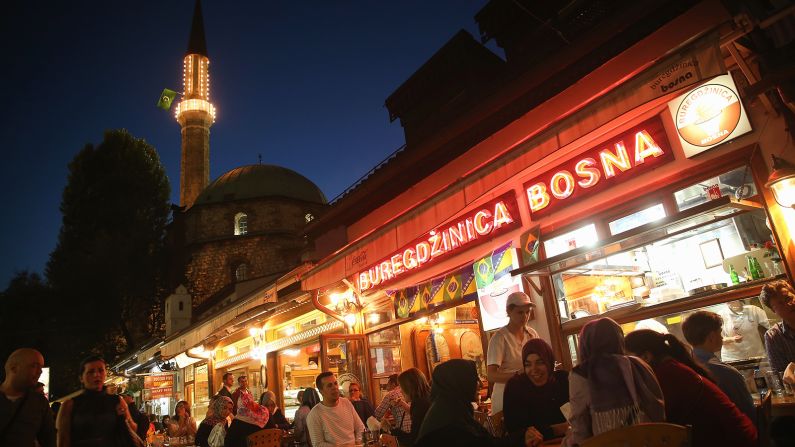
Sarajevo reborn: It still carries the scars of 1990s conflict, but this enigmatic city exudes a modern cool in numerous ways and is emerging as a hot European destination.
Sean Gallup/Getty Images
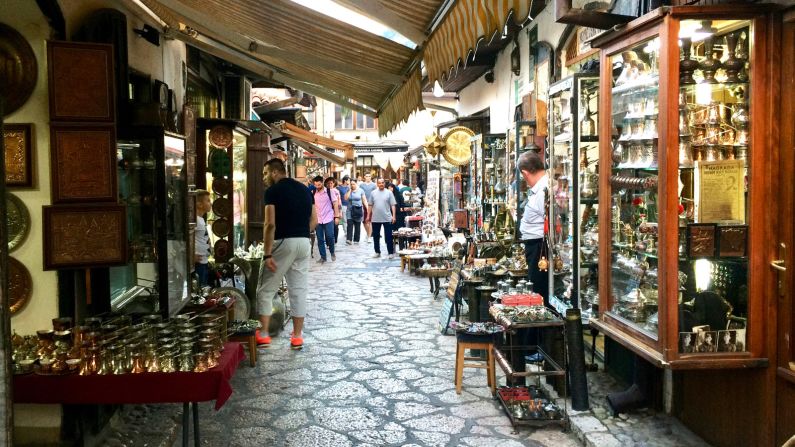
The Ottoman bazaar: The heart of Sarajevo still lies in the Baščaršija, a tight quarter of one-story market stalls that date to the city's earliest years in the 15th century.
courtesy Albert Stumm
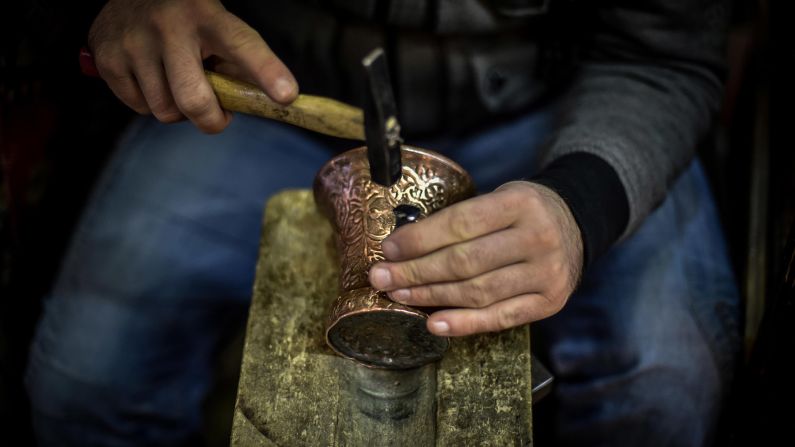
Handicrafts in Baščaršija:Grizzled men in some stalls in the bazaar use metal tongs to pull searing copper from a fire and then hammer it into intricately designed plates, trays and goblets.
courtesy Sarajevo Tourism Office
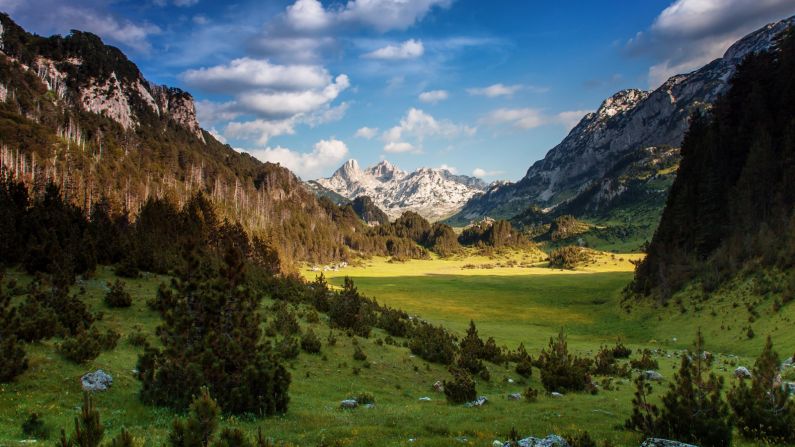
One of the world's best hikes: Well-marked hiking trails, including the scenic Via Dinarcia, through the mountains of the Dinaric Alps are easy day trips from Saravejo.
courtesy Adnan Bubalo
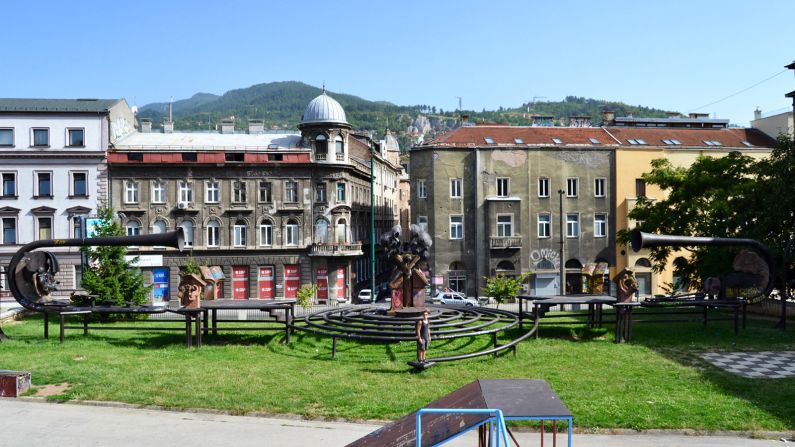
Steampunk and skaters: The Hastahana Park is a popular hangout for families, skateboarders and beer-drinkers. It houses a gigantic steampunk sculpture created by German artist Helmut Lutz.
courtesy Albert Stumm
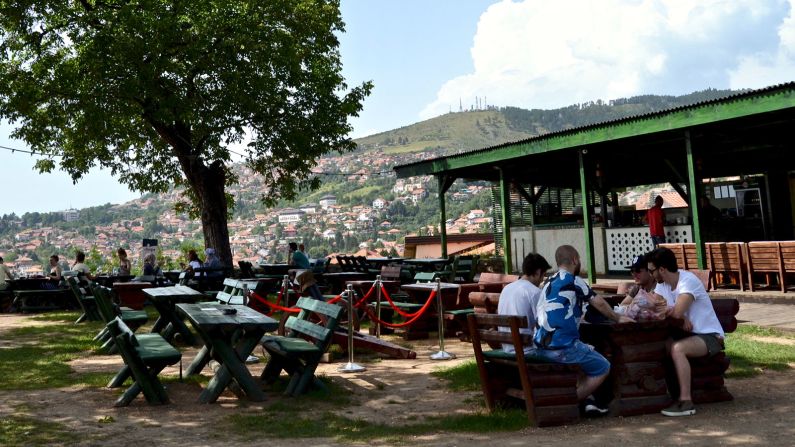
A view from above: A cafe opened in the Yellow Fortress in 2016, with outdoor picnic tables and a fantastic view of the city, especially in the sunset.
courtesy Albert Stumm
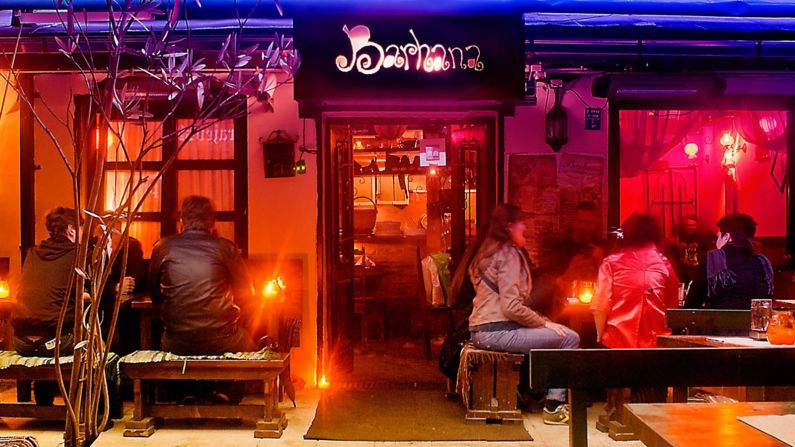
Rakija and late nights: Barhana in the Baščaršija serves many varieties of rakija, a party drink staple similar to grappa, as well as mezze, or small snacks, and tablets of cured meat and cheese similar to what you'd find at Spanish tapas bars.
courtesy Barhana
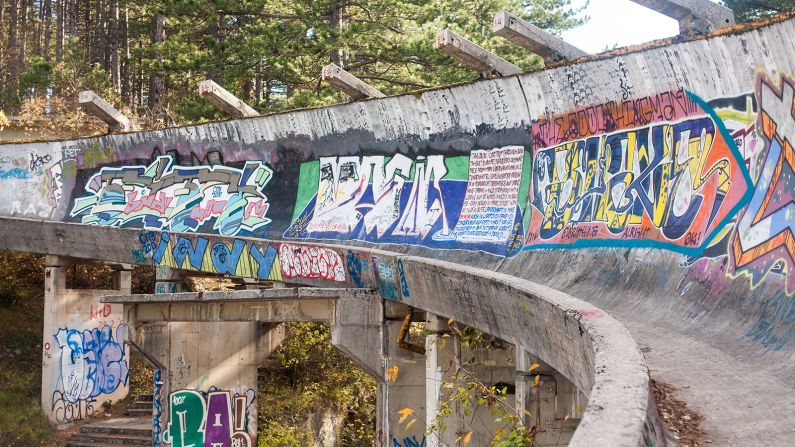
Hike up to the abandoned Olympic bobsled track: The bobsled and luge track on Trebevic Mountain south of town is one of the abandoned Olympic venues for the 1984 Winter Olympics. The track has turned into a large graffiti canvas and an alternative attraction.
courtesy Cat Norman
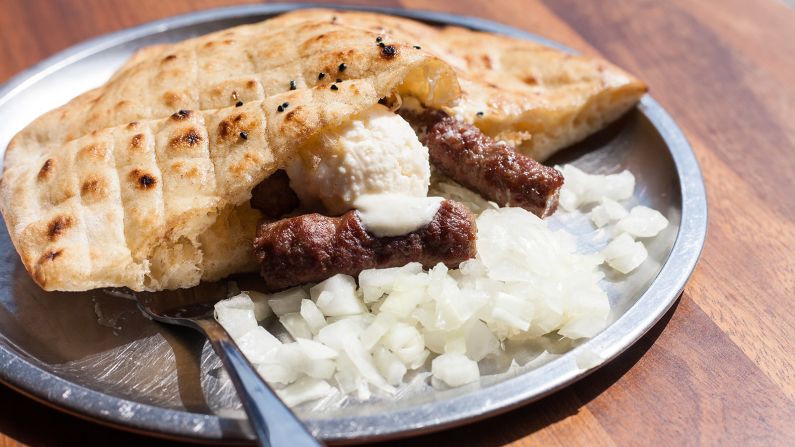
Eating like a Bosnian: Bosnians claim they have the best version of a Balkan staple called čevapi. Grilled links of minced beef or lamb are stuffed into somun with onions and sometimes sour cream.
courtesy Cat Norman
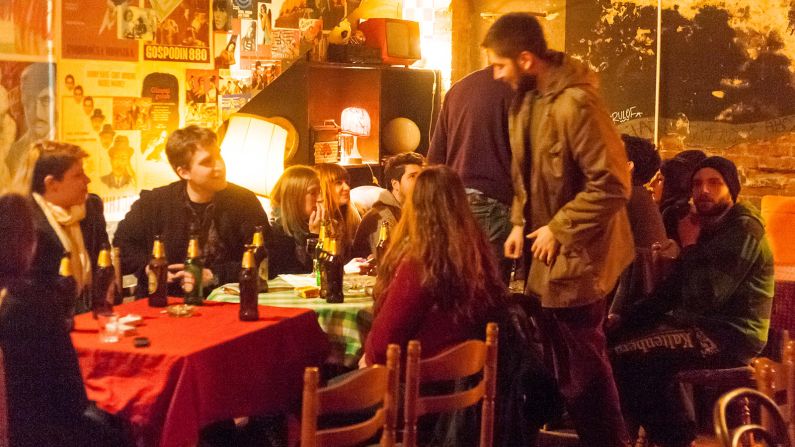
Fun folk at an old porn theater: Formerly a movie theater showing Hollywood movies and eventually porn films, Kino Bosna has reopened as a bar.
courtesy Cat Norman
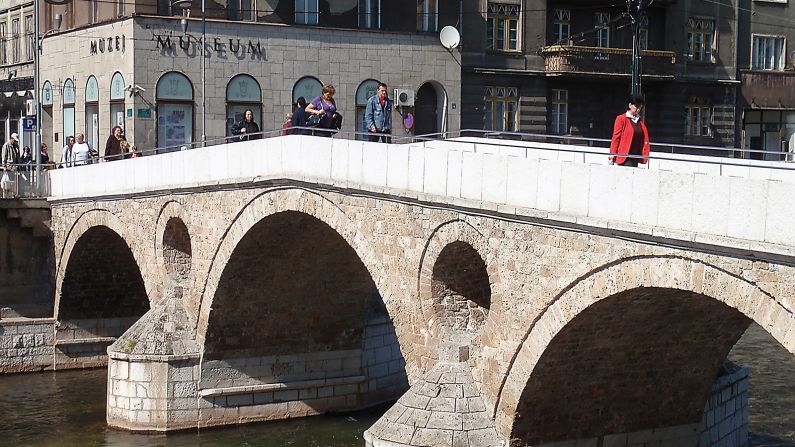
Where World War I began: The Latin Bridge, the city's oldest bridge, was where Archduke Franz Ferdinand was assassinated -- sparking the outbreak of World War I. A modest museum now stands at the end of the bridge to tell the story.
courtesy Sarajevo Tourism Office
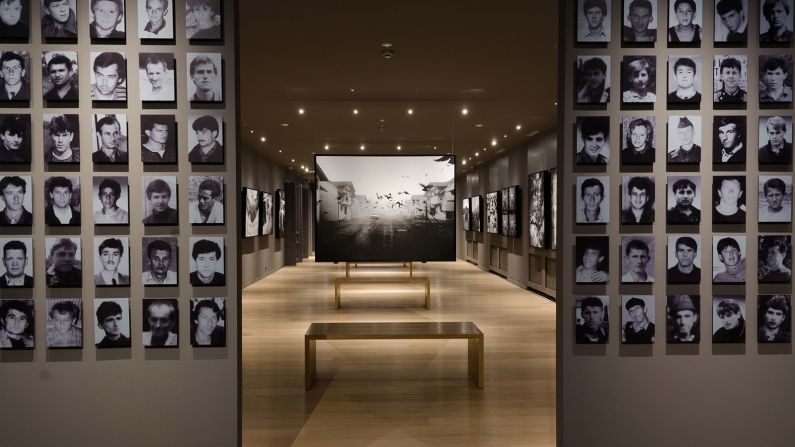
From siege to Srebrenica: The Srebrenica-Galerija 11/07/95 focuses on the worst genocide in Europe since the Holocaust and documents the lives of the survivors. Serbian troops slaughtered more than 8,000 Bosnian Muslims in one town in one month near the end of the war.
courtesy Sarajevo Tourism Office
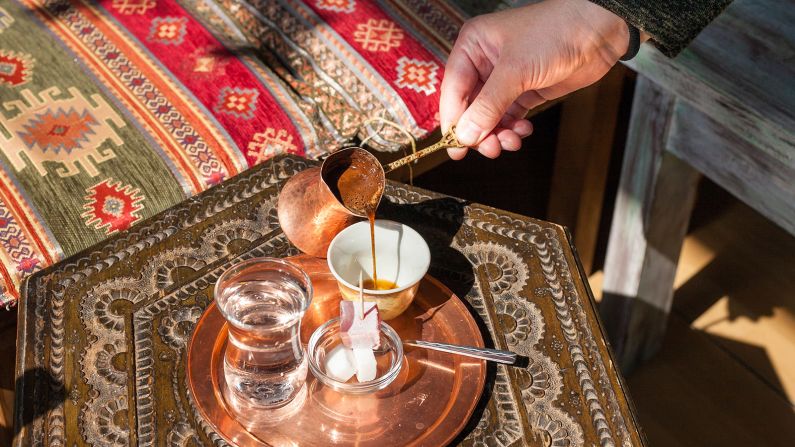
A cultural pick-me-up: Thick, rich and strong as jet fuel, Bosnian coffee is is such a part of the culture that it's the drink of choice for everyone from a courting couples to businessmen closing a deal.
Cat Norman
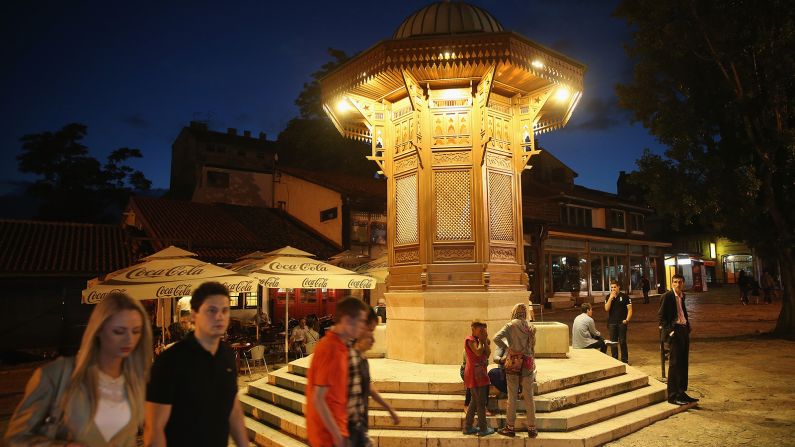
History and a hike: The Sebilj fountain, the Baščaršija's most-photographed landmark, is a guaranteed stop on the two-hour Sarajevo Free Walking Tour.