Morocco's fabled blue city —
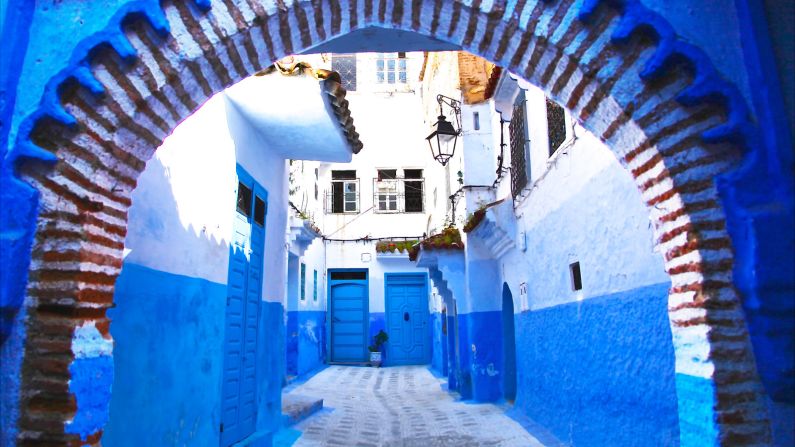
The city of Chefchaouen, or Chaouen for short, is seen as a new "it" place on Morocco's tourist trail. Yet it's not the mountains or the "Game of Thrones" architecture that travelers come in their thousands to see. It's the color -- a gorgeous blue rinse that covers not only Chaouen's houses but its mosques, government buildings, public squares and even its lampposts and bins. The custom dates back to the 15th century, when Jewish refugees fleeing the Spanish Inquisition settled in large numbers in Chaouen. They brought with them their tradition of painting things blue to mirror the sky and remind them of God.
The medina —
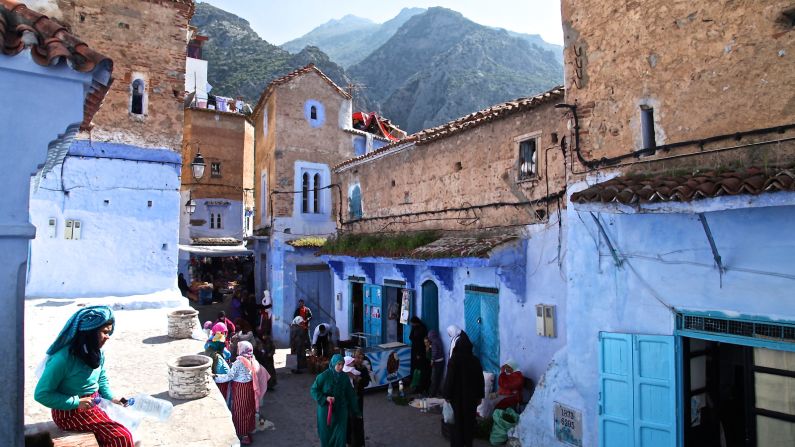
A medina is a walled quarter found in many Moroccan cities. The narrow maze-like streets and higgledy-piggledy alleyways block out the harsh African sun, creating a mild micro-climate. They also block out all natural geographic points, making it very easy to get lost; tourists in the famous medinas of Marrakesh or Fez regularly have to ask locals to lead them back to their hotels. Not so in Choauen, where from just about any vantage point within the medina, visitors can see the twin 1,700 meter-high peaks from which the city gets its name. In the language of the Berber, the indigenous tribespeople of the region, "chaoua" means "horns of a goat" and "chef" means "looks at." So Chefchaouen literally means "look at the horns."
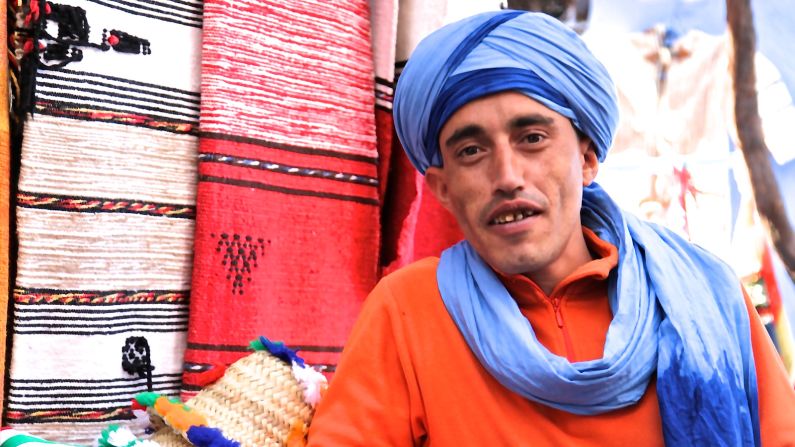
The photo taboo —
The people of Chaouen generally dislike having their pictures taken and this stall holder was a rare exception. "I'm a photographer and I know how a person can bring life to a photo," says Mohamed Yassin El Ouahabi, a volunteer at Choauen's tourist information kiosk. "But in Arabic culture to take a photo of someone is taboo because our body is sacred, so it's improper to reproduce it in a picture -- especially for old people who are not used to technology. I've seen tourists get off buses here and shove telescopic lenses in people's faces. They should know better." Store assistant Elmokhtar Boulagdam adds: "Most tourists don't even ask to take photos when they come into our store."
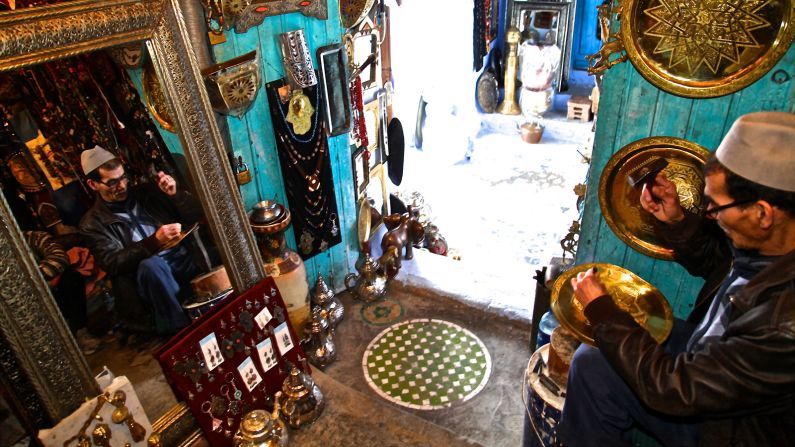
Coppersmith —
Seen here working in his store, Elmokhtar's father is one of Choauen's last remaining coppersmiths and boilermakers. Possessing ancient knowledge passed down by generations, he pounds copper and brass in a remarkable orchestra of sounds. From his expert hands come a wide variety of utensils and tools, from pots and pans and buckets and incense burners, to teapots and sugar boxes, to couscous streamers and more.
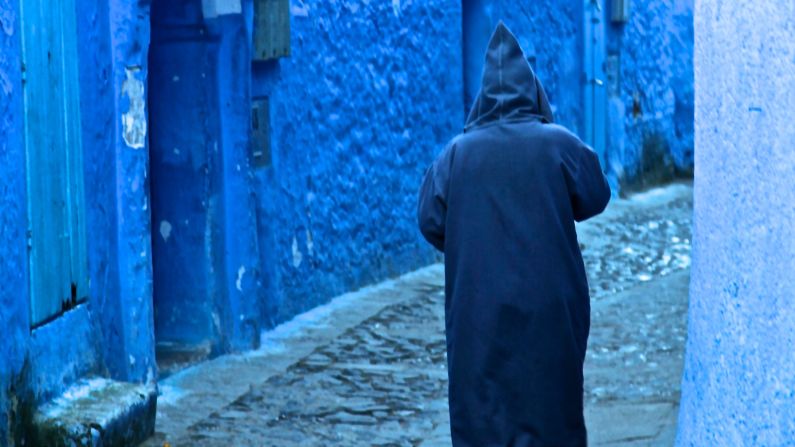
Jedi-like figures —
In La Ville Bleue, a stunning Giorgio Armani commercial filmed in Choauen in 2011, a fashion model meets a mysterious figure wearing a djellaba, the long hooded cloaks worn by men and women throughout North Africa. The djellaba bears an uncanny resemblance to the Java robes worn by Jedi knights in the "Star Wars" movie series, and it's been suggested "Star Wars" creator George Lucas was inspired by the djellaba while filming the original movie in neighboring Tunisia.
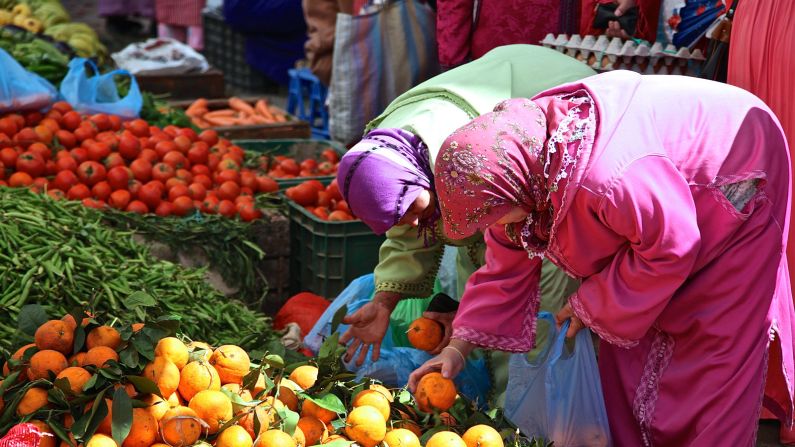
Great shopping —
Maybe it's the fresh mountain air... Unlike the street hawkers in Marrakesh and Fez, the hawkers of Chaouen are relaxed and non-aggressive. "Come into my store and make your eyes happy," is a popular line. Handicrafts are king here, with tiny shops and stalls stocking earthenware pots, copper sculptures, silver jewelry encrusted with gems and handwoven Berber pillowcases and rugs. Buyers have to haggle to get a good price. The fresh produce markets that pop up in the medina's many public squares are the place to buy huge strawberries, purple candy apples and Chaouen's famous tangy goat's cheese, sold in giant roundels or in little squares to eat on the go.
Two tones —
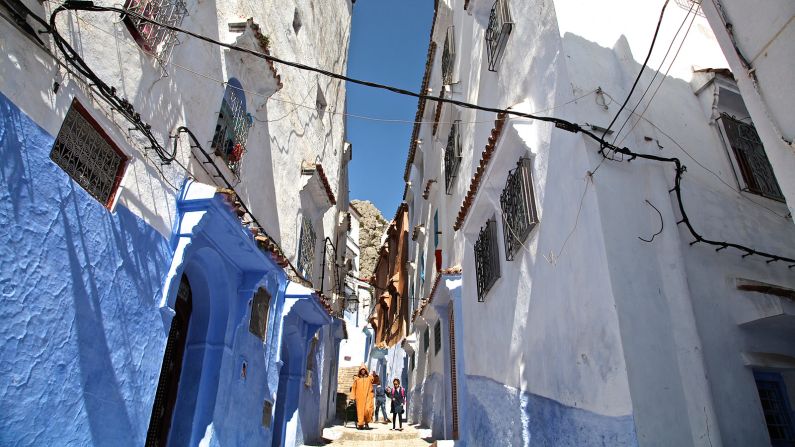
In this typical Choauen streetscape, the textured lower half and the whitewashed upper half of the walls are remarkably similar to those seen in villages like Campo de Criptana in the south of Spain. Various gradients of blue can be seen within the ramparts of Choauen's medina. Over time they are discolored by dirt, mold and dust to create purple and green shades.
Fresh coat of paint —
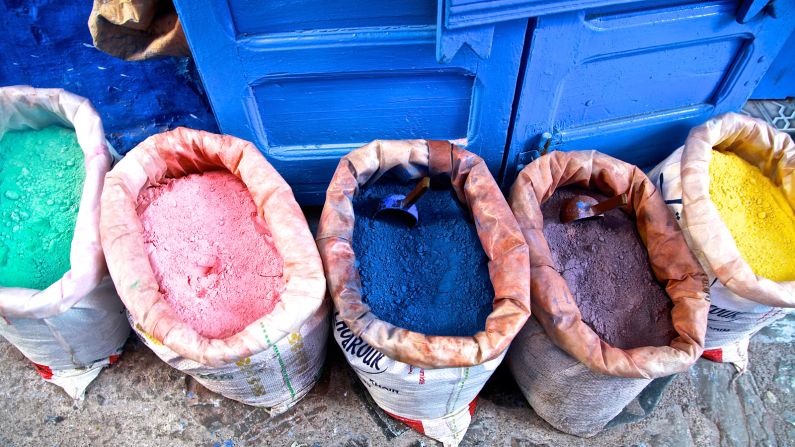
The entire city needs a fresh coat of blue paint every two years. It's done in stages -- a never-ending chore accomplished with powdered pigment like these. The bags are a common sight outside shops around the city. The pigment is mixed with water and is often applied with a traditional brush made of dried grass tied in a bundle.
The tourism boom —
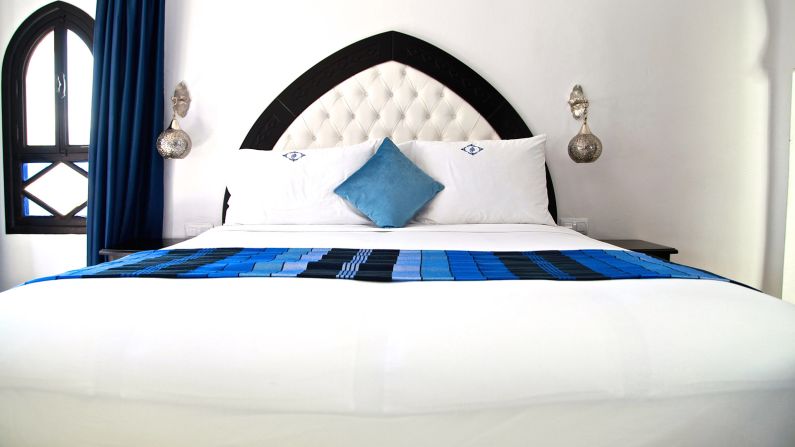
For a small city of 40,000, Choauen sure has a lot of hotels: 200 by conservative estimates. One of the most decadent is Lina Ryad & Spa. It's in a stand-alone five-story building with an underground swimming pool and a traditional hammam where guests are scrubbed with Moroccan cosmetic clay. But there's a dark side to Choauen's success. Most expensive hotels are foreign-owned -- part of a tourism-driven property boom that's increased the average price of an apartment in the medina from $22,000 in 2005 to $110,000 today. "Life has become expensive in Choauen because of tourism," says tourism information officer Mohamed Yassin El Ouahabi. "In the market you can't buy any good fish. It all goes to the tourist restaurants."
The Kasbah —
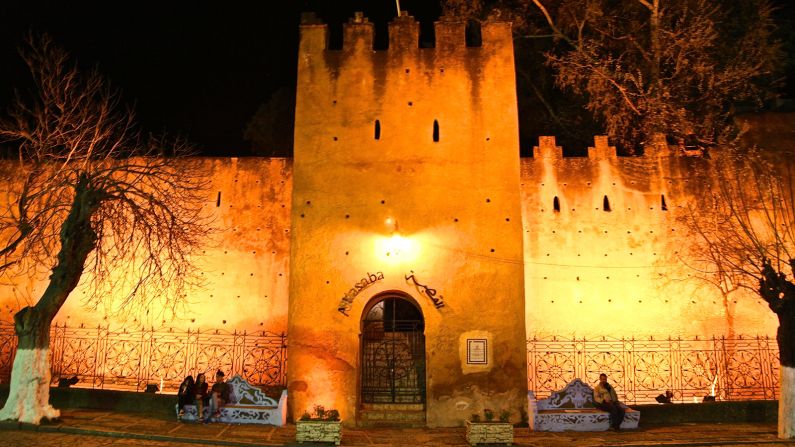
The Kasbah, or fortress of Chaouen, was built by Moulay Ali Ben Rachid in the late 17th century as a final line of defense against attacks by Berber tribesmen as well as Portuguese and Spaniard invaders. Visitors are charged 10 dirham ($1) to enter the Moorish fortress, stroll through its tropical garden, visit a small museum and climb the medieval watchtower to observe life in Uta el-Hammam Square. It's filled with tourist crowds at weekends as coaches arrive from the port of Tangier. But on Monday morning, visitors depart in droves and the beautiful blue city regains its pious Islamic character.
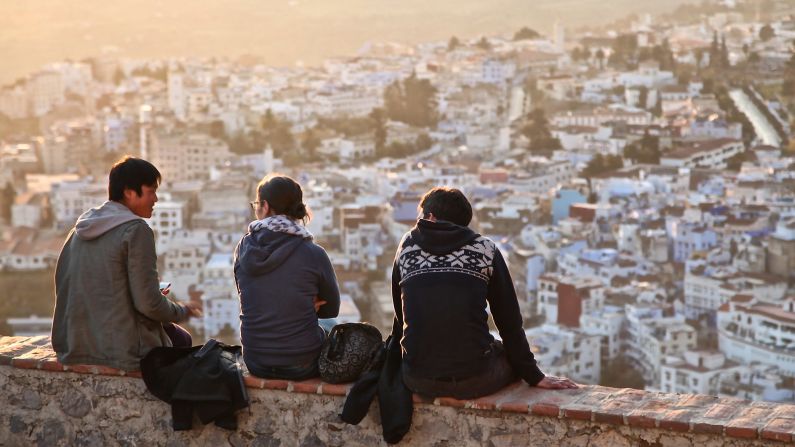
Eagle's nest —
Standing upon a hillside 200 meters above Chaouen is Jemaa Bouzafar, a whitewashed Spanish mosque. It commands panoramic views of the medina, the new city and the limestone peaks of the Rif mountain range, making it a popular spot for tourists and locals alike.
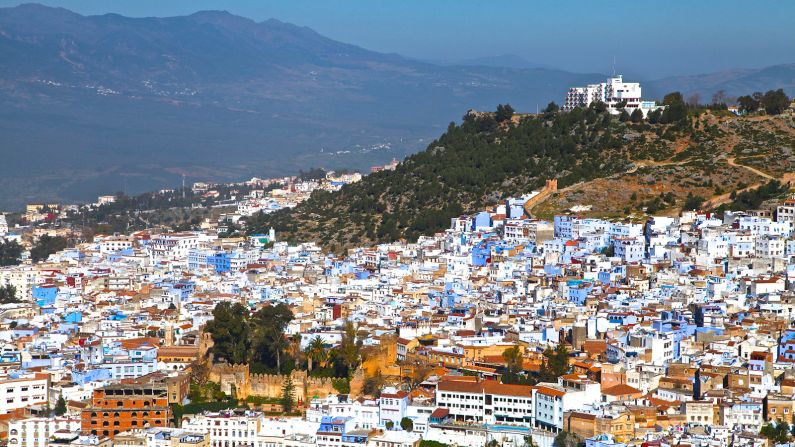
The view —
To get to the mosque, exit the eastern gate of the medina and follow the ancient cobblestone bridge that straddles the small waterfall where local women wash sheep's wool. From that point, follow a well-signed mule track east along the ridge planted with olive groves. It's a 15-minute walk to the mosque. The view is impressive anytime in the day...
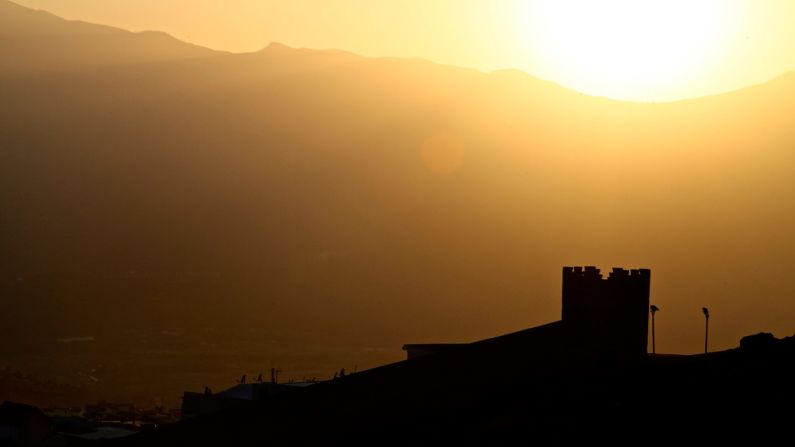
Mustard colored sky —
... and even more so at dusk or dawn. This photo shows a magnification of the Kasbah's outer rampart wall moments before the sun sets behind the Rif mountain range. The Rif mountains are 2,455 meters at their highest point.
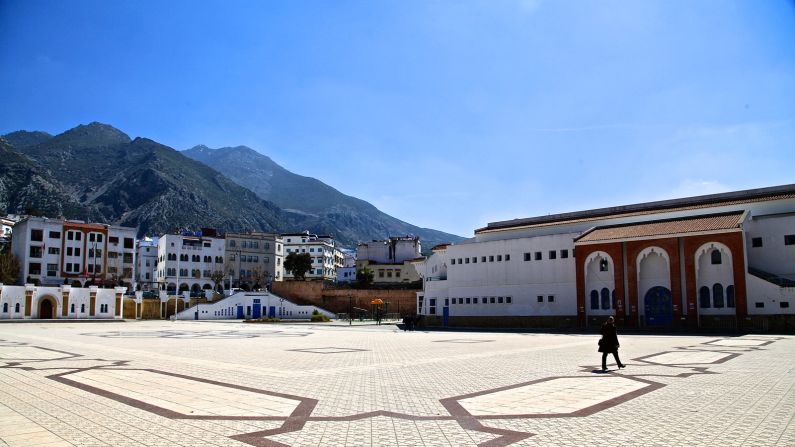
The new city —
East of the medina is the Western-style new city of Chaouen. Built by the Spanish and the French in the early 20th century, it has wide, tree-lined avenues, modern galleries and stores, blue government buildings, an old Spanish cathedral with a whitewashed clock tower and three plazas. The largest, Mohamed Plaza, is pictured here. In the background Chaouen's twin-horned mountains reach for the sky.
Epic drives —
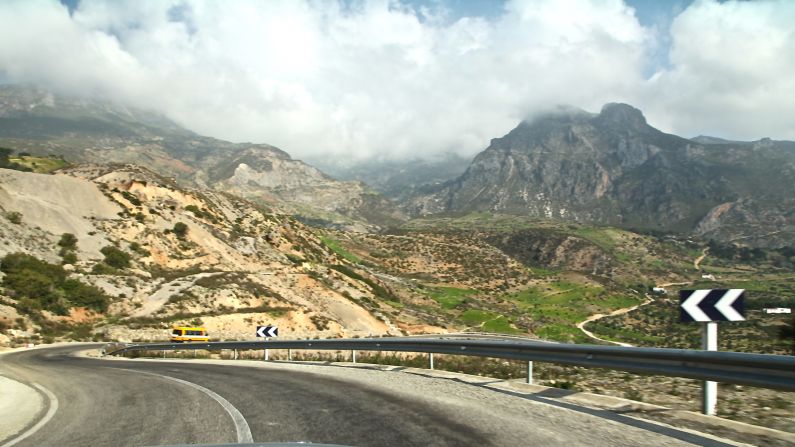
With its tourist-friendly infrastructure, Chaouen makes an ideal base for exploring the Rif mountains. An extension of the Baetic range that includes the southern mountains of the Iberian Peninsula in Spain, these hills are the cultural home of the Berber. Punctuated with pine forests, ancient caves, peaks and the odd oasis, the arid yet colorful landscape makes for fantastic trekking. Family-run eco-tourism company Gite Talassemtane offers guided hikes and mountain bike tours from Chaouen to the Mediterranean coast and across Talassemtane National Park. But even driving through the Rif mountains is an epic experience. This picture shows the road between Chaouen and Akchour village, the starting point for the 90-minute hike to the Pont de Dieu bridge and the colossal Oued El Kelaa waterfalls.
A fond farewell —
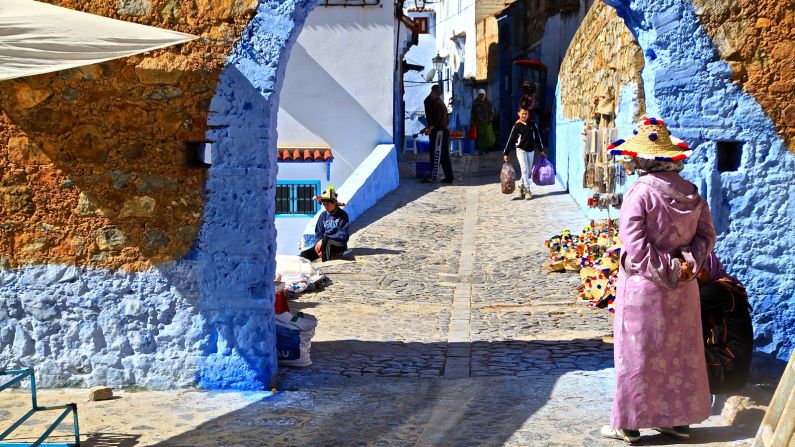
A woman wearing a traditional Berber hat decorated with colorful cotton balls stands outside Bab al Anser, also known as the Eastern Gate. An inscription on the inside of the gate reads: "Those who leave here have no option but to go in the direction of the river in front of the peaks of the mountains in harmony with the sky."