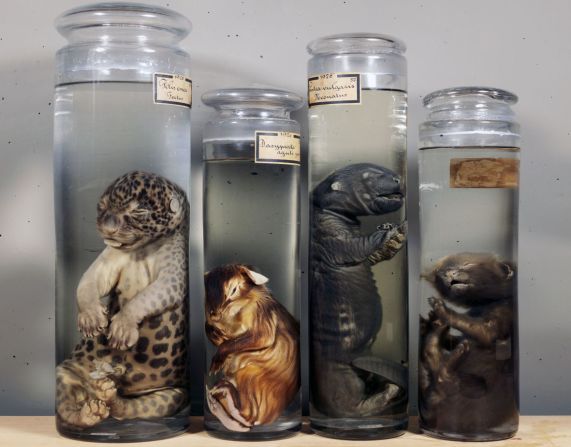
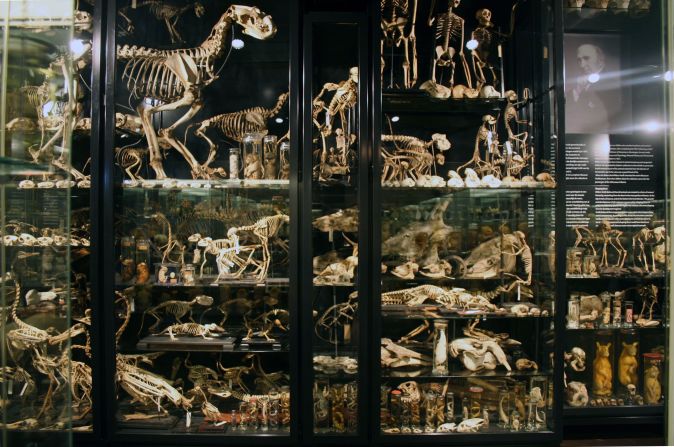
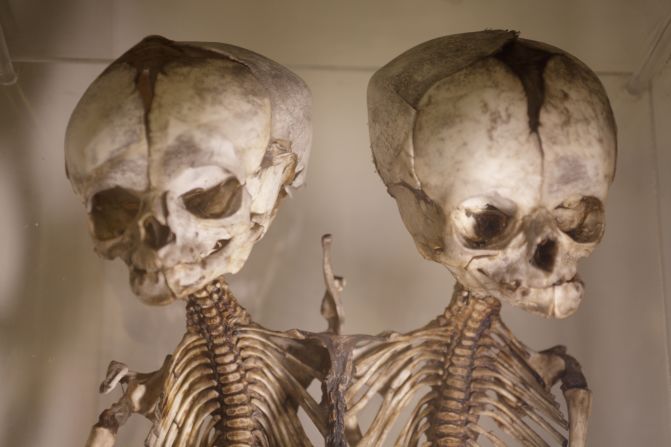
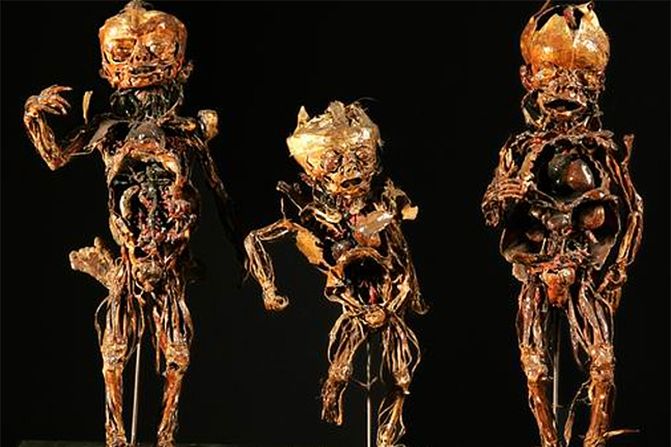
An Amsterdam family's collection of medicine and anatomy includes so-called mermaid fetuses and preserved conjoined twins among 10,000 or so items.
courtesy vrolik museum
Museum Vrolik, Netherlands —
The museum explicitly states that it's not suitable for children.
courtesy vrolik museum
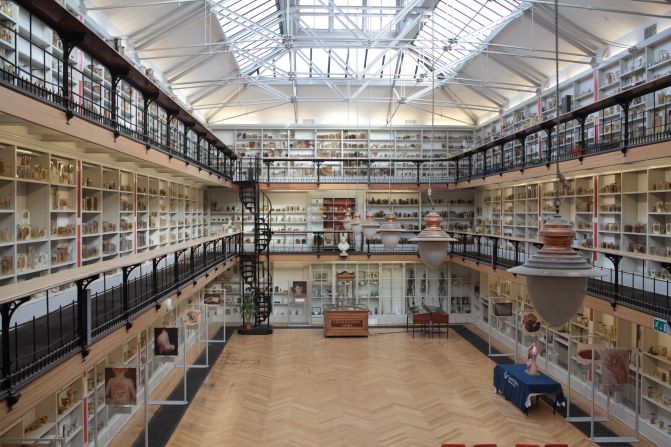
Bart's Pathology Museum, England —
This London museum houses nearly 5,000 medical oddities, including random objects pulled from human bodies over the past 150 years -- toothbrush in the esophagus, anyone?
Courtesy Tony T.K. Smith
Bart's Pathology Museum, England —
The museum is open only for special events. Maybe a Halloween party?
courtesy Tony T.K. Smith
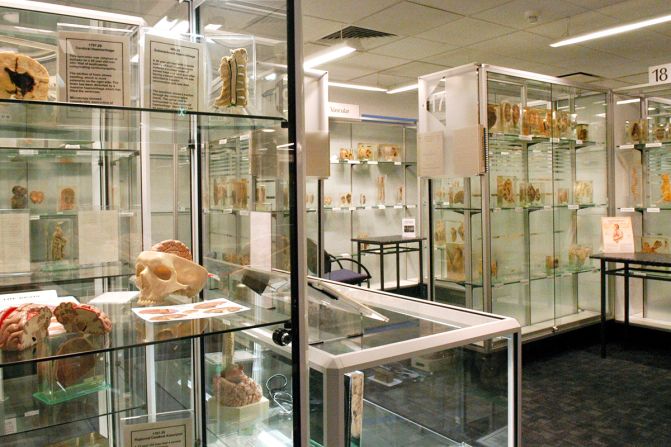
Museum of Human Disease, Australia —
Behold: 2,000 examples of human disease, past and present. When's lunch?
courtesy museum of human disease
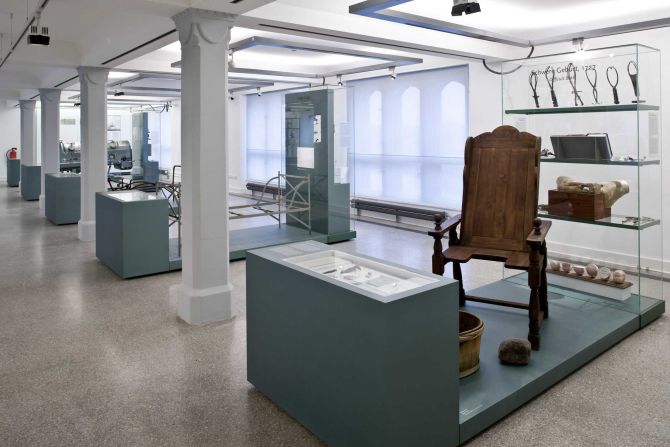
Berlin Museum of Medical History, Germany —
Only 1,800 specimens of the museum's original 23,000 survived World War II bombings; they're now on display in Berlin. Visitors can see how National Socialists used science to justify arguments for race purification.
courtesy Thomas Bruns
Fragonard Museum, France —
Horses, monkeys and even human fetuses are on display at this anatomy collection that was originally started for veterinary students in the 18th century.
courtesy Fragonard.Museum
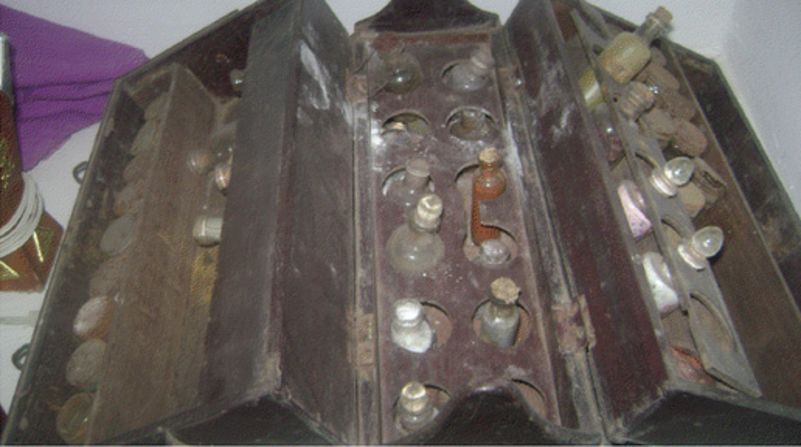
Ibn Sina Academy of Medieval Medicine, India —
This traditional Unani medicine box is one of the displays the Ibn Sina Museum is most proud of.
courtesy Ib Sina Museum
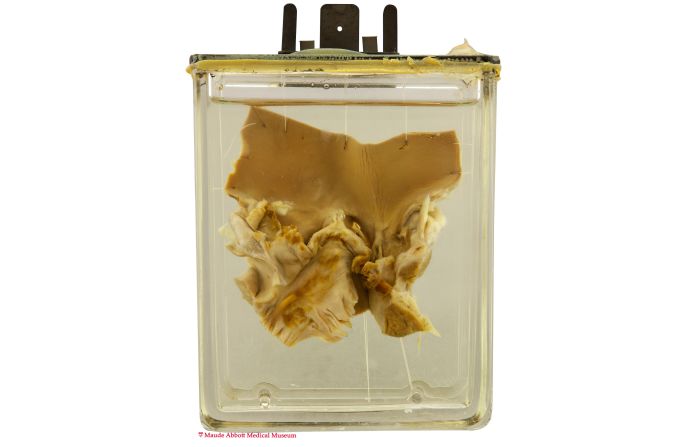
Maude Abbott Medical Museum, Canada —
For now, the display of 150 organs dating to the 19th century at this Canadian academic museum is available for viewing only online.
courtesy made abbott museum
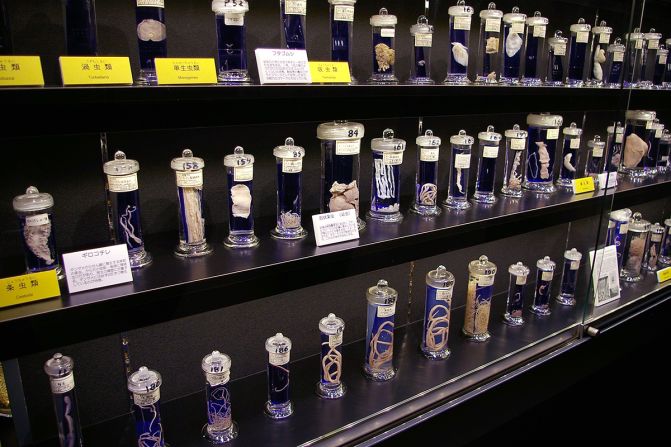
Meguro Parasitological Museum, Japan —
This intriguing parasite museum began exhibiting skin-crawling, skin-burrowing creatures in order to raise public awareness to disease following World War II.
courtesy Megura Museum
Paul Stradin's History of Medicine Museum, Latvia —
The main attraction here? How could it not be the two-headed dog?
courtesy paul stradin museum
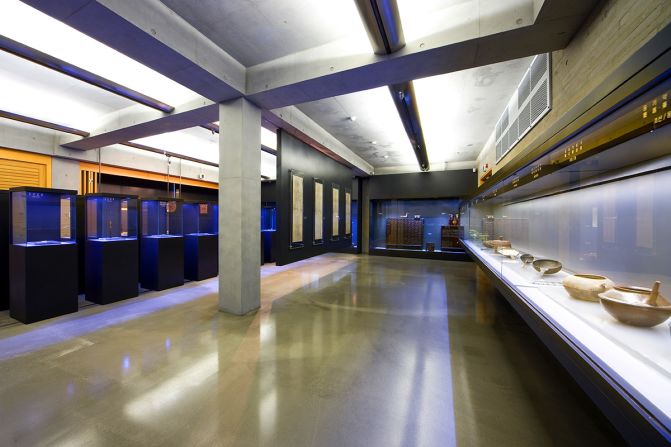
Choowondang Medical Museum, South Korea —
Sorry, no gruesome specimens here. Just a detailed visual history of Korean medicine.