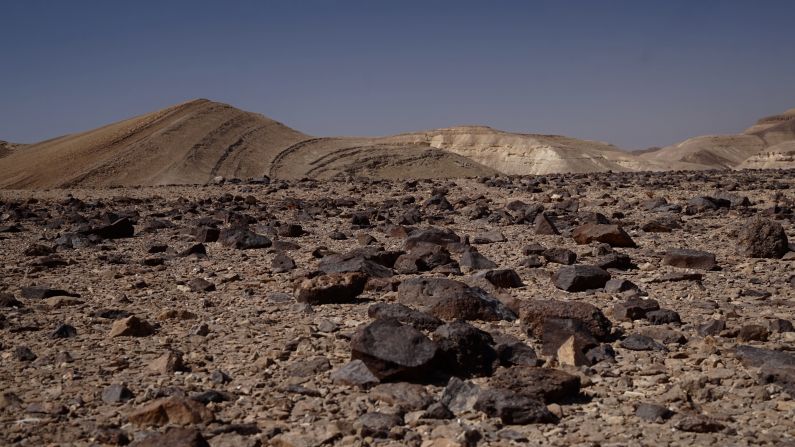
Stories in the stones: With little plant cover, the Sinai Peninsula's geological history is laid bare. Fossilized seashells recall the time when the land was covered by an ocean, and these basalt rocks are remnants of the region's volcanic past.
Courtesy Jen Rose Smith
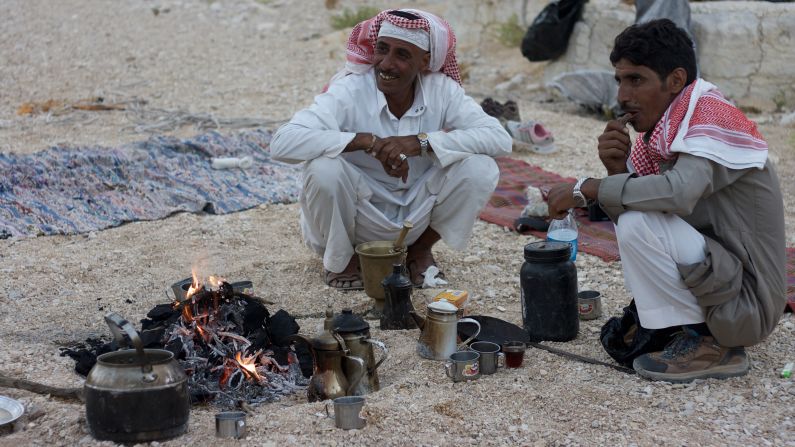
Teatime with Tarabin: Sharing tea and coffee is an important part of Bedouin hospitality, and each day on the trail begins and ends with hot drinks around the fire. Coffee is ground by hand in a mortar and pestle and infused with aromatic cardamom. Tea comes with an energetic dose of sugar.
Courtesy Jen Rose Smith
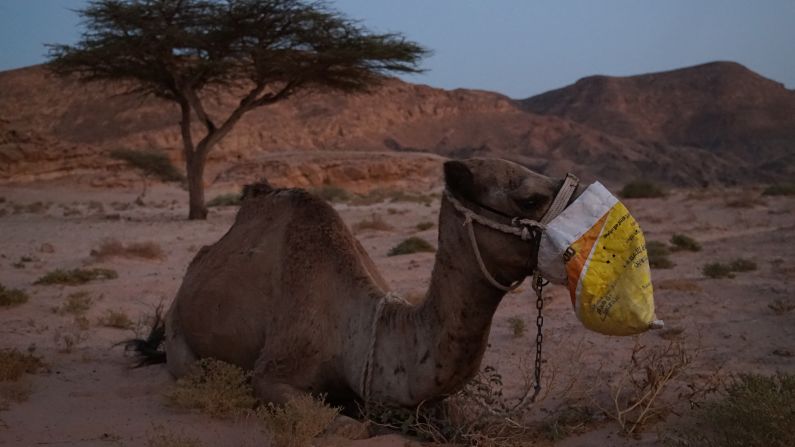
Dinner in the desert: Both prized and beloved by Bedouin people, camels' wide feet and ability to go long periods without water make them ideally suited to desert travel. After a day on the trail this camel is rewarded with a bag full of food, but the animals also nibble from acacia trees, grazing on tiny leaves while avoiding the trees' long, sharp thorns.
Courtesy Jen Rose Smith
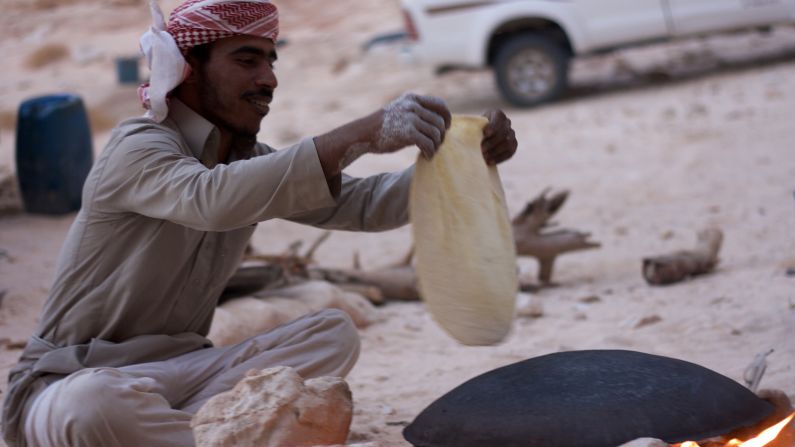
A moveable bakery: Unleavened bread is prepared each day on the trail, made from a simple dough of flour, water and salt. The staple comes in two varieties: "male" bread is a thick round that's baked directly in the coals of a fire, while "female" bread, shown here, is stretched thin before being slapped onto a heated metal dome.
Courtesy Jen Rose Smith
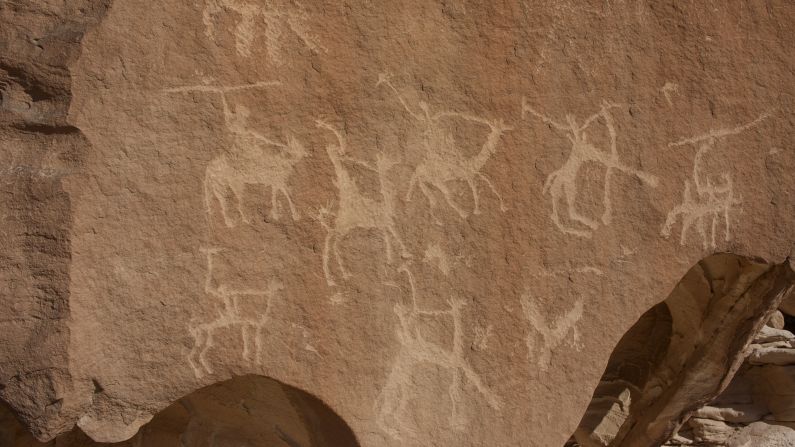
"Camels were here": Depicting camels and riders, petroglyphs like these are etched into sandstone rocks throughout the Sinai Peninsula. Petroglyphs are difficult to date with precision, but some archeologists believe Sinai's camel petroglyphs were made in the Late Bronze Age, when camels may have been used to carry copper and turquoise from peninsular mines.
Courtesy Jen Rose Smith
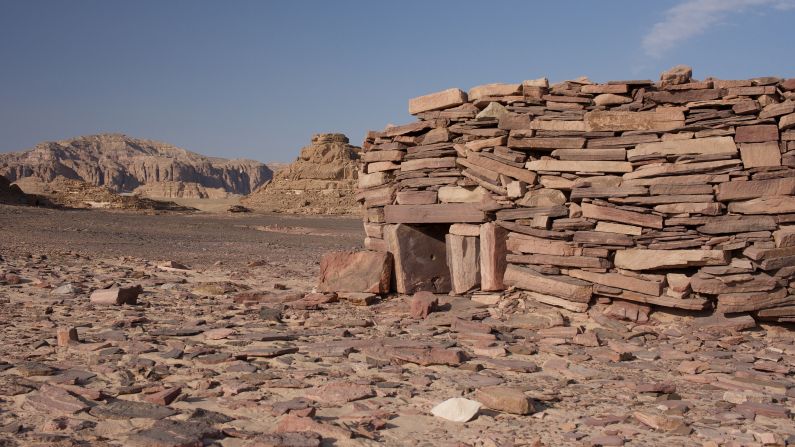
Remains of the ancients: Archeologists believe these round, stone structures, called nawamis, were built up to 6,000 years ago, making them older than Egypt's pyramids. Ranging from three to six meters across, they were likely constructed as tombs by the Sinai's pastoral indigenous inhabitants.
Courtesy Jen Rose Smith
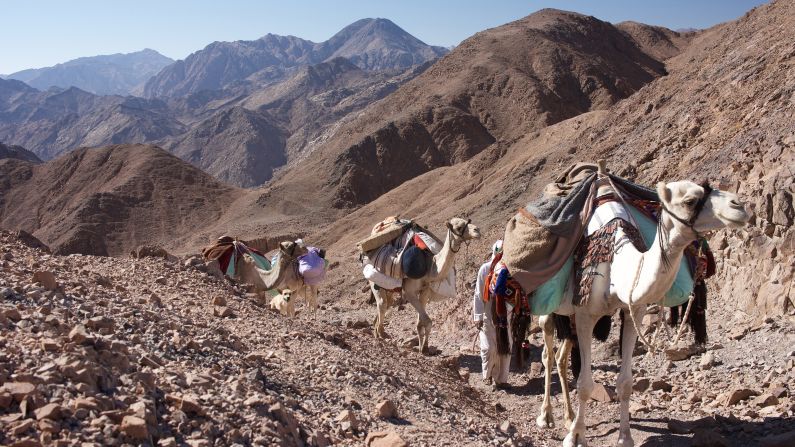
Beasts of burden: Loaded with bags and blankets, camels carry all of the group's camping supplies and food. Here, the camel train climbs steep switchbacks from the Ein Hudara oasis, where a desert spring supports several Bedouin families.
Courtesy Jen Rose Smith
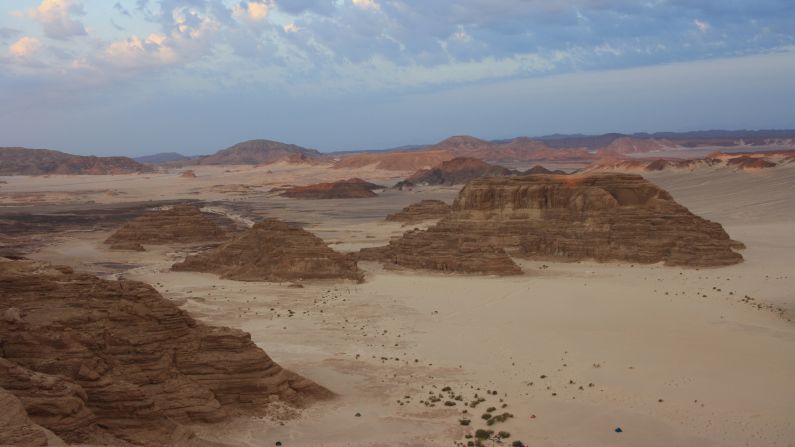
From sandstone to sand: Years of wind and weather have transformed this sandstone plateau into a landscape of powdery dunes and peaks.
Courtesy Jen Rose Smith
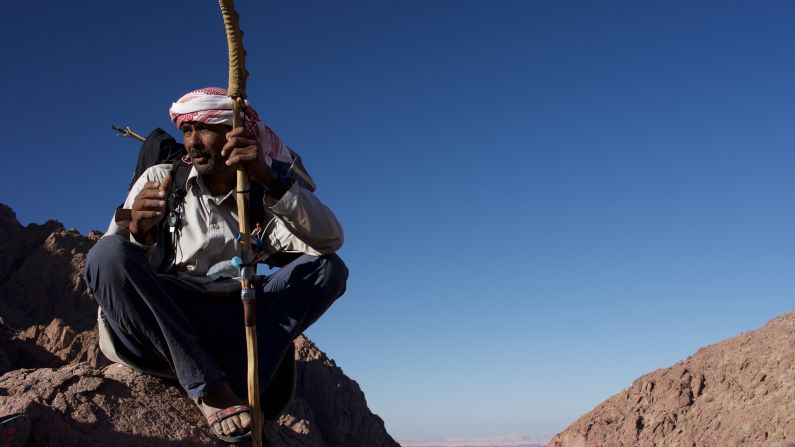
Sinai's desert leaders: Jebeleya guide Nasser Mansour rests after the steep climb out of the Blue Desert. Wearing a traditional, red-and-white Bedouin shemagh, or head wrap, his walking stick is topped with the horn from a Nubian ibex, which he found at the edge of the trail.
Courtesy Jen Rose Smith
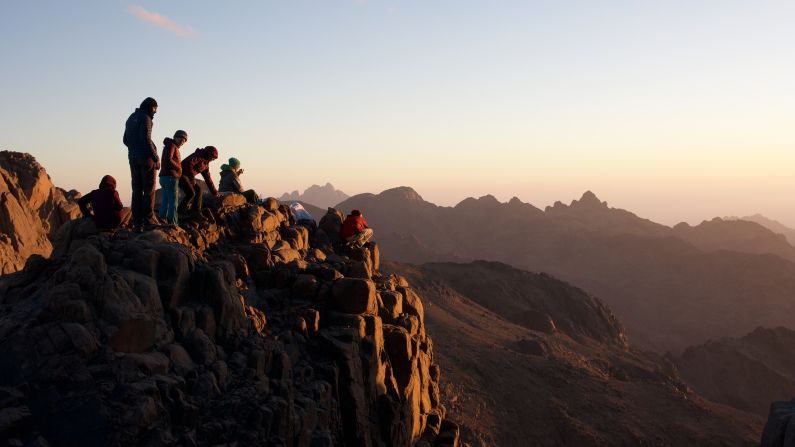
Sunset on Mount Katherine: Warm desert nights give way to an evening chill in Sinai's high mountains, where night temperatures drop below freezing. On the final night of the trail, hikers catch the final rays of light from a campsite high on Mount Katherine.