China’s frontiers: Is there anything left to explore?
A lifetime of exploration —
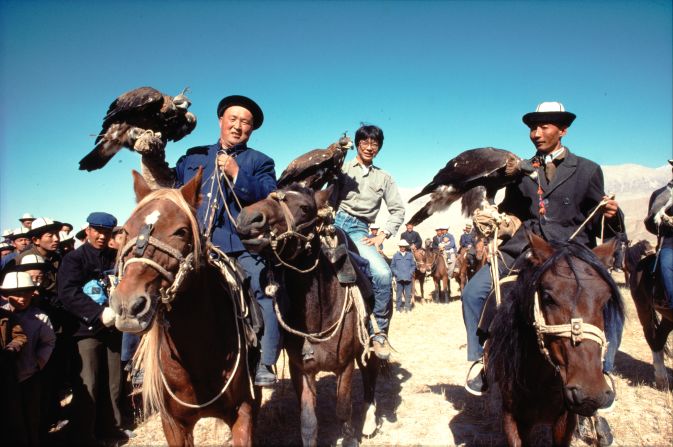
Wong How Man, center, in 1984 with Kirghiz eagle hunters at the border between China's Xinjiang province and the former Soviet Union. A year later, he led an expedition to find the source of the Yangtze River that required him and his team to travel nine days on horseback.
Courtesy Wong How Man
14 borders = 14 opportunites —
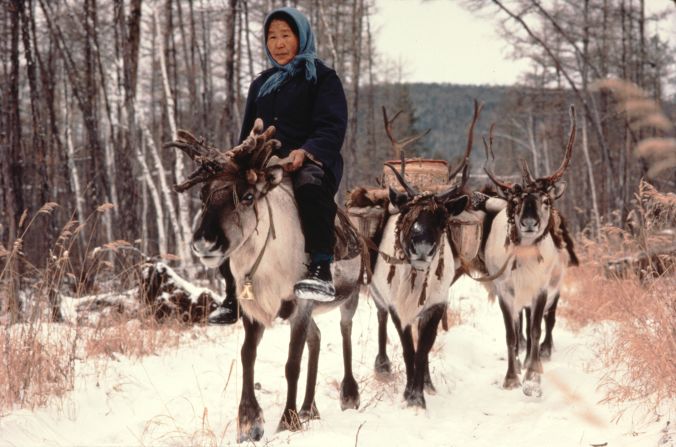
A reindeer herder on China's northeast border with Russia. China shares land borders with 14 countries -- Mongolia, Russia, North Korea, Vietnam, Laos, Myanmar, India, Bhutan, Nepal, Pakistan, Afghanistan, Tajikistan, Kyrgyzstan and Kazakhstan.
Courtesy Wong How Man
The Silk Road —
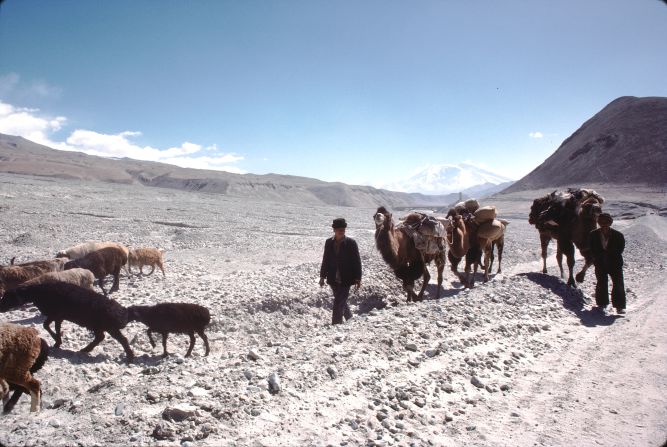
Wong took this shot while traveling on Central Asia's Silk Road into the Pamir Mountains near Afghanistan.
Courtesy Wong How Man
The Russia-China divide —
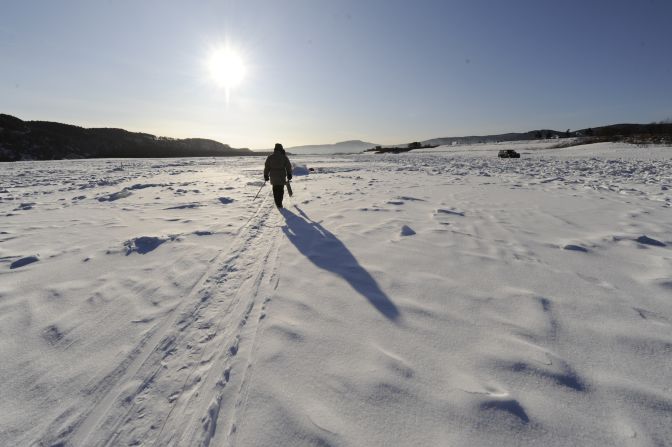
"You can drive almost to the source of the Amur River, the 10th longest river in the world, and see the border troops talking to each other, people ice fishing and crossing the river even through they're not supposed to," says Wong.
Courtesy Wong How Man
Xinjiang —
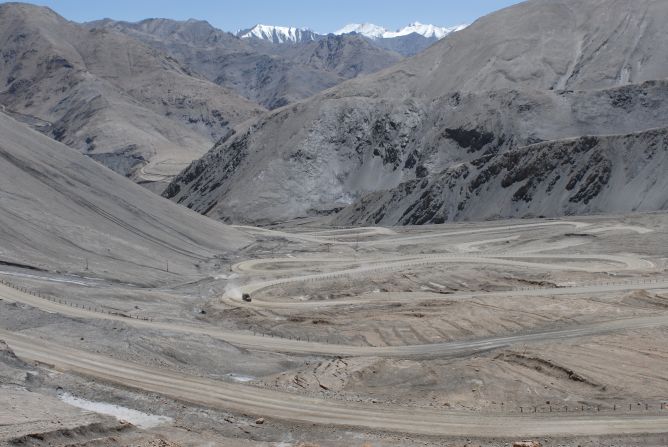
This winding road leads from the desert of China's far west Xinjiang province towards the Karakoram mountain range, which spans the borders between Pakistan, India and China.
Courtesy Wong How Man
Offroading —
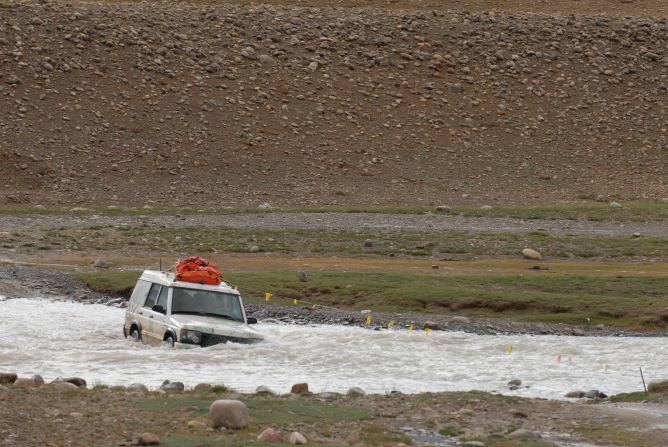
A good explorer has to have faith in his wheels. Here, Wong's expedition team crosses a river near China's border with India in a four-wheel drive vehicle.
Courtesy Wong How Man
Nomadic tribes —
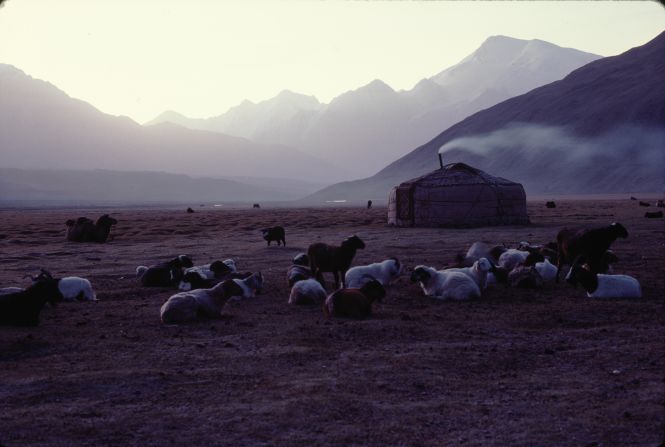
A Tajik nomadic yurt near the border of Afghanistan. Though long associated with Mongolia, yurts are also used by nomads in the steppes of Central Asia.