The Team RV aerobatic squadron is slated to perform at this July's Oshkosh airshow. Team RV's homebuilt aircraft -- designed by Richard VanGrunsven -- perform at speeds over 200 mph while pulling g-forces up to 6 times normal gravity.
Courtesy EAA AirVenture Oshkosh
Warbirds —
"Warbird" aircraft are central to the Oshkosh experience. As a teen, CNN commenter XR1138 remembered watching World War II ace Clarence "Bud" Anderson perform "the most incredible display of piloting skill and energy management that I have ever seen and probably will never see again."
Courtesy EAA AirVenture Oshkosh
San Diego Air & Space Museum —
Welcoming visitors to the San Diego Air & Space Museum is the U.S. Navy's Sea Dart. It was designed as "the first combat-type plane equipped with retractable hydro-skis, the first delta-winged seaplane, and the first supersonic seaplane in the world," according to the museum.
Courtesy San Diego Air & Space Museum
Horten 229 V3 Flying Wing —
Nazi Germany's Horten 229 V3 was "the first pure flying wing powered by a turbojet," according to the museum. It also was the "first aircraft designed to incorporate what became known as stealth technology." The museum's exhibit is a full-scale replica built by Northrop Grumman from original plans.
Courtesy San Diego Air & Space Museum
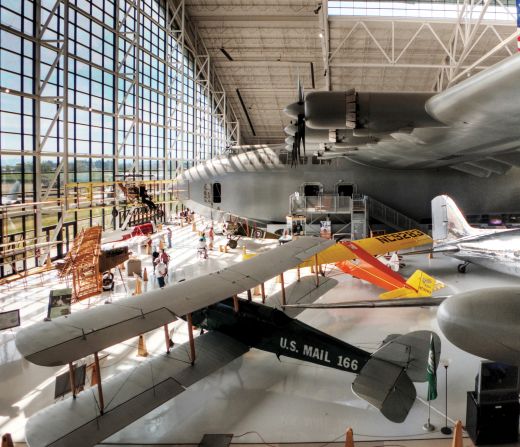
Evergreen Aviation & Space Museum —
The media nicknamed it the Spruce Goose because it's made of wood. But this seaplane with the wingspan of a football field was orginially called the HK-1 and then later the H-4 Hercules when it was developed in the 1940s. It's now living at the Evergreen Aviation & Space Museum in McMinnville, Oregon.
Courtesy Evergreen Aviation & Space Museum
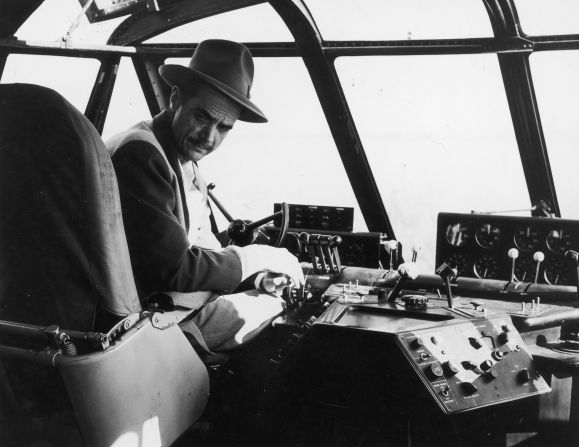
Howard Hughes in the cockpit —
This photo shows billionaire businessman and aviator Howard Hughes in the aircraft's cockpit on the actual day of its only flight -- November 2, 1947. Hughes was at the controls off Long Beach, California, when the giant plane flew for one minute a distance of a little more than one mile at an altitude of 70 feet, according to the museum.
Keystone/Getty Images
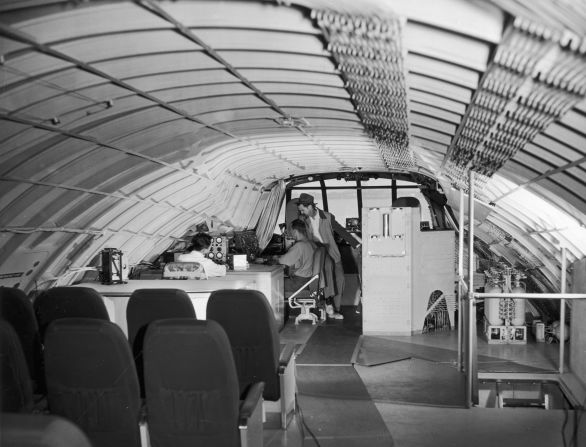
Troop transport —
The aircraft, also known as the "Flying Boat" was designed to transport hundreds of World War II-era troops across the Atlantic more safely than ships, which were vulnerable to enemy submarines, according to the museum.
Keystone/Getty Images
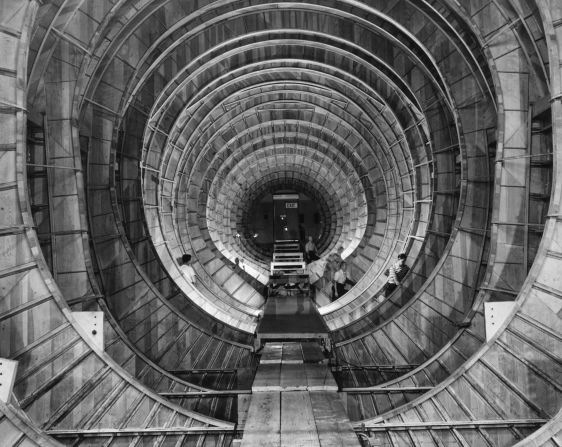
Inside the hull —
This 1945 photo shows the incomplete hull of the Spruce Goose. The plane is six times larger than any aircraft of its period, according to the museum.
Keystone Features/Getty Images
Grissom Air Museum —
Grissom Air Museum in Peru, Indiana, is an "off-the-beaten-path gem," wrote CNN commenter lastdomino. "If you're ever close ... [it's] definitely worth the trip." A crown jewel at Grissom is this F-100C Super Sabre, formerly flown by Apollo 11 moonwalker Neil Armstrong.
Courtesy Grissom Air Museum
George W. Bush's TF-102A Delta Dagger —
This rare, two-seat TF-102A Delta Dagger was flown by a young George W. Bush, according to Grissom Air Museum. This model could reach a top speed of 646 mph -- just under the speed of sound.
Courtesy Grissom Air Museum
Film star: 'Passionate Paulette' B-25J bomber —
This bomber was one of several B-25 Mitchells flown in the 1970 film "Catch-22." Named "Passionate Paulette," it's one of 139 surviving B-25s, 48 of which are still flying, according to Grissom Air Museum.
The jet, code named SAM 26000, was where Lyndon Johnson was sworn in as president on November 22, 1963, after the assassination of President Kennedy. The plane also ferried President Nixon on his historic 1972 mission to China.
AFP/Getty Images
McDonnell XF-85 Goblin —
The museum also has this bad boy: a McDonnell XF-85 Goblin, which was developed in the 1940s to be released from a bomber to defend against attacks by enemy fighter planes. The project was killed in 1949, according to the museum.


![<a href="index.php?page=&url=http%3A%2F%2Fwww.grissomairmuseum.com%2F" target="_blank" target="_blank">Grissom Air Museum</a> in Peru, Indiana, is an "off-the-beaten-path gem," wrote CNN commenter lastdomino. "If you're ever close ... [it's] definitely worth the trip." A crown jewel at Grissom is this F-100C Super Sabre, formerly flown by Apollo 11 moonwalker Neil Armstrong.](https://media.cnn.com/api/v1/images/stellar/prod/120612081656-grissom-f100-sabre-fighter-jet.jpg?q=w_3008,h_2000,x_0,y_0,c_fill/h_447)