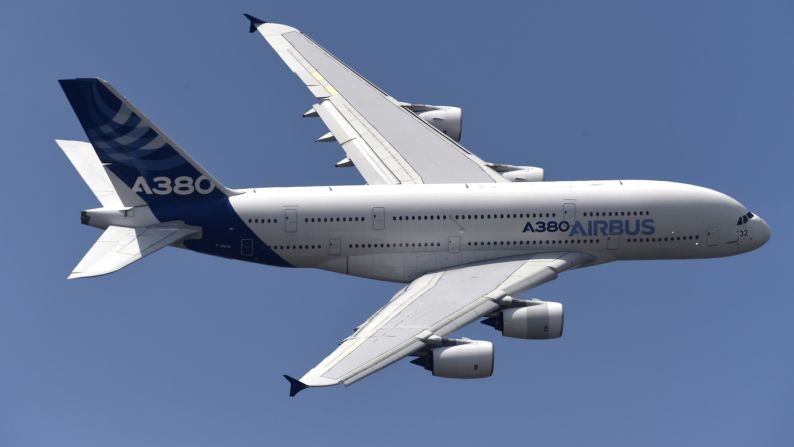
World's largest passenger airliner: The double-deck, four-engine Airbus A380 is the world's largest passenger airliner, measuring close to 73 meters in length and holding as many as 853 passengers.
MIGUEL MEDINA/AFP/AFP/Getty Images
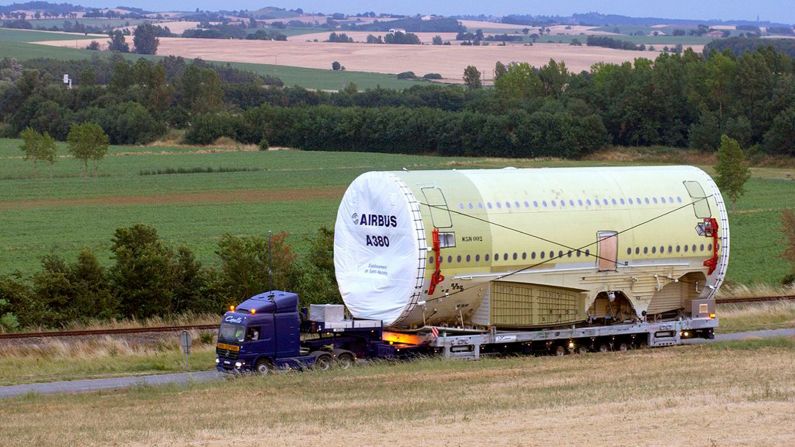
Assembly: From rivets and bolts, to seats and engines, an A380 is made up of about four million individual parts produced by 1,500 companies from 30 countries around the world. All the components -- including this fuselage -- must make the journey to the A380's Final Assembly Line (FAL) at the Aéroport Toulouse-Blagnac in France.
Courtesy Airbus
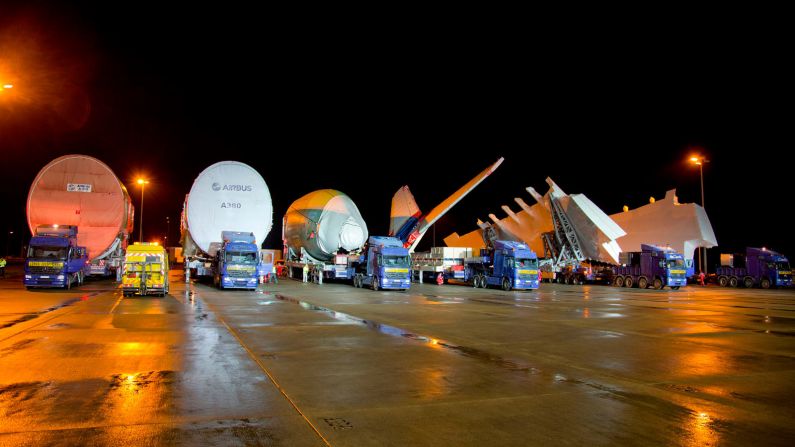
Six major components: The megajet's wings are built in Wales, fuselage sections come from Hamburg and France, the horizontal tailplane is made in Spain and the vertical tail fin is also manufactured in Hamburg.
Courtesy Airbus
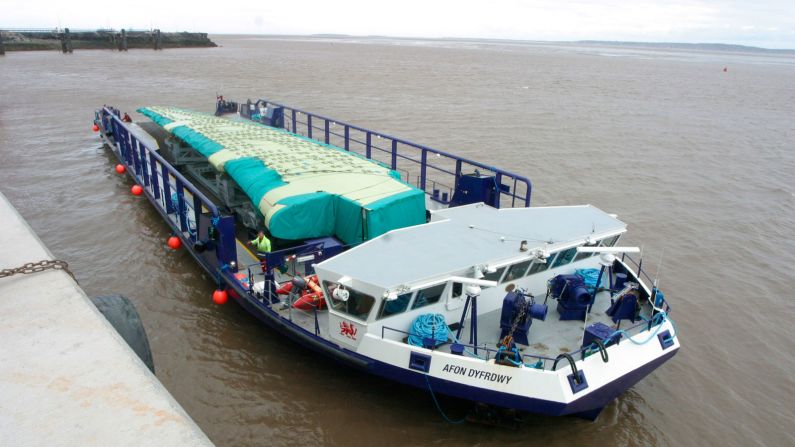
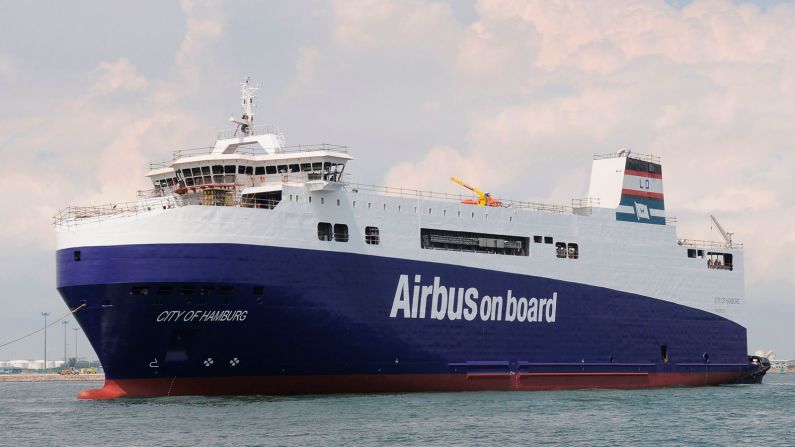
Sea cruise: In Wales, the wings are shipped down the river from Broughton to Mostyn onboard the Afon Dyfrdwy barge. They are then transported onto Ciudad de Cadiz, one of three specially designed ships used by Airbus.
Courtesy Airbus
Substantial cargo: Meanwhile, a second ship sets off from Hamburg in Germany with the rear part of the fuselage. It heads to Saint-Nazaire in France to load the other parts of the center and forward fuselage, before traveling to the French town of Pauillac.
Courtesy Airbus
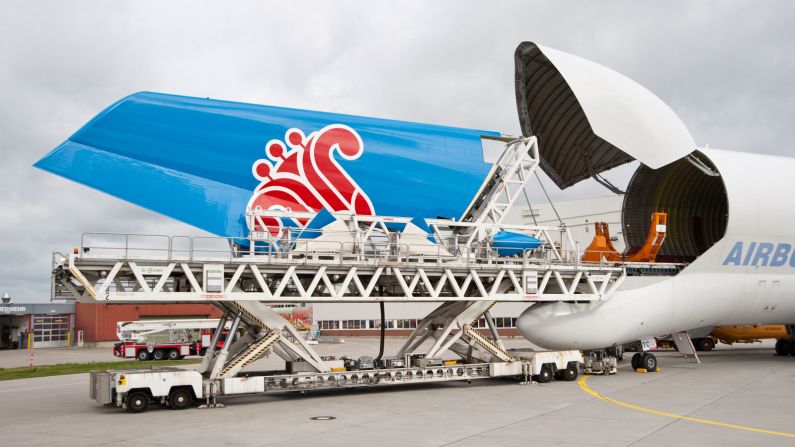
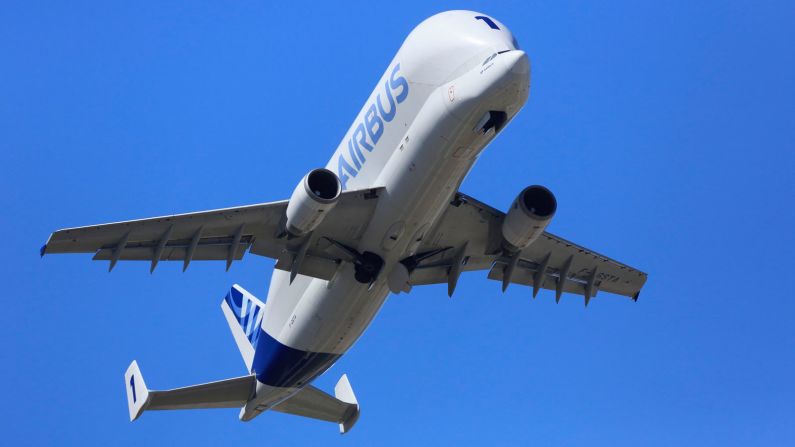
Voyage of the tail fin: While the six major components of an A380 are enjoying a sea cruise, the plane's vertical tail fin flies from Hamburg to Toulouse inside one of Airbus' A300-600ST Super Transporters.
Courtesy Airbus
A300-600ST Super Transporters: Better known as the Beluga, these colossal carriers are designed to transport oversized cargo -- but it can only accommodate the A380's vertical fin. The other sections are too large to travel by air.
Courtesy Airbus
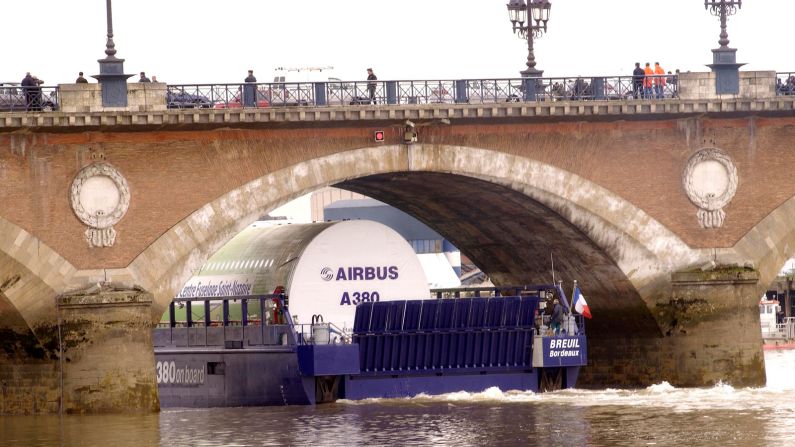
Arrival in France: When the ships arrive at Pauillac, two barges (Le Breuil and Le Brion) pick up the components and then transport them to Langon.
Courtesy Airbus
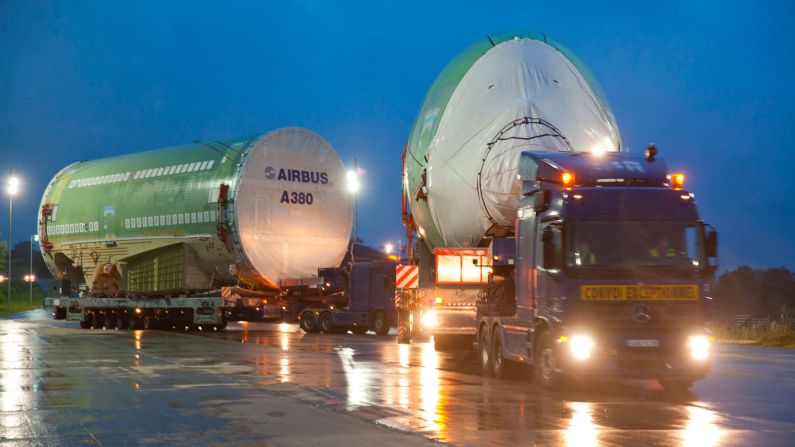
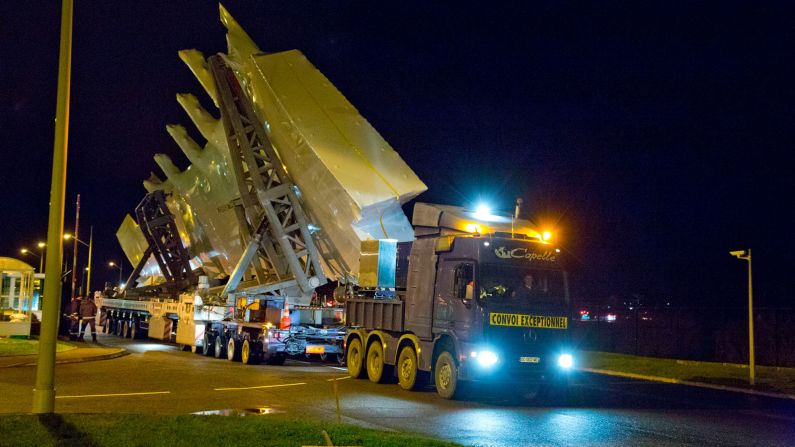
Final voyage: The next section of the journeys is on road. Each major component is transferred to a specially designed trailer once it arrives at Langon.
Courtesy Airbus
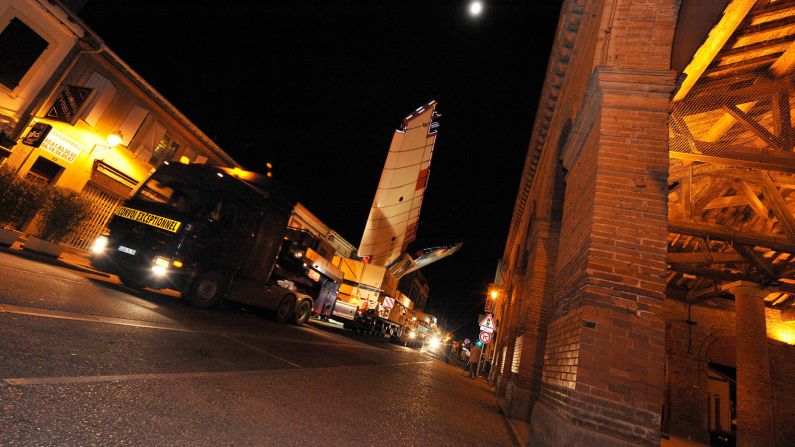
Secure transmission: The convoy receives a police escort for the 240-kilometer journey to Toulouse on a secondary-road route that was modified to handle the extreme size of the A380's sections.
Courtesy Airbus
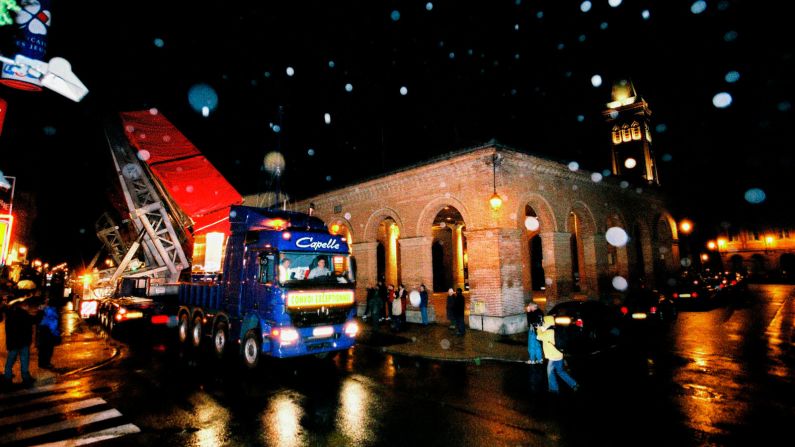
Special delivery: The journey sees the convoy pass through 21 towns and villages at a speed of 10 to 25 kilometers an hour.
Courtesy Airbus
Hero's welcome: The six sets of trailers and their tractors then travel through the town of Lévignac to the final assembly plant in Blagnac, Toulouse, where they are greeted by thrilled crowds.