The bizarre world of vintage tobacco and alcohol ads | CNN
Thank You!
Your effort and contribution in providing this feedback is much
appreciated.
Close
Ad Feedback
The bizarre world of vintage tobacco and alcohol ads
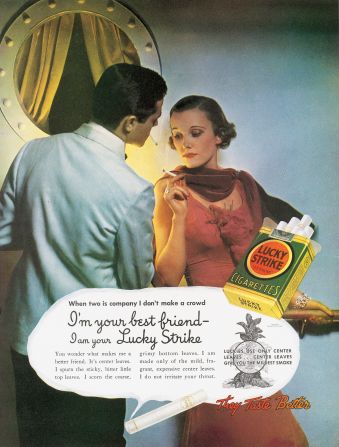
Lucky Strike, 1935 —
This vintage Lucky Strike ad from 1935 is representative of the kind of imagery and concepts that were once used to sell cigarettes. It show a couple enjoying a smoke in a luxury setting, and touts the smoothness of the tobacco, described as giving "the mildest smoke" that doesn't irritate the throat. It would be decades before health considerations even played a role.
Courtesy Taschen
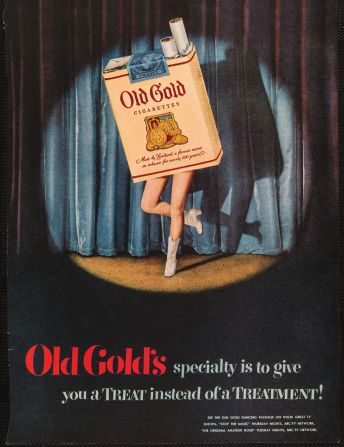
Old Gold, 1950 —
This ad from 1950 was inspired by a TV show in which a woman was wearing a cigarette pack costume.
Courtesy Taschen
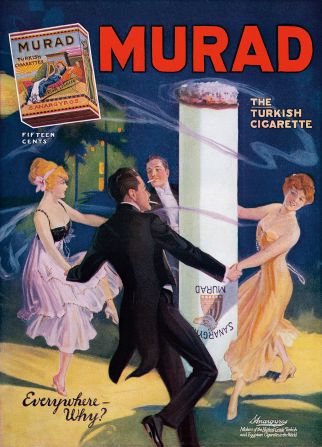
Murad, 1919 —
"This is a great example of the lush illustration used at the time and it shows a kind of surrealistic, whimsical approach with people dancing around a giant cigarette," said Jim Heimann, author of "20th Century Alcohol & Tobacco Ads."
Courtesy Taschen
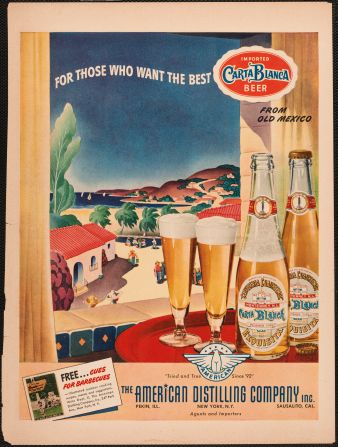
Carta Blanca, 1943 —
"This is a pretty early ad for a Mexican beer, which as a product, didn't really come into its own until the 1970s with Corona, so it was a pretty daunting task at that time."
Courtesy Taschen
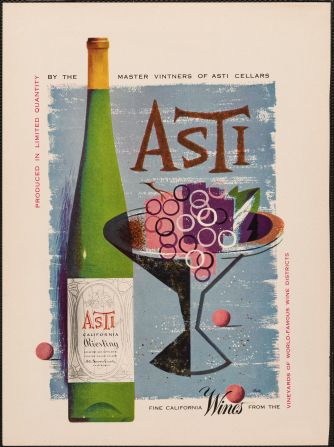
Asti, 1952 —
"This is an exception to the rule of using photography for this time period, it has a really modernist feel to it, with the abstraction of the grapes, and the typeface is really great."
Courtesy Taschen
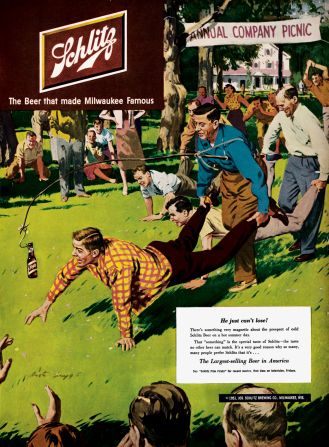
Schlitz, 1951 —
"The aim of this campaign was to show how populist Schlitz beer was and how it was ingrained in all aspects of American life, including the company party."
Courtesy Taschen
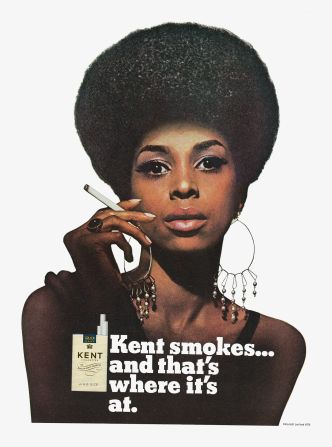
Kent, 1970 —
Alcohol and tobacco ads didn't generally portray any minorities until the civil rights era. "It's basically a white person's world until the late 1950s and then obviously the mid-1960s, when things began to change as social mores changed," Heimann said.
Courtesy Taschen
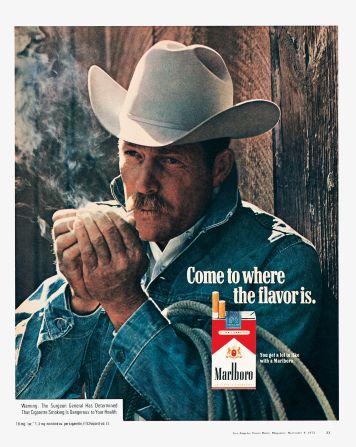
Marlboro, 1973 —
"Marlboro have been very clever in their use of iconic Western imagery to sell cigarettes. Once (the) Marlboro Man was established, they could have shown just a belt buckle and the word Marlboro to make an ad."
Courtesy Taschen
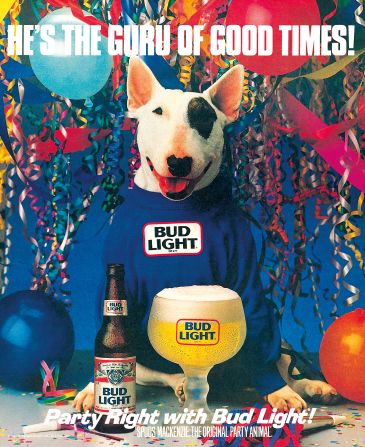
Bud Light, 1988 —
In a Super Bowl ad in 1987, Budweiser debuted Spuds MacKenzie, a bull terrier mascot.
"Spuds McKenzie was a hugely successful campaign and it even spawned merchandise that you could get through a contest -- an idea probably taken from Joe Camel, of buying into a product indirectly through some kind of cartoon character."
Courtesy Taschen
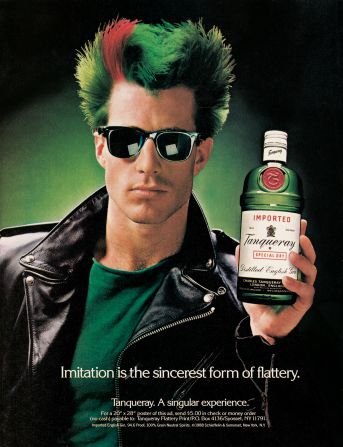
Tanqueray, 1988 —
"People used to really buy into this kind of imagery. I think that now we are getting less and less of it, just because of the nature of how we view alcohol and tobacco these days."