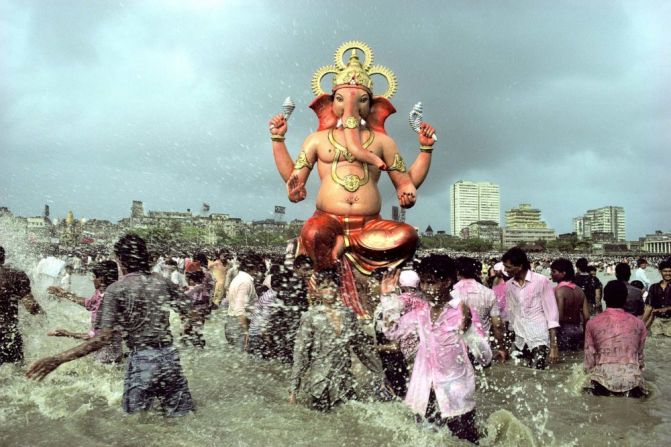
Ganapati Immersion, Chowpatty, Bombay, Maharashtra (1989) —
"Modernism on the Ganges: Raghubir Singh Photographs," a retrospective at New York's Met Breuer, presents the photographer's vibrant vision of his Indian homeland.

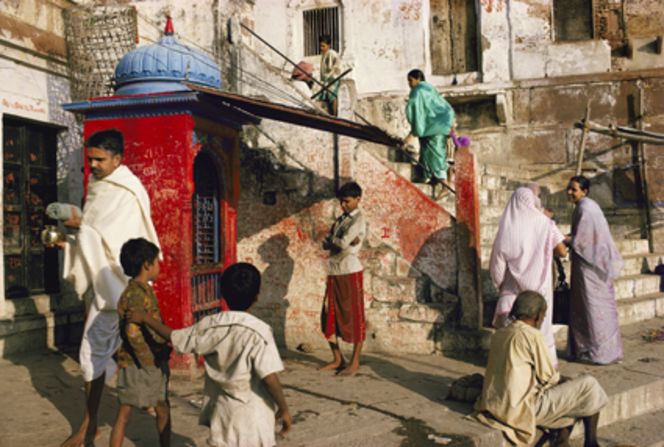
Morning on Panchganga Ghat, Benares, Uttar Pradesh (1985) —
Singh's depictions of everyday life in India drew heavily on the street photography of Robert Frank, William Gedney and Henri Cartier-Bresson.

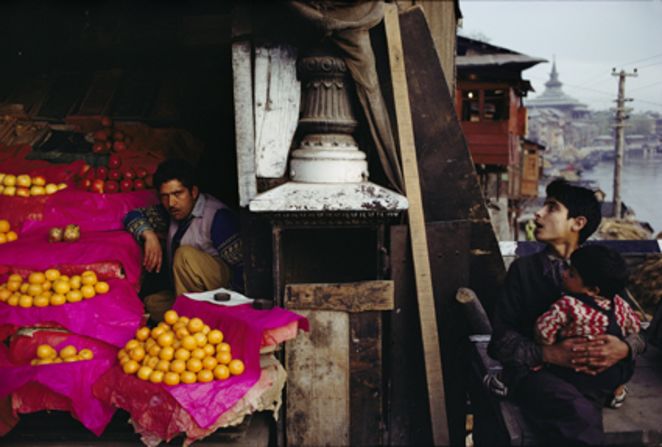
Fruit Seller and a Boy with a Child at Zaina Kadal Bridge, Jhelum River, Srinagar, Kashmir (1979) —
For Singh, who died in 1999, the use of color was an essential element of portraying life in his home country.
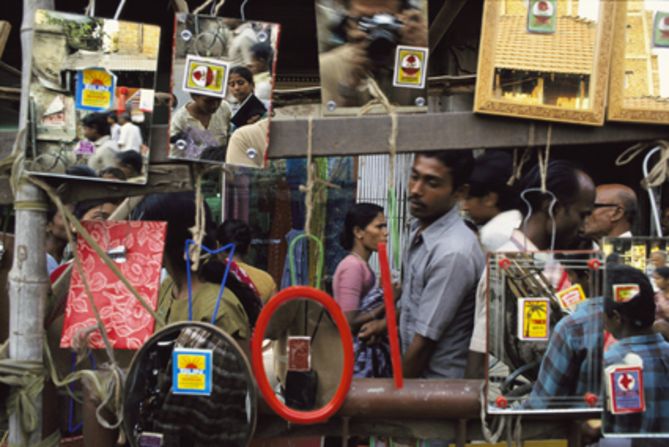
Pavement Mirror Shop, Howrah, West Bengal (1991) —
Singh pioneered the use of color film in the 1970s.

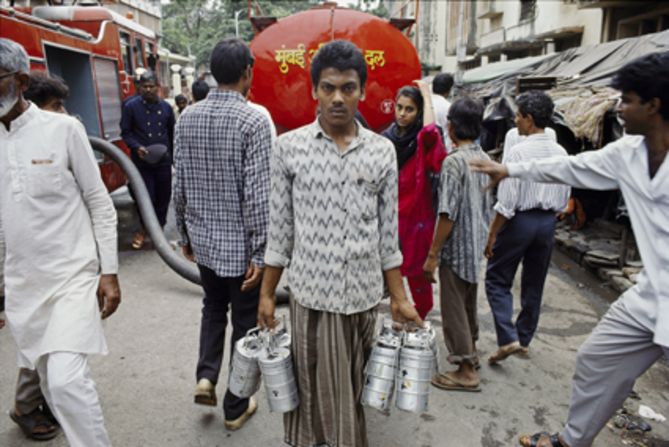
Dhabawallah, or Professional Lunch Distributor, Bombay, Maharashtra (1992) —
Singh credited the miniature paintings of the Mughal period as influences.

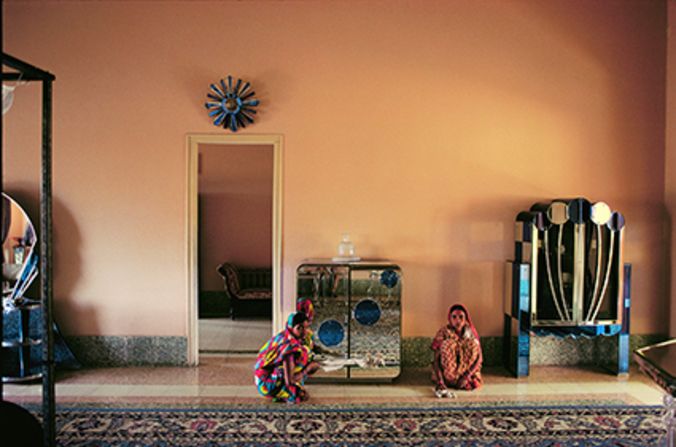
Employees, Morvi Palace, Gujarat (1982) —
"To see India monochromatically, is to miss it altogether," he he told Time magazine in 1999.

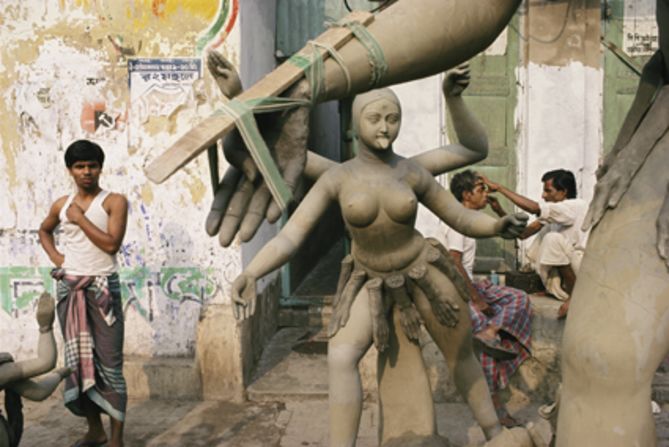
Barber and Goddess Kali, Calcutta, West Bengal (1987) —
"He loved that sense of a moment," said Partha Mitter, a professor of art history at the University of Sussex and a close friend of Singh's. "But his very deliberate use of color meant that he was not like Cartier-Bresson.
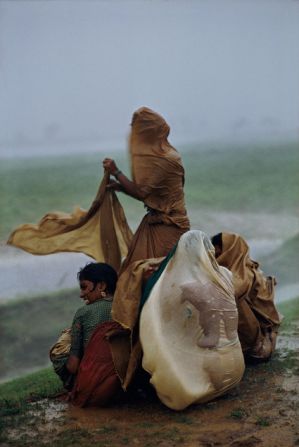
Monsoon Rains, Monghyr, Bihar (1967) —
Singh's sense of composition owes as much to traditional Indian art as modernism.

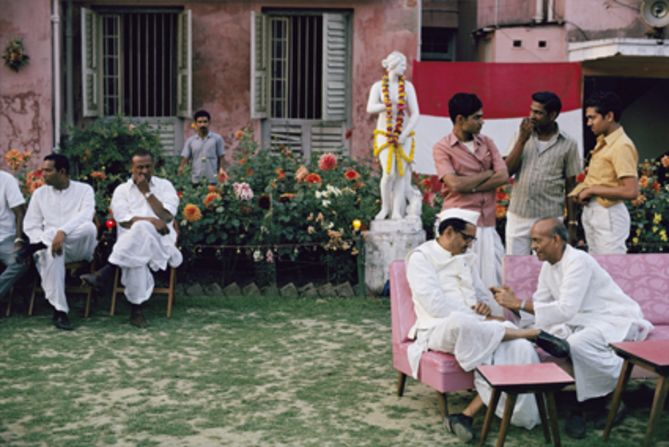
A Marwari Wedding Reception in South Calcutta's Singhi Park, Calcutta, West Bengal (c.1972) —
Although Singh spent time living in Hong Kong, London, Paris and New York, his photography focused exclusively on India.

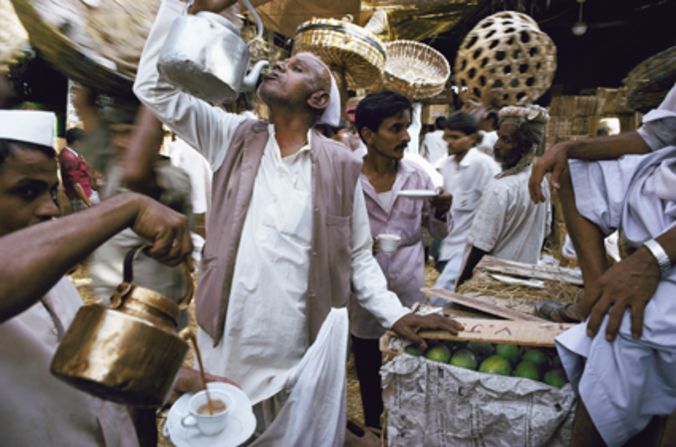
Crawford Market, Bombay, Maharashtra (1993) —
He published more than a dozen collections of photographs from across the country.

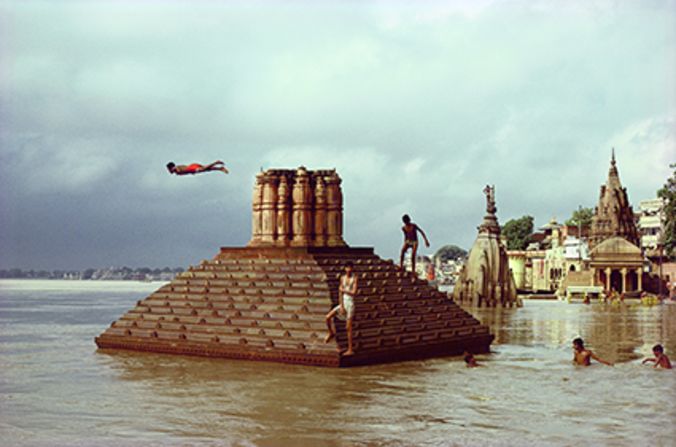
Man Diving, Ganges Floods, Benares, Uttar Pradesh (1985) —
"Modernism on the Ganges: Raghubir Singh Photographs" is on at The Met Breuer until Jan. 2, 2018.