Your effort and contribution in providing this feedback is much
appreciated.
Close
Ad Feedback
What propaganda tells us about North Korea
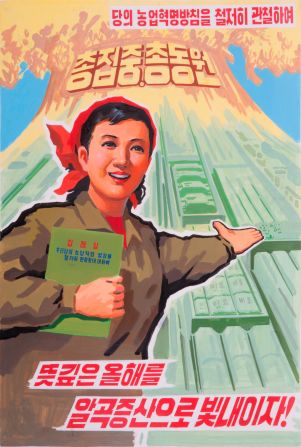
"Let us achieve the party's agriculture revolution policy thoroughly and brighten the year with increased grain production." —
Stanford fellow Katharina Zellweger -- who lived in Pyongyang while working for a Swiss government agency -- has collected over 100 posters from North Korea. Most of them promote new agricultural practices and policy.
University Museum and Art Gallery, The University of Hong Kong
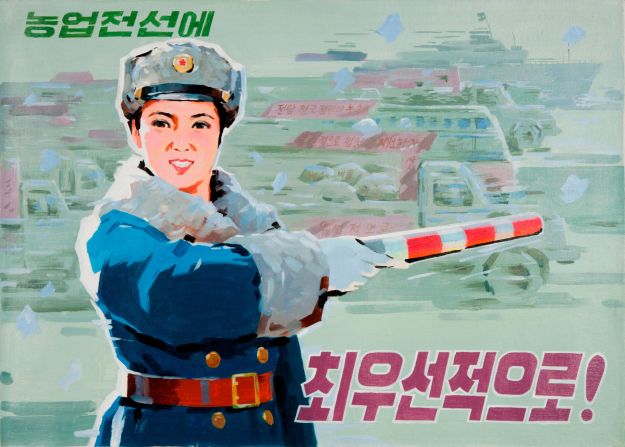
"Agriculture as the first priority!" —
The positive posters offer an alternative message to the violent scenes typically associated with North Korean propaganda.
University Museum and Art Gallery, The University of Hong Kong
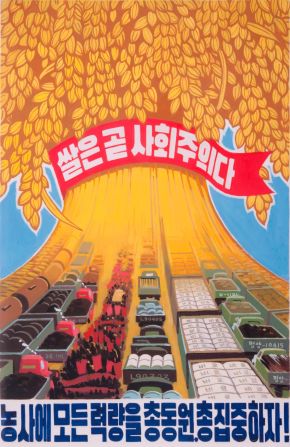
"Rice is socialism. Let us concentrate all efforts on agriculture!" —
The posters often reflect the priorities of the North Korean government, encouraging citizens to rally around a certain cause.
University Museum and Art Gallery, The University of Hong Kong
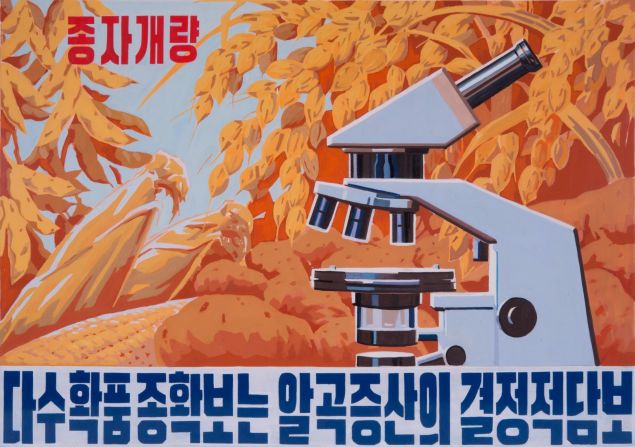
"Securing a high-yield variety is a definitive guarantee of increased grain production" —
Featuring a microscope and a selection of foodstuffs, this poster shows "changes in crops and practices becoming more efficient," according the director of the University Museum and Art Gallery in Hong Kong, Florian Knothe.
University Museum and Art Gallery, The University of Hong Kong
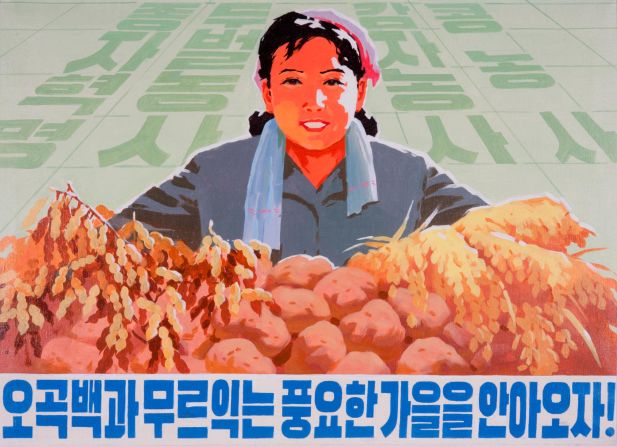
"Let us get a fertile autumn where many fruits and grains become ripe" —
Almost all state posters in North Korea feature large worded slogans. Literacy may not be as high as the 100% figure reported by the country's officials, but Zellweger believes that her posters were designed on the assumption that everyone can read.
University Museum and Art Gallery, The University of Hong Kong
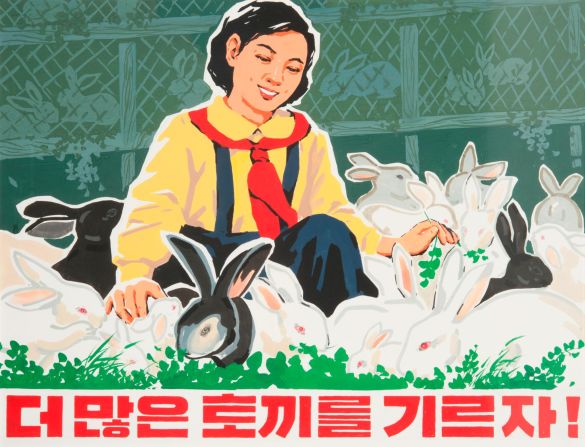
"Let us breed more rabbits!" —
"What happens is that, usually, the government announces the subject -- let's say breeding rabbits -- and then different artists paint posters," Zellweger said. "Like a competition, one or two are chosen and then these are multiplied by the thousand in print."
University Museum and Art Gallery, The University of Hong Kong
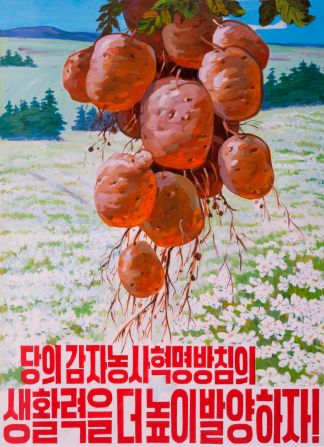
"Let us elevate the vitality of the Party's innovation policy on potato farming!" —
The posters often celebrate and promote policies devised by the ruling Workers' Party of Korea.
University Museum and Art Gallery, The University of Hong Kong
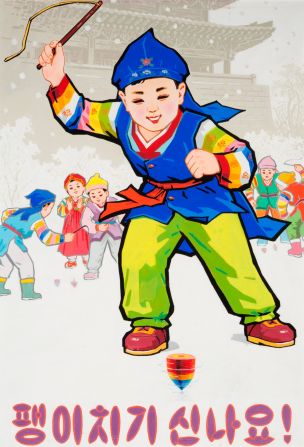
"Spinning tops is fun!" —
As well as addressing political and economic issues, the posters carry social or familial messages. This image encourages children to play with spinning tops.
University Museum and Art Gallery, The University of Hong Kong
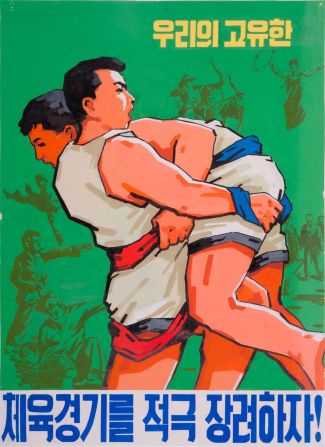
"Let us actively encourage our own athletic games" —
"(The posters) promote family values, welfare, social activities -- things very much away from what people would perceive as political propaganda," Knothe said
University Museum and Art Gallery, The University of Hong Kong
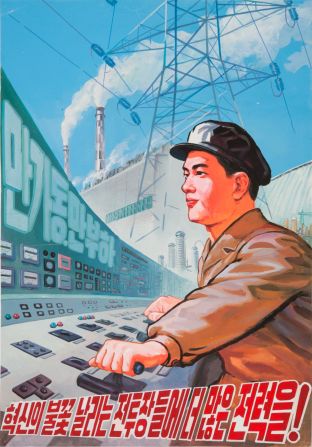
"Let us provide more electricity to the battlefields where we are breaking new ground!" —
"(The posters) suggest social change, economic growth and scientific advances like the electrification of the country," said Knothe.
University Museum and Art Gallery, The University of Hong Kong
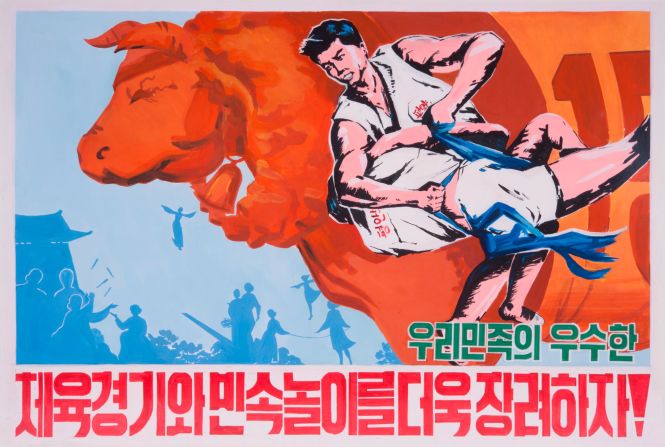
"Let us further encourage our nation's excellent sports activities and folk games!" —
Athletic achievements and international sporting events are topics commonly addressed by the propaganda posters.
University Museum and Art Gallery, The University of Hong Kong
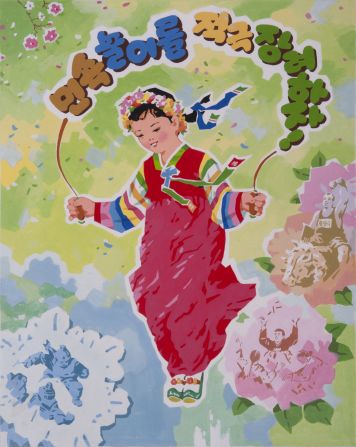
"Let us actively encourage folk games" —
"The posters often use a very clever combination of words and pictures so their messages are integrated into the image," said Knothe.
University Museum and Art Gallery, The University of Hong Kong
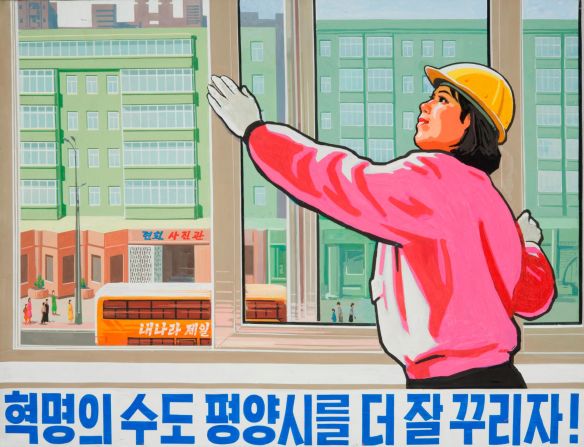
"Let us better manage Pyongyang, the capital of innovation" —
Although soldiers are normally always depicted as males, women are often used to communicate messages relating to agriculture and industry.
University Museum and Art Gallery, The University of Hong Kong
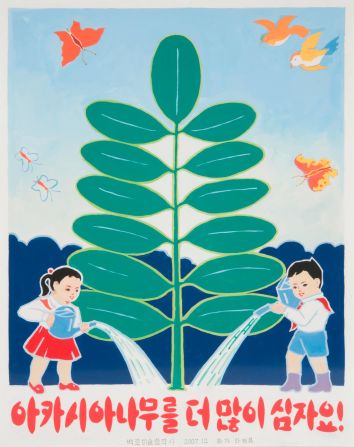
"Let us plant more acacias" —
Most of the posters -- including all of those in Zellweger's collection -- were painted by hand.
University Museum and Art Gallery, The University of Hong Kong
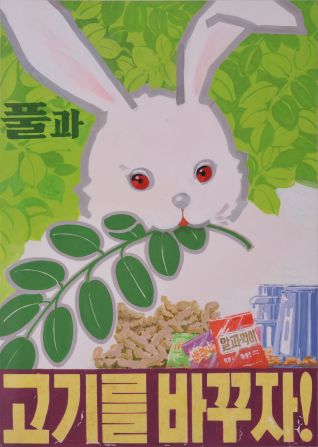
"Let us switch grass with meat!" —
Many of the posters are produced at the Mansudae Art Studio, a state-run facility believed to employ around 1,000 of the country's most gifted artists.
University Museum and Art Gallery, The University of Hong Kong
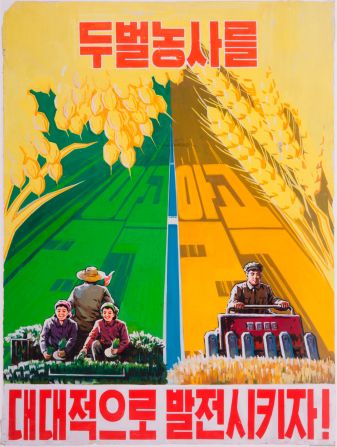
"Let us extensively develop double cropping!" —
Propaganda posters are used to promote better practices in agriculture and industry.
University Museum and Art Gallery, The University of Hong Kong
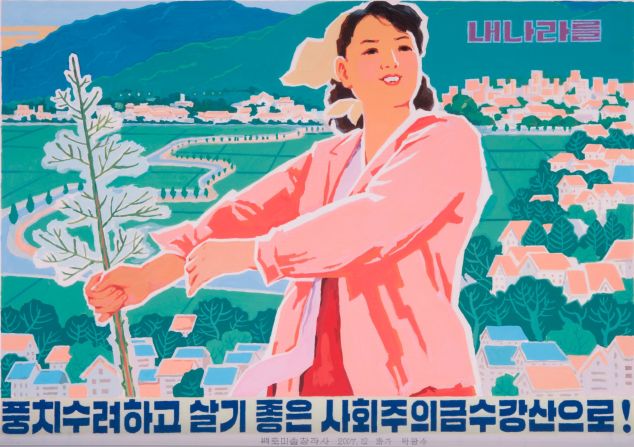
"My country as the beautiful and salubrious socialist Mount Kumgang!" —
This poster relates to Mount Kumgang, a scenic mountain in the east of the country.
University Museum and Art Gallery, The University of Hong Kong
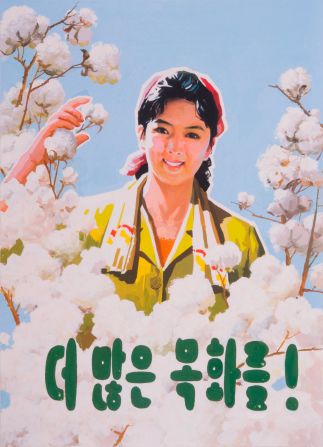
"More cotton!" —
The message is often simple and direct, such as this poster calling for "more cotton!"
University Museum and Art Gallery, The University of Hong Kong
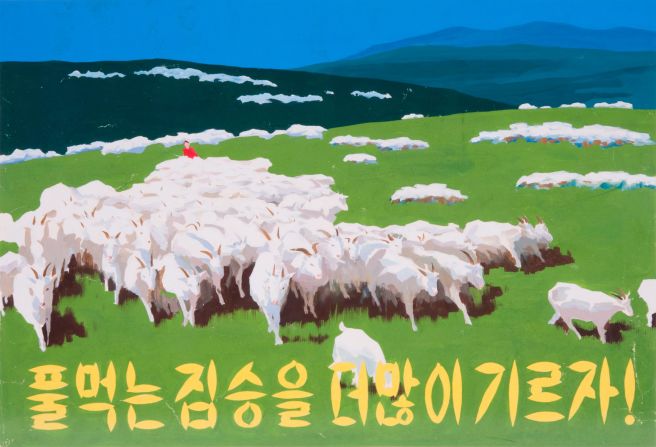
"Let us raise more grass-eating animals!" —
One of 25 of the posters now on display at the University Museum and Art Gallery in Hong Kong.
University Museum and Art Gallery, The University of Hong Kong
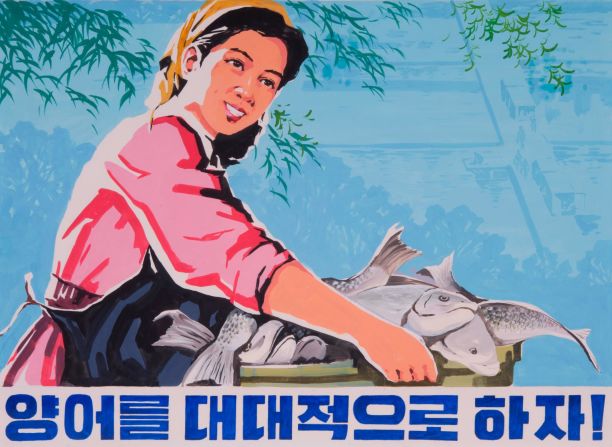
"Let us do extensive fish-farming!" —
Despite the advances they depict, the posters' style has remained relatively consistent since the 1950s.
University Museum and Art Gallery, The University of Hong Kong