Your effort and contribution in providing this feedback is much
appreciated.
Close
Ad Feedback
North Korea’s fascinating stamp archive
To mark the anniversary of the Korean War, North Korea has release two anti-American stamps.
Korean Central News Agency/Korea News Service via AP
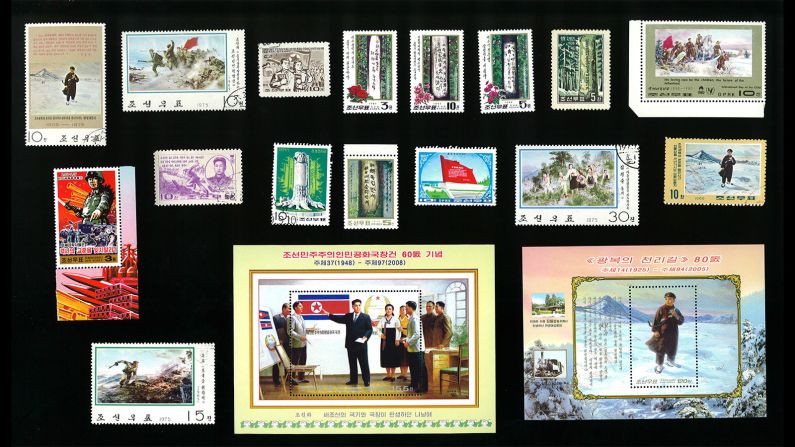
With its eyes firmly on the collectors' market, Pyongyang has turned the stamp industry into a steady source of income, according to the head of Asia studies at the University of British Columbia, Ross King.
via ross king
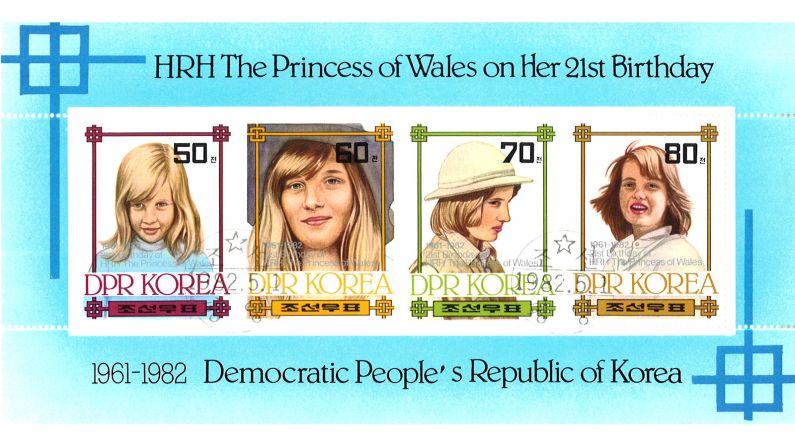
The world's stamp market is changing, and North Korean designs are evolving to reflect shifting demand. In the 1980s, images of Princess Diana and German tennis star Steffi Graf were to used attract Western collectors. Today, China is the main target, according to King.
via ross king
China is believed to be home to about 20 million stamp collectors, about one-third of the world's total.
via Ross King
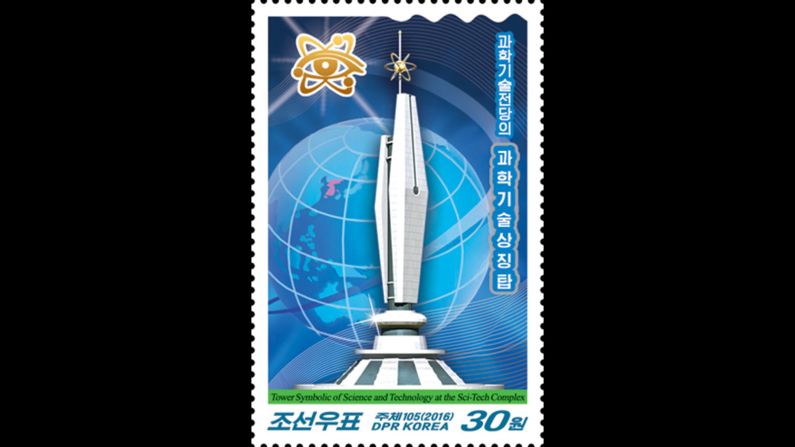
Science and innovation feature prominently in North Korea's propaganda artwork. This 2016 stamp celebrates the opening of the Sci-Tech Complex in Pyongyang. The building was constructed to disseminate the "latest science and technology in which the party's plan has been materialized," according to the country's news agency, KCNA.
Korea Stamp Corporation
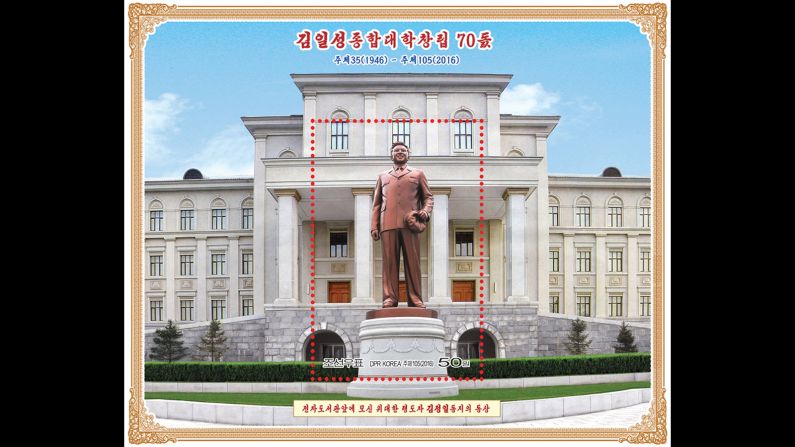
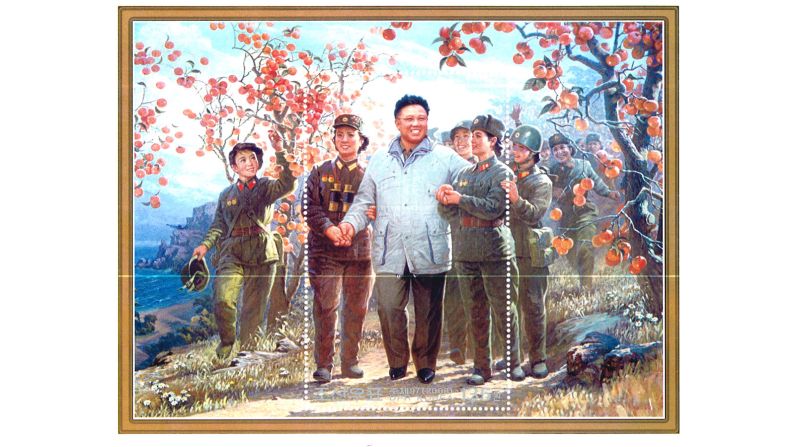
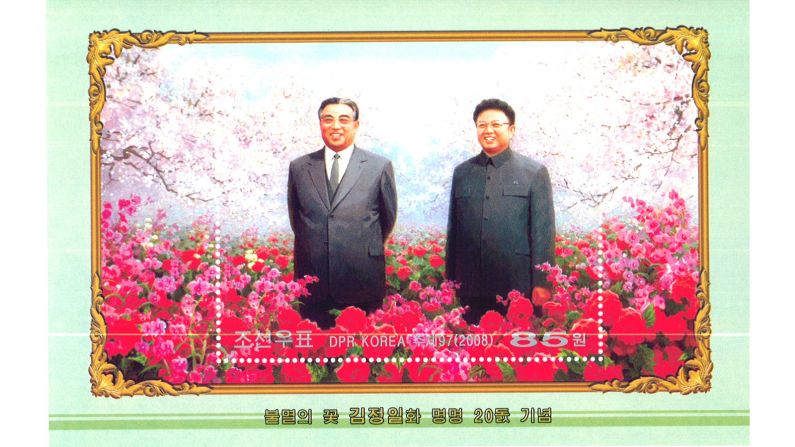
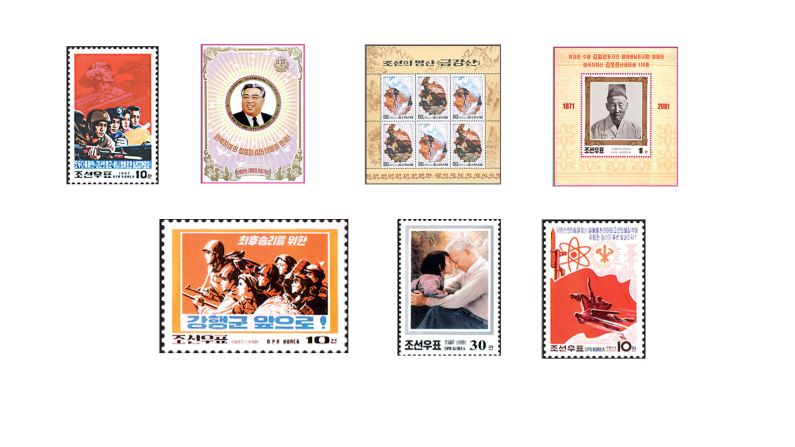
Current and former leaders make regular appearances in the country's postage stamps -- as they do in most aspects of North Korean life. This stamp, featuring a statue of Kim Jong-il, has a postage value of 50 won (about 4 cents). But these issues are aimed at collectors and are unlikely to ever be used.
Korea Stamp Corporation
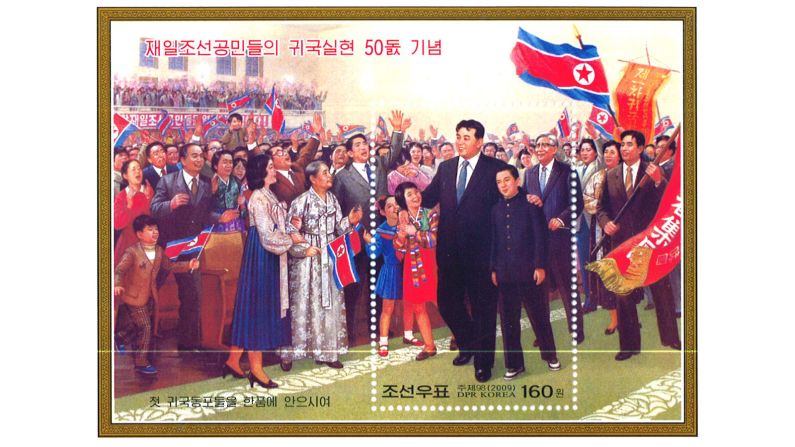
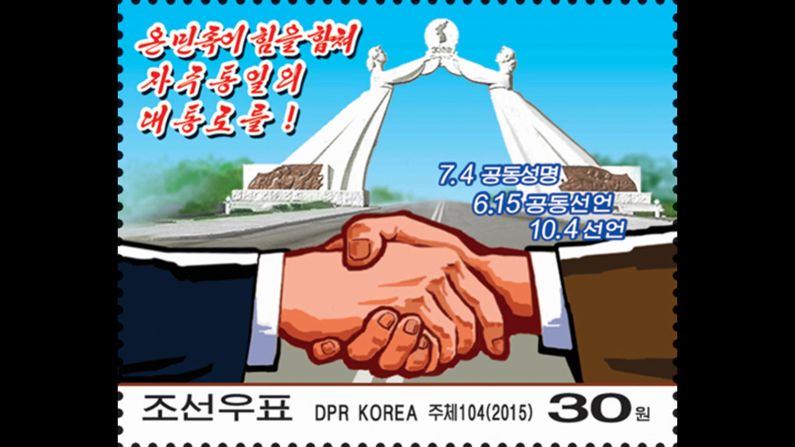
Calls for the reunification of Korea are often made through images of peace and friendship. This one reads "Open up a broad avenue to independent reunification by the concerted efforts of the whole nation!"
Korea Stamp Corporation
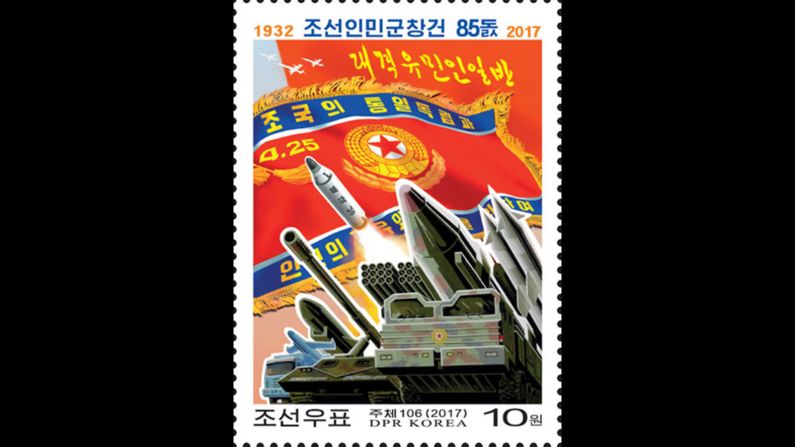
This 2017 stamp celebrates the supposed 85th anniversary of the Korean People's Army. But this birthday is based on Pyongyang's claim that its army is a continuation of Kim Il-sung's anti-Japanese guerrilla army, which was founded in 1932. In its current form, the Korean People's Army -- like North Korea itself -- did not exist until after the Second World War II.
Korea Stamp Corporation
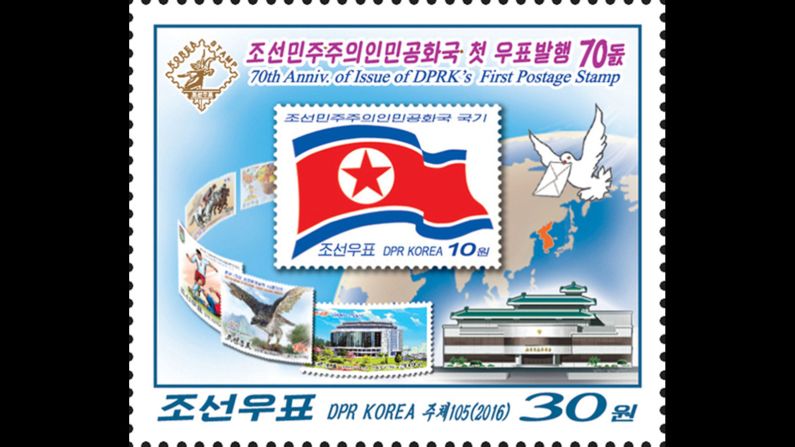
A design commemorating the 70th anniversary of North Korea's first stamp. The country's early stamps were crudely drawn in monochrome, with the familiar multicolored designs not being introduced until the late 1950s.
Korea Stamp Corporation
First held in 2016, the Wonsan International Friendship Air Festival offers the Korean People's Army Air Force a chance to show off some of its hardware. According to the festival's official website, visitors will also enjoy "flying displays, picturesque pleasure flights, exciting skydiving opportunities, scenic mass balloon ascents and colorful model aircraft flying, arranged for your delectation and delight."
KCNA
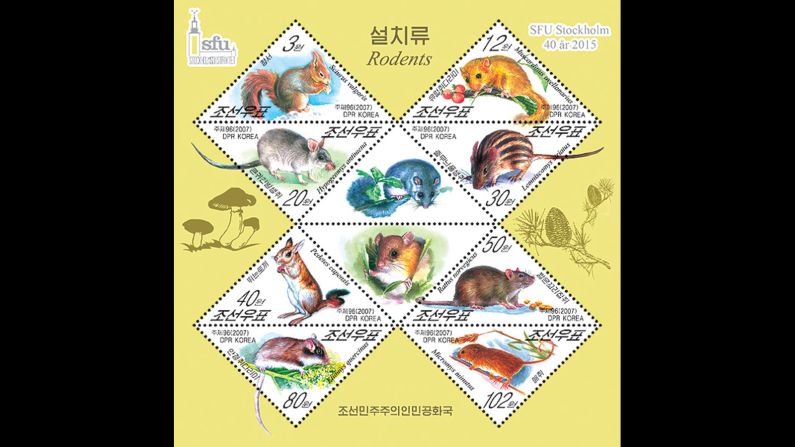
Stamps depicting animals -- like this selection of rodents -- are largely aimed at overseas collectors.
KCNA
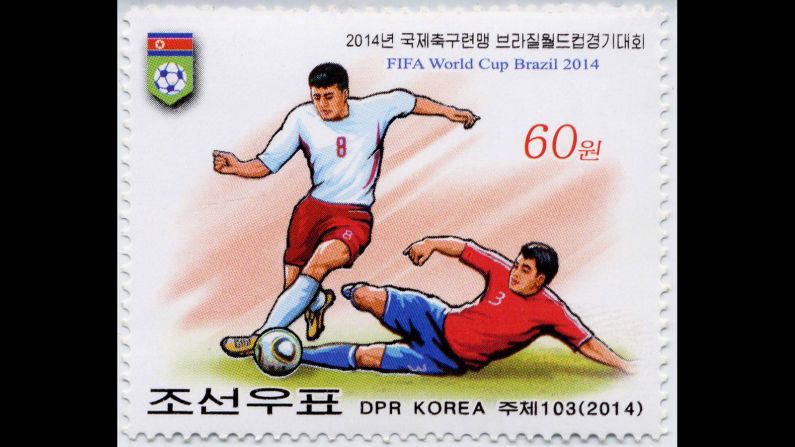
Despite failing to qualify for the 2014 World Cup, North Korea released this commemorative stamp.
KCNA
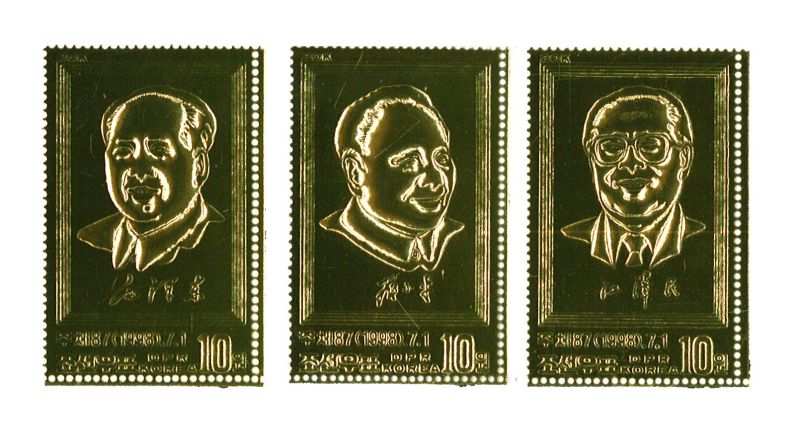
Hoping to attract the world's collectors, the reclusive country often issues stamps for global events, including the Hong Kong handover...
via ross king
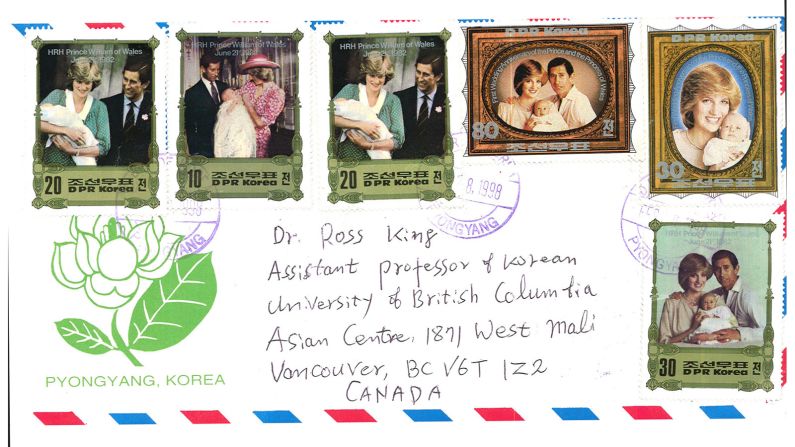
...and Prince William's birth.
via Ross King
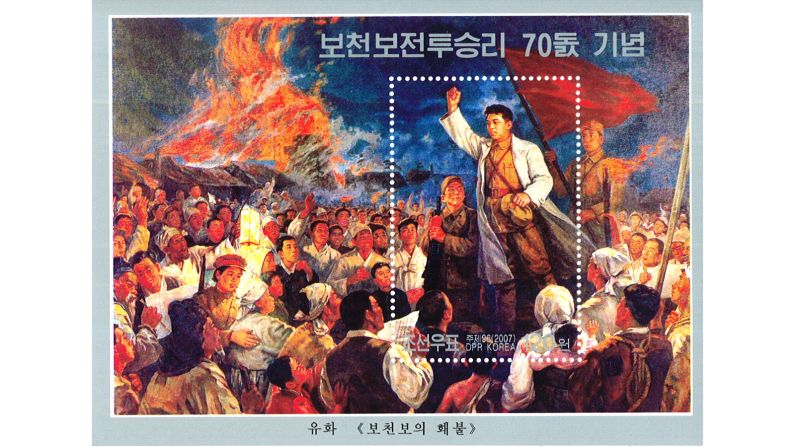
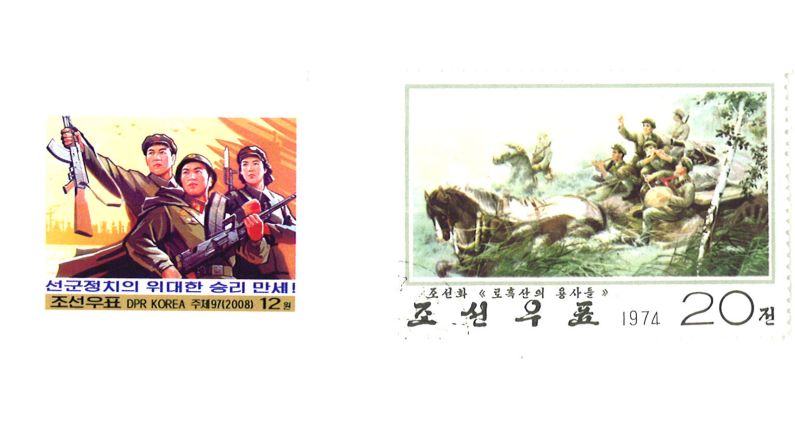
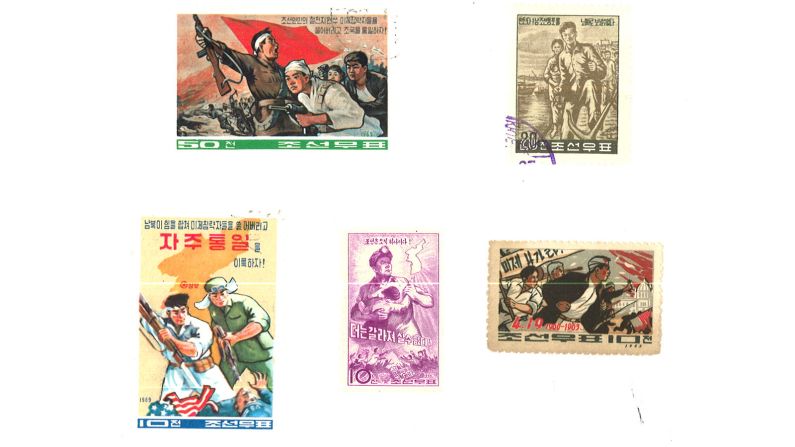
Violent and revolutionary images form just a fraction of the designs appearing on North Korea's postage stamps.
via ross king
But national events, infrastructure, flowers and sports all make regular appearances.
via Ross King
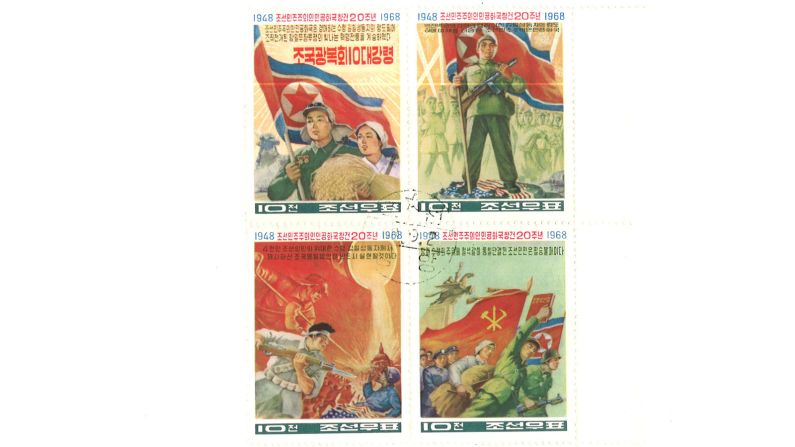
"Propaganda images also often present American presence in South Korea as a form of occupation, and demand the departure of US troops to achieve reunification," says Koen de Ceuster, a Leiden University lecturer who recently created an online database of North Korean posters.
via ross king
A study by Stockholm University's Gabriel Jonsson found that between 1948 and 2002, North Korea issued around twice as many different stamp designs as South Korea did.
via ross king
Producers -- in North Korea and elsewhere -- are increasingly turning to China, which accounts for about one-third of the world's 60 million stamp collectors.
via ross king
Despite their low market value, stamps are cheap to produce and thus very profitable. "It's more or less free money (for North Korea)," said Dutch collector and stamp dealer, Willem van der Bijl.
via ross king
The head of Asia studies at the University of British Columbia, Ross King, believes that the country is -- in terms of the number of stamps it prints each year -- "right up there with the United States as one of the most prolific stamp-issuing authorities."