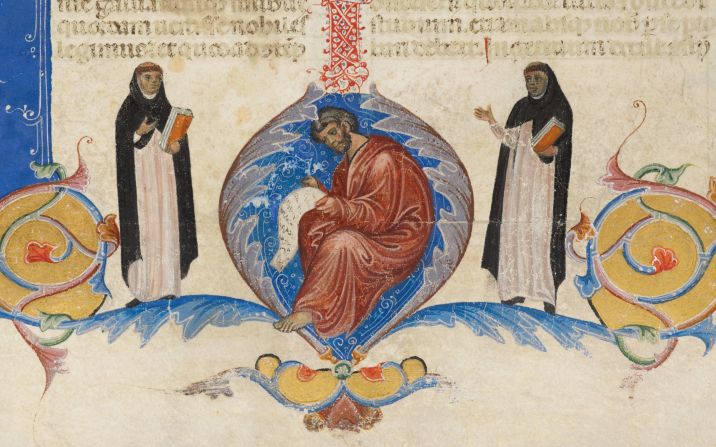
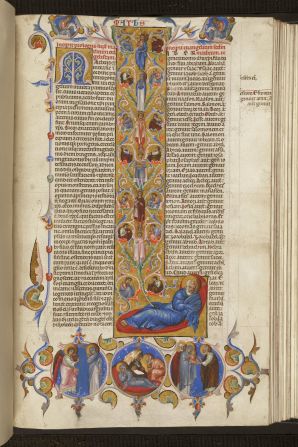
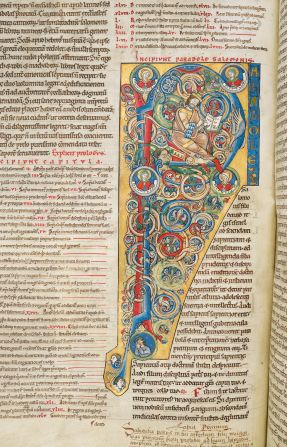
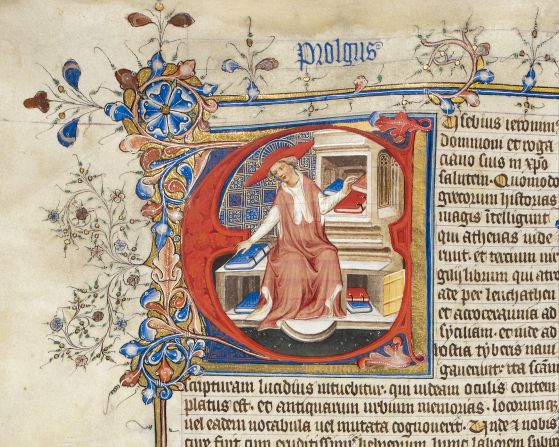
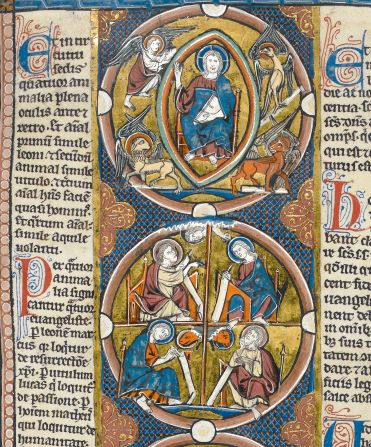
A Bolognese Bible (c. 1280-1300), Bologna, Italy —
"The Art of the Bible" tracks the development of Christian art and calligraphy through its use in biblical manuscripts dating back thousands of years.
8548/The British Library
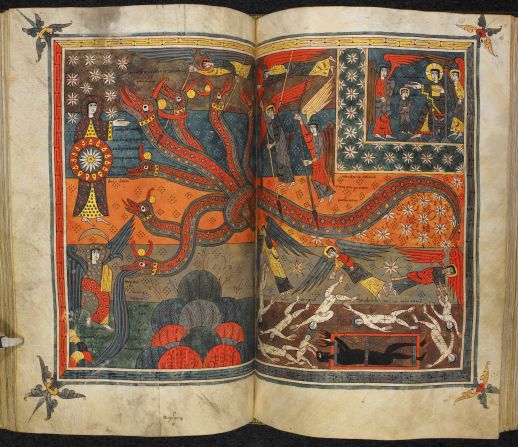
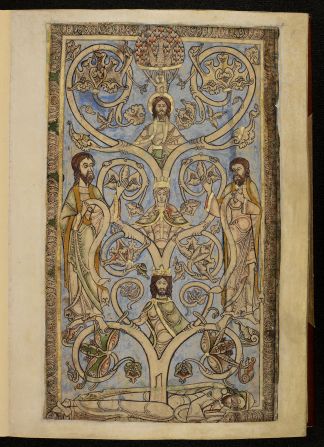
The Silos Apocalypse (1091 to 1109), Spain —
"One of the things we were trying to achieve was to report faithfully and accurately on the development of the text, the way in which the art embellished that text, and what it was used for," says co-author Kathleen Doyle, lead curator of illuminated manuscripts at the British Library.
2289/The Britsh Library
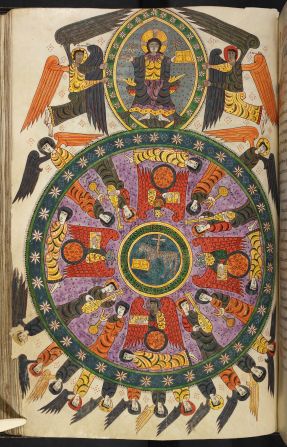
The Silos Apocalypse (1091 to 1109), Latin —
"It's not a religious book, it's an art book," adds the book's other author, Scot McKendrick, head of Western Heritage Collections at the British Library.
2289/The Britsh Library/The Britsh Library
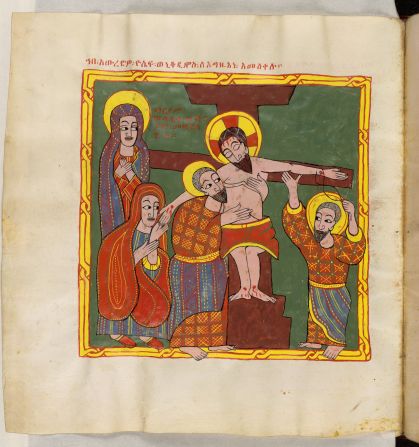
An Ethiopian Octateuch and Gospels (c. late 17th century), Ethiopia —
By the time this manuscript was being made, Christian bookmaking had played an important part in the life of Ethiopians for over 1300 years, according to McKendrick and Doyle.
The British Library
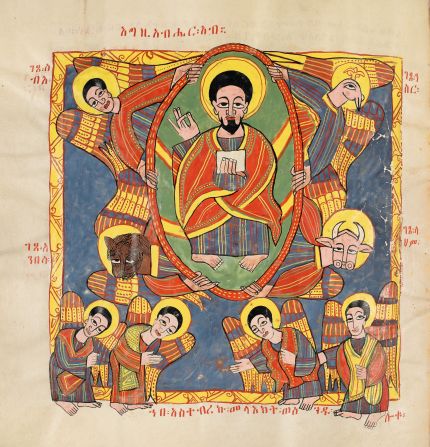
An Ethiopian Octateuch and Gospels (c. late 17th century), Ethiopia —
Since the 13th century to the present day, Ethiopians have sustained a remarkable tradition of Christian book illumination.
8548/The British Library
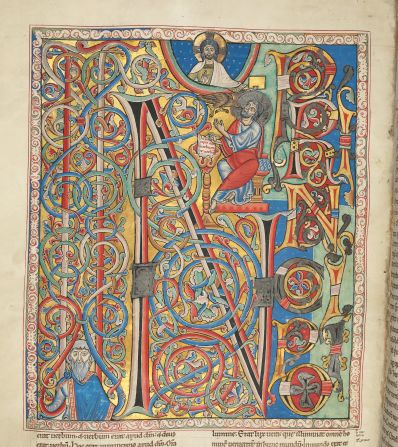
The Arnstein Bible (c. 1172), Arnstein, Germany —
In addition to their size and legibility, Romanesque giant Bibles like this one are often distinguished by the beauty of their decoration, according to the authors.
14075/The British Library /The British Library
The Arnstein Bible (c. 1172), Arnstein, Germany —
A "virtuoso display" of learning is found in Giant Bibles made in the Mosan and Rhenish regions of Germany in particular, according to the authors, although two English examples also survive.
14075/The British Library
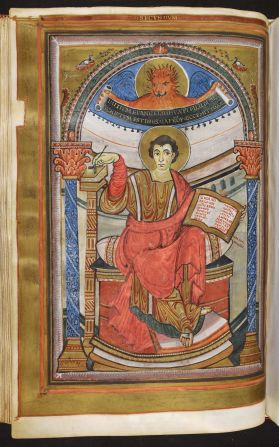
The Harley Golden Gospels (c. 800), Aachen, Carolingian Empire —
Charlemagne was crowned Holy Roman Emperor in Rome on Christmas Day in the year 800. With his revival of Roman artistic styles, he sought to recreate the splendor and glory of ancient Rome. A small group of luxury gospel books survive that are clear evidence of the success of that ambition, according to the authors.
8548/The British Library
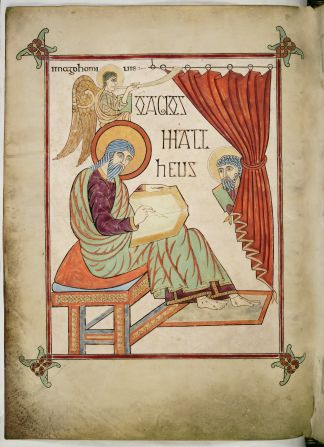
The Lindisfarne Gospels (c. 700), Lindisfarne, UK —
The Lindisfarne Gospels is critical to our understanding of Anglo-Saxon book production in one of the key centers of Christianity in Western Europe in the early Middle Ages, according to the authors. After the Book of Kells, this lavish manuscript is perhaps the best-known copy of the four Gospels to survive from any period.
The British Library
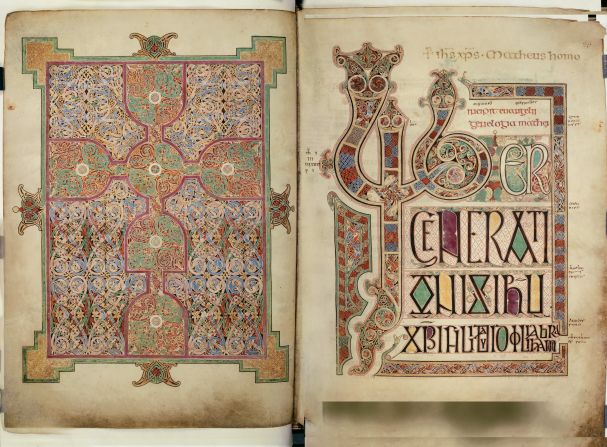
The Lindisfarne Gospels (c. 700), Lindisfarne, UK —
The book's importance lies in the evidence of its production, the beauty of its illustrations, and the gloss of its text, which is the earliest rendering of the Gospels in the English language, the authors say.
The British Library
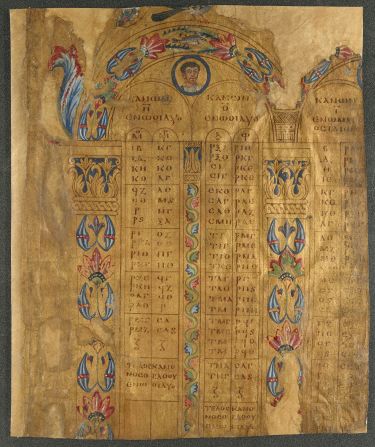
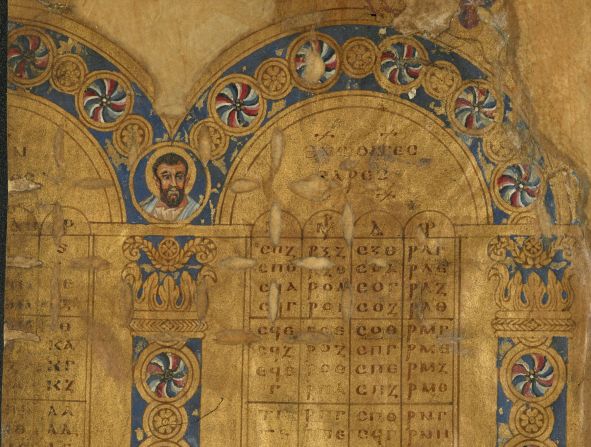
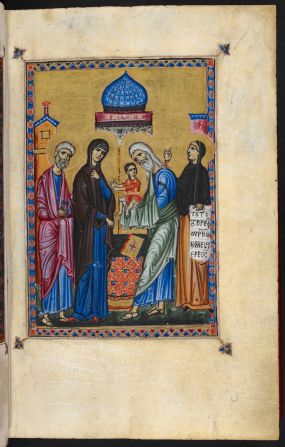
The Golden Canon Tables (c. 6th or 7th century), Constantinople —
For over 1,000 years, Constantinople (now Istanbul) was a byword for awe-inspiring splendor. The city was the Christian capital of the world at the time.
14075/The British Library
The Golden Canon Tables (c. 6th or 7th century) from Constantinople —
The manuscripts are spectacular examples of the painting undertaken there to embellish Christian texts, according to the authors. Now mere fragments, they hint at what fine early manuscripts of the Bible we might have lost.
14075/The British Library
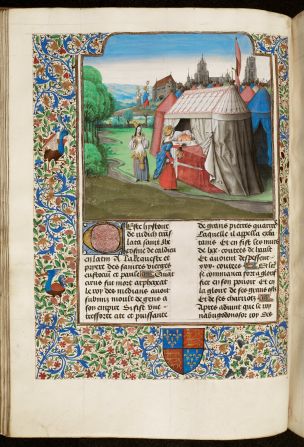
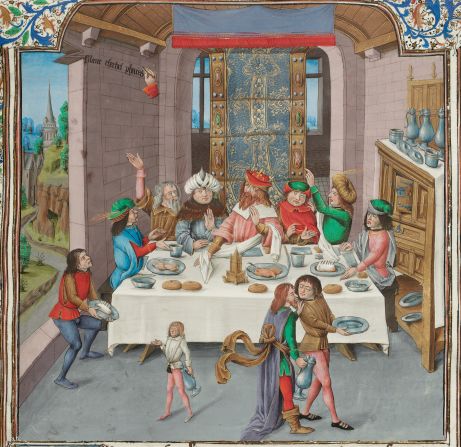
The Bible historiale of Edward IV (1470-c. 1479) from Bruges, Belgium —
Together with two companion volumes, this manuscript has been described as forming the most beautiful Bible in French ever made, according to the authors.
11861/The British Library
The Bible historiale of Edward IV (1470-c. 1479) from Bruges, Belgium —
Its 77 miniatures, which illustrate a wide range of Old and New Testament subjects, make it among the most complex illustrated Bibles, according to the authors.
11861/The British Library/The British Library
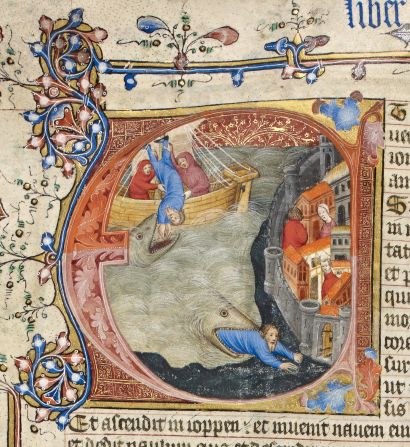
The Great Bible of the Kings of England (c. 1410-1413), London, England —
The pages of this Bible are two feet tall, and are a monument to both the exceptional skills of its producers and the extravagant ambition of its sponsors, according to the authors.
2289/The Britsh Library
The Great Bible of the Kings of England (c. 1410-1413), London, England —
Few surviving manuscript Bibles are as large as this, McKendrick and Doyle say.
2289/The Britsh Library
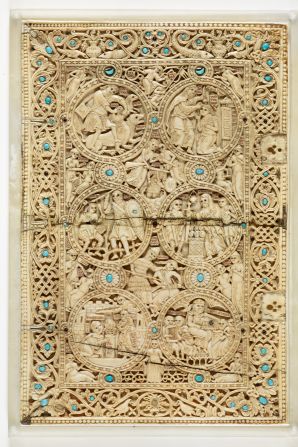
The Psalter of Queen Melisende (1131-1143), Jerusalem —
Between 1099 and 1187, Crusader kings ruled Jerusalem. One of the most precious survivals from Crusader Jerusalem is this Psalter, according to the authors.
2289/The British Library Board
The Psalter of Queen Melisende (1131-1143), Jerusalem —
It is named after Queen Melisende, who reigned jointly with her husband, and subsequently her son, from 1131 until 1152.
The British library
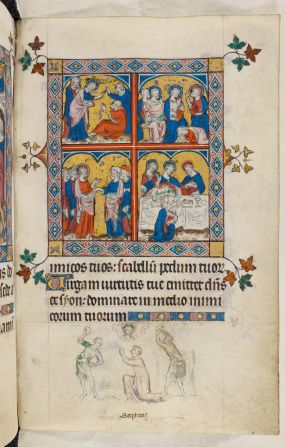
The Queen Mary Psalter (c. 14th century), London, England —
In England, the taste for large-scale and extensively illuminated Psalters continued throughout the 14th century, say McKendrick and Doyle. The Queen Mary Psalter is one of the most extensively illustrated biblical manuscripts ever produced, containing around 1,000 images.
11861/The British Library
The Winchester Psalter (mid-12th century), Winchester, England —
There are 12 manuscripts of the so-called Oxford Psalter from the 12th to 13th centuries, according to the authors. The Winchester Psalter, with an extensive cycle of images, is the most splendid copy of these English manuscripts.
11861/The British Library
The Harley Bible moralisée (c. 13th century), Paris, France —
"Moralized" Bibles like this are so named because biblical scenes are paired with their symbolic or theological interpretation -- or "moralizations" -- below, with a short biblical extract or explanation next to each picture.