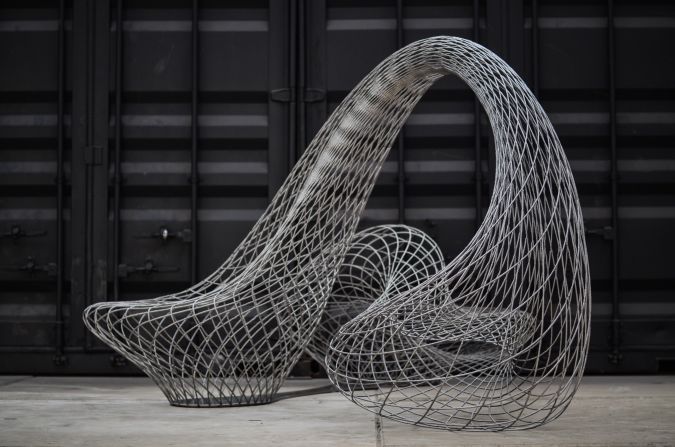
Laarman's team uses a 3D printer that was designed in-house, the MX3D, to print metals such as steel, aluminum, bronze and copper.
Courtesy Joris Laarman Lab
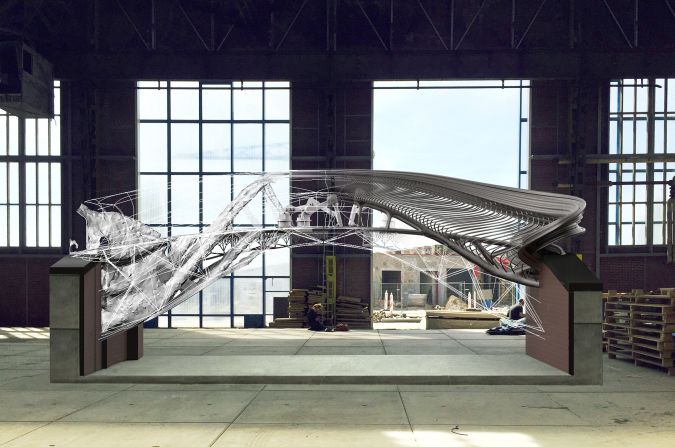
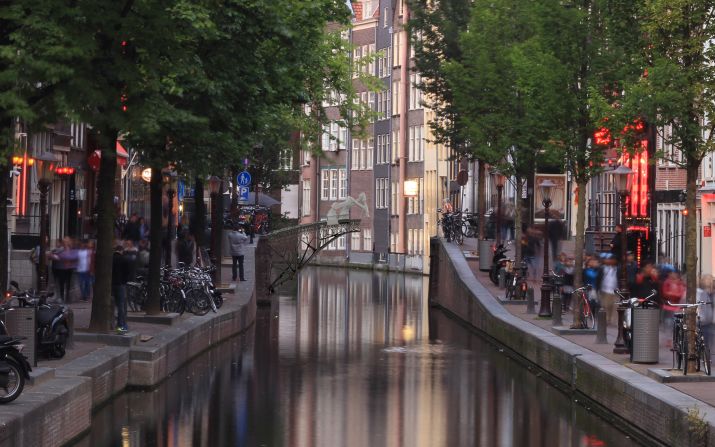
The design for a forthcoming bridge being 3D-printed in stainless steel by Joris Laarman Lab.
Courtesy Joris Laarman Lab
A collection of Laarman's furniture will be on display at New York's Cooper Hewitt, The Smithsonian Design Museum, alongside some of his other digitally-produced creations.
Courtesy Joris Laarman Lab
One of Laarman's Maker Chair series will be made available for download to visitors to New York's Cooper Hewitt, The Smithsonian Design Museum.
Courtesy Joris Laarman Lab
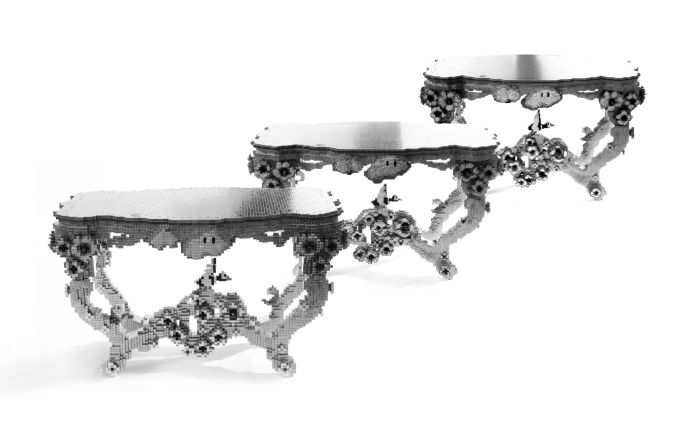
This series of tables was made from reprogrammable building blocks called voxels. It was built using industrial robots.
Courtesy Joris Laarman Lab
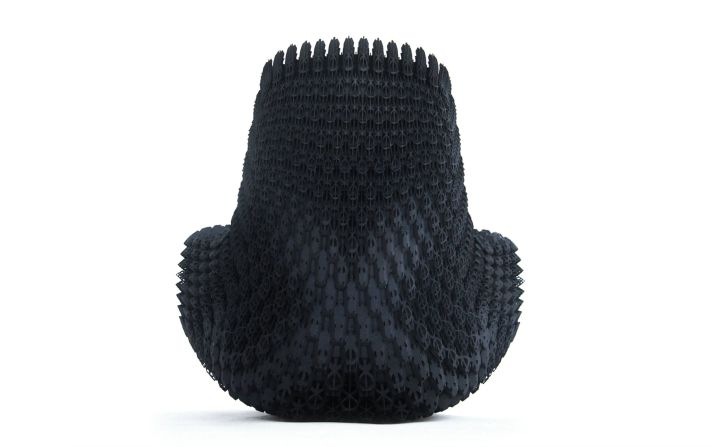
Designed and 3D-printed in thermoplastic polyurethane, this chair is made from a soft, foam-like material that has been digitally engineered at a cellular level.
Courtesy Joris Laarman Lab
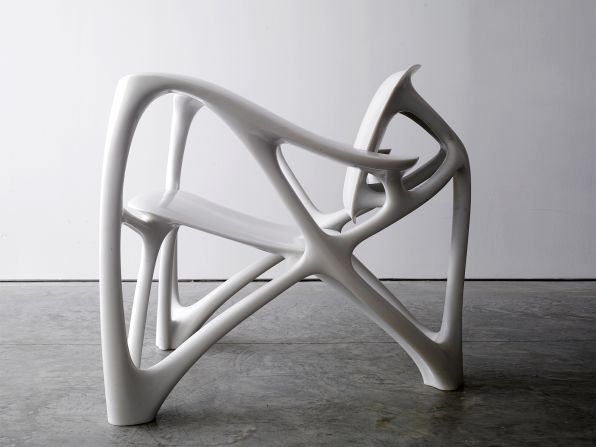
Built by Joris Laarman in 2007, this 3D-printed chair is made from casting resin and white Carara marble dust, a by-product from the marble industry.
Courtesy Joris Laarman Lab
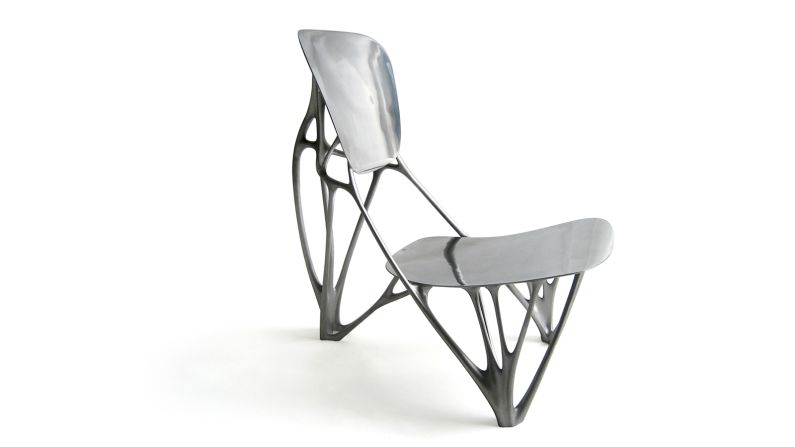
This chair was created with algorithms that mimic bone growth. Using a large volume of computer-generated calculations, Laarman's program systematically adjusted and strengthened the chair's design.
Courtesy Joris Laarman Lab
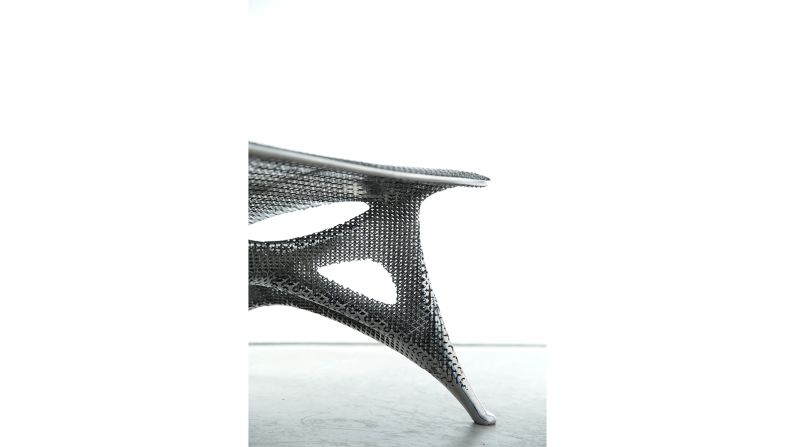
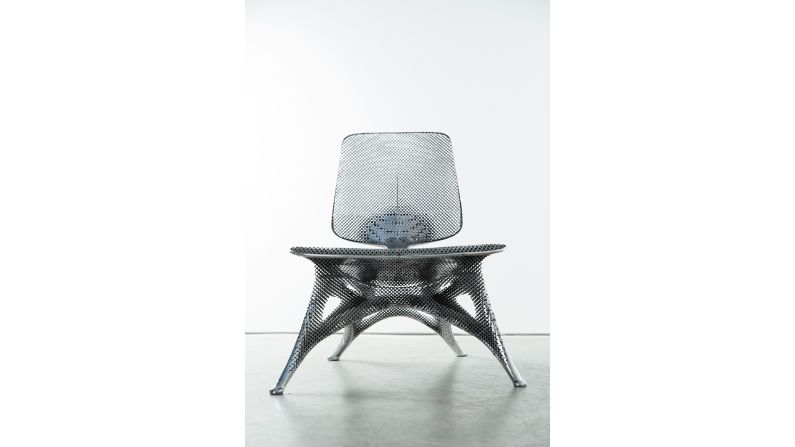
The lightweight aluminum used in this chair was "engineered on a cellular level... to create structural strength and rigidity," according to Joris Laarman Lab.
Courtesy Joris Laarman Lab
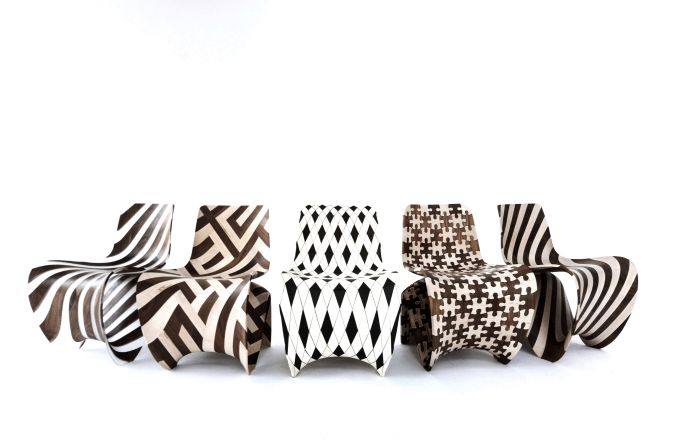
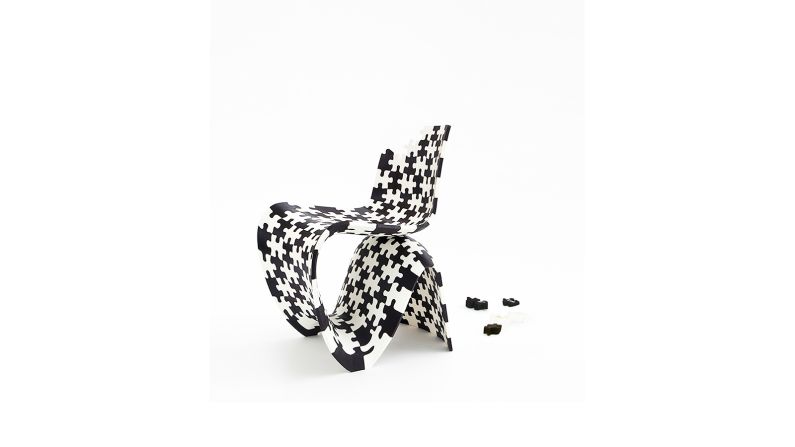
Each of the 12 chairs in the Maker series is digitally fabricated and assembled from small printed parts, like a 3D puzzle.
Courtesy Joris Laarman Lab
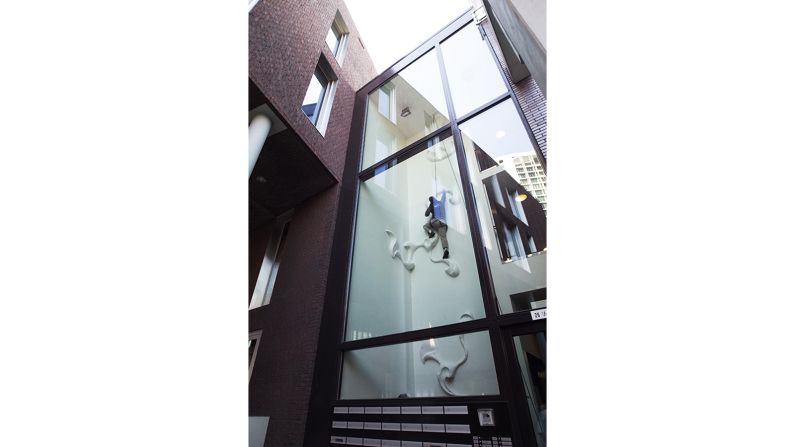
A wall decoration that doubles up as a climbing wall. Laarman hopes that it gives users a new perspective on the spaces below.
Courtesy Joris Laarman Lab
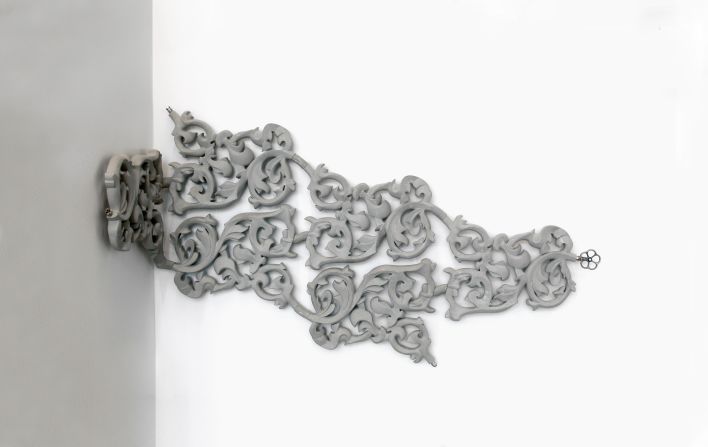
The oldest item in the upcoming exhibition, the Heatwave Radiator was Laarman's design school thesis project. The curls create a large surface area, allowing heat to be more efficiently dispersed.
Courtesy Joris Laarman Lab
The project will debut as a fully functional footbridge in Amsterdam next year.
Courtesy Joris Laarman Lab
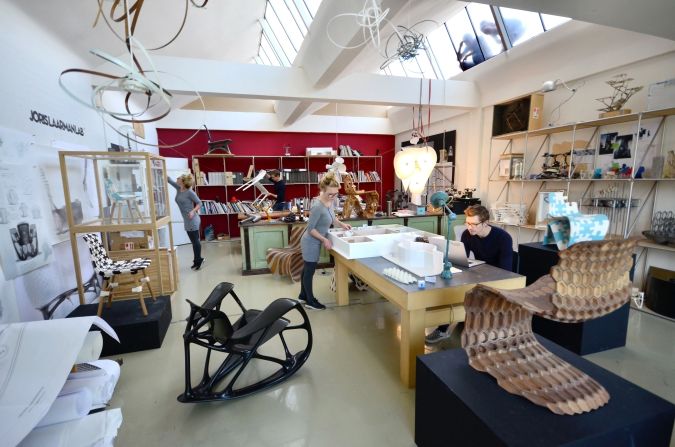
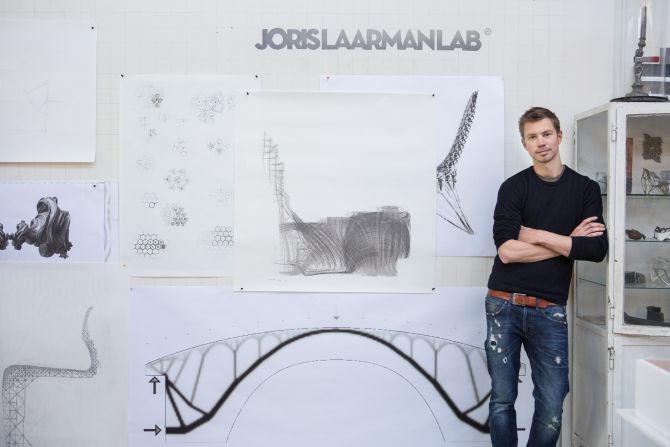
"We're more like a laboratory than a design studio," Laarman said. "We're trying to figure out what the design of the future will be -- what it could look like."
Courtesy Joris Laarman Lab
Over a 14-year career, Laarman has worked at the intersection of design and technology.