Your effort and contribution in providing this feedback is much
appreciated.
Close
Ad Feedback
The man who put the color in photography
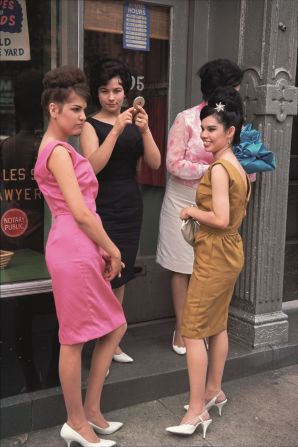
Puerto Rico Day Parade, New York City (1963) —
Joel Meyerowitz, a pioneer of color photography. Reminiscing about this shot from in the early '60s, he said: "The four girls stood in a doorway primping and getting ready to walk in the parade. Seen against the dreary buildings, they were like tropical flowers bursting into color."
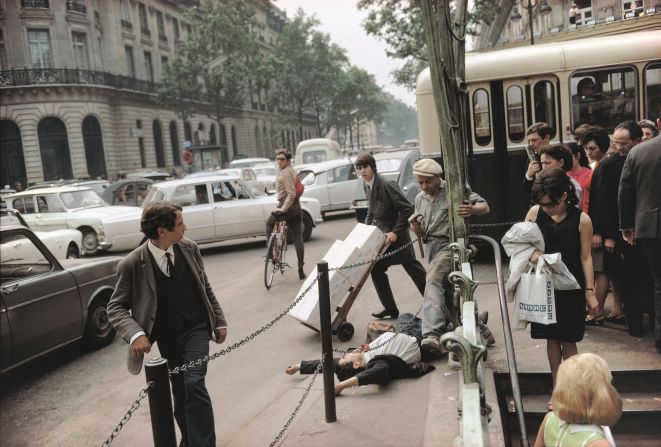
Meyerowitz favored his home turf of Fifth Avenue, New York, but one of his best shots was taken in Paris. "Which is the greater drama of life in the city: the fictitious clash between two figures that is implied (by the young man on the ground and the workman stepping over him), or the indifference of the one to the other that is actual? A photograph allows such contradictions to exist in everyday life; more than that, it encourages them," he said.
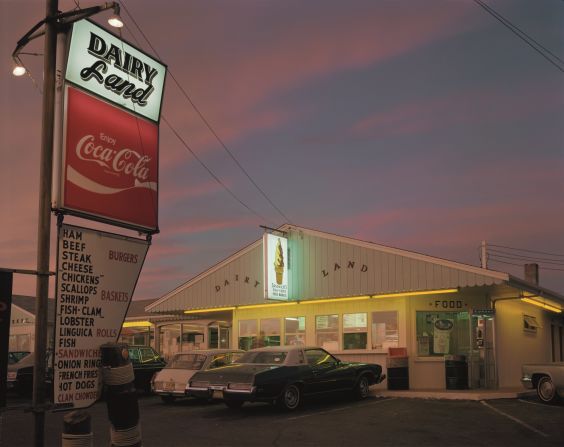
"I was on my way back from the supermarket when I passed Dairy Land," Meyerowitz said. Out of the corner of my eye, the neon glow called out to me, so I swerved right in. Stepping out of the car was like stepping into a cotton-candy pink haze. The light radiating through and off the clouds at that hour suffused everything with a rosy glow against which the yellow neon hummed a crazy harmony."
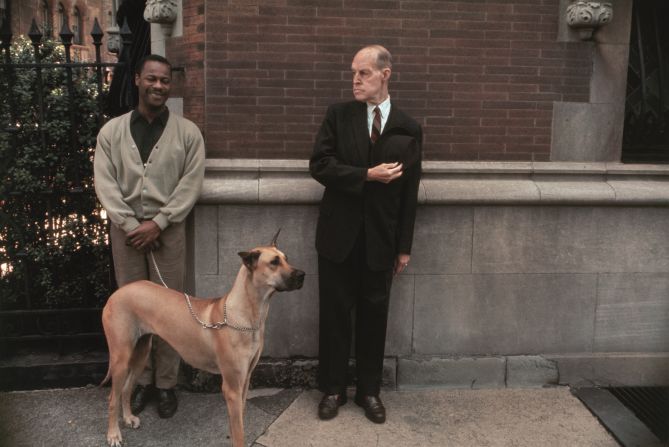
"What interested me about photographing the parades in New York was seeing the way people who were not necessarily relating to each other were now thrown together simply because I put a frame around them. Suddenly they had a new context that only I could see, and the absurdity of what that sometimes produced I found fascinating."
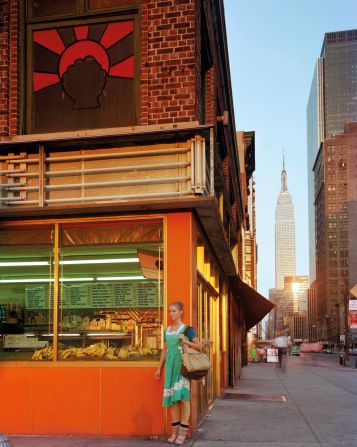
"I was working on a project where the Empire State Building was my Mount Fuji, and I circled around it looking for interesting moments that came from ordinary life being lived under within range of the mountain. On this corner I saw a young ballet dancer waiting for a friend, and there behind her was a window full of color: bananas, neon light, the gorgeous orange of the storefront, that crazy sunburst above and, in the background, the majestic Empire State Building."
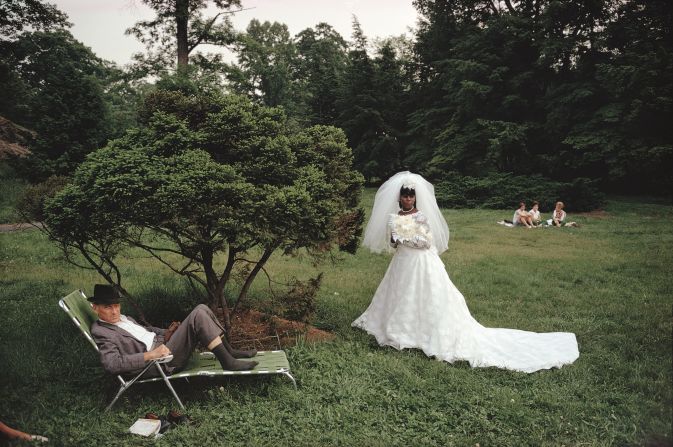
"Walking through the gardens one summer Saturday, I saw a bride posing for her wedding album. But, at the same time, I saw what the wedding photographer would cut out of his frame: the man sitting on his lounge chair. I knew right then that the photograph was about that."
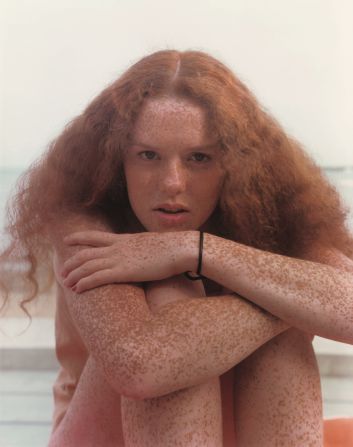
"I was fascinated by the unexpected beauty that I found myself attracted to, like this young woman, whose freckled skin and curly red hair seemed to me to make her as exotic as a rare tropical fish."
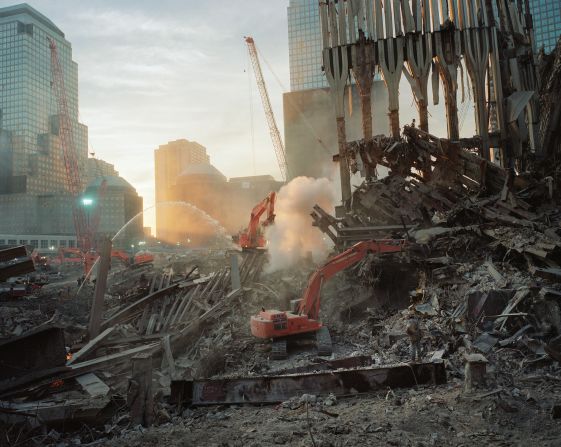
"I spent nine months photographing inside ground zero. Even though this was a place where a great tragedy occurred, there were moments when nature, in the form of light or weather, produced startlingly beautiful effects. It was my responsibility as the artist-historian to respond to beauty even when it appeared over what might seem to be a place reserved for the tragic."
"There's a French expression, the 'flaneur' -- somebody who would go out walking on the boulevards of Paris, for example, just observing life and commenting on it in whatever way they chose. I'm someone who loves to go out on the boulevards of the world. Fifth Avenue in New York City was my street for my whole working life and there you see it all, the high and the low."