Your effort and contribution in providing this feedback is much
appreciated.
Close
Ad Feedback
Jewelry from around the world
"Imperial Splendours: The Art of Jewellery since the 18th Century" —
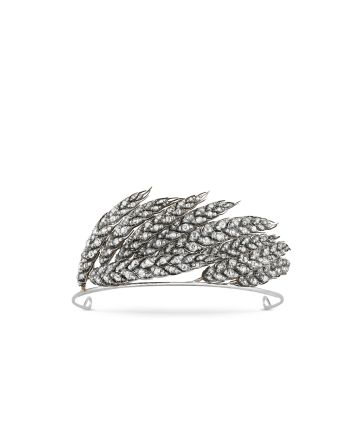
"Imperial Splendours" at at the Palace Museum in Beijing is dedicated to the French brand Chaumet. This 1811 gold, silver and diamond tiara was created by Chaumet for Empress Marie-Louise. The wheat sheaf is a theme Chaumet continues to revisit today.
Courtesy Chaumet
"Imperial Splendours: The Art of Jewellery since the 18th Century" —
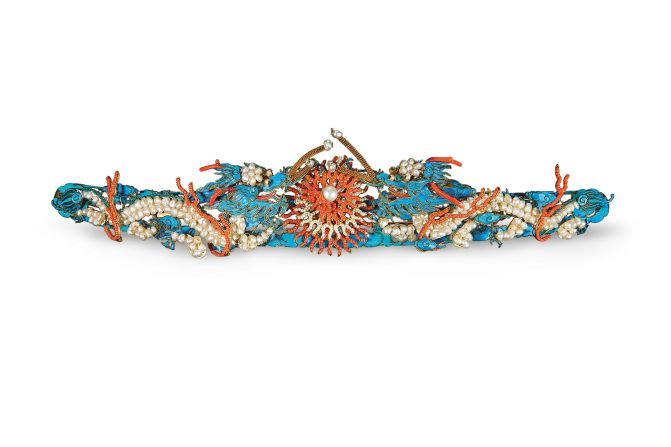
The show juxtaposes Chaumet's jewels with imperial works from the Palace Museum, such as this Qing dynasty double-dragon hair pin, set in gilded and colored silver, pearls, coral and glass.
Courtesy Chaumet
"Imperial Splendours: The Art of Jewellery since the 18th Century" —
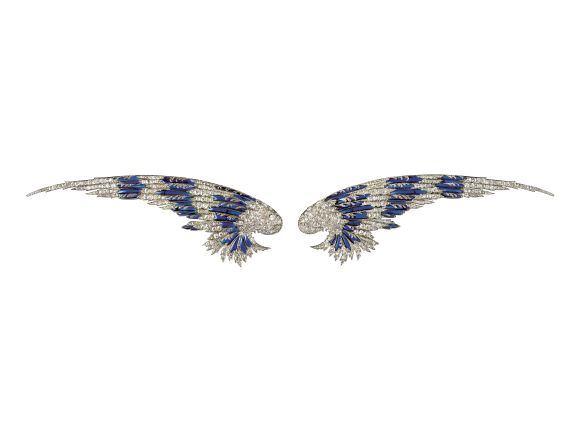
These Chaumet platinum, diamond and enamel wings from 1910 can be worn as a diadem or as brooches. They belonged to Payne Whitney (born Gertrude Vanderbilt), founder of Vogue magazine and the Whitney Museum in New York.
Courtesy Chaumet
"Imperial Splendours: The Art of Jewellery since the 18th Century" —
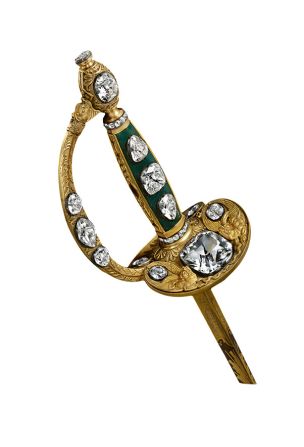
Napoleon's consular sword was co-created by Chaumet's founder Marie-Étienne Nitot in 1802. Napoleon brought it to his coronation in 1804.
Courtesy Chaumet
"Imperial Splendours: The Art of Jewellery since the 18th Century" —
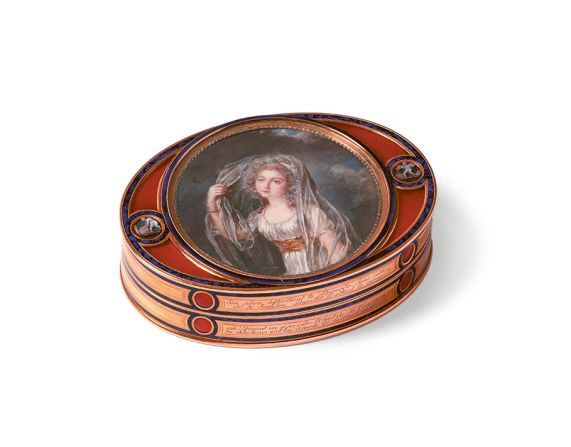
The show's oldest piece is a 1789 memorial box for the Marquise de Lawoestine, here painted in miniature.
Courtesy Chaumet
"Imperial Splendours: The Art of Jewellery since the 18th Century" —
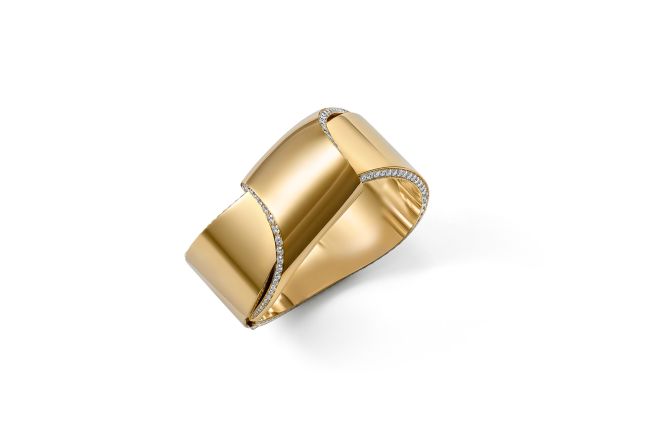
The show also features Chaumet's more recent creations, such as this 2016 Escapade de Chaumet gold and diamond cuff that recalls a rolled-up ribbon.
Courtesy Chaumet
"Imperial Splendours: The Art of Jewellery since the 18th Century" —
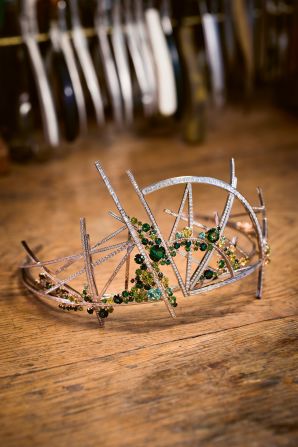
The Vertiges diadem is fashioned from white and red gold, baguette, square and brilliant cut diamonds, green tourmalines and garnets. The piece was created for Chaumet by 21-year-old British jewelery design student Scott Armstrong.
Courtesy Chaumet
"Jeweled Splendors of the Art Deco Era: The Prince and Princess Sadruddin Aga Khan Collection" —
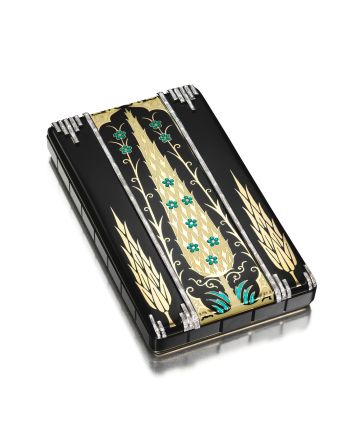
New York's Cooper Hewitt Smithsonian Design Museum has curated a show of over 100 luxury art deco objects, such as this 1928 vanity case in gold, enamel, diamonds, onyx, platinum and mirrored plate glass designed by Van Cleef & Arpels .
Courtesy Doug Rosa
"Jeweled Splendors of the Art Deco Era: The Prince and Princess Sadruddin Aga Khan Collection" —
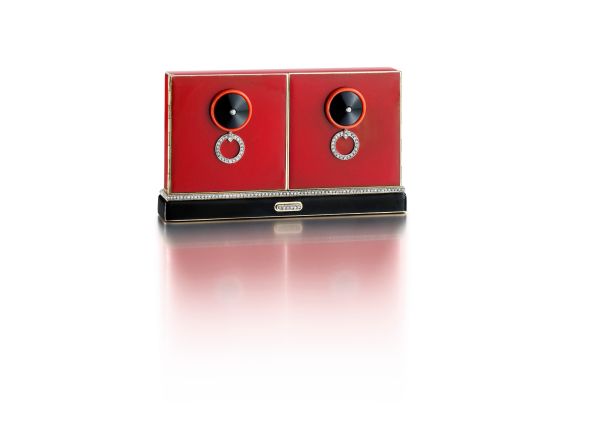
Created in 1924 by Lacloche Frères, in carved onyx, coral, diamonds, mirrored plate glass, gold and platinum, this Imperial Door vanity case was notably made using lacquer, a material that fascinated designers at the time.
Courtesy Doug Rosa
"Jeweled Splendors of the Art Deco Era: The Prince and Princess Sadruddin Aga Khan Collection" —
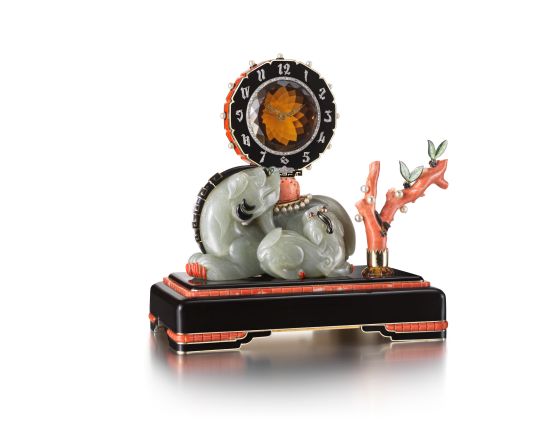
The exhibition also includes standout watches and clocks, such as this wonderful 1929 Imperial Guardian Lion Mystery Clock, produced by Maurice Couet for Cartier.
Courtesy Doug Rosa
"From the Great Mughals to the Maharajas: Jewels from the Al Thani Collection" —
"From the Great Mughals to the Maharajas: Jewels from the Al Thani Collection" —
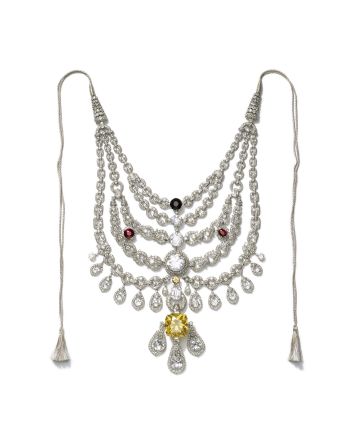
Like many western houses during the Art Deco period, Cartier was greatly inspired by Indian heritage and culture. In 1928 it produced this necklace by special order from Sir Bhupindra Singh, Maharaja of Patiala. The necklace vanished after Indian independence in 1947, only to resurface 50 years later.
Courtesy Nick Welsh/Collection Cartier/Cartier
Amrapali Museum —
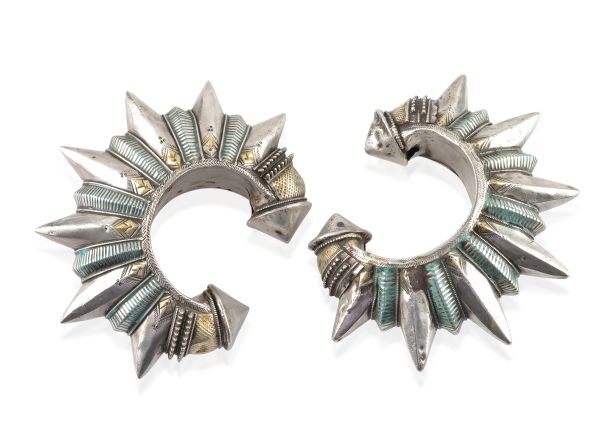
Amrapali, one of India's biggest contemporary jewellers, has opened a museum in Jaipur to showcase India's gold and silversmithing heritage. Most works date from the 19th to 20th century, such as this 19th-century silver and enamel bracelet.
Courtesy Amrapali
Amrapali Museum —
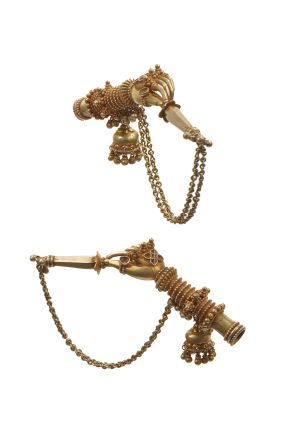
This mouth piece from Uttar Pradesh was attached to small hookahs. Used mainly during celebrations in the Islamic courts of Lucknow and other states, the idea was to give the illusion of a beautiful woman serving distinguished guests.
Courtesy Amrapali
Amrapali Museum —
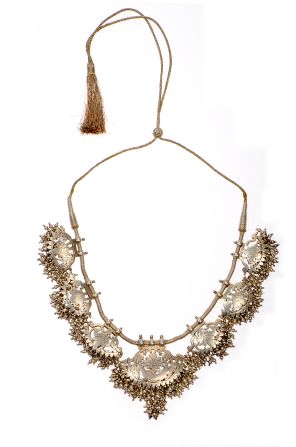
Women from the Khati community in Bikaner, Rajasthan were historically experts in mounting silver foil on wood, from which this necklace takes its cue.
Courtesy Amrapali
Amrapali Museum —
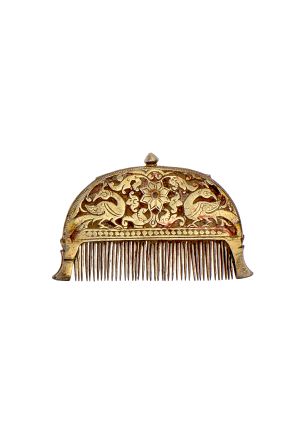
The collection also includes historic personal objects, such as this Kanghi comb from Rajasthan's Kota and Bundi regions. Carved with peacock and plant motifs, the hollowed, silver and gilt-gold piece doubled as a hair oil dispenser. (The comb was filled through the top screw-knob.)