"Everything Is Fine" by Kacey Wong (2016) —
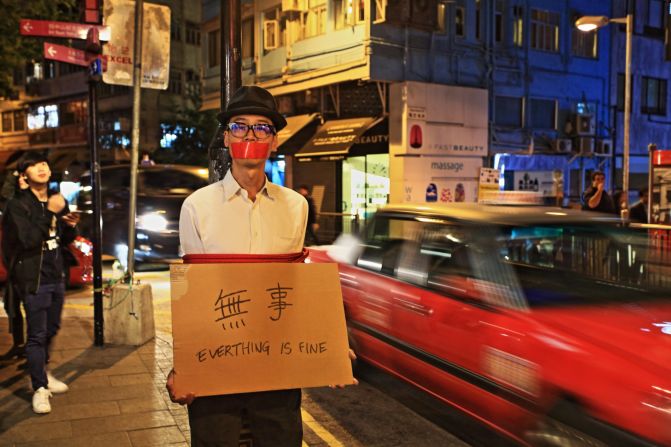
At the end of 2015, five Hong Kong booksellers, who published gossipy books about China's elite, went missing. It was later discovered that the booksellers had been detained by Chinese authorities. "Everything Is Fine" is Kacey Wong's response to the incidents. The artist taped his mouth shut and tied himself to a lamp post on a busy street in Hong Kong's art district. He then held up a cardboard sign saying "Everything Is Fine" in English and Chinese. "I'm an activist artist," Wong says. "That means I can accurately and honestly express my emotions, no matter how obscure those emotions are. When the public sees the work, it's almost like seeing a stone out of their mind -- it's like somebody is finally speaking honestly for them on their behalf."
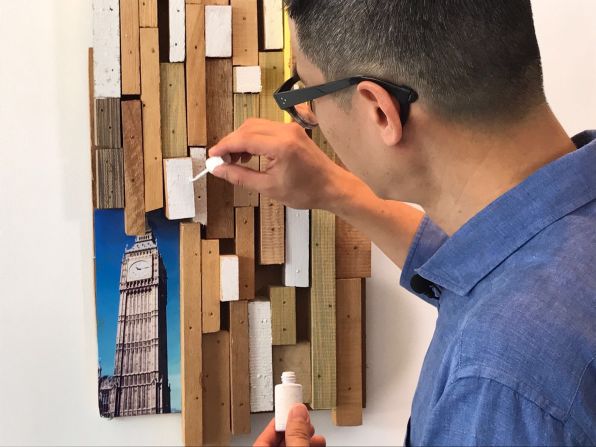
"White Out" by Kacey Wong (2007) —
Kacey Wong's "White Out" is a structure made out of 50 wooden blocks of varying shapes and sizes. Each block represents a year from 1997 to 2047. 2047 is the year when Hong Kong's "one country, two systems" arrangement with Beijing -- which gives the semi-autonomous city freedoms unseen on the mainland -- is set to expire. After each passing year, the artist covers a piece of wood with correction fluid to symbolize the perceived erosion of Hong Kong's culture.
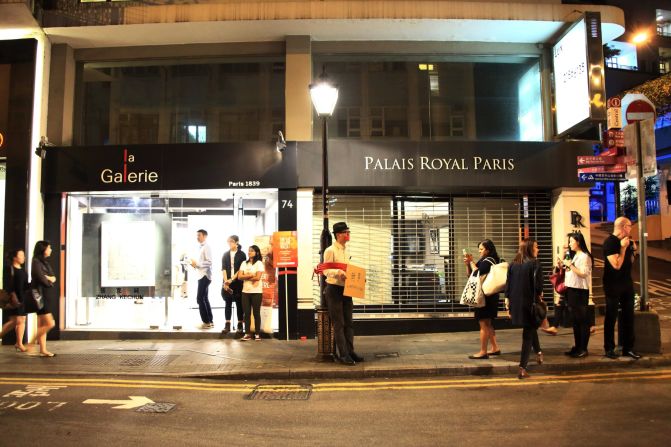
"Everything Is Fine" by Kacey Wong (2016) —
"I feel like I'm in a stronger colony," says Kacey Wong, one of Hong Kong's most recognized activist artists. "When I was living under the British rule, I didn't feel like there was a colony going on as much as (I do) now," he says. "Now I really feel it. I feel like this is the colony of the Chinese Communist Party."
"Waiting for Another Round" by Chloe Cheuk (2015) —
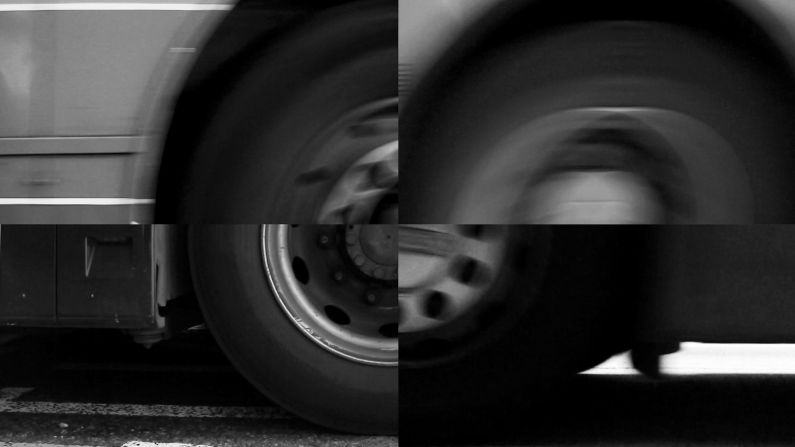
Occupy Central was Hong Kong's largest -- and longest -- series of protests since the territory was handed back to China in 1997. Thousands of people, mainly students, took to the streets of the city's main financial district to pressure the Chinese government into giving the city full universal suffrage. "The road and bus stops were voices," says Cheuk, a local artist whose work deals with themes of displacement and identity. Artist Chloe Cheuk went to several bus stops around Hong Kong to capture videos of buses passing through the streets and wiping out any remaining traces of the Occupy Central protests. At certain intervals in the video, titled "Waiting for Another Round," the wheels of four buses all come to a halt to form a large circle. "It's symbolic of a type of waiting game," Cheuk explains. "The people of Hong Kong are always expecting something to happen next. When is the next round coming?"
"If The Moment Came" by Chloe Cheuk (2015) —
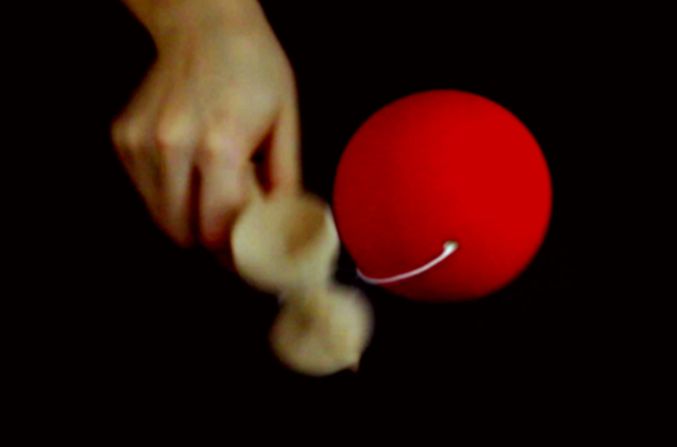
"It's about the voices of people -- it represents us," Chloe Cheuk says of this work. "We're trying to voice our opinions, but they are not getting heard." Despite the political restrictions imposed on Hong Kong, the artist hopes that the piece will empower people.
"If The Moment Came" by Chloe Cheuk (2015) —
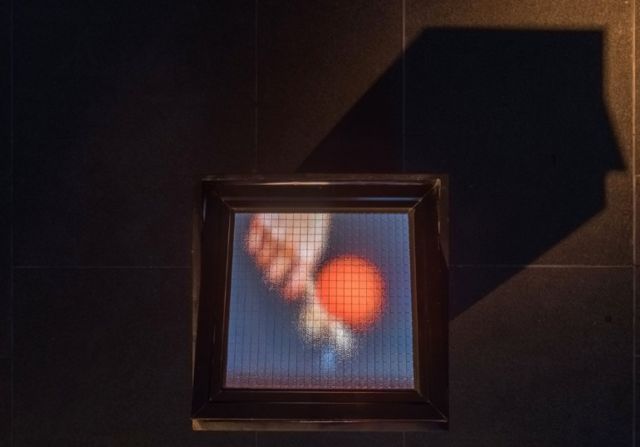
"My wish -- and expectation -- is that the ball will eventually come out and break the window," Cheuk explains.
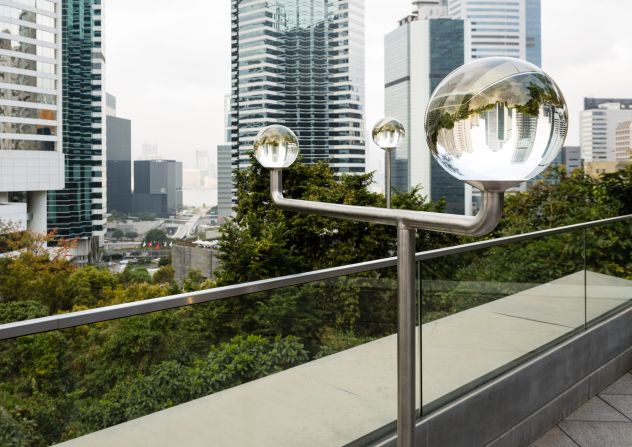
"...Until I Am Found" by Chloe Cheuk (2017) —
Chloe Cheuk began a masters degree at Montreal's Concordia University in 2015. While in Canada, Cheuk says she began to reflect on the meaning of identity. "I feel like if I can get the freedom and benefit from other countries and systems, this can affect my work in a positive way," she says.
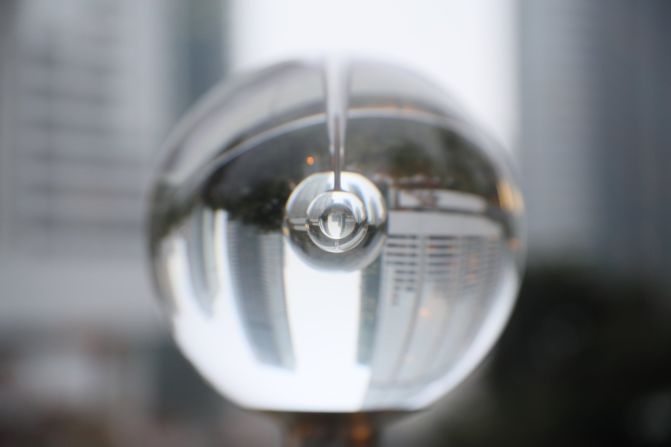
"...Until I Am Found" by Chloe Cheuk (2017) —
The interactive structure "...Until I Am Found," is currently on display as part of an exhibition called "Breathing Space." Organized by the Asia Society in Hong Kong, the exhibition aims to address the physical and metaphorical limitations of living in Hong Kong. Cheuk's three-part crystal ball installation sits in front of Hong Kong's cityscape. By looking through the balls, viewers can see the city up close -- or upside down. "Sometimes we have to step back to have a clearer picture," the artist says. "Sometimes the world is not a perfect place, sometimes it's hard to navigate yourself."
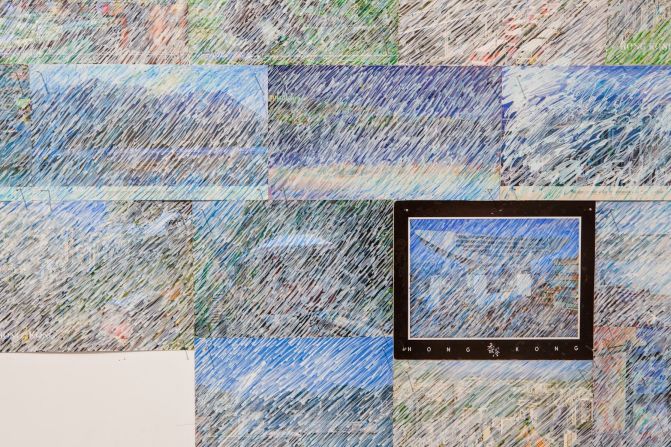
"Liquefied Sunshine" by Luke Ching (2013) —
Taken from a popular Hong Kong television drama, the well-known quote "The city is dying" has been adopted by local youths as a subversive tag. In "Liquefied Sunshine," artist Luke Ching rejects the idealized image of Hong Kong by distorting postcards of the cityscape. To Ching, the iconic Hong Kong postcard is a "touristic product born of globalization" and does not truly represent the city. He uses correction fluid to create the illusion of a rainstorm engulfing the backdrop. The artist says that his piece emphasizes Hong Kong's flaws, despite its status as a global, cosmopolitan city.
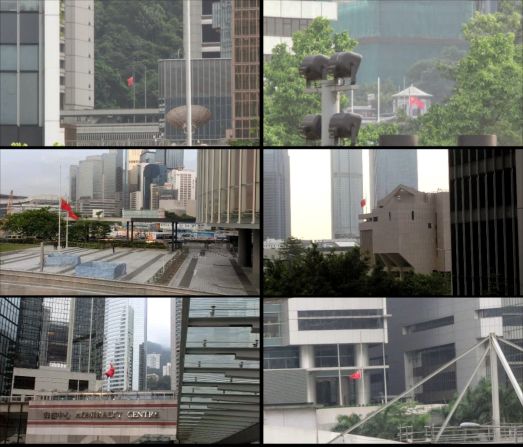
"Screensaver -- Sunsets in our country" (2014) —
Every day at 6pm, The Hong Kong flag is taken down at various locations around the city -- a daily ritual carried out since 1997. Inspired by the tale of "The Little Prince" who watches the sunset 44 times a day, artist Luke Ching's "Screensaver -- Sunsets in Our Country" is a 39-minute video documenting six flag-lowering ceremonies. He says the work is a metaphor for the decreasing power and lack of control Hong Kong residents feel they have over their city.
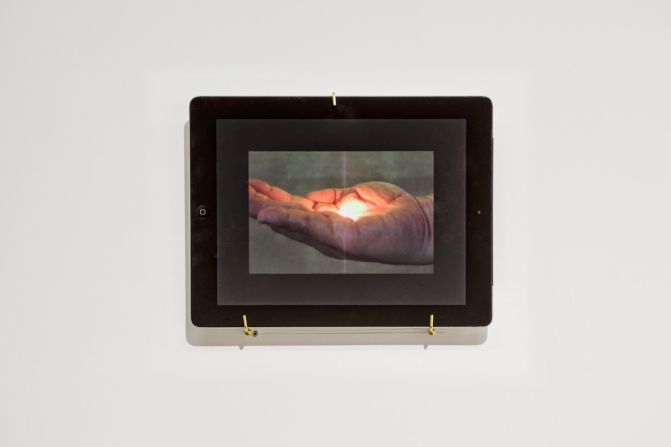
"Pixel" by Luke Ching (2014) —
Every year on June 4, thousands of people gather at Hong Kong's Victoria Park for a candlelight vigil marking the anniversary of the 1989 Tiananmen Square massacre. Luke Ching's piece "Pixel" commemorates the student protesters who lost their lives. To Ching, a candle's flame is similar to a pixel, in that it brings clarity. He says that, in this context, the flame brings clarity to the oppression imposed by the Chinese Government.
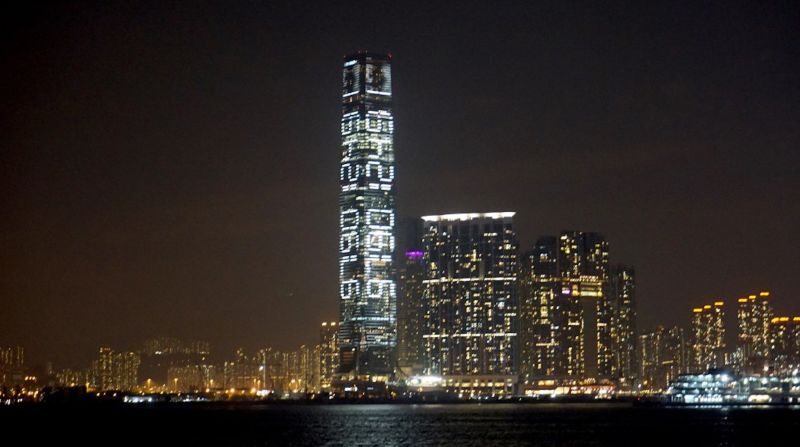
"Countdown Machine" by Sampson Wong (2016) —
Sampson Wong's installation "The Countdown Machine" shows a digital clock face counting down the seconds to July 1, 2047 -- the day on which Hong Kong's semi-autonomous status expires. The artist projected the image vertically across Hong Kong's tallest skyscraper, The International Commerce Center, for four days in May 2016. It was eventually removed by The Hong Kong Arts Development Council.
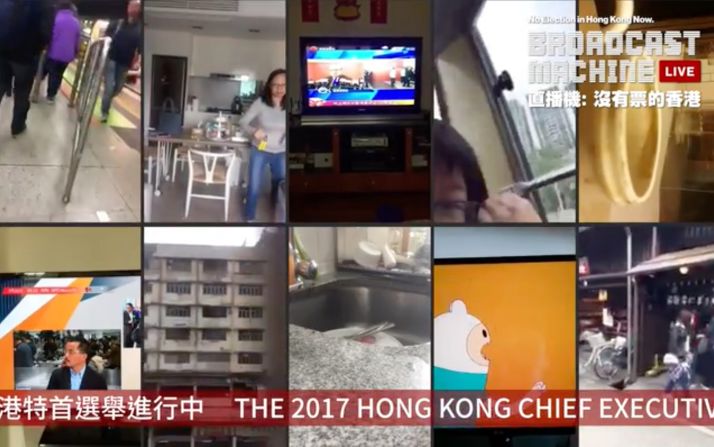
"Broadcast Machine" by Sampson Wong (2017) —
Of the 7.3 million people living in Hong Kong, only those 1,194 who make up the Election Committee are allowed to vote for the territory's leader. Sampson Wong's "Broadcast Machine" is an ironic response to the lack of universal suffrage, which he describes as a "participatory project of activist art." During the elections, Wong's activist group Add Oil Team invited residents to broadcast themselves on Facebook carrying out mundane tasks, such as cooking and cleaning. The clips were then compiled and made into a video montage representing how ordinary local people have no say in electing their leader.