Black artists are confronting the UK’s colonial past
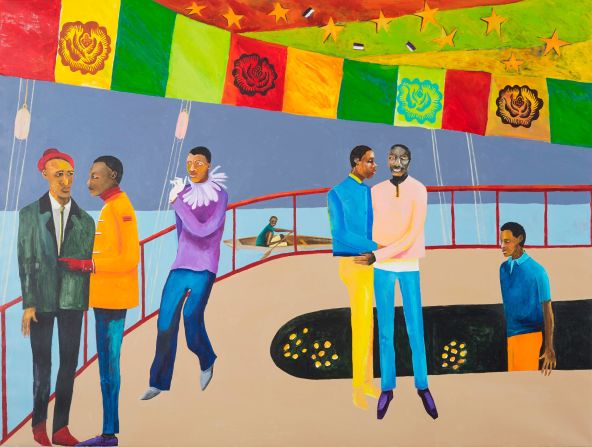
An exhibition at London's Tate Modern is exploring the work of Lubaina Himid, who in 2017 became the first Black woman to win the UK's prestigious Turner Prize. In the series of paintings called "Le Rodeur," Himid depicts abstractly how the horrors aboard a French slave ship in the 19th Century "still reverberate'' to this day. - Lubaina Himid - "Ball on Shipboard" (2018)
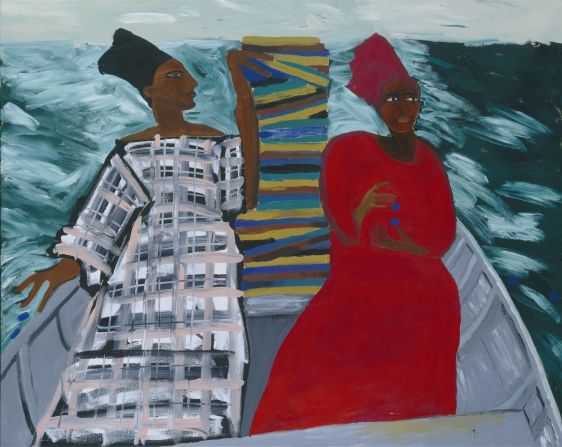
The artist was born in Zanzibar in 1954, moving to the UK as a baby with her British mother. This painting, from her "Revenge" series, is based on the 1877 work "Portsmouth Dockyard." Where James Tissot's original depicts a White British soldier and two women, Himid replaces the trio with two Black women dressed in African fabric. - Lubaina Himid - "Between the Two My Heart is Balanced" (1991)
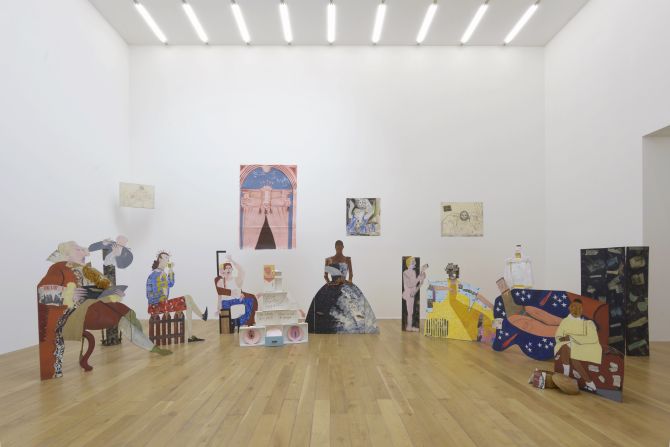
Himid is a prominent member of the British Black Arts Movement, which began in the 1980s. "A Fashionable Marriage," a work from that period, took aim at then UK Prime Minister Margaret Thatcher and US President Ronald Reagan, along with a "patronizing" arts establishment. - Lubaina Himid - "A Fashionable Marriage" (1986)
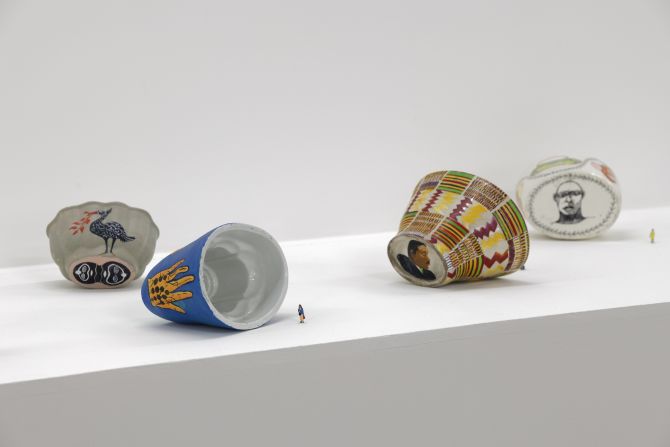
These works by Himid draw attention to the contribution of Black diasporas to the UK's history and culture. - Lubaina Himid - "Jelly Mould Pavillons for Liverpool" (2010)
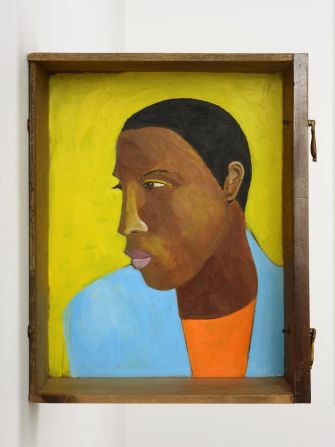
This portrait of a subtly androgynous man, painted inside a drawer, is not Himid's first painting on reclaimed domestic materials. ''I want to enlarge, enliven, or activate the everyday,'' says the artist. - Lubaina Himid - "Man in a Shirt Drawer" (2017-18)
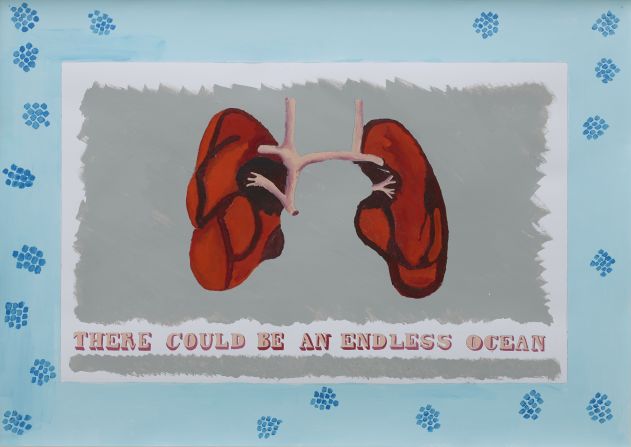
The artist here re-interprets the bright kanga fabrics of East Africa, which are worn in two pieces wrapped around the body. ''I see kangas as an extra way of speaking, of speaking clothes if you like," she says. - Lubaina Himid - "There Could Be an Endless Ocean" (2018)
Lubaina Himid / Hollybush Gardens
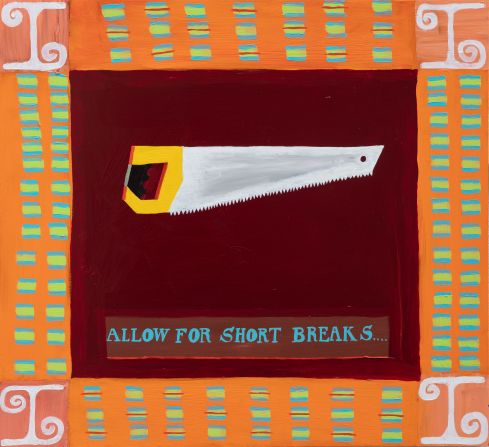
''My father used to buy a whole set of kangas for my grandmother and her friends to go to weddings,'' recalled Himid. "Little traces of my background kind of keep me comfortable ... I like to talk about them and make work using them.'' - Lubaina Himid - "Metal Handkerchief - Saw/Flag" (2019)
Lubaina Himid / Hollybush Gardens
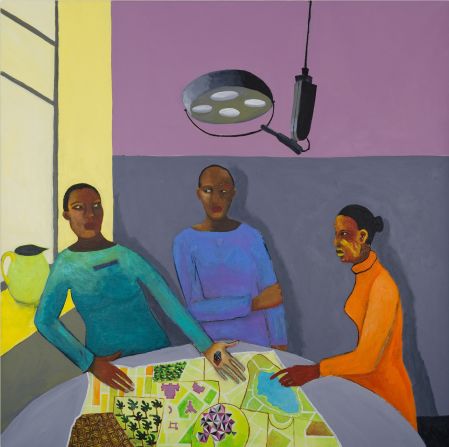
''Most of the time the women in my paintings are planning and strategizing, working things out,'' explains Himid. The women here "are trying to plan a city ... that is safe enough for little girls to walk from their own houses to their grandma's houses." - Lubaina Himid - "The Operating Table" (2017-18)
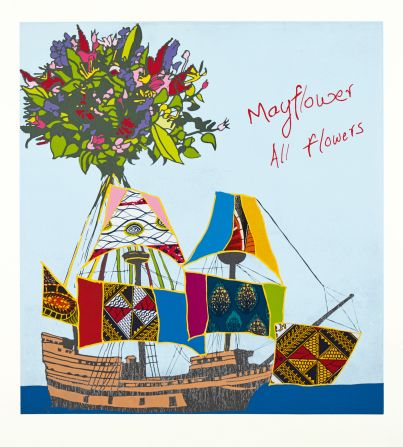
British Nigerian artist Yinka Shonibare recently curated the Summer Exhibition at the Royal Academy, in London. The colonial ship "The Mayflower" is here adorned in Shonibare's signature African batik fabric. This textile was manufactured by the Dutch, based on Indonesian designs, representing to the artist the complexity of colonial legacies. - Yinka Shonibare - "Mayflower, All Flowers" (2020)
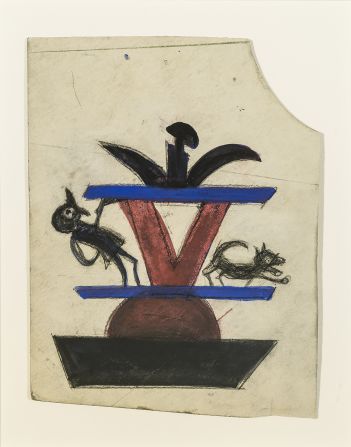
The Royal Academy exhibition featured the work of Bill Traylor, an artist and also a freed slave. "In a way, Bill Traylor has been the main inspiration for the entire project,'' said Shonibare. - Bill Traylor - "Man with Barking Dog" (Blue and Red Construction)
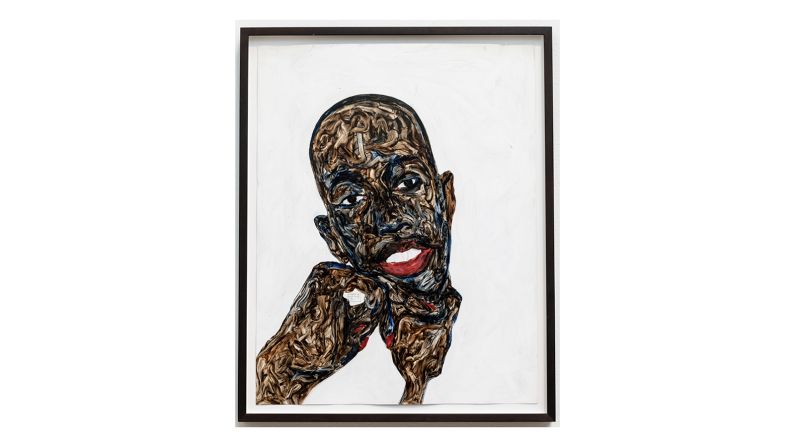
The exhibition included the works of emerging African artists. Hailing from Accra, Ghana, and currently based in Vienna, Amoako Boafo has recently shot to fame in the art world with his bold portraits of figures from African diasporas. - Amoako Boafo - "Fatou"
Photo: Matt Humphrey, Courtesy of Amoako Boafo
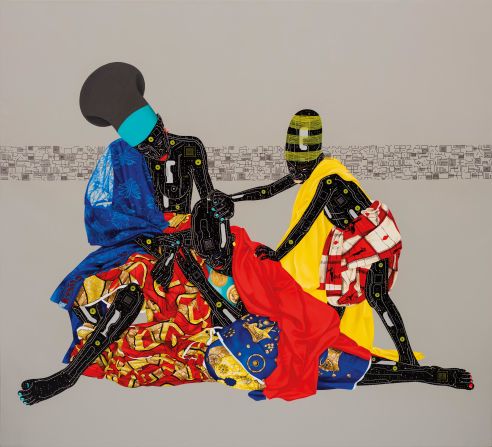
The skin of the figures in portraits by Eddy Kamuanga are inscribed with what some critics have suggested to be circuit boards. Such products require the mineral coltan, which is extracted, sometimes exploitatively, from the artist's native Congo. - Eddy Kamuanga - "Oubliez le passé et vous perdez les deux yeux"