Your effort and contribution in providing this feedback is much
appreciated.
Close
Ad Feedback
Inside ‘Golden Kingdoms’
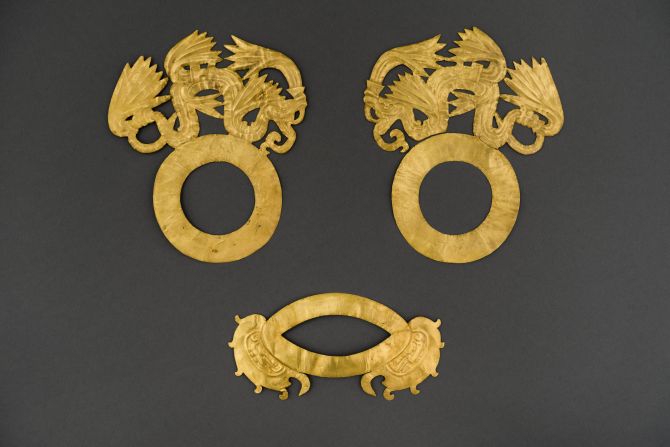
Face ornaments of Quetzalcoatl, various dates —
Mayan ornaments depicting Quetzalcoatl, a Mesoamerican deity. "We have written texts showing that (Mayan ornaments often) represent deities or underworld forces -- beings that relate to the control of the world," said Potts.
Image: Courtesy President and Fellows of Harvard College, Peabody Museum of Archaeology and Ethnology Photo by Michael Cardinali
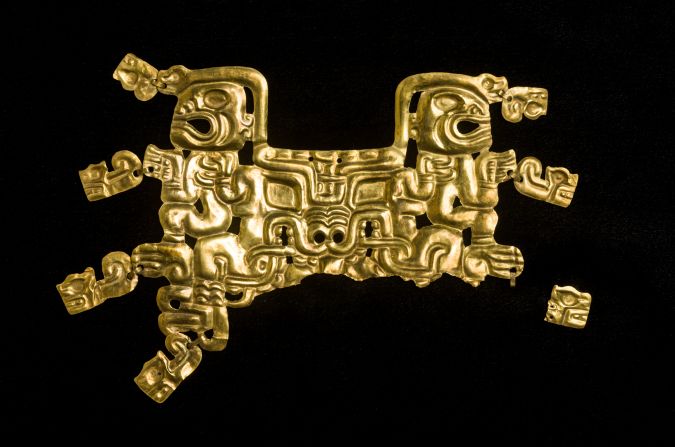
Sheet gold pectoral ornament, A.D. 1200 - 1500 —
Found in Coclé, part of modern-day Panama, this gold ornament is one of the items about to go on display at the Getty Center's new exhibition "Golden Kingdoms: Luxury and Legacy in the Ancient Americas."
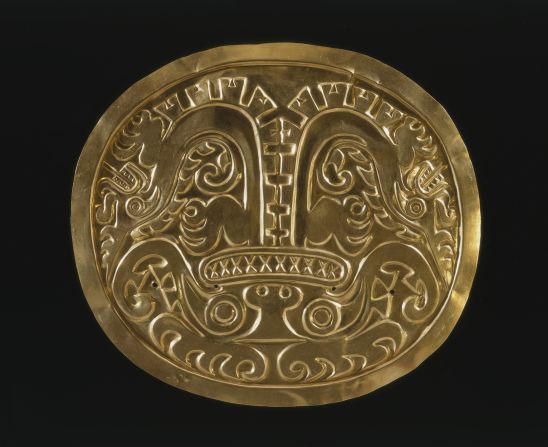
Mouth Mask with Feline Creature and Human Figures, 800 - 550 B.C. —
One of the oldest items on display at the exhibition, this gold ornament was from either the Cupisnique or Chavín civilizations, both of which flourished northern Peru.
Image: Courtesy Kuntur Wasi Museum, Ministerio de Cultura del Perú
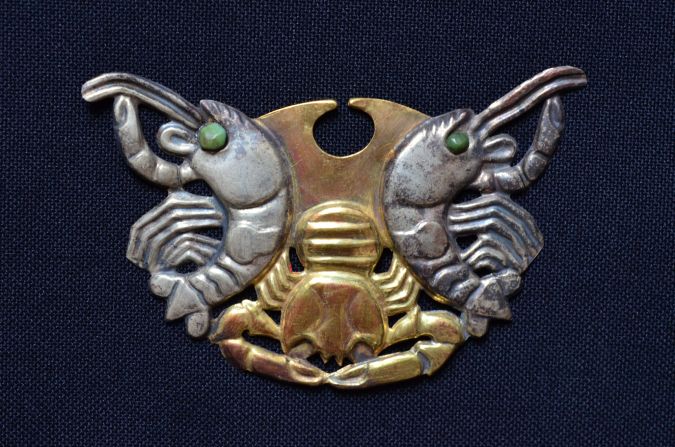
Nose Ornament, about A.D. 400 —
Made from both gold and silver, this three-inch-wide ornament was made by the Moche civilization in modern-day Peru.
Image: Courtesy Museo Cao, Ministerio de Cultura del Perú and Fundacion Augusto N. Wiese
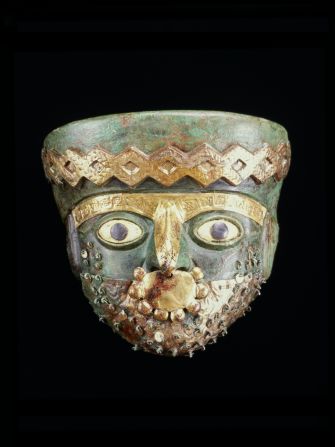
Burial Mask, A.D. 525 - 550 —
The Moche civilization used a wide variety of techniques to create ceramics, textiles and other luxury items. This burial mask is made from a combination of copper, gilt copper, gold, shell and stone.
Image: Courtesy Museo de Sitio Chan Chan, Ministerio de Cultura del Perú Photo by Christopher B. Donnan
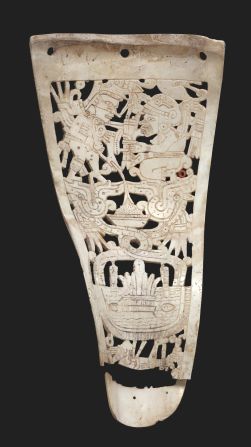
Pectoral, A.D. 900 - 1521 —
This small ornamental breastplate was made from shell during time of the Huastec civilization. Like a number of pre-Columbian societies, the ancient huastecs also developed metallurgy and were able to produce alloys.
Image: Courtesy Middle American Research Institute, Tulane University
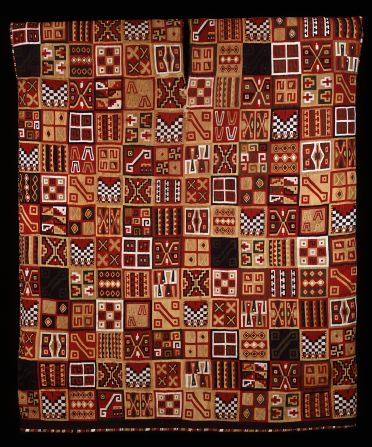
Royal Tunic (All T'oqapu Tunic), A.D. 1450 - 1540 —
Excavated in the Andes, this 48-square-foot tunic is among the best-preserved examples of Inca textile-making.
Image: Courtesy Dumbarton Oaks, Pre-Columbian Collection, Washington, DC
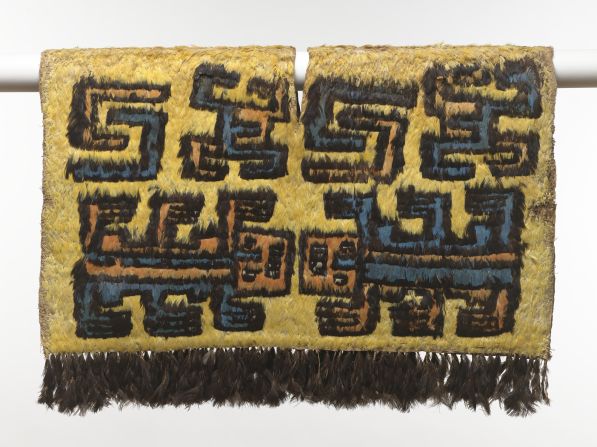
Tabard with Lizard-like Creatures, A.D. 400 - 700 —
Although a number of gold items are featured in the exhibition, co-curator Timothy Potts said that he wanted to focus on "the other materials that these cultures valued." This relic from the Nazca civilization is made from feathers and cotton.
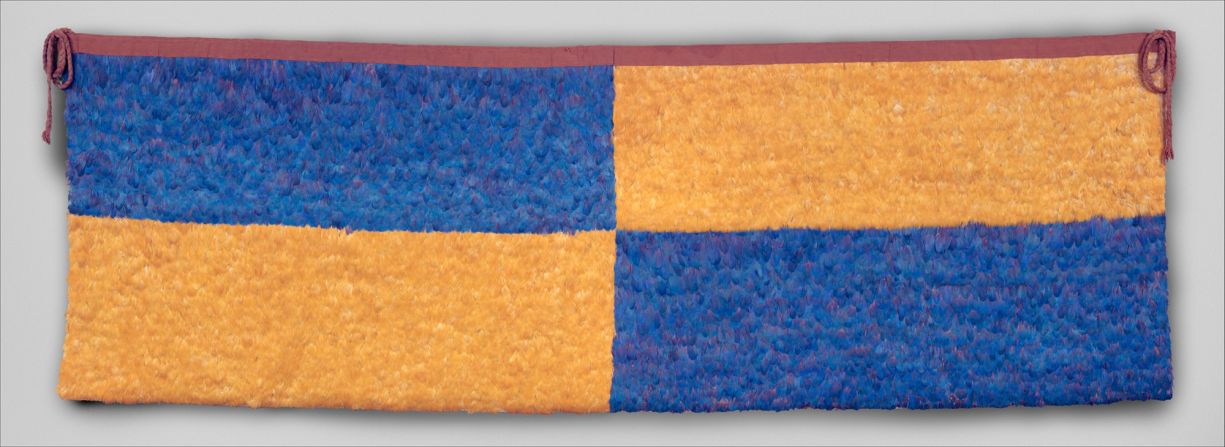
The Wari people lived in the south Andes between A.D. 500 and 1000. As with most of the items featured in the exhibition, the creator of this wall art is unknown.