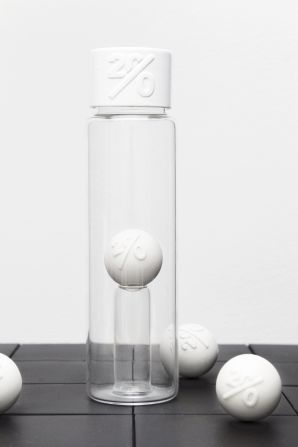
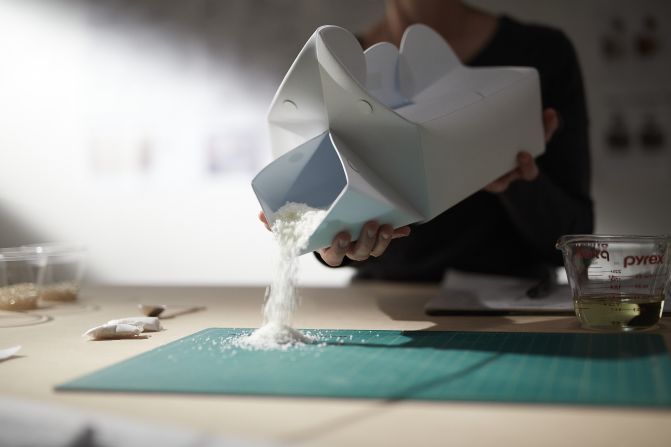
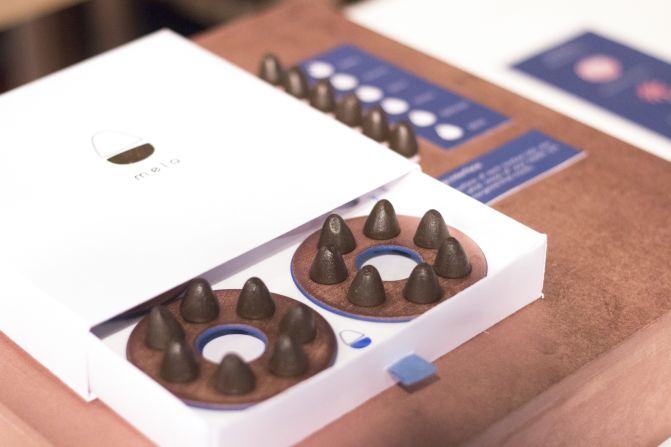
Mirjam de Bruijn from the prestigious Design Academy Eindhoven created a range of dehydrated cleaning products to be rehydrated by consumers, thus reducing shipping emissions.
courtesy Global Grad Show
Detecting cancer in seconds —
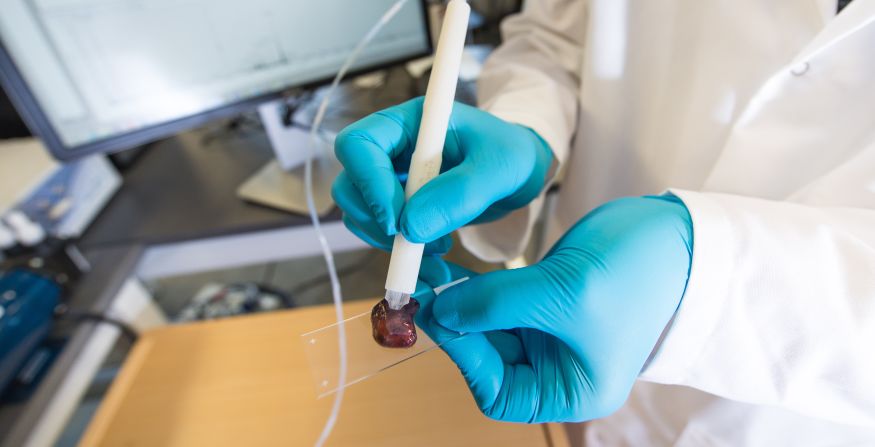
A team from the University of Texas at Austin developed a handheld device for high-speed cancer identification. Its makers claim the MasSpec Pen can detect cancerous tissue mid-surgery in 10 seconds, versus 30 minutes using a microscope. The pen, when touching suspect tissue, releases a droplet of water which takes up chemicals from inside human cells, which is sucked into the pen for analysis.
courtesy Global Grad Show
Keeping refugees safe at night —
Women in refugee camps can be vulnerable, particularly at night. Anna Meddaugh of the ArtCenter College of Design, California created the Night Loo, a portable toilet which can be used in the privacy of a woman's own tent. After using the Night Loo, a sachet of superabsorbent polymer turns all liquid into a dry, odorless powder which can be poured into a latrine in the morning.
courtesy Global Grad Show
Robotic romance —
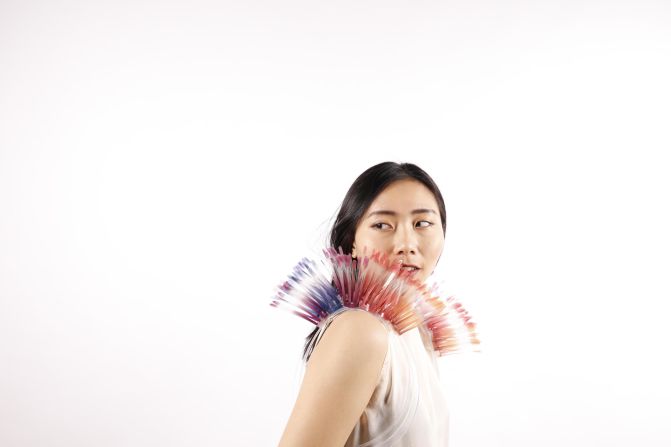
You know that feeling when the hairs on the back of your neck stand up? Well grads from the Royal College of Arts (RCA), England created a wearable body extension called Ripple that they say creates a robotic frisson when computer sensors detect someone in a room is attracted to you.
courtesy Global Grad Show
A suffocating experience —
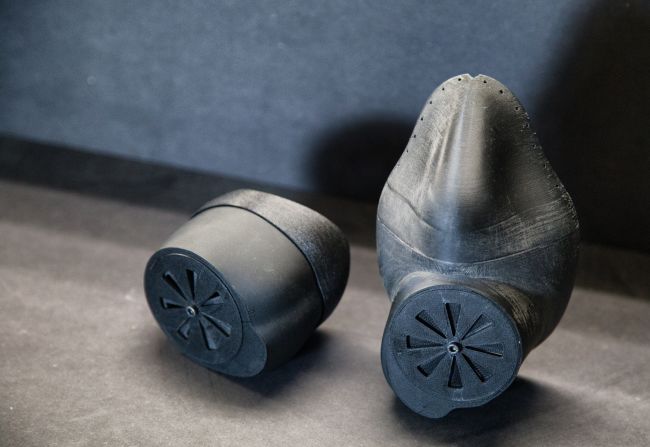
Using product design as a grim wake up call, Yiannis Vogdanis from the Institute for Advanced Architecture of Catalonia created a collection of wearables that simulate environmental conditions such as hypoxia -- low oxygen -- in pollution hotspots around the world.
courtesy Global Grad Show
Space oddity —
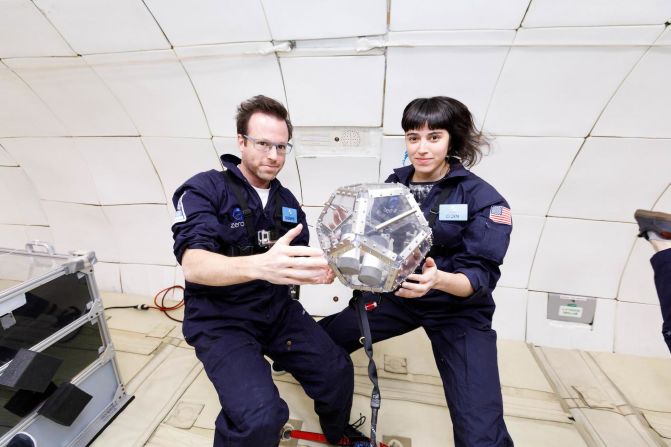
Students at MIT Media Lab, Massachusetts designed a musical instrument for zero gravity, using gyroscopes and sensors to create electronic musical notes.
courtesy Global Grad Show
A cut above —
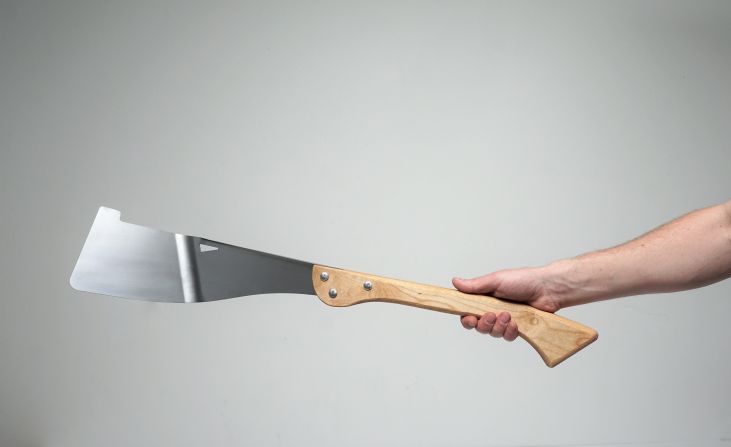
An exercise in ergonomics, Olov Eriksson of Lund University created an angular machete for sugar cane laborers in Nicaragua, designed to reduce stresses on the body and last for generations.
courtesy Global Grad Show
Accommodating life on the road —
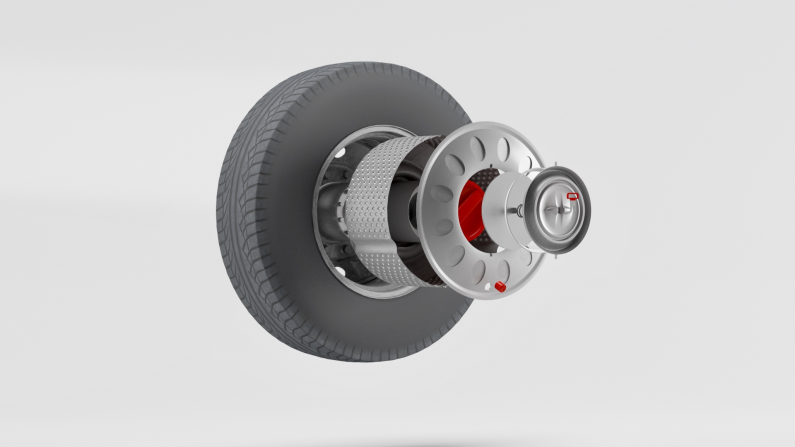
No laundromat, no problem, if you can use your truck wheel as a washing machine. Members of the Art University of Isfahan, Iran were inspired by local truck drivers who are away from home for long stints and often use open water sources to wash clothes. The C.mile drum fits within the wheel and uses its rotations while driving to launder garments.
courtesy Global Grad Show
Pulling water from the air —
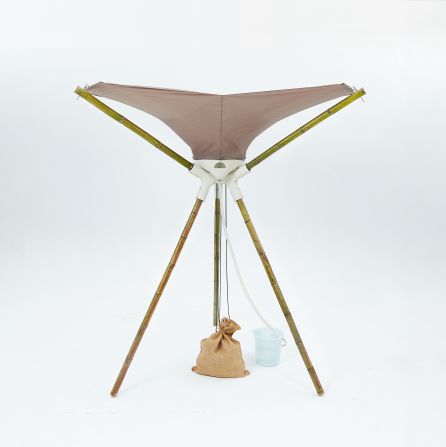
A collapsible water vapor collector, the Aquair by students from National Cheng Kung University, Taiwan, is designed for mountainous areas in tropical climates. The waterproof fabric unit is supported by bamboo struts and utilizes a fan and centrifuge to transport drinkable water down into a bucket.
courtesy Global Grad Show
No hands! —
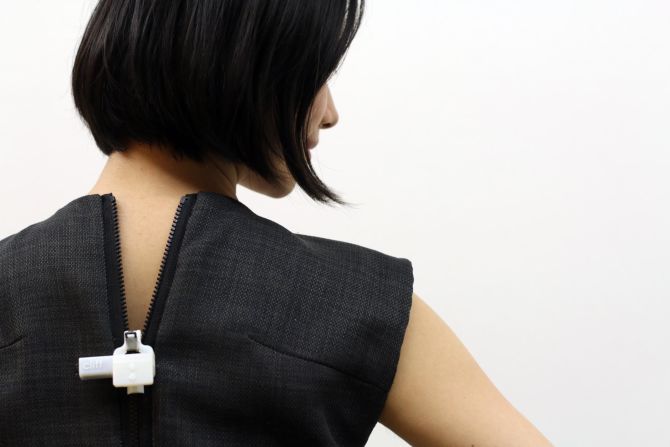
An automated zipper might seem trivial, but not if you have Parkinson's disease. Eindhoven University of Technology students pitched their gadget as a solution for anyone who has difficulty putting on certain clothes -- from the elderly to women who love that dress but hate its unreachable back zipper.
courtesy Global Grad Show
Chocolates for a happy gut —
Students from the RCA created a chocolatey morsel containing a disposable electronic pill -- a "Gutbot" -- that measures microorganisms in the stomach. Gut microbiota can impact sleep cycles, stress, digestive problems and the body's metabolism.
courtesy Global Grad Show
Loved but not lost —
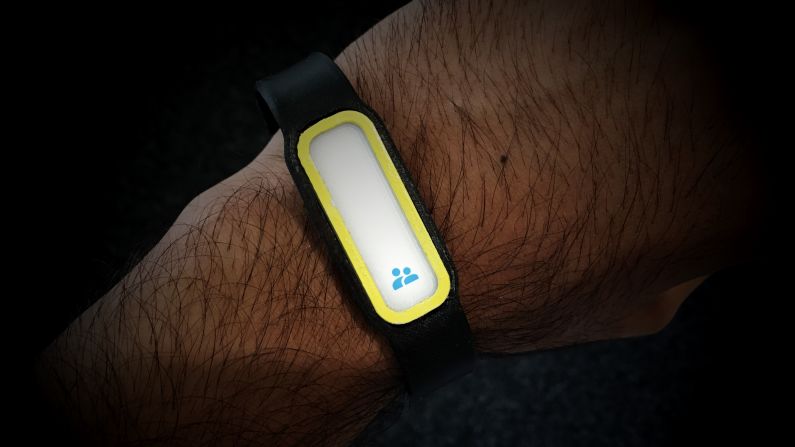
The Haj pilgrimage is undertaken by millions of Muslims converging on Mecca, Saudi Arabia every year. RCA student Hamza Oza created the Rehber location device to help pilgrim families keep track of family members, targeted at the young and elderly. It has a three-mile range and doesn't require a smartphone or rely on heavily-burdened mobile networks.
courtesy Global Grad Show
What lies beneath —
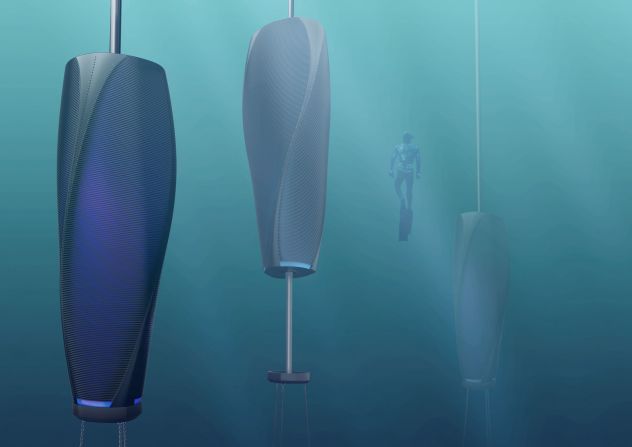
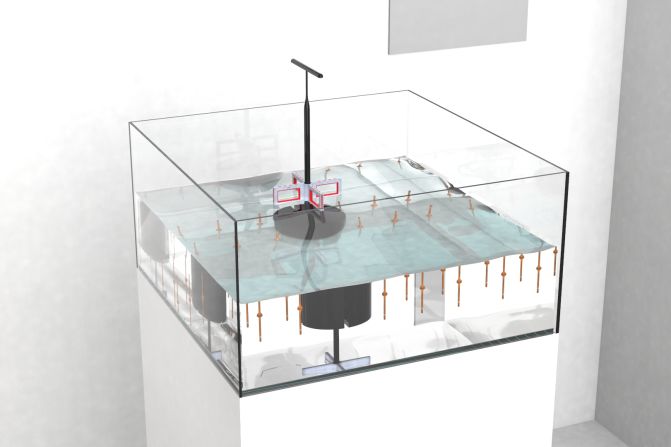
Julianna Probst from the University of Cincinnati proposed a Pelagic Oil Recovery (POR) system for subsurface oil spill cleanup. It uses magnetically charged nanoparticles and other filters to purify ocean water while allowing the collected oil to be reused.
courtesy Global Grad Show
Planning for a world without bees —
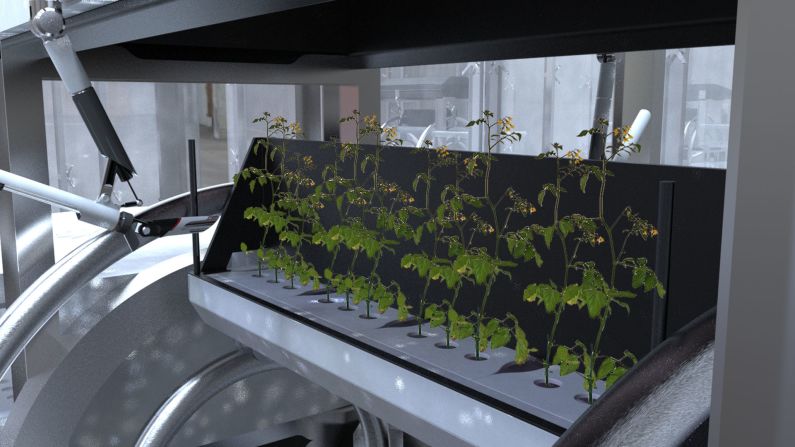
Taking a worst-case-scenario approach to the problem of bee population collapse, students from Monash University, Australia designed a growing environment for plants that uses robotic arms and magnetically charged styluses to transfer pollen.
courtesy Global Grad Show
Stopping flood victims from being swept away —
Also created by students from the Art University of Isfahan, this floatation device for flood victims attaches around street lights. It rises with the water level and is fitted with belts and straps to keep bodies secure.