Your effort and contribution in providing this feedback is much
appreciated.
Close
Ad Feedback
The art of capturing fragrance
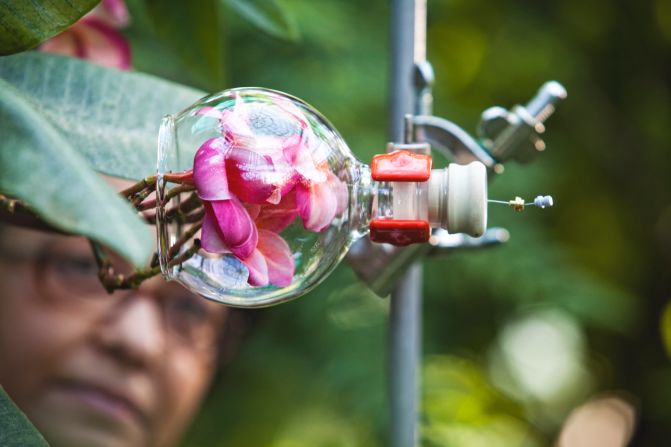
Headspace technology —
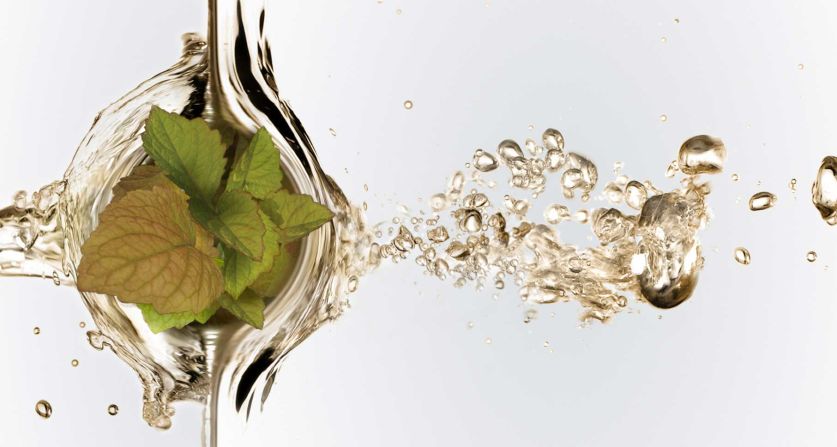
Technology has greatly changed the way scent is captured and perfumes made in recent decades. Here, Headspace technology is used to take scent samples of an exotic flower in its natural environment, making it the least intrusive method of analyzing the chemical components of a plant. The volatile compounds from the flower and its environment are captured on a fine silicone wire, which is analyzed in a Gas Chromatograph Mass Spectrometer. This then generates a printout of all component molecules produced, acting like a 'photograph' of the smell.
IFF
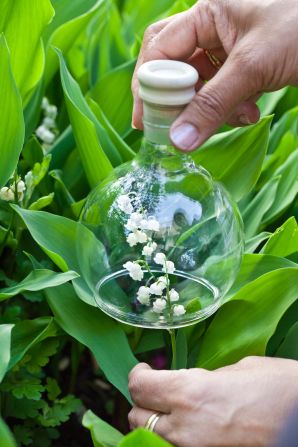
Headspace technology —
'Mute' flowers, such as lily of the valley and lilac, cannot produce a natural extract and must be recreated in the lab. Headspace allows this to happen.
IFF
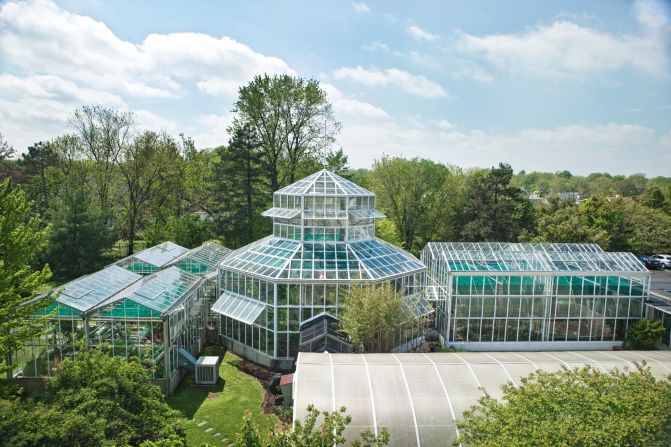
International Flavors & Fragrances (IFF) —
The greenhouses at IFF's Laboratoire Monique Remy is full of plants for research into future naturals.
IFF
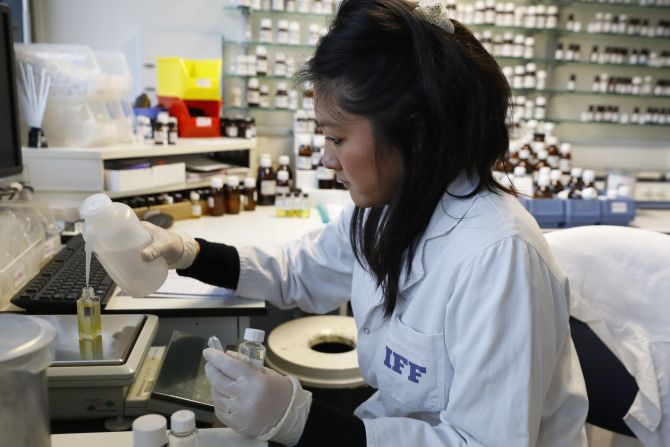
International Flavors & Fragrances (IFF) —
The process of capturing a scent is largely mysterious to the world outside of the perfume industry. An employee of IFF manipulates perfume components at the company's laboratory in Neuilly-sur-Seine, near Paris, France.
PATRICK KOVARIK/AFP/AFP/Getty Images
Clearwood technology —
Clearwood is one of the most innovative materials to launch in the perfume industry in recent years. Created by scientists at fragrance house Firmenich, it can be used as a replacement for patchouli owing to its similar chemical composition.
Firmenich
Max Burton —
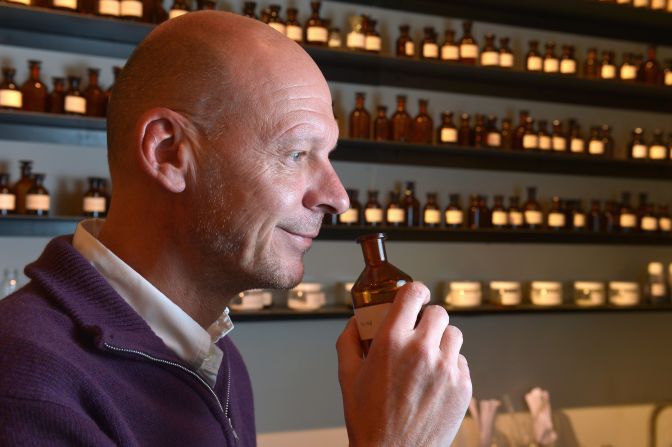
British perfumer Mark Buxton smells one of his creations at his workplace in Paris.
MIGUEL MEDINA/AFP/AFP/Getty Images
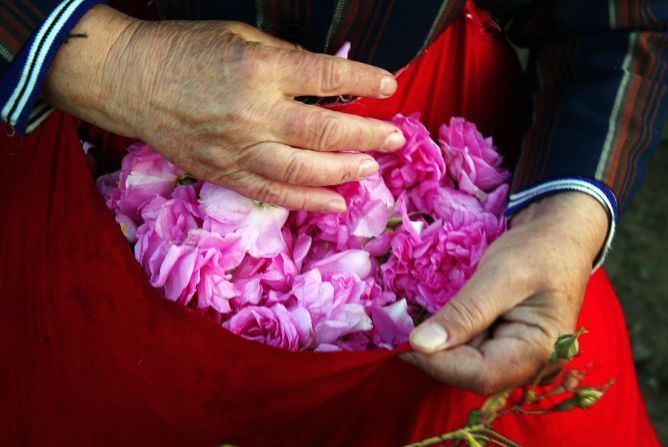
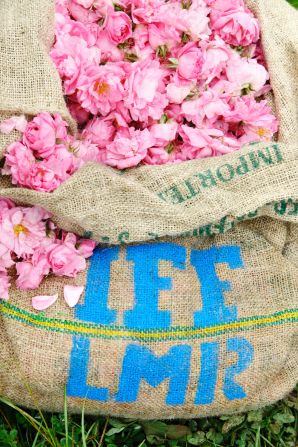
A Bulgarian woman holds a bag filled with picked rose petals in the Valley of Roses, near the town of Karlovo, in central Bulgaria. Its mild climate has made Bulgaria, along with Turkey and Morocco, one the world's three largest producers of rosa damascena, whose oil is a much-wanted perfumery substance.
DIMITAR DILKOFF/AFP/AFP/Getty Images
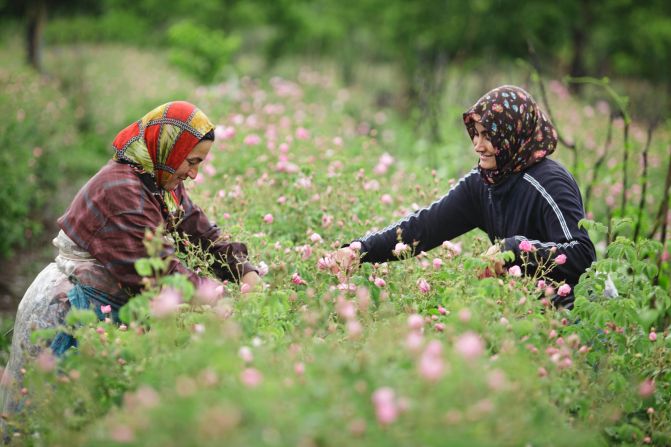
Women pick roses at dawn, ensuring the maximum quantity of oil in the petals in Isparta, Turkey.
IFF
Harvested roses ready to be processed into rose essence.
IFF
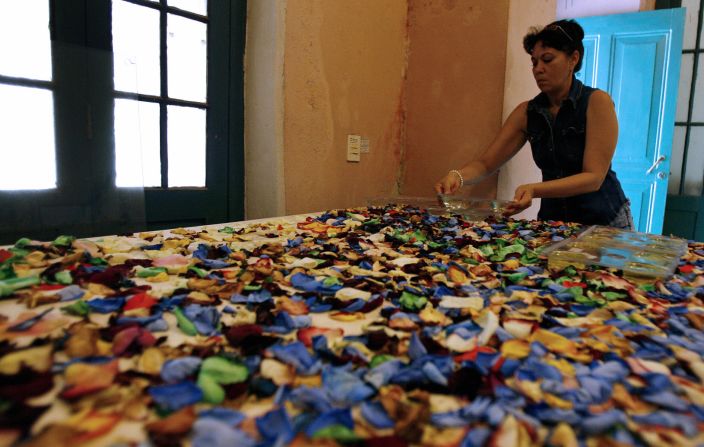
Habana 1791, Cuba —
The Habana 1791 perfumery in Havana, Cuba still uses traditional methods for making its twelve different fragrances. Ingredients here include roses, gardenias, tobacco and orange blossoms.
RODRIGO ARANGUA/AFP/AFP/Getty Images
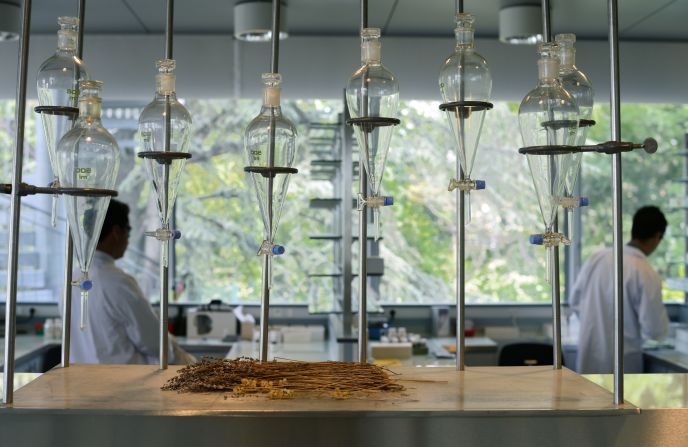
Students at work in a laboratory at the Givaudan Perfumery School in Argenteuil, a northern suburb of Paris, France. The school opened in 1946.