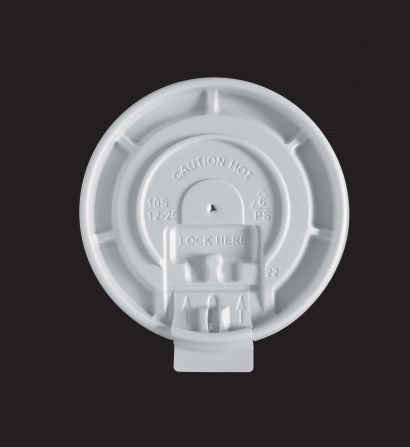
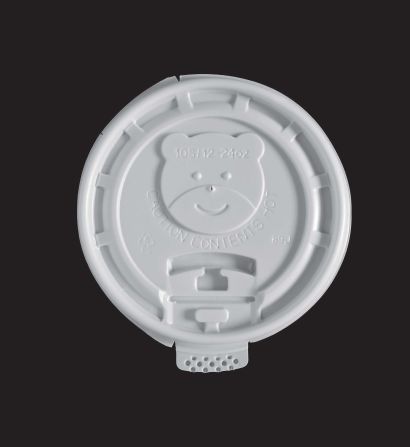
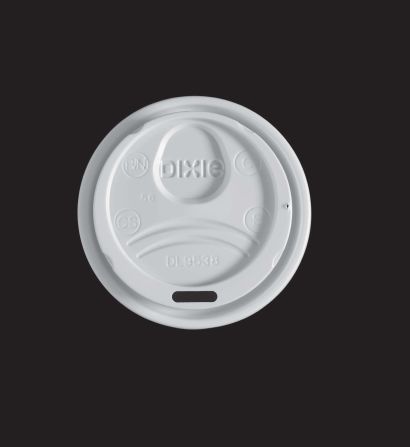
A coffee lid with molded grooves around the edges to catch spilled liquid.
Benjamin English / Princeton Architectural Press
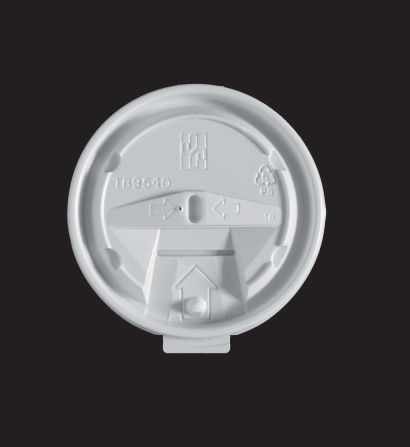
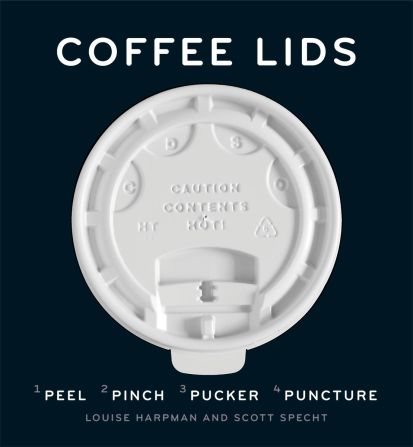
A book titled "Coffee Lids" categorizes the lids in chapters, according to the way they're used by drinkers: pinch, pucker, puncture and, as seen here, peel.
Benjamin English / Princeton Architectural Press
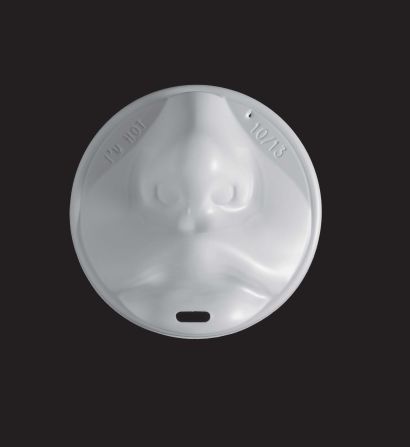
One of the most unusual lids in the book is a South Korean design featuring a protruding nose and lips that drinkers effectively kiss upon taking a sip.
Benjamin English / Princeton Architectural Press
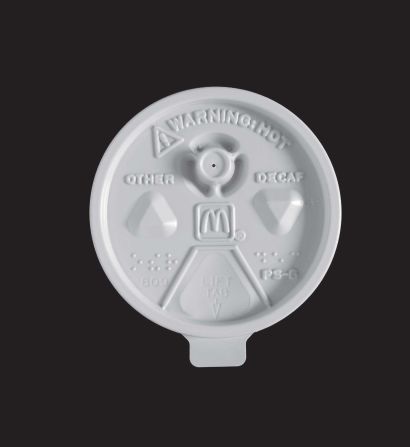
A McDonald's coffee lid featuring Braille markings and a prominent safety warning.
Benjamin English / Princeton Architectural Press
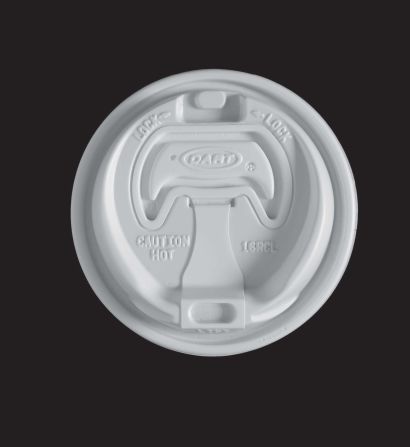
While many of today's disposable coffees come with raised lids to accommodate frothy drinks like lattes and cappuccinos, earlier designs were often flat with a peel-away tab.
Benjamin English / Princeton Architectural Press
In this design, the aperture is revealed by pulling away the tap and locking it onto the opposite side of the rim.
Benjamin English / Princeton Architectural Press
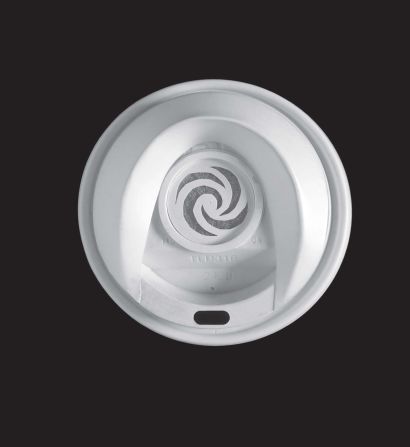
A prototype lid featuring an in-built "aroma pod" that can be filled with coffee granules (or other scents), offering drinkers a further sensory blast.
Benjamin English / Princeton Architectural Press
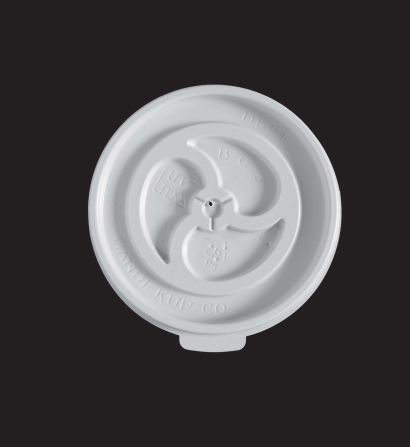
One of the earliest examples in the book, this lid is designed without an aperture. Instead, the tab at the bottom must be torn to create an opening.
Benjamin English / Princeton Architectural Press
Designs listed in the chapter "Pucker" -- where users drink through an aperture in the lid, not the cup -- appear to have prevailed in recent years.
Benjamin English / Princeton Architectural Press
A common design feature is convex dimples that can be pressed by baristas to denote cream, milk or other preferences.
Benjamin English / Princeton Architectural Press
"Coffee Lids," published by Princeton Architectural Press, is available now.