Bio-art: A fusion between nature, science and art | CNN
Thank You!
Your effort and contribution in providing this feedback is much
appreciated.
Close
Ad Feedback
Bio-art: A fusion between nature, science and art
Bruise —
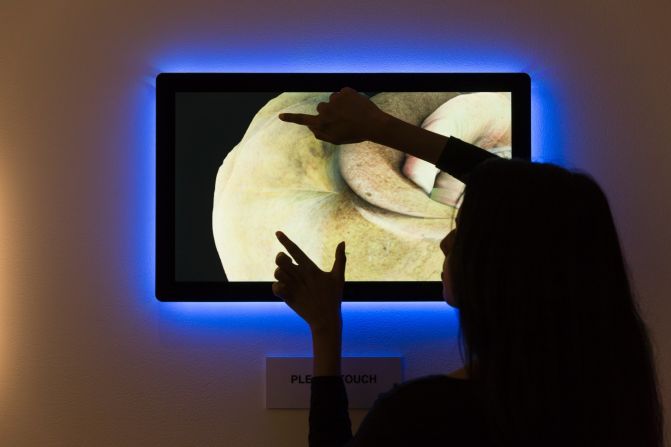
This interactive artwork installation is "Bruise" by Alison Bennett. Currently on display at the RMIT gallery, it invites users to investigate an image of a bruise by touching the display screen.
courtesy of Alison BENNETT
Cabinet of Ocular Obscurities —
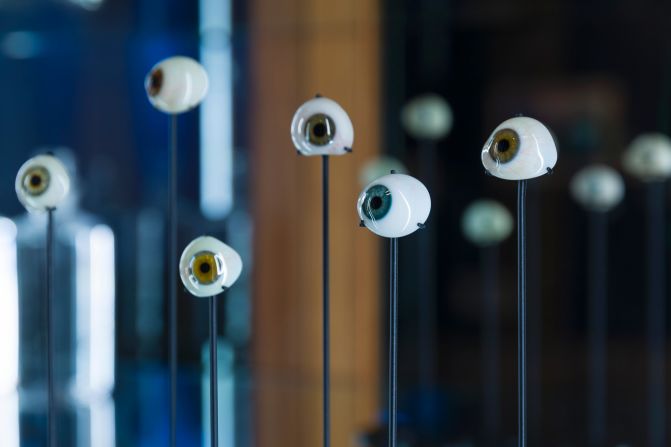
Australian artist Lienors Torre often creates works using glass. Her series, on display at the RMIT gallery, features antique glass eyes as well as cast and blown glass.
courtesy Lienors TORRE
Invasion of the Ants —
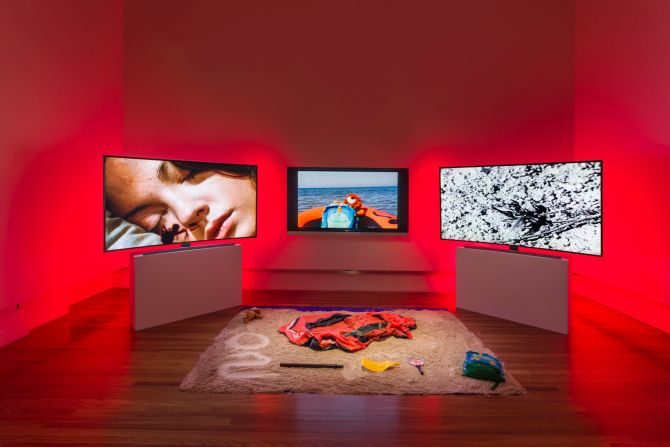
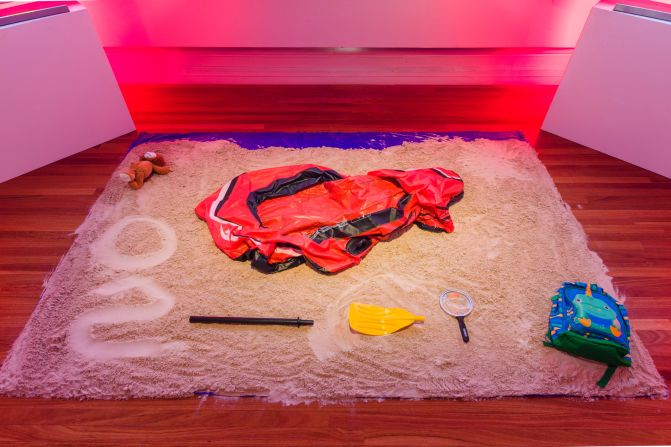
This installation by Sean and Joshua Redmond uses ant invasions -- a natural occurrence where manmade homes become infested with ants -- as a metaphor for the refugee crisis.
Courtesy of Joshua REDMOND & Sean REDMOND
Invasion of the Ants —
The artwork is intended to be commentary on how first world policies affect refugees.
Courtesy of Joshua REDMOND & Sean REDMOND
Song of the Phenomena —
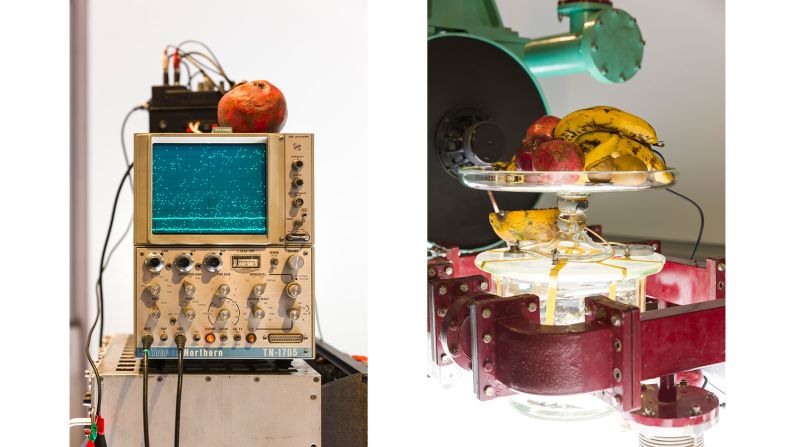
"Song of the Phenomena" by Chris Henschke is currently on display at the RMIT gallery. A large particle accelerator machine shows how organic substances such as fruit emit antimatter.
Chris HENSCHKE // LINAC courtesy of Mark Boland, the Australian Synchrotron // via RMIT
blue/red:VIM/SIMS —
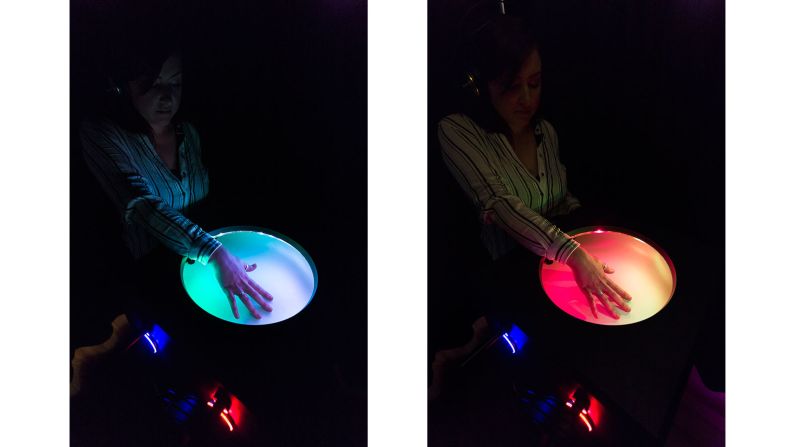
Artist Darrin Verhagen works with group (((20hz))) on this installation titled "blue/red:VIM/SIMS" at the RMIT gallery. The light and sound installation allows users to interact with the art. They can choose between two audio options: to hear a commentary on why soundscapes can induce nausea, or to actually hear the nausea-inducing sounds.
Courtesy of AkE Lab, RMIT University
Stelarc —
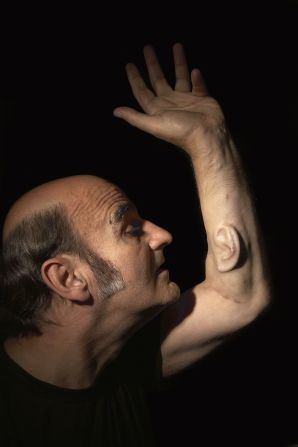
Other artists have also experimented in bio-art. Award-winning Australian performance artist Stelarc, for example, surgically implanted an ear into his arm.
Nina Sellars
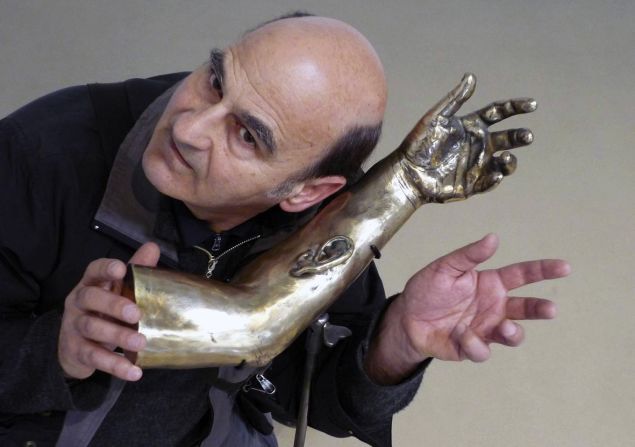
Stelarc —
"It's when art is surprising that it becomes interesting," Stelarc told CNN.
Stephen Jones
Diemut Strebe —
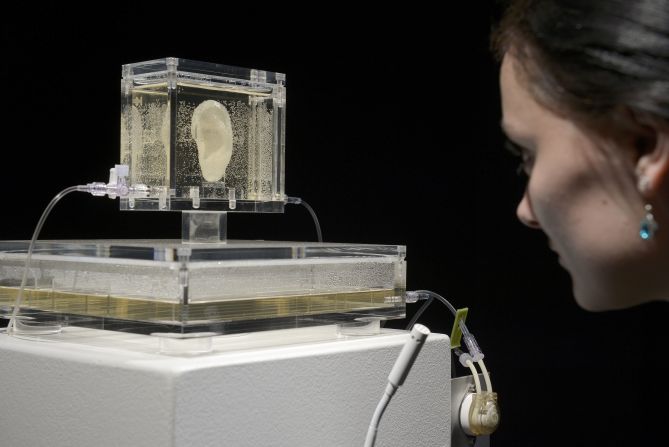
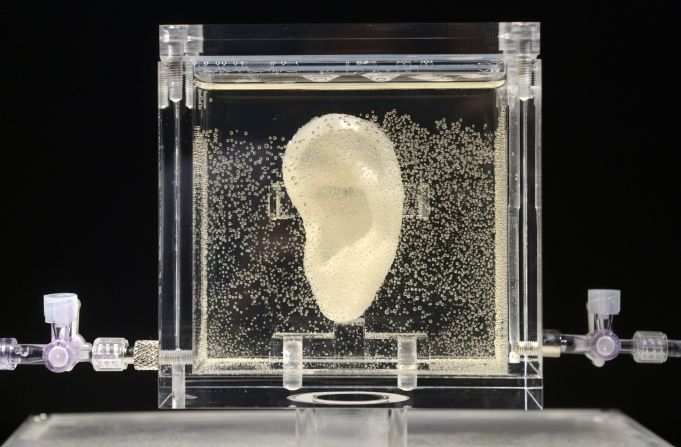
Boston-based artist Diemut Strebe used tissue engineering to create a replica of Vincent Van Gogh's ear.
THOMAS KIENZLE/Getty
Diemut Strebe —
The artist used a piece of an ear donated by Lieuwe van Gogh -- the great-great-grandson of Vincent van Gogh's brother -- to create the ear.
THOMAS KIENZLE/Getty Images
Ferry van Tongeren and Jaap Sinke —
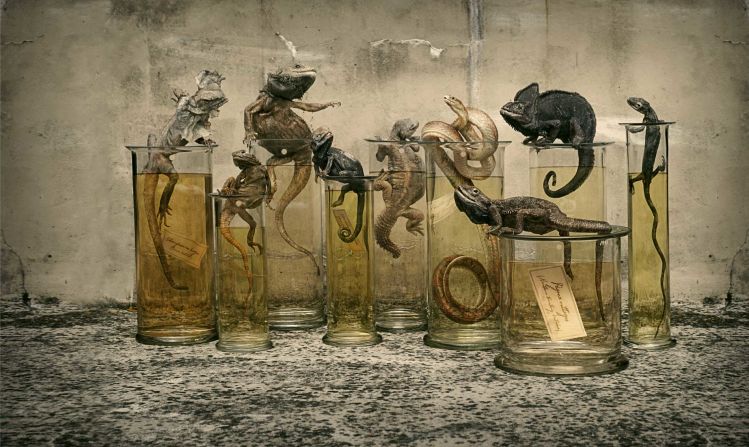
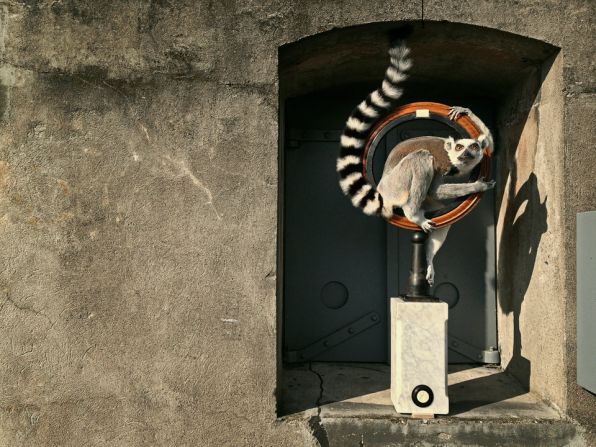
The term bio-art refers to works that incorporate biological sciences -- notably, genes, cells or animals -- with the world of art. Dutch artists Ferry van Tongeren and Jaap Sinke use animals in their works. They apply Victorian taxidermy techniques to produce installations.
Courtesy Fine Taxidermy
Ferry van Tongeren and Jaap Sinke —
"It's about capturing and holding beauty, not death," they told CNN.