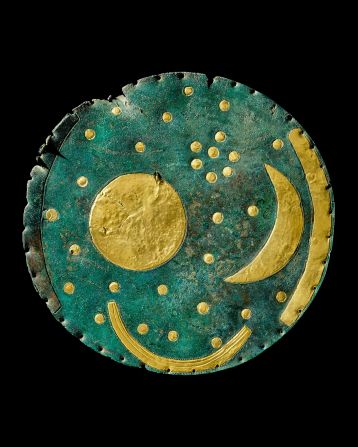
The Nebra Sky Disc was unearthed in Germany and is about 3,600 years old. It's the earliest known depiction of the cosmos. The artifact's inlaid gold is from Cornwall, England, showing the world at that time was deeply interconnected. Photo courtesy of the State Office for Heritage Management and Archaeology Saxony-Anhalt, Juraj Lipták
LDA Sachsen-Anhalt, Juraj Lipták
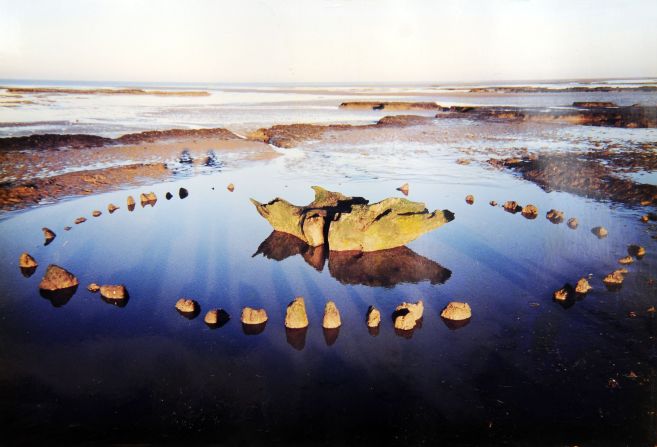
Seahenge, a timber circle with an upturned oak stump at the center, was revealed by shifting sands on Holme Beach in Norfolk, Eastern England, in 1998. Some think the oak stump might have supported a dead body during funeral rituals.
Wendy George
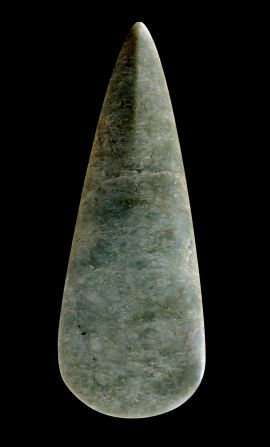
This finely worked jadeite ax-head was made from material quarried in the high Italian Alps 6,500 to 5,500 years ago. It would have belonged to some of the first farmers to arrive in Britain.
The Trustees of the British Museum
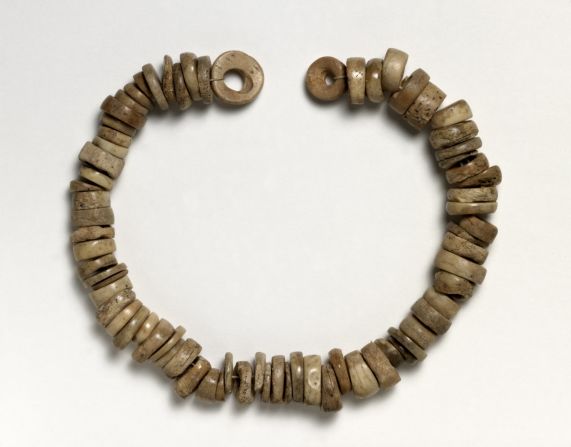
This bone-bead necklace was found in Skara Brae, Orkney, and is 5,100 to 4,500 years old. Many of the objects on display reveal that Stonehenge was not home to an isolated community but one with long-distance connections.
The Trustees of the British Museum
The monument of Stonehenge was built at the same time as the Sphinx and the Great Pyramid of Giza in ancient Egypt.
Peter Richardson/English Heritage
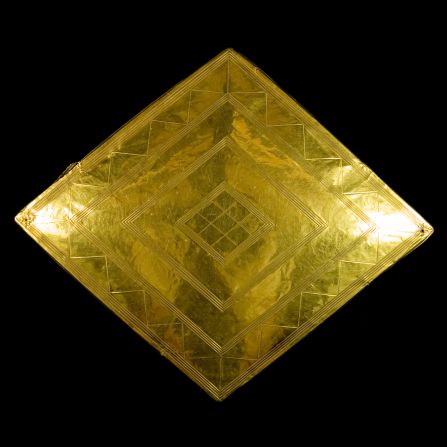
Many individuals were buried in the shadow of Stonehenge with remarkable grave goods. This gold lozenge, regarded the finest example of gold craftmanship in Bronze Age Britain and dating back to 1950 to 1600 BC, was buried on the chest of the Bush Barrow chieftain.
David Bukach/Wiltshire Museum
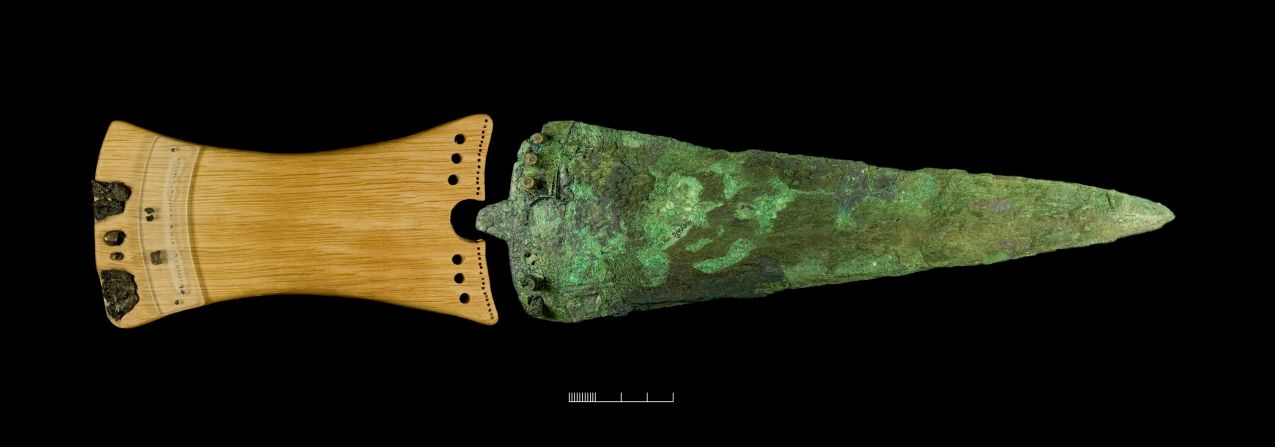
This dagger, with a replica handle, was also buried at the Bush Barrow site near Stonehenge.
David Bukach/Wiltshire Museum
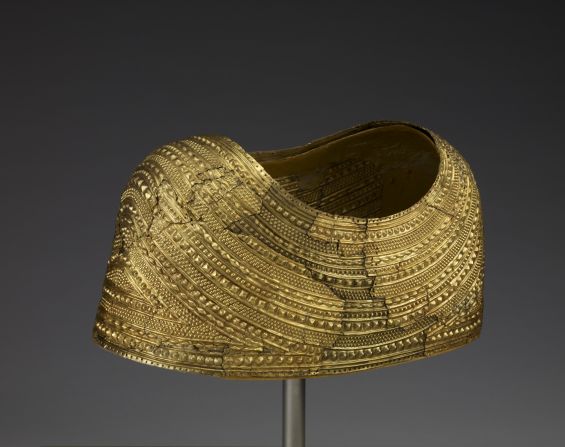
This ceremonial gold cape, found in Wales, is about 4,000 years old and would have marked its wearer as an extraordinary person. It would have been part of an outfit that included more than 200 amber beads sewn to woven fabric.
The Trustees of the British Museum
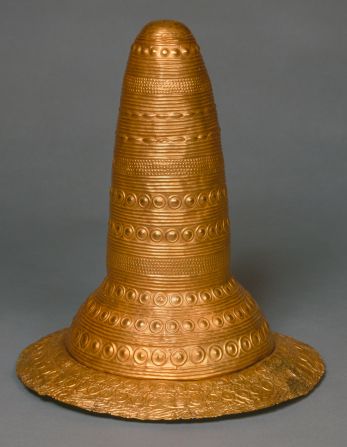
The Schifferstadt gold hat dates from 1600 BC and was found in Germany. It's thought that it could be a cosmic calendar.
Kurt Diehl/Historisches Museum der Pfalz Speyer
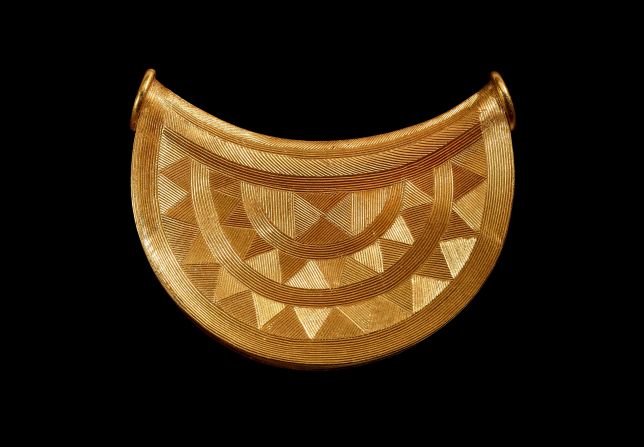
The introduction of metal to Britain about 4,500 years ago meant that the significance imbued in large monuments could be translated to smaller, more personal objects. This gold sun pendant is about 3,000 years old.
The Trustees of the British Museum
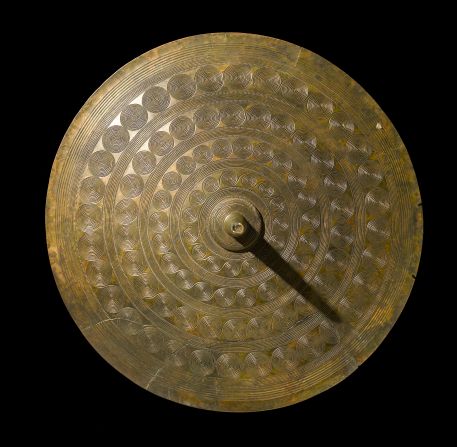
This decorated sun disc, found in Denmark, would have been attached to a woman's belt about 3,400 years ago.
National Museum of Denmark
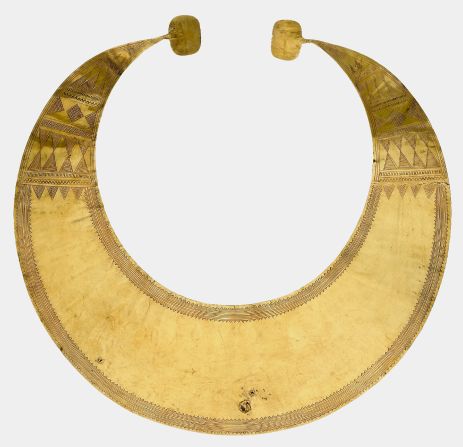
This gold collar is known as a lunala and celebrates the sun. It's 4,400 to 4,000 years old and is from Blessington, County Wicklow, in Ireland.