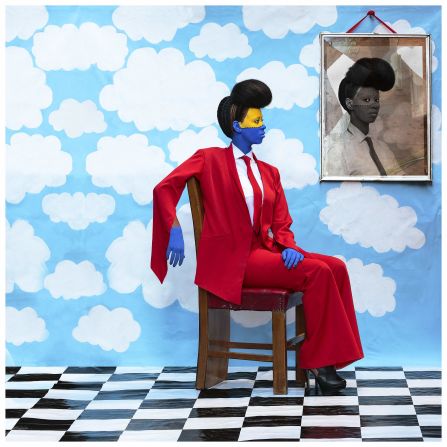
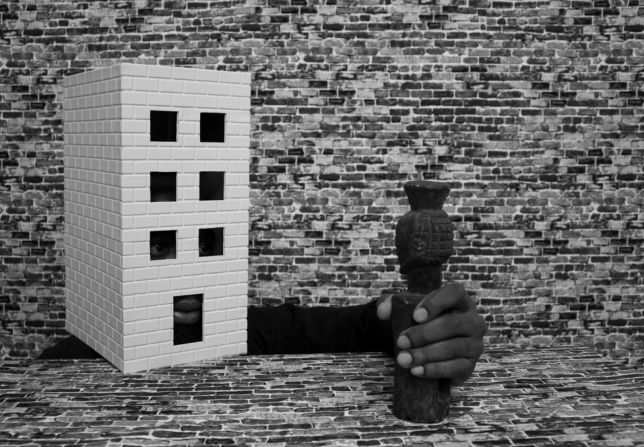
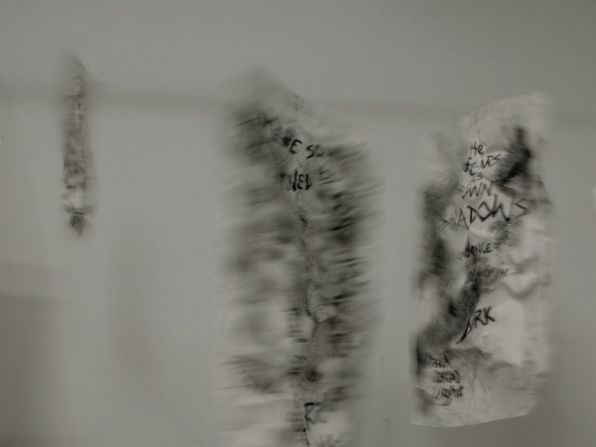
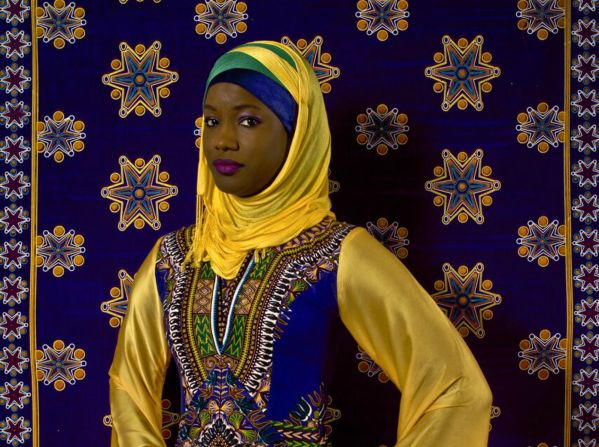
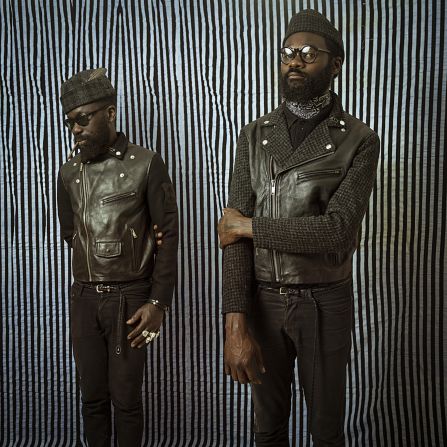
"The distant gaze" (2016) by Ethiopian photographer Aida Muluneh. The image is part of a series titled The World is 9, questioning life, love, history and contentment.
Aida Muluneh/David Krut
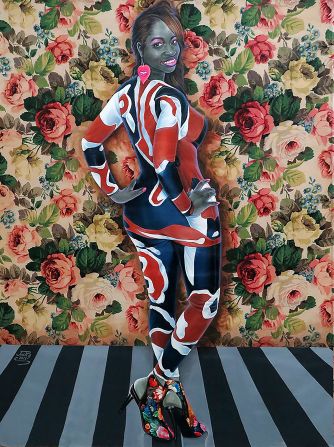
Please Come Back by Derrick Adams. The multimedia artist works with video, sound and 3D performances often exploring the role popular culture plays in perception.
Galerie Anne de Villepoix
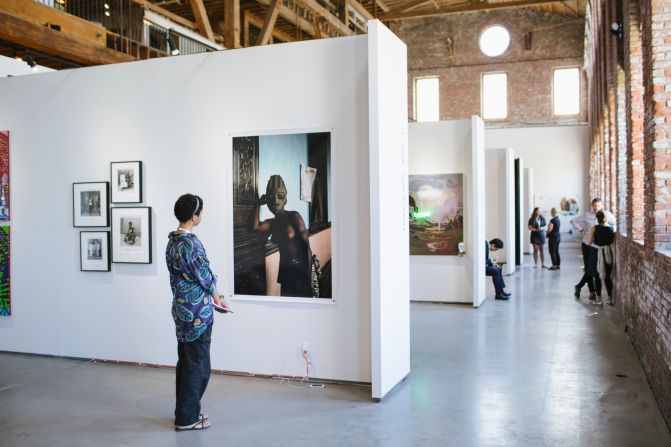
This is the second edition of the exhibition in New York, with returning artists such as Senegalese photographer Omar Victor Diop, Leonce Raphael Agbodjélou, and Aida Muluneh.
Katrina Sorrentino/1:54 Contemporary African Art Fair
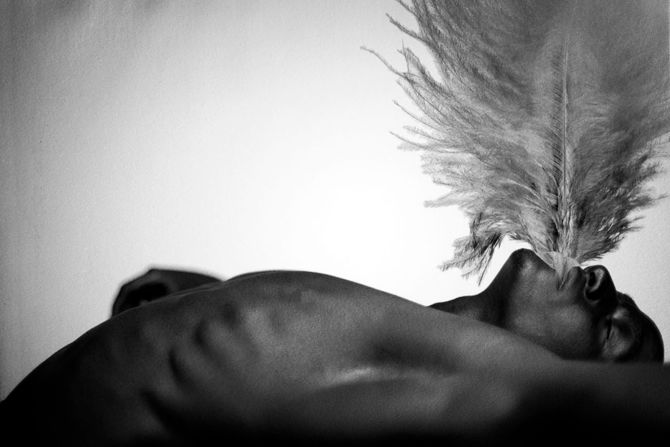
Em'kal Eyongakpa, untitled, from letters from etokobarek (2014). Eyongakpa is a photographer from Cameroon whose surreal images consider human conditioning and the absorption of information.
Em'kal Eyongakpa/Apalazzo Gallery
Oumy Ndour (2015) The Studio of Vanities by Omar Viktor Diop. The Senegalese photographer's works are distinguishable through his vivid use of color and patterns.
Omar Victor Diop
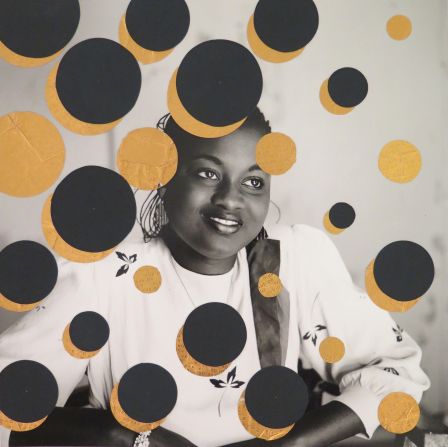
Vincent Michea, Or serie 2 (2015). Working and living in Senegal's capital, Michea's vibrant images aims to capture the country's great past.
Vincent Michéa/Galerie Cécile Fakhoury
Vincent Michéa's Or Série lights up black and white images with gold and orange cut papers, his images are a throwback to Senegal's history.
Vincent Michéa/Galerie Cécile Fakhoury
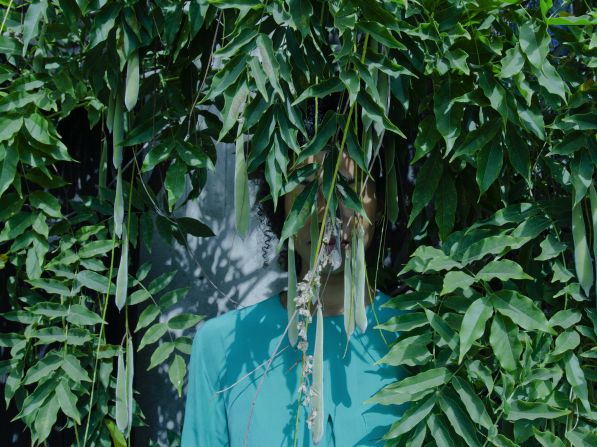
"Ficus Carica"(2015) by Zohra Opoku. What political and psychological role does fashion play in relation to Africa's history and societal identities? These are the issues explored by Accra-based mixed media artist Opoku.
Zohra Opoku/Mariane Ibrahim Gallery
Fashion designers Art Comes First photographed in the Studio of Vanities (2014) by Omar Viktor Diop. The series aims to capture Africa's vibrancy through portraits of the top artists shaping its contemporary urban scene. Its "objective is to portray a generation which endeavors to showcase the African urban universe and its blossoming art production and exchanges", Diop explains.
Omar Victor Diop
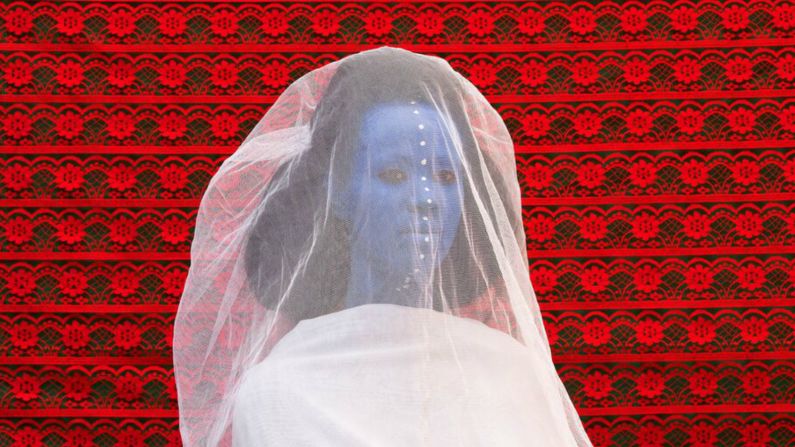
Aida Muluneh, The Morning Bride (2016). The image is part of the Ethiopian's The World is 9 series looking at life, love, history, and whether we can live in this world with full contentment. "I am not seeking answers but asking provocative questions about the life that we live -- as people, as nations, as beings," she says.
Aida Muluneh/David Krut
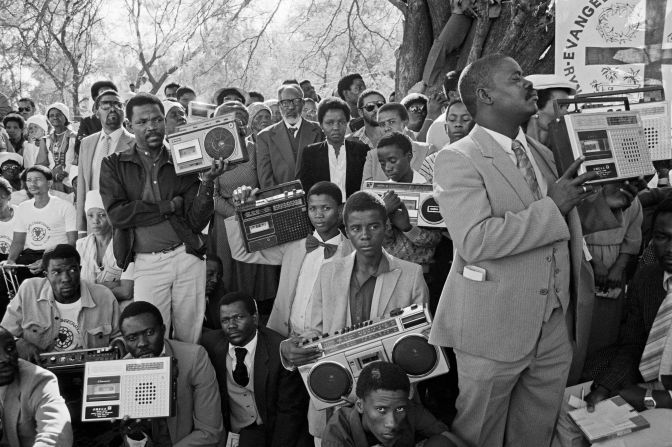
Radio star (1986) by John Liebenberg. Born in South Africa, Liebenberg's collection of photographs documenting the Namibian War of Independence is widely used by historians and researchers.
john liebenberg
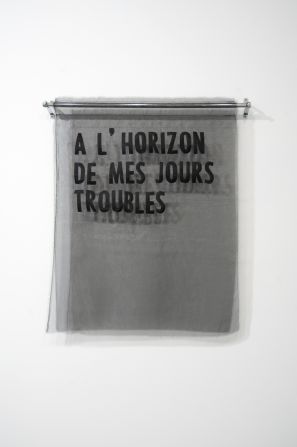
A L'Horizon de Mes Jours Troubles, 2015, by Joël Andrianomearisoa. The Madagascan born photographer works in various mediums, from video to performance and sculpture -- the only unifying theme being his use of black as a color. "I need to be surprised by images. The situation has to be completely staggered. I do not consider myself as a photographer; I am someone who makes images", he says.
Joël Andrianomearisoa
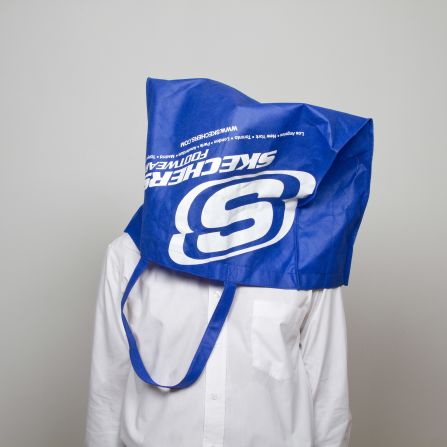
Edson Chagas photographs himself with plastic bags covering his head. The images serve as a pointer to capitalism in Angola.
Edson Chagas/APALAZZOGALLERY
Secession (2015) by Jim Chuchu. The Kenyan photographer envisions future and pre-colonial religious practices in Africa.
Mariane Ibrahim Gallery
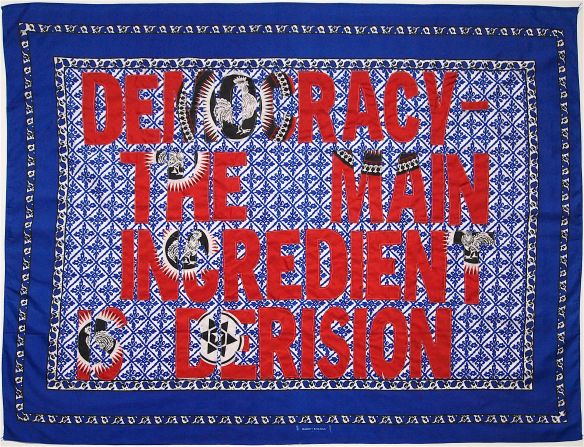
Democracy - the main ingredient is derision (2016) by Lawrence Lemaoana. The continuing discontent with politics in South Africa is directly reflected in Johannesburg born Lemaoana's works. A former professional rugby star, "the works are a commentary on contemporary South African politics", he explains, adding it is "the failed vision on what democracy is to different denominations of our society".'
Lawrence Lemaoana/AFRONOVA Gallery
Elégance by JP Mika (2015). Mika sometimes puts himself in his works through self portraits or adding himself in group composition - most of the time dressed as a "sapeur" (a group of well-dressed men in Congo making cultural statements through their style).'