Today's Show Transcript
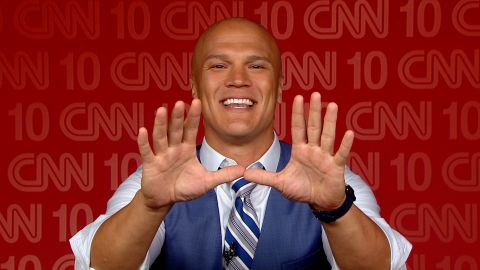
COY WIRE, CNN 10 ANCHOR: What's up, sunshine? I'm Coy Wire. Happy Monday. Motivational Monday. Remember, what is within influences what happens without. So, let's acknowledge the bad when we must, but quickly move to focusing on the good, the positive, the uplifting, getting our minds right so we can shine bright.
We had one of the biggest sporting events on the planet last night, and congrats to all the Seahawks fans out there winning the Super Bowl. They get redemption from the last time they made it to the Super Bowl in 2015 when they lost the big game against the Patriots. Congrats to Seattle.
Also in sporting news, the 2026 Milan-Cortina Winter Games are officially underway. I'll be heading to Italy later tonight. Can't wait to shout some of you out from there. I will have updates from the games for you, and of course, the other top news stories of the day.
Twin cauldrons were lit in Milan and Cortina on Friday to officially kick off the games, and there's already been plenty of historic moments and heartbreak right out of the gates. Perhaps the biggest headline, skiing legend Lindsey Vonn, whose incredible comeback attempt came to an end Sunday.
Vonn crashing during the women's downhill finals and had to be airlifted from the course as the world watched in stunned silence. The 41-year-old is one of the greatest skiers of all time. She was determined to compete despite completely rupturing her ACL, or anterior cruciate ligament, in her knee during a training run just nine days earlier.
At the time of this taping, she was airlifted by helicopter to a hospital in Innsbruck for evaluation. She is brave, she is bold, and she was determined to continue chasing that dream. We wish her a speedy recovery.
As for the competition, we have a new Olympic queen of speed, 30-year-old American Breezy Johnson, taking home gold in that women's downhill after missing the last Winter Games with an injury. The Wyoming-born, Idaho-raised Breezy says that at speeds of 80-plus miles per hour, it's like Formula One on ice. Congrats to Breezy.
These Winter Olympics feature some incredibly unique events, and I got the chance to try one of them. Curling, the popular Olympic event, is a one-of-a-kind of experience, and I can confidently tell you it is much harder than it looks. I hit the ice alongside CNN's Victor Blackwell to get a crash course in curling from our very own meteorologist extraordinaire and part-time curling coach, Allison Chinchar.
(BEGIN VIDEOTAPE)
ALLISON CHINCHAR, CNN METEOROLOGIST: This may look like house cleaning on ice.
VICTOR BLACKWELL, CNN ANCHOR: Lots of folks would not even think this is a sport.
WIRE: It's actually one of the most strategic sports in the Olympics.
ALL TOGETHER: Welcome to curling.
CHINCHAR (voice-over): No skates, no sticks, just stones, brooms, and extreme thinking.
BLACKWELL: Yeah, it looks chill until it isn't.
WIRE: Curling is weird, wonderful, and extremely intense.
CHINCHAR: Wait, keep swiping.
WIRE: We got to spend some time with the curlers at the Peachtree Curling Association in Marietta, Georgia, the only dedicated curling facility in the entire state, and our very own Allison Chinchar showed us the ropes.
BLACKWELL: So, what is curling?
CHINCHAR: So, it's kind of like shuffleboard on ice. Essentially, you have two teams of four different people, and the object is to get the stones all the way from one end down to what looks like a bullseye. It's called the house. The closer to the center, that's the point that wins the game.
Essentially, each team throws eight stones per end. The players will take turns sliding the stone down the ice toward the house with the goal of getting it as close to the button as possible.
Now, the stones can also be used to knock other stones out of the way or even block shots. Those are called guards. Once the stone is released and crosses the hog line, your teammates can begin sweeping.
Now, it must cross the far hog line in order to actually stay in play. If not, it's removed. You score one point for each stone closer to the button than the opponent's closest stone, but stones must be at least partly inside the house to count.
WIRE: That's a long way away. I didn't realize it was that far.
CHINCHAR: That's why you have sweepers, because your sweepers can help assist the rock, making it all the way down, just in case you don't quite give it that bump that's needed to make it all the way to the end.
WIRE: Once we got the rules down, it was time to slide into the game.
CHINCHAR: As I push, you are going to sweep almost like you're pushing down on the ice. You're trying to almost make a divot as you sweep. Sweep! Sweep! Hard!
Ready?
BLACKWELL: Sweeping melts the ice slightly.
WIRE: It makes the stone travel farther.
BLACKWELL: And sweeping isn't cleaning, it's science.
WIRE: The harder we sweep --
ALL TOGETHER: -- the farther it goes.
WIRE: That's like bocce ball.
CHINCHAR: It is. It's like bocce meets shuffleboard meets ice. Get in your position, then put your foot on this.
WIRE: I can do it. Believe.
CHINCHAR: There you go.
BLACKWELL: Wait. I don't know what to do with that.
CHINCHAR: One, two, three.
WIRE: Is there a do-over in the Olympics? Thankfully, we had plenty of seasoned curlers on the ice to learn from.
MEAGHAN THOMSON, BOARD MEMBER, PEACHTREE CURLING ASSOCIATION: I live in Atlanta, and I started curling here when we built this place 10 years ago. It's harder than it looks. It's got a little bit of flexibility. It's got a little bit of cardio with the sweeping. And I say it's harder than it looks, but we've never had anyone not be able to do it.
STACEY RICE, BOARD MEMBER, PEACHTREE CURLING ASSOCIATION: I've been curling for seven years now, and I love it. And that's the beauty of curling, is the whole family can get involved, just like tennis. But it's a sport that you can do at a beginner's level, intermediate, advanced, all the way up to the Paralympics.
WIRE: The fascinating winter sport originated on frozen Scottish lochs and ponds dating back to the 1500s. It's been a regular inclusion in the Winter Olympics since 1998.
THOMSON: Of course, it's very popular in Canada and Scotland, but it's starting to spread in popularity across lots of different countries. So, as long as they can have access to a sheet of ice, they can start curling. And so you're seeing a lot more non-traditional, is how I'll say it, countries that are starting to get into curling. We've got Puerto Rico now, Kenya, Nigeria, Australia, New Zealand. So, it's really cool to see those countries get represented now in our sport.
WIRE: The best part, though, might be when the games are over. It looks kind of calm, but it is a lot of fun, and it's kind of fierce.
BLACKWELL: Yeah, and so now when you watch the 2026 Olympics, you'll know what's going on.
CHINCHAR: And now that it's all over, and you finally know what you're supposed to do, now's the best part. This is where we all hang out afterwards. It's called broom stacking, have a drink, chat with some good friends, and enjoy the time. But you're missing the very last step. That is what really separates you from a true fan, and that is the hats.
WIRE: Yay.
CHINCHAR: Perfect.
WIRE: Cheers.
CHINCHAR: Cheers.
BLACKWELL: Cheers.
(END VIDEOTAPE)
WIRE: Pop quiz hot shot.
In New York City about what percentage of households rent their homes versus owning them?
30 percent, 50 percent, 70, or 90?
If you said 70 percent, ding, ding, you are correct. Nationwide, it's the opposite. About 65 percent of U.S. households own their homes. New York City ranks number one for highest rent prices in the United States.
Making housing more affordable has been one of the key promises of New York City's new mayor. But the crisis also contributes to another overwhelming problem in the city. Over 300,000 New Yorkers are unhoused, with many of them living on the streets. As the temperatures plunge, so do their odds of survival. And that has advocates and social workers working as fast as they can to get them into shelters. Our Gloria Pazmino has more.
(BEGIN VIDEO CLIP)
ALY COLEMAN, PROGRAM DIRECTOR, CUCS STREAT OUTREACH TEAM: We're seeing who is on the street at this point in the day, who might be in need of assistance, clients that we don't know, people that we are trying to connect with.
GLORIA PAZMINO, CNN NATIONAL CORRESPONDENT (voice-over): At least 17 people have died during the cold temperatures in recent days. Several of them had previously interacted with the shelter system.
MOLLY WASOW PARK, COMMISSIONER, NEW YORK CITY DEPARTMENT OF SOCIAL SERVICES: Until we are thinking more holistically about how systems interact and also developing housing at a scale that we haven't seen in a long time, you know, we are going to have to continue to wrestle with homelessness.
PAZMINO: The city's cold weather emergency has created a challenge for Mayor Zohran Mamdani. The city has opened additional shelters, increased bed capacity, and set up dozens of warming centers. But not everyone is receptive right away.
Safe havens are only one part of the city's effort to combat a crisis that's been unfolding for years. More than 80,000 New Yorkers live in city shelters. An additional 4,500 people are estimated to live on the street. These transitional shelters can be the beginning of recovery for some.
(END VIDEO TAPE)
WIRE: Today's story, getting a 10 out of 10, a father-son referee duo sharing a career milestone. High school wrestling ref Dale Acheson has been officiating for more than four decades. His son Jared followed in his footsteps and has nearly 20 years under his belt after being inspired by dad.
Last week marked a special moment for the pair when they both took to the mats to officiate the Iowa State Wrestling Tournament. They have officiated together before, but they say this one means the most.
(BEGIN VIDEO CLIP)
DALE ACHESON, HIGH SCHOOL WRESTLING REFEREE: This certainly is one of the greatest moments I think of our officiating group. It's something we've dreamed of, working together at the state tournament, and so this probably is the pinnacle I would say.
(END VIDEO CLIP)
WIRE: Jared says each new meet allows the pair to grow closer, bonding over their shared passion.
(BEGIN VIDEO CLIP)
JARED ACHESON: I've watched hours and hours of my dad officiate, and he's in the Hall of Fame, and so I wanted to learn from one of the best.
(END VIDEO CLIP)
WIRE: All right, superstars, shout out time now. This first one from our CNN 10 YouTube channel, Miss Jimena at Next Gen Academy in Albuquerque, New Mexico. Your Griffins showed up and showed out on our YouTube page over the weekend, and they want to wish you a healthy and restful maternity leave.
And from Instagram, Miss Flaherty at the Louis F. Angelo School in Brockton, Massachusetts. Go Gators, rise up everyone, and thanks to all of you for making me a part of your day.
Your love keeps me warm, and I'm going to need it. I'll see you soon from the Winter Olympics in Italy. I'm Coy Wire, and arrivederci.
END
CNN 10's Weekly News Quiz


 • Video 10:50Video CNN10 How the NFL is leveling the playing field for the Superbowl 10:50
 • Video 9:50Video CNN10 Why Pandas are unlike any other bear 9:50
 • Video 10:19Video CNN10 A first-of-its-kind ban on … hidden door handles? 10:19
 • Video 10:55Video CNN10 A father-daughter duo makes Grammy history 10:55
 • Video 10:29Video CNN10 Meet the inventor of the Super Soaker, who's next idea could help our warming planet 10:29
 • Video 10:09Video CNN10 Could A.I. become part of your school's curriculum? 10:09
 • Video 10:49Video CNN10 How a "self-eating" spacecraft could make exploration more affordable 10:49
 • Video 11:09Video CNN10 The tiny tech revolutionizing what we know about butterflies 11:09