podcast
CNN 5 Things
We bring you 5 stories that will get you up to speed and on with your day. Updates at 7am, 12pm, and 6pm Eastern, every weekday.
One Thing: Trump Strikes Iran (Again). How Long Will It Last?
CNN 5 Things
Feb 28, 2026
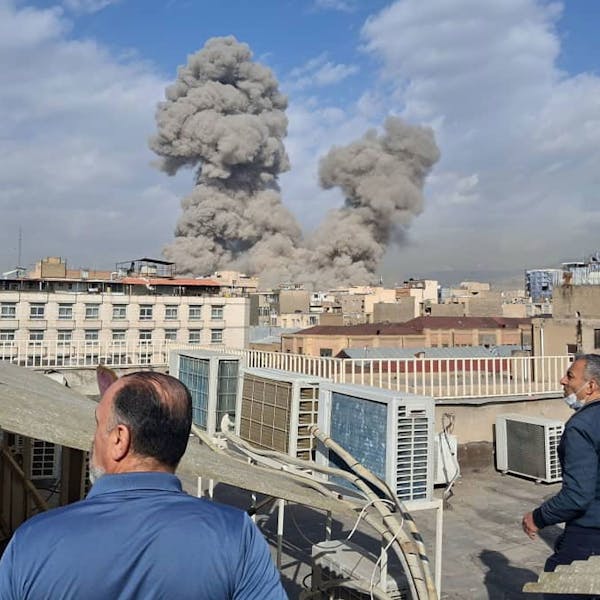
After months of planning, the US and Israel struck Iran as part of a massive operation aimed at unseating the hardline Iranian regime. Supreme Leader Ayatollah Ali Khamenei was killed in the strikes, according to Israeli sources. Iran has retaliated, hitting US military bases and major population centers across the region. So how long will this war last? And is regime change even feasible? We break down what we know as of Saturday afternoon.
For more: Trump launches the regime-change effort in Iran that he pledged to avoid
---
Guest: Natasha Bertrand, CNN Correspondent
Host: David Rind
Producer: Paola Ortiz
Showrunner: Felicia Patinkin
Photo: AP
Episode Transcript
David Rind
00:00:00
Welcome back to One Thing, I'm David Rind, and is this one broken promise or breaking point?
Kelly Ryerson
00:00:06
There are many people that will not be coming back. This lost a lot of people.
David Rind
00:00:10
Why Maha is fuming mad about an herbicide. If you were to put a grade on what this administration has accomplished versus what you would hope for going in, what would you give it?
Kelly Ryerson
00:00:25
I give the EPA a D and I give HHS an A and I gave the USDA probably a B minus.
David Rind
00:00:34
That's a very big bag. Kelly Ryerson has been part of the Maha movement since day one, in fact way before Make America Healthy Again was even a thing. After giving birth to her second child, Kelly started experiencing a range of debilitating symptoms stemming from what she later discovered was an autoimmune condition. She said she started feeling better after she gave up gluten and started eating organically. And it was during this journey where she met a scientist who told her about a chemical called glyphosate.
Kelly Ryerson
00:01:06
Roundup, as it's better known, is sprayed on our grains right before harvest. And I said, well, that isn't good. We all know what Roundup is. So if you've seen it at Home Depot, this is not a good situation. Dad, it's sprayed right on our food.
David Rind
00:01:21
Roundup is the nation's most widely used weed killer. Glyphosate is one of the herbicides in it. It helps kill unwanted plants. And in 2018, the company that makes it, Monsanto, was being taken to court in San Francisco over claims that glyphosates causes cancer, something Monsando strongly denies. It ended up losing that case, among others that year, but had the damages drastically reduced on appeal. It has also won some other cases outright. But it was in that courtroom that Kelly met a certain environmental lawyer.
Kelly Ryerson
00:01:51
I walked right into the courtroom, sat right next to R.F.K Jr., who was the attorney who was litigating, so this was in 2018, and made myself like a fake girl as a blogger to blog that blows during the courtroom to really tell what was happening there.
David Rind
00:02:06
'From that moment on, Kelly decided to devote her life to fighting against chemicals like glyphosate. She still goes by the glyphisate girl on Instagram. Before we go any further, I just wanna talk about what the science says about the impacts of glyphousate because it is not totally settled. In 2015, the World Health Organization classified glyphophate is, quote, probably carcinogenic to humans. Two large meta-analyzes have found that people exposed to glyphusate have a higher risk of non-Hodgkin lymphoma. The EPA says it looked at a more comprehensive dataset than the WHO and concluded that glyphosate is, quote, not likely to be carcinogenic. Also, a review by the European Union did not find enough evidence to say that glyphasate causes cancer. Monsanto and its parent company Bayer insist it does not cause cancer. Bayer's website says, quote experts and regulators worldwide have concluded that LifeSafe based products can be used safely as directed. In fact, last month, Bayer proposed a $7.25 billion settlement to resolve current and future claims alleging that Roundup causes cancer. The settlement would not include an admission of liability or wrongdoing. And just one day later.
Kelly Ryerson
00:03:17
It was like a gut punch, like a huge gut punch.
David Rind
00:03:19
President Donald Trump signed an executive order, declaring that glyphosate is quote central to American economic and national security and called for an adequate domestic supply. In short, Trump wants more glyphocate, not less, which is the exact opposite of what moms like Kelly have been calling for.
Kelly Ryerson
00:03:38
Of all things. I mean, I have dedicated my life to it now for over a decade. So that really I'm.
David Rind
00:03:45
Did you feel betrayed?
Kelly Ryerson
00:03:46
I feel totally betrayed. The fact that an executive order calling out as a national security issue to have glyphosate mined and protected is so outlandish and so poorly executed strategically from a political standpoint that I have no idea what they were thinking in that department.
David Rind
00:04:09
What's also really interesting here is that HHS Secretary Robert F. Kennedy Jr. Says he's also on board with this executive order. This is the same person who took Monsanto to court over cancer claims and won and was reiterating those beliefs as early as January of this year.
RFK Jr.
00:04:24
Well, I believe that glyphosate causes cancer.
David Rind
00:04:30
But just a few weeks later, he was on Theo Vonn's podcast and sounded a little less adversarial.
RFK Jr.
00:04:40
Right now, if you ban glyphosate outright, it would put out of business, 80% of our farmers. Got it.
Theo Vonn
00:04:43
Wow, so we're kind of dependent upon something that we know makes us sick. Yeah.
David Rind
00:04:48
And after the executive order, Secretary Kennedy wrote a long post on social media, which started off by saying, pesticides and herbicides are toxic by design and put Americans at risk when introduced into the food system. But ultimately, Kennedy said the EO was necessary to protect against adversarial nations like China and to make sure farmers don't lose their livelihoods. Does none of that resonate with you at all?
Kelly Ryerson
00:05:12
It actually, that part does resonate with me because I work with many farmers who are dependent on it currently. They are currently dependent on glyphosate. And it isn't a good idea to have China manufacturing such an important chemical when we have the ability to do it ourselves. So it's not even so much that, it's that it was paraded in the form of an executive order with no other explanation or no parallel comment that now we're gonna get off of this chemical treadmill. And it goes even beyond that because this is also in the context of several attempts that the White House has supported to give full immunity to pesticide manufacturers when we get sick from exposure. We have the White House that came in in support of Bayer for the Supreme Court to take up a case that will strip us of our rights to sue pesticide manufactures. And I'm just like looking all over and then and then just to in case we didn't notice to bring in a cherry on top of an executive order, just to say. How important glyphosate is, is just too much. It's so, it's so overstepping.
David Rind
00:06:17
You can hear the frustration and exasperation in Kelly's voice. She's not alone. So many in the Maha movement who voted for Trump solely so they could see action on healthier food and less pesticides are feeling kind of duped. And with the midterms kicking off in earnest this Tuesday with primaries in Texas and other states, a key voting block that helped boost Republicans in 2024 might not be there this time around.
Kelly Ryerson
00:06:42
I really need to see, and I know many people do, we need to see some proactive action to signal to us. President Trump has not forgotten what his mandate was, his own mandate that he gave to make America healthy again, which included these exposures. I can tell you that judging from all the emails that I didn't ask for and all of the DMs that I've now received since his EO, and there are many people that will not be coming back. This lost a lot of people. And you know, and that sucks. And I'm mad that the president has put me personally and all the people that have gone to bat for him in this position. It looks really bad. It's embarrassing.
David Rind
00:07:22
'But is this a full-on split between Maha and MAGA, or will other wins on vaccines and food dyes be enough to satisfy the base? Will this unrest actually shape the trajectory of the midterms? Sarah Overmahl covers health policy and politics for CNN. So Sarah, we just heard from Kelly Ryerson who said she's feeling betrayed over this glyphosate executive order, but are there policy wins Maha is pleased with a year plus in the Trump second term.
Sarah Owermohle
00:07:49
'The things that people are most happy with are the actions that they've taken on food, both with reformulating the dietary guidelines, the so-called reverse food pyramid, and artificial food dyes, their promises to come after ultra-processed foods, especially the ingredients in them. That's where they're most happy. On vaccines, it's a little bit more complicated while people are really happy with some of the things that they have done, for instance, whittling down the recommended vaccines for children. Questioning when a child should get, say, the hepatitis B vaccine, there's actually a lot of Maha advocates that want to see even more action, I would say.
David Rind
00:08:26
They don't think it's gone far enough.
Sarah Owermohle
00:08:28
'No. You might be surprised by that, but one of the things that people have been most adamant about is mRNA vaccines, which people got familiar with first with the COVID-19 vaccines, but now there's discussion about the flu shots. So that's been a point of frustration too.
David Rind
00:08:43
Going back to this pesticide issue, it seems like the folks are upset about not just the executive order, but also that it seems like the administration is kind of signaling that they want the Supreme Court to weigh in on a decision that could strip people the right to sue pesticide manufacturers. So this even goes beyond just the health impacts, but it seems they're angry about the recourse that people can take from this.
Sarah Owermohle
00:09:10
Absolutely. There's a case before the Supreme Court right now with Bayer, which now owns Monsanto, the maker of Roundup, about whether they have shields or they have immunity against these types of claims. And people who argue against pesticides who say that they are linked to cancer or other illnesses are saying that if you give them this immunity, they kind of liken it to what they believe is an unfair immunity that vaccine makers have against damages or purported damages.
Sen. Bill Cassidy
00:09:40
The Senate Committee on Health, Education, Labor, and Pensions will please come to order. Hey, Dr. Means.
Sarah Owermohle
00:09:47
We actually just heard about this in the confirmation hearing on Wednesday for Casey Means, who Trump picked to be his new Surgeon General, or the nation's top doctor. And it was a really illustrative way of the two sides of this. So the first time it came up was from an Ohio Republican, Senator John Husted.
Sen. John Husted
00:10:04
This is an earworm, this is the kind of thing that destroys our crops.
Sarah Owermohle
00:10:07
Who was arguing with this giant poster board behind him of an earworm on an ear of corn, destroying this ear of a corn. It was really big and I was very close to it.
Sen. John Husted
00:10:18
If we fail to use, you know, proper pesticides, it will drive down yields of 20 to 50%, even more for fruits and vegetables, the very things we want people to eat more of, which will.
Sarah Owermohle
00:10:29
Arguing that if we don't use these pesticides, this is what's going to happen to our crops. And we're like the breadbasket, not just of the nation, but a lot of the world. And so we need these pesticides to stabilize the American food supply. So that's the first time that it came up in the hearing and Casey Means kind of walked a line there saying.
Dr. Casey Means
00:10:45
This is a very complex issue.
Sarah Owermohle
00:10:46
I think we should research this more, but I absolutely understand the complexity of this and we can't just change things overnight.
Dr. Casey Means
00:10:52
And obviously changing anything overnight would be devastating to the American farmer and the American consumer.
Senator
00:11:00
Senator Markey. Thank you, Dr. Means. Thank you.
Sarah Owermohle
00:11:03
Fast forward more than an hour, and Senator Ed Markey, a Massachusetts Democrat, brings us up again.
Sen. Ed Markey
00:11:10
According to your blog post of August 19, 2024, and I have this here, you wrote, quote, the World Health Organization has explicitly stated that glyphosate damages our DNA and probably causes cancer.
Sarah Owermohle
00:11:28
And he says, does this not represent a reversal on the part of you and Kennedy, who have promised for a long time to do something on this and said that it does cause damage, as it does cause health problems for people?
Sen. Ed Markey
00:11:39
I'm disappointed to see you back away from your efforts.
Dr. Casey Means
00:11:42
I'm not I am not in any way backing away from this issue. It is a core passion of my life.
Sen. Ed Markey
00:11:46
Look at secretary Kennedy has already backed away
Sarah Owermohle
00:11:49
And that's where she got a little bit more impassioned and she said to him, almost in a heated way, she's like, this is a core passion of mine. I am not backing down from this. We are going to research this.
Dr. Casey Means
00:11:58
We are gonna make sure American consumers are protected and that we are entering an era where we are gonna prioritize helping farmers move to more sustainable farming practices. I think those are all good things. I think it's extremely important both for our planet and our health and I'm gonna be a champion on that issue.
Sarah Owermohle
00:12:14
So it really was illustrative of the controversy here and kind of what health officials have to navigate when talking about it.
David Rind
00:12:21
Tell me more about Casey Means, because this is a name I've heard in Maha circles for a while now, but she's finally having this confirmation hearing after a delay, right?
Sarah Owermohle
00:12:33
'Yep, after a delay. So, she was supposed to be there this past October, but actually went into labor with her first child five hours before her scheduled hearing. So that was delayed, understandably. She really was one of the early advocates of this MAHA idea, an early ally of Robert F. Kennedy Jr. She wrote a best-selling book called Good NRG that came out in 2024, which really focused on kind of your own personal ways to improve your health better. Nutrition, better exercise, tracking your nutrient levels, your metabolic health, things that are largely uncontroversial and I think a lot of people could support. So when Trump nominated her last May to become Surgeon General, I think it was seen as a sort of more approachable, more palatable even, view of maha, where we aren't talking about vaccines, we aren't t talking about the most controversial aspects of this, we're
David Rind
00:13:30
It's just like we should eat right, we should take care of our bodies and that'll solve a lot of problems by itself.
Sarah Owermohle
00:13:35
Totally and kind of who can disagree or you know and then we've seen a lot of that We've seen, a lot, of democrats even being like look i totally am behind you on this stuff but there's been other aspects of her Her stances things that she's talked about publicly that have drawn criticism not just from democrats but from republicans as Well the pesticides issue is one of them but there has been her stance on birth control her stance and psychedelics
David Rind
00:14:01
Yeah, there's also the question of her medical qualifications. She did get a medical degree, but dropped out of her residency with six months ago, said she felt disillusioned with the medical system. Her medical license is currently inactive. We should say it's not like the Surgeon General sets any actual policy, but they are the sort of public face of the administration's health push, right? So it seems like her holistic healing, wellness, influencer vibe would be a good fit for R.F.K. Junior and Trump.
Sarah Owermohle
00:14:26
'Totally. And I would add to that, too, as you said, you know, she doesn't have regulatory authority or wouldn't if she was in this role, but being a prominent voice as the Surgeon General and also being essentially, if she gets confirmed, the most prominent woman in this space. She's, everyone else who's talking right now, Kennedy, the Food and Drug Administration, the head of the National Institutes of Health, everyone else is a man. And so-
David Rind
00:14:52
I mean, that's really interesting because maha, when I hear that, I hear maha moms and the way that women have had a huge voice in this.
Sarah Owermohle
00:15:00
Exactly, and I think she reflected some of that today too when she was asked about women's health and hormones and things like that. It's kind of, I think, a piece that some women feel is missing in the conversation right now. So that could be a helpful way for her to become more prominent in this administration too.
David Rind
00:15:19
When we come back, Maha and the midterms. Stick around. Well, so whether you talk about that representation issue or this frustration with pesticides and how the administration is handling that, is this a moment where the harsh realities of Washington are clashing with an ambitious wish list? Or do you get the sense that these priorities are just not what is going to carry Republicans and the broader MAGA base going forward into the midterms and beyond. So they're not really focusing on them now that the 2024 election is the thing of the past.
Sarah Owermohle
00:15:59
I think that it's a little bit of both. I think some of the typical Washington machinations are happening and certainly a lot of Maha people who support Kennedy think that's what's happening. There's an interesting thing where when there's setbacks, like the pesticides issue, people aren't necessarily blaming him, but saying that people around him are stopping this progress. But I think to coming up into this midterm election, there's this understanding within both the broader Trump administration and MAGA world. But also among Maha leaders of what is resonating with people. And so the vaccine issue that we're seeing polls, multiple polls saying that most Americans have a lot of confidence in vaccines and the childhood vaccine schedule, this is not resonating with them, especially as we see these ongoing measles outbreaks and things like that. So they've been kind of distancing from that. You also see this interesting pivot towards talking more about affordability and accessibility, and I say it's interesting because while that's been something that Trump and others have talked about for a while, Maha hasn't really engaged with it. But you're seeing more of them talking about more affordable access to medicines.
David Rind
00:17:12
Is this base of Maha folks who may not have voted for Republicans before, but came over because of what Kennedy was saying and what Trump was promising he would let Kennedy do. Is that base big enough or loud enough to make any kind of difference if they are dissatisfied with what they've been seeing thus far?
Sarah Owermohle
00:17:31
'That's the big question. If you ask MAHA voters and leaders of that movement, they say they were the decisive vote for Trump. Whether that is true or not, I think, is still up for debate. And when you go into the midterms right now, I just think that most people would say to you, there's bigger issues. This is not the pivotal issue that any single voter is going to vote on when you have all these other things like affordability. So I think that where you could see it play out is maybe in state races. There's a really interesting race in Iowa right now, where a seventh generation farmer named Zach Lane is the fifth Republican to join the gubernatorial race. And he is very Maha. He's talking about pesticides. He's taking about these changes. So I think in races like that, you could see really where the Maha influence could be. I have done a lot of reporting on sort of what the Maha-influence lobby... Outside of this administration is doing both in terms of preparing for the midterms, but also keeping all these issues on top of mind for a lot of people in Congress. This MAHA action, as it's called, which is led by Tony Lyons, a longtime ally of Kennedy, the publisher of his many books, has raised a lot money, but they've been using it in interesting ways. They're primarily using it so far to fund these weekly streaming shows to do a lot of social media, I would say, a lot of grassroots outreach. They haven't yet done much endorsing of political candidates that is followed by then financial support, although they did recently announce that they would give $1 million to Julia Letlow, who is running in Louisiana for Bill Cassidy's seat. And what is significant about that is that Bill Cassody is the chairman of the Senate Help Committee. I.e. The committee that Casey Means went before this Wednesday. And Cassidy has been probably one of the most vocal critics, definitely the most critical critic among Republicans of the vaccine action that Kennedy has taken.
David Rind
00:19:33
Right, he's an actual doctor.
Sarah Owermohle
00:19:35
'Yes, he's a doctor. One of his biggest things has been, especially because of the practice he was in, he treats liver disease, etc., he has been mostly transfixed on the hepatitis B vaccine, which is generally given to an infant shortly after their birth because of the way that hepatitis B is transmitted. And he has a long-time critic of what Kennedy is doing here. He brought it up extensively with KC Means. But didn't Cassidy vote to confirm Kennedy? He did. And he said that he made that confirmation vote based on assurances that Kennedy gave him. There's a lot of debate about whether Kennedy has broken some of those assuriances. So how Cassidy could vote on this upcoming nomination of Casey Means for Surgeon General I think is going to be very interesting for people. There's some speculation that he could use that vote as a way to register his frustration with the administration and potentially vote no on her. But then again, like you said earlier, she doesn't have regulatory authority and there are a lot of parts of her message that I think resonate with people. She also is very clear during the hearing that vaccines are not one of her priorities. She is not, she does not have an agenda on vaccines. So you could be reassured by that.
David Rind
00:20:49
'I do have to ask, before we go, Sarah, while all this is going on, there seems to be a bit of a Maha-tinged PR effort underway.
RFK Jr.
00:20:58
Where's kid?
David Rind
00:21:00
'There was that really weird video of RFK drinking whole milk and working out with Kid Rock. At one point he jumped into a cold plunge with jeans on. You have Dr. Oz and Defense Secretary Pete Hextheth posting photos, you know, them doing pull-ups.
Sec. Pete Hegseth
00:21:17
I got it, I got this, I GOT IT!
David Rind
00:21:20
Hexeth also posted a video of him bench pressing over 300 pounds. His teenage son was spotting him.
Sec. Pete Hegseth
00:21:27
Here we go!
David Rind
00:21:29
What is going on here?
Sarah Owermohle
00:21:30
'Also, a lot of AI use among those videos, especially the whole milk ones. No, it's really interesting to watch, and I think one of the things that strikes me about those videos is kind of the overarching tone of like, people don't want you to do this. Like, they don't you to exercise. I don't want you to have whole milk. It's this sort of perception that-
David Rind
00:21:51
Like, we're being bad boys, Mike, just, you know. We're like, we are fighting.
Sarah Owermohle
00:21:53
We're fighting these unseen forces that are telling you don't exercise, don't have whole foods, and it's like, who, what is that war? Who is telling you not to do that? But I think it's this overarching idea that we're winning, and in order to win, you have to have an adversary. And so there's just these constant videos that are like, we're going to do it anyway. I just don't know if that's resonating because, you know, this was born out of a lot of maha moms. And their concern over what their kids are eating. And they have done a lot of progress or are planning a lot of progress in school lunches and childhood nutrition. But I don't know if that tone resonates with your average person looking for what the progress has been. And they keep tabs. I've been covering the Maha movement for a few years now and I've rarely talked to people so invested in the details of policy, of court cases. Of what a congressman's record is, they're going to notice if this doesn't get done.
David Rind
00:22:55
Sarah, thanks for coming on, really appreciate it.
Sarah Owermohle
00:22:58
No, thank you so much for having me.
David Rind
00:23:02
That's all we've got today. Thank you so much as always for listening. As I say so often on the show, just leave a rating or a review wherever you're listening. It helps other people find the show. And the easiest thing you could do is just tell somebody about it. I don't even care if it's a stranger, blurt it out, it's fine with me. We'll be back on Wednesday. I'll talk to you then.