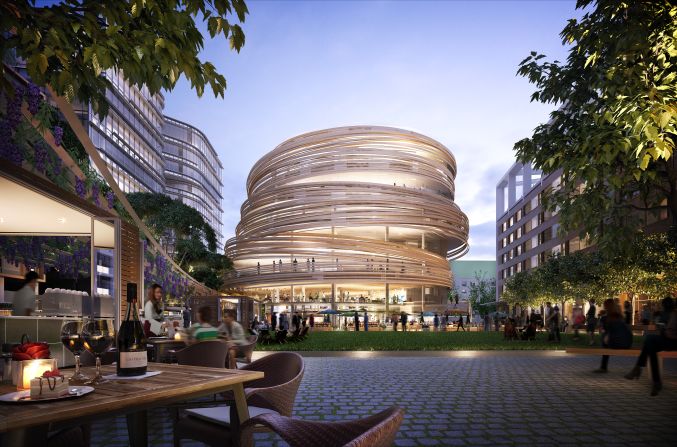
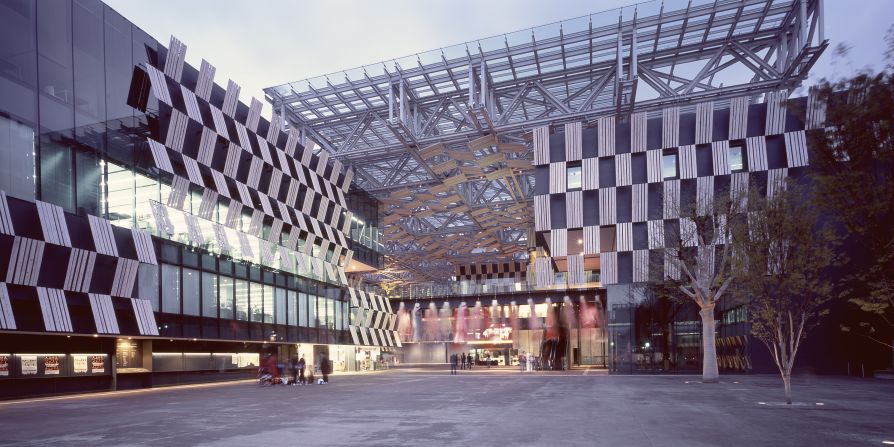
Kengo Kuma, an award-winning Japanese architect, is known for his minimalism and innovative use of natural materials in his buildings. His design for the Darling Exchange in Sydney, Australia will feature 20 kilometers of curved timber.
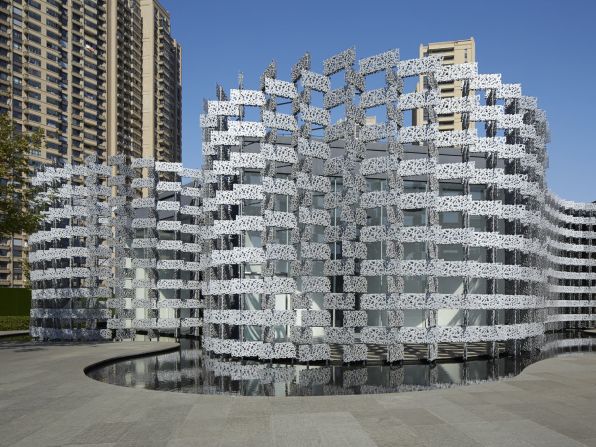
Wuxi Vanke, in Wuxi, China —
Kuma transformed this former cotton mill into a shopping mall using a frame of aluminium panels, which lets sunlight shine in the building symbolizing where the "past and future is connected."
Eiichi Kano
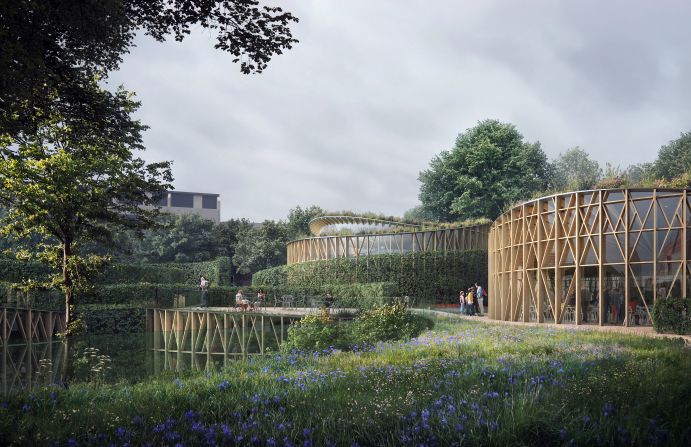
Hans Christian Andersen Museum, in Odense, Denmark —
The Japanese architect used Danish wooden frames for this design, which he submitted to international competition to design the H.C. Andersen's House of Fairy Tales.
Mir AS/Mir/Mir
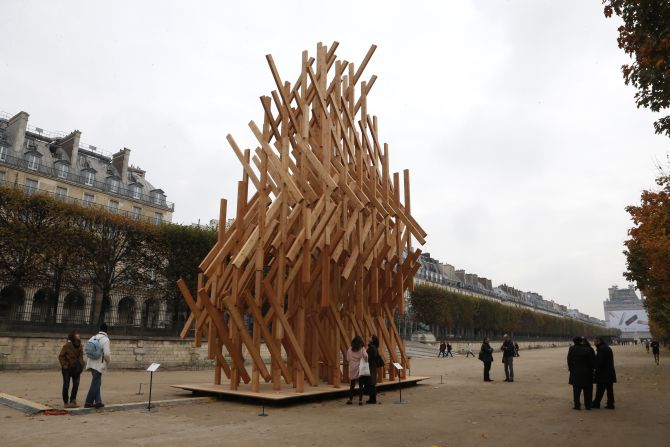
YURE, in Paris, France —
This wooden pavilion, which people can climb up, was temporarily erected at the Tuileries Garden, near the Louvre museum in Paris, as part of the FIAC International Contemporary Art Fair on October 20, 2015.
THOMAS SAMSON/AFP/AFP/Getty Images
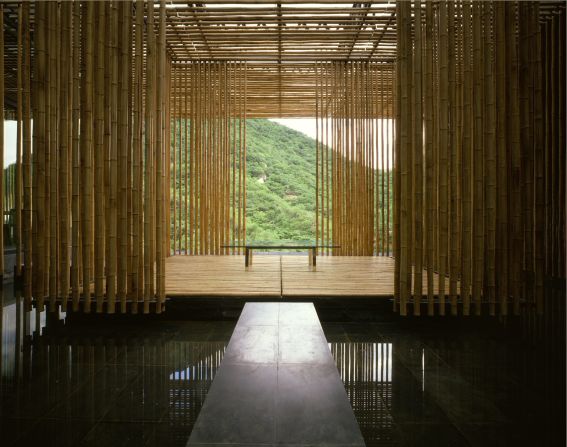
Great (Bamboo) Wall, in Beijing, China (2002) —
Kuma's dedication to architecture that incorporates nature saw him be one of the 10 architects invited to design a residence at this retreat at the Great Wall of China.
Satoshi Asakawa
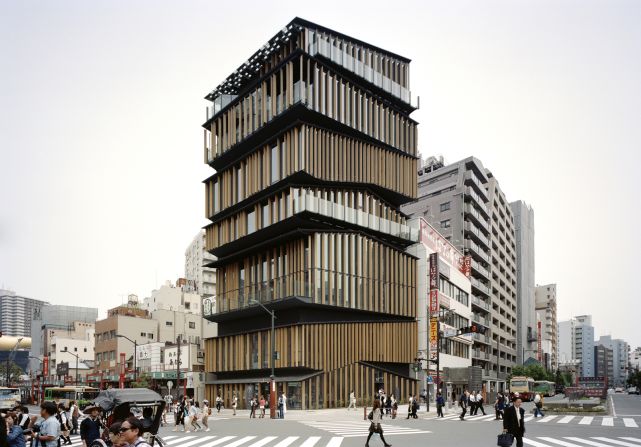
Asakusa Culture Tourist Information Center, in Tokyo, Japan (2012) —
This tourist information center gives the illusion of being made of several roofs stacked on top of one another.
(c) Takeshi YAMAGISHI
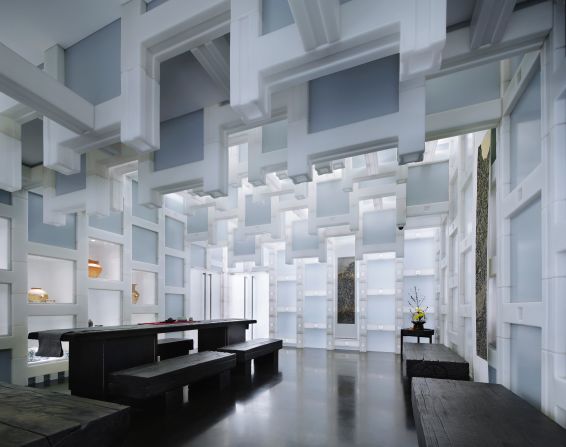
Beijing Tea House, in Beijing, China (2014) —
Kuma uniquely renovated this siheyuan-style tea house, near the Forbidden Palace East Gate, using polyethylene blocks. Light gently filters through the translucent blocks -- echoing the way how was used to let in light in traditional siheyuan architecture.
Nacasa & Partners inc.
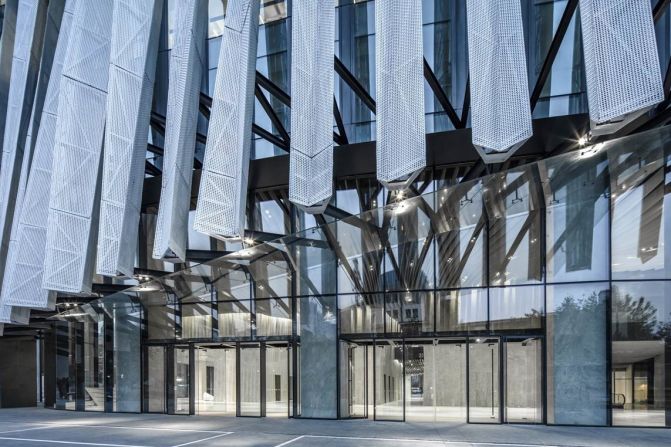
Hongkou SOHO, in Shanghai, China (2015) —
Aluminum mesh "pleats" wrap around the Hongkou Soho office block. like a lace dress for women. It looks different from every angle.
Jerry Yin, Kengo Kuma and Associates
Nagaoka City Hall Aore, in Niigata, Japan (2012) —
A brilliant example of sustainable architecture, solar panels cover this city hall. "In the 20th century, most architects thought of architecture as producing the art pieces of the period. I think architecture is a never-ending project," says Kuma.