Your effort and contribution in providing this feedback is much
appreciated.
Close
Ad Feedback
Cleaning up space debris
Space net —
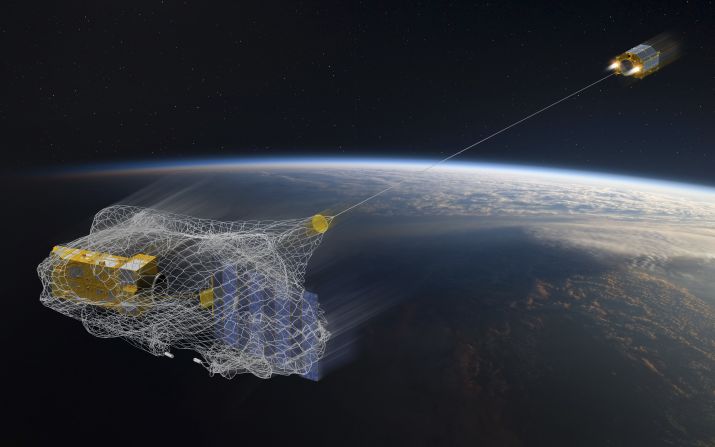
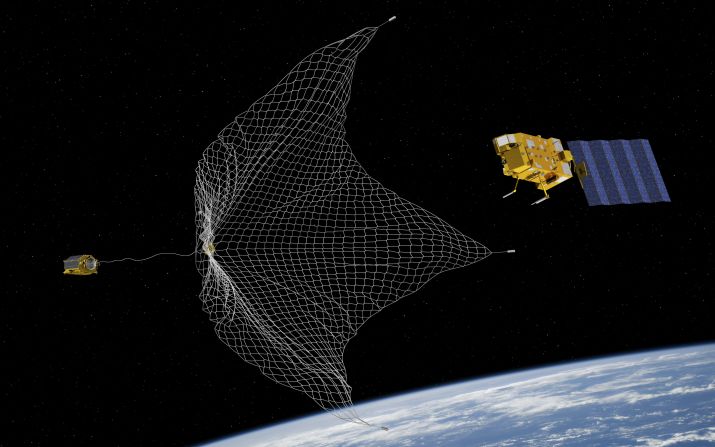
Astroscale's Space Sweepers aren't the only ones looking to develop technology for clearing space junk. The European Space Agency (ESA) is planning a space debris removal mission in 2024. One approach being explored by the ESA is capturing space debris in a net.
Courtesy David Ducros/ESA
Space net —
The nets will attempt to capture some of the 7,000 tons of estimated space junk orbiting the planet.
Courtesy David Ducros/ESA
Robotic arm —
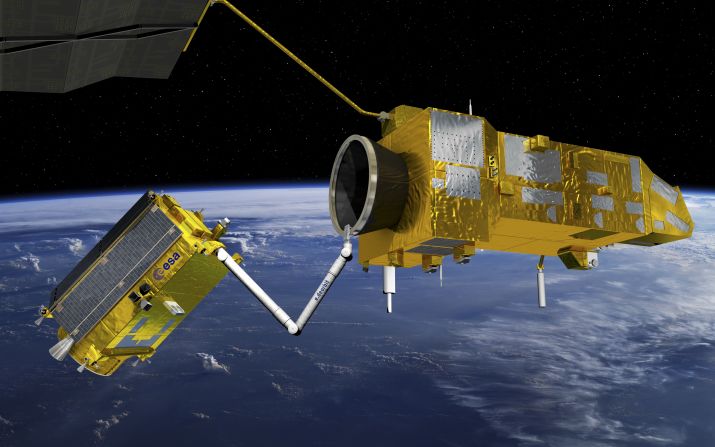
Another potential solution being explored by the ESA is the use of a robotic arm.
Courtesy David Ducros/ESA
LIDAR —
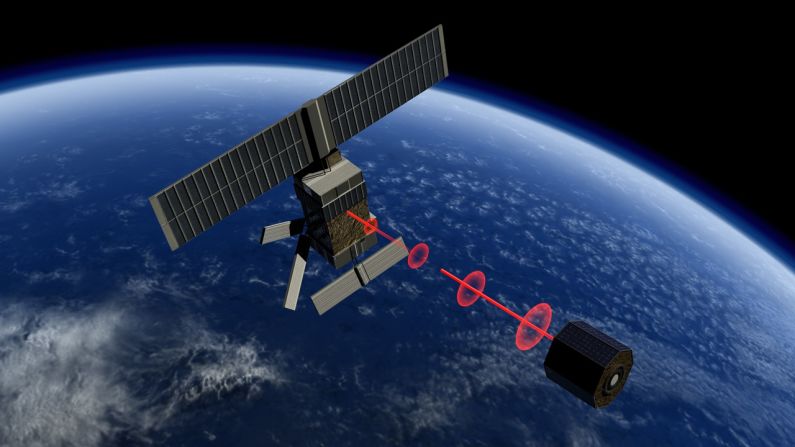
Capturing space debris requires close targeting which could be achieved by LIDAR, a technique that uses pulsating light to measure distances.
Courtesy ESA
Cleanspace One —
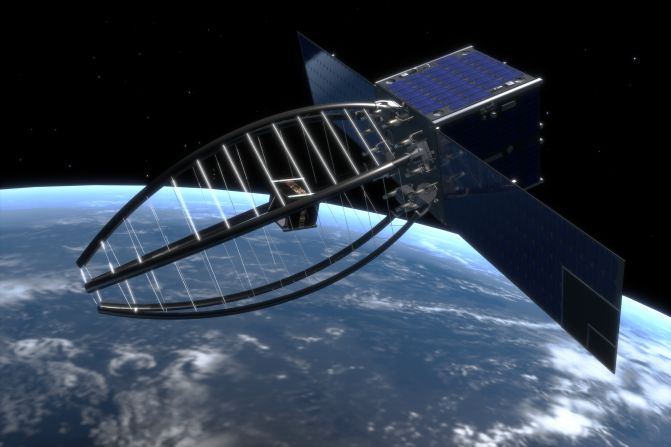
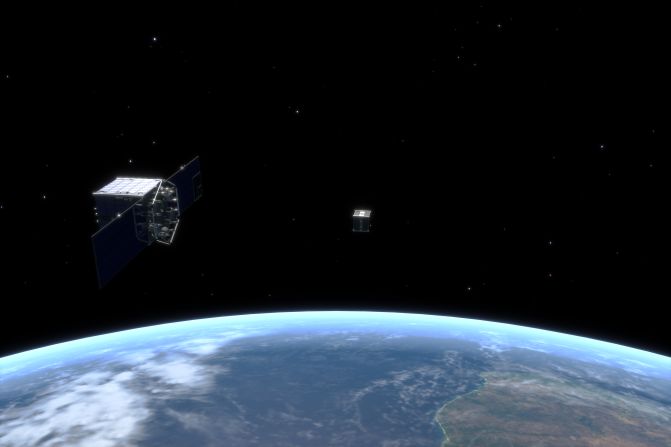
Cleanspace One is a satellite in development by the Swiss Federal Institute of Technology of Lausanne. Originally the design featured a claw, but scientists found a net-system would be a more effective system to capture and deorbit space debris.
Courtesy J.Caillet/EPFL
Cleanspace One —
The satellite is targeted to launch for 2018.
Courtesy J.Caillet/EPFL
"Fishing net" —
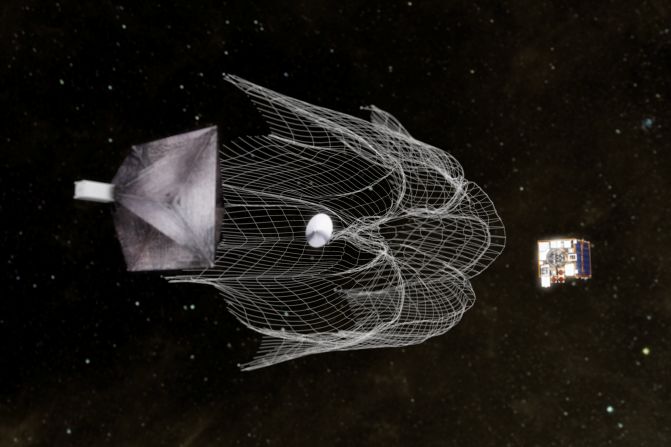
The RemoveDEBRIS team from Surrey Space Centre has designed a system using a net -- much like a fishing net -- to capture debris. The debris would then be dragged behind the space craft as it returns to Earth.
Courtesy Surrey Space Centre/University of Surrey/2016
Space sail —
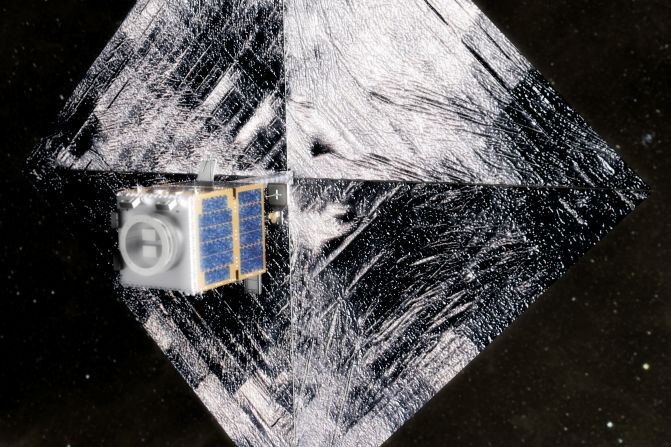
Another possible solution being tested by the Surrey Space Centre is a "dragsail" pushed by photons of light from the sun. This sail would then drive the junk out of its orbit, causing it to spiral back into the Earth's atmosphere.
Courtesy Surrey Space Centre/University of Surrey/2016
Burning space debris —
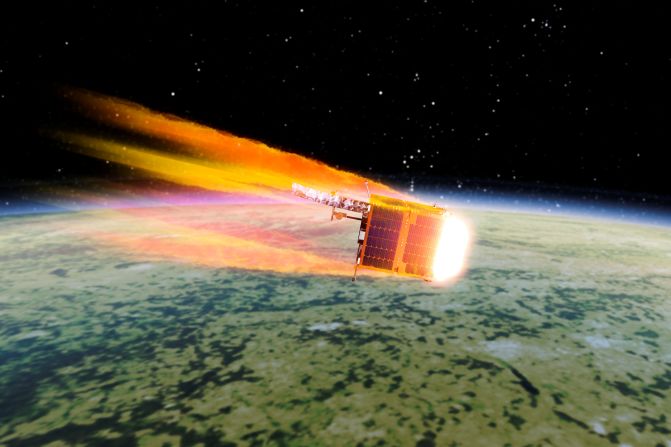
Upon re-entry into the Earth's atmosphere, the pieces of space debris will burn up.
Courtesy Surrey Space Centre/University of Surrey/2016