Your effort and contribution in providing this feedback is much
appreciated.
Close
Ad Feedback
Ad Feedback
Remote-controlled law and order
Dubai Police will introduce its first robot police officer on May 24. It's functions are limited, but the Emirate has big plans for the future. By 2030 it wants robots to make up 25% of its police force -- including fully functioning androids capable of chasing down offenders and making arrests.
Scroll through to discover how robots are being used by police forces around the world right now.
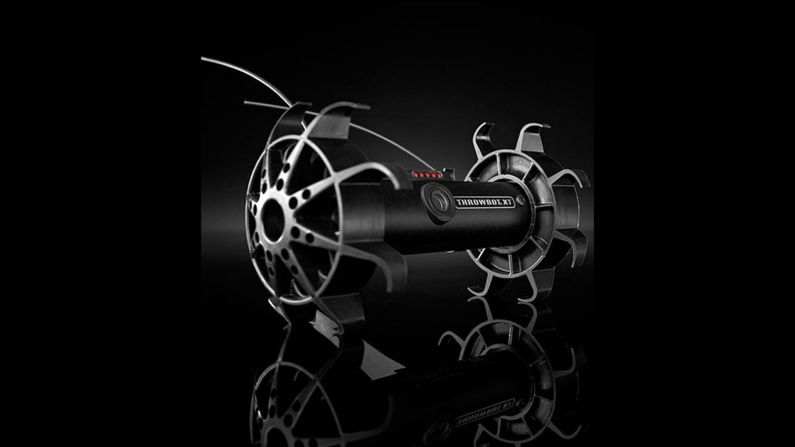
The Throwbot —
This dumbbell-shaped robot is small but effective: Weighing in at just over a pound, the Throwbot can be thrown into a scene to send back audio and video. According to manufacturer Recon Robotics, the Throwbot can be used to "locate armed subjects, confirm the presence of hostages or innocent civilians, listen in on conversations, and reveal the layout of rooms" -- all of which are key in high risk situations.
Recon Robotics
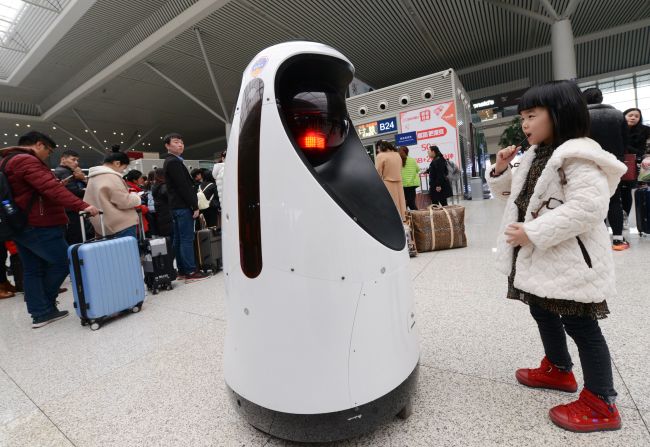
E-Patrol Robot Sheriff —
Designed for use in transport hubs, E-Patrol Robot Sheriff is currently on the beat in Zhengzhou East Railway Station, China. Using a system of cameras, the robot moves autonomously through public spaces and has facial recognition technology. As well as detecting fires and potential safety hazards, local media reports that the robot can cross-reference faces to police databases, and will follow a wanted person until the police arrive.
VCG/Getty Images AsiaPac/VCG via Getty Images
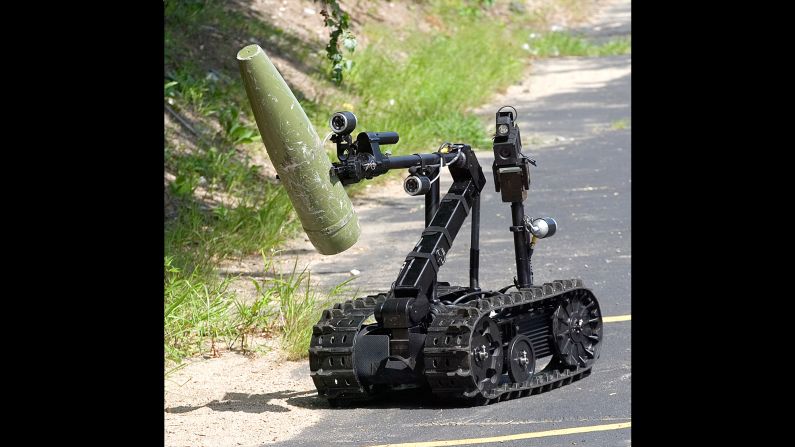
The TALON —
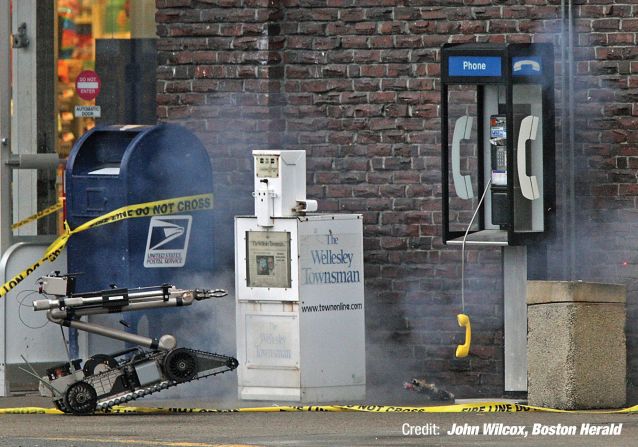
The LAPD also uses a robot called the TALON. Created by QinetiQ, the machine was made to assist law enforcement with bomb disposal, communications, hazmat situations and surveillance, among other things.
From qinetiq
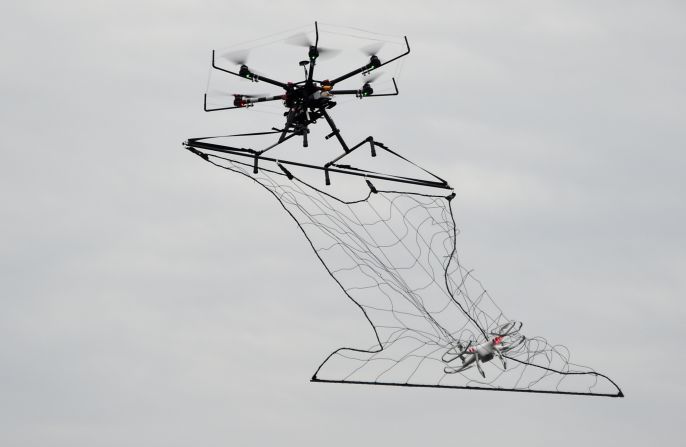
Tokyo Police Drone Interceptor —
In 2015 Tokyo Metropolitan Police unveiled a drone capable of taking out other drones, capturing them in a net. The police adapted current drone technology after a quadcopter carrying radioactive material was flown onto the rooftop of Japanese Prime Minister Shinzo Abe's office in April 2015.
TOSHIFUMI KITAMURA/AFP/AFP/Getty Images
Kinshasa traffic warden —
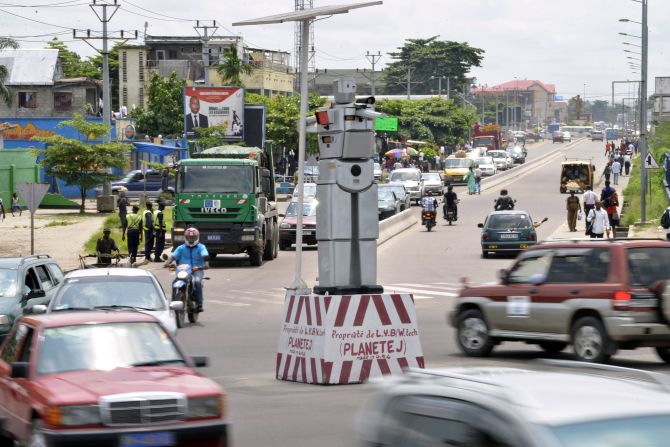
In 2014 two rudimentary androids were installed at a busy intersection in Kinshasa, Democratic Republic of Congo. Designed by the Kinshasa Higher Institute of Applied Technique, known as ISTA, the two prototypes were fitted with four cameras which recorded traffic flow. Video was fed back to the police for analyze.
AFP/AFP/AFP/Getty Images
The SwatBot —
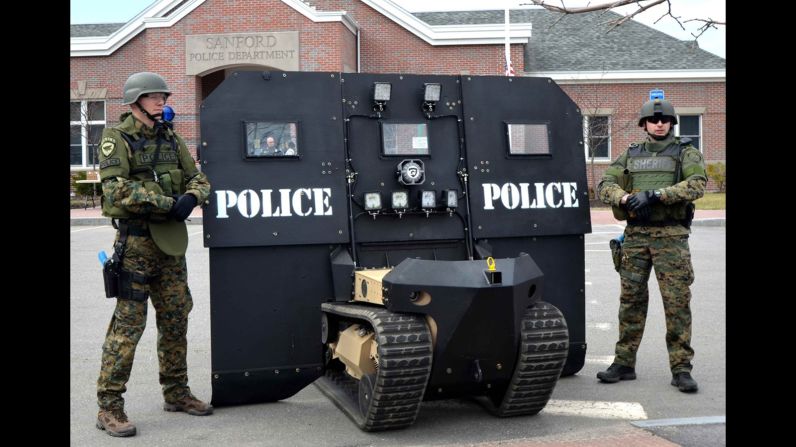
True to its name, this device was made to be a technological asset for SWAT teams. The SwatBot was developed by Howe and Howe Technologies along with the Massachusetts State Police to serve as "a robotic ballistic shield, door breacher and vehicle/debris remover when the environment is deemed unsafe," Howe and Howe explains.
Howe Howe Technologies
The PackBot —
Another popular reconnaissance bot is the PackBot, a small, nimble machine that can be equipped with a variety of sensors. In addition to sending back real-time video, audio and sensor data, the PackBot is good at climbing stairs or navigating tricky terrain and can assist with tasks such as bomb disposal.
Endeavor Robotics
Matilda —
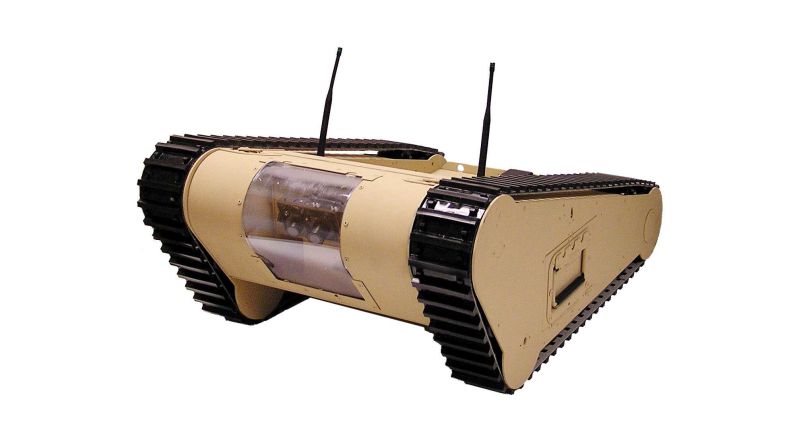
This device designed by MESA Robotics is another option for members of law enforcement who need a machine that can handle surveillance as well as taking care of potentially dangerous objects.
From Mesa Robotics
The Batcat —
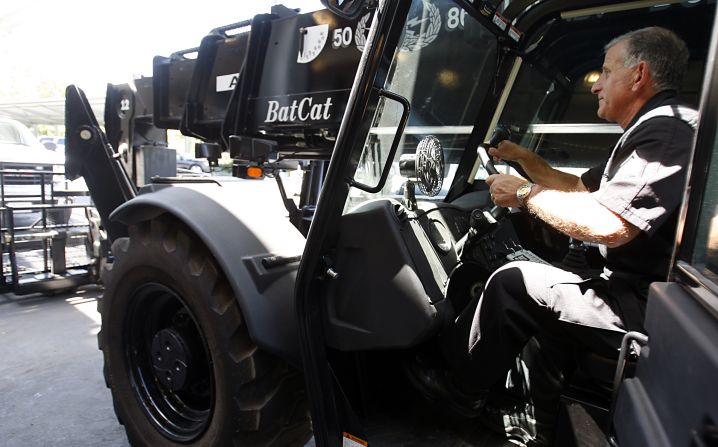
The Los Angeles Police Department adopted the Batcat -- or the Bomb Assault Tactical Control Assessment Tool -- to help officers with things like bomb disposal. According to the L.A. Times, the Batcat, a "39,000-pound, remote-control vehicle that looks like a forklift truck on steroids with a massive telescopic arm," cost the department nearly $1 million. "We can pick up a large vehicle bomb and move where we want without risk to anyone's life," said LAPD Capt. Horace Frank. "The beauty of this thing is no one needs to get near."
Luis Sinco/Los Angeles Times/Getty Images
Andros Mark 5A-1 —
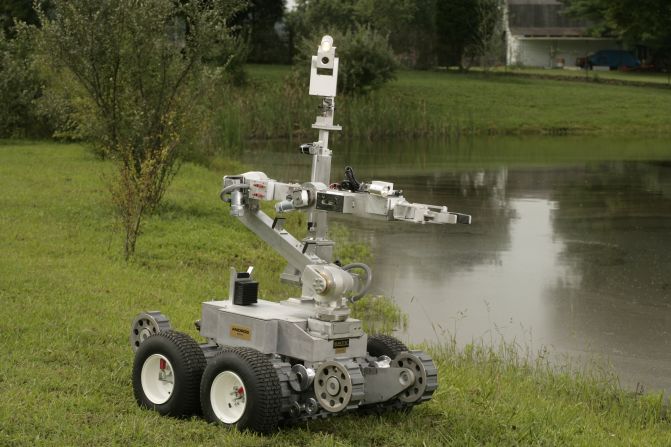
Northrop Grumman's Andros Mark 5A-1 is used to protect first responders and law enforcement agencies from explosives.
Courtesy Northrop Grumman
TEODOR —
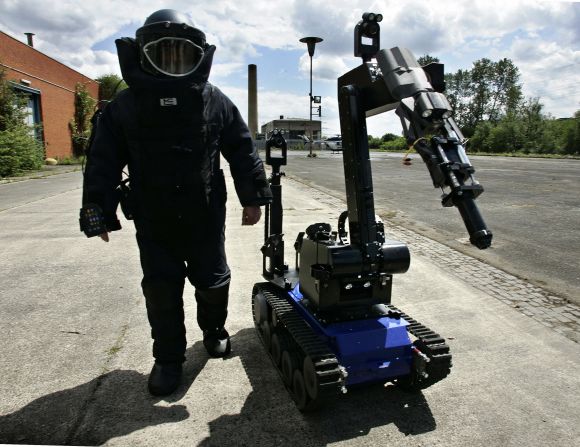
TEODOR (Telerob Explosive Ordinance Disposal Observation Robot) was on call during the 2006 FIFA Football World Cup in Germany. Built to detect and disarm explosives, the 375kg robot is reportedly used by 20 NATO countries.