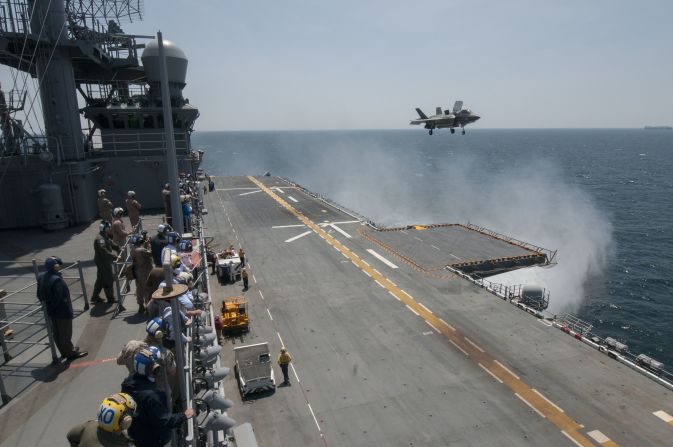
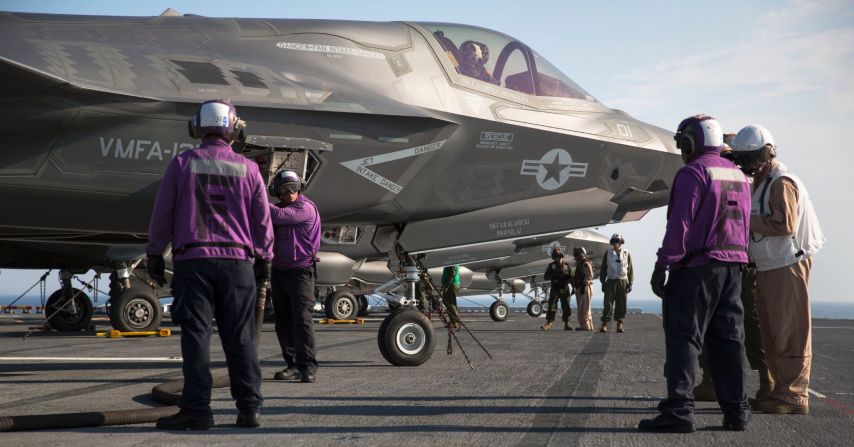
Sailors and distinguished visitors watch an F-35B Lightning II aircraft conduct vertical takeoff and landing flight operations aboard the amphibious assault ship USS Wasp in May 2015. Click through the gallery to see more images from the testing.
Chief Petty Officer William Tonacchio/U.S. Navy
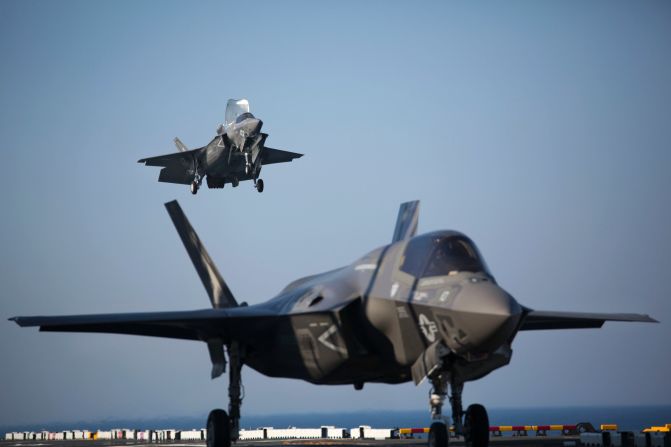
Two F-35B Lightning II fighters complete vertical landings aboard the amphibious assault ship USS Wasp during the opening day of the first session of operational testing in May 2015. As the future of Marine Corps aviation, the F-35B is designed to eventually replace all aircraft from three legacy Marine Corps platforms; the AV-8B Harrier, the F/A-18 Hornet, and the EA-6B Prowler.
Lance Cpl. Remington Hall/USMC
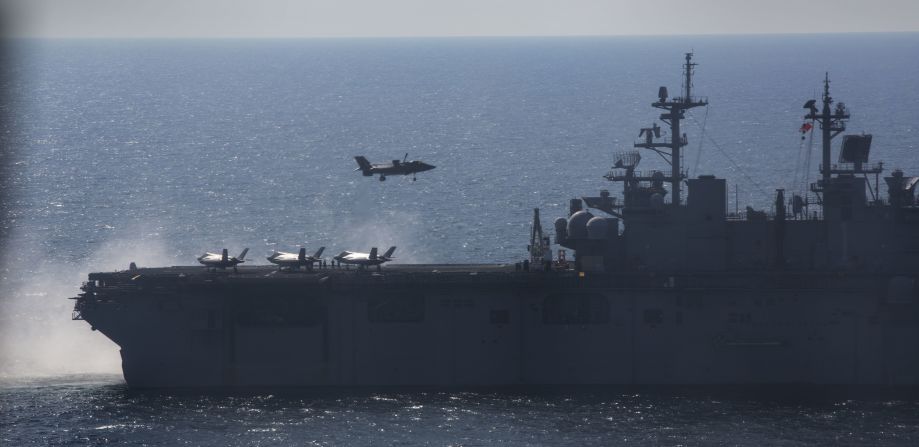
An F-35 B Lightning II fighter lands on the flight deck of the amphibious assault ship USS Wasp during short take-off, vertical landing operations in May. A new Pentagon report says the testing did not adequately reflect conditions the aircraft would face in real operations.
Lance Cpl. Remington Hall/USMC
Marines and sailors aboard the amphibious assault ship USS Wasp secure and refuel an F-35B Lightning II fighter after its arrival for the first session of operational testing.
Lance Cpl. Remington Hall/USMC
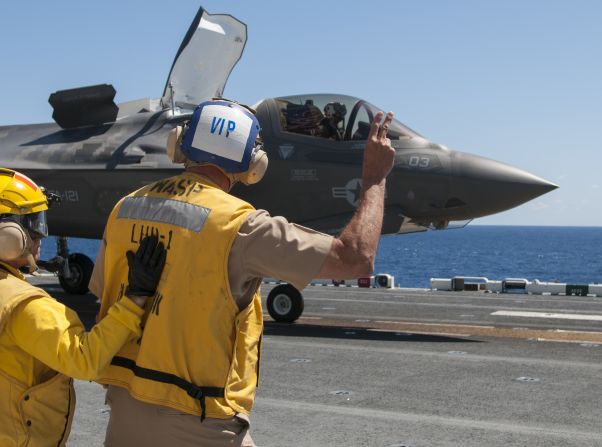
Vice Adm. William Hilrides, commander of Naval Sea Systems Command, holds up two fingers to indicate to the F-35B Lightning II pilot to power up for takeoff aboard the amphibious assault ship the amphibious assault ship USS Wasp in May.
Chief Petty Officer William Tonacchio/U.S. Navy
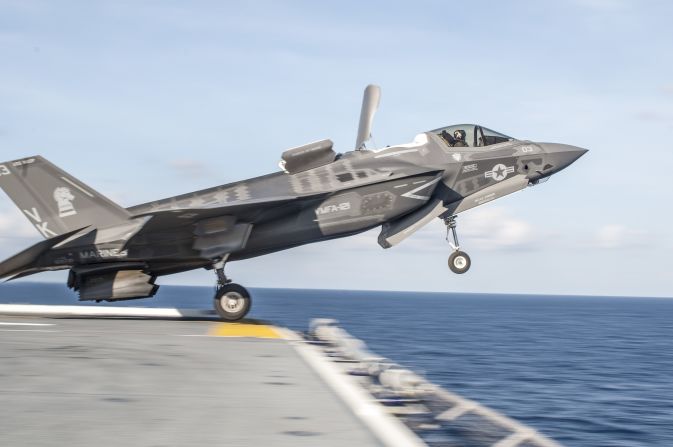
An F-35B Lightning II takes off from the flight deck of the amphibious assault ship USS Wasp during test operations in May.
Spc. Rawad Madanat/U.S. Navy
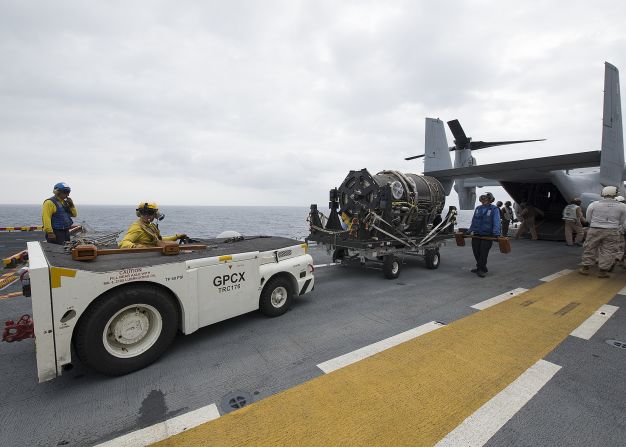
Sailors and Marines remove a generator for the F-35B Lightning II aircraft from an MV-22 Osprey assault support aircraft aboard the amphibious assault ship USS Wasp during operational testing in May. A new Pentagon report says the testing highlighted maintenance challenges for the F-35.