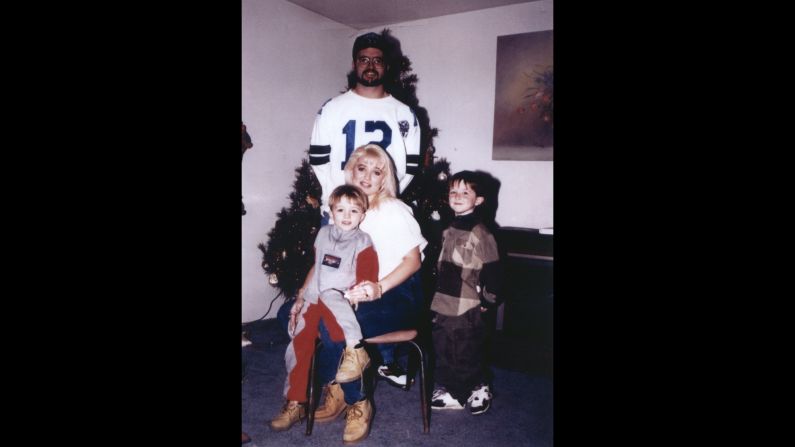
A family photo shows Darlie Routier; her husband, Darin; and their sons Damon and Devon. On June 6, 1996, both children were brutally stabbed to death in their Dallas-area home. Darlie Routier's throat was slashed that night; a necklace she had been wearing apparently saved her life as it stopped the knife from hitting her carotid artery.
Within days, police arrested Darlie Routier and charged her with the two boys' murders. She was convicted and sentenced to death. To date, she has steadfastly claimed a home intruder was responsible for the attack and that she is innocent.
Twelve days after the murders, Darlie and Darin Routier returned to the police department voluntarily for another round of questioning. Only one of them would walk out: Darlie Routier was arrested on June 18, 1996, by the Rowlett, Texas, Police Department.
Rowlet PD
Darlie Routier was a 26-year-old mother of three boys at the time of the killings. Here, she's seen in a family photo with the slain Devon and Damon. Drake, the third son, who was an infant at the time of the murders, was asleep upstairs and was not injured.
Stephen Cooper
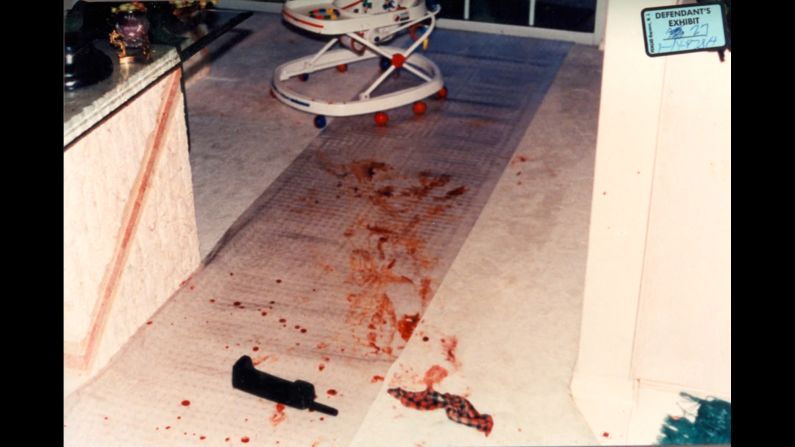
A photo of the crime scene shows the cordless telephone Darlie Routier used to call 911 on the night of the attacks. The 911 recording and the duration of the call (five minutes and 42 seconds) were key pieces of evidence during the trial.
Appellate lawyer Stephen Cooper would later argue that given the length of time Routier was on the phone with 911, the prosecution's timeline of events was flawed: One piece of evidence was a sock with both boys' blood on it that was found in an alley 75 yards away from the house.
"There is not but a couple of minutes for her to stab and kill the children, cut the screen, get this sock and run it down the alley in the dark through a gate that doesn't really work very well, (and) come back," Cooper said.
Dallas County Court Records
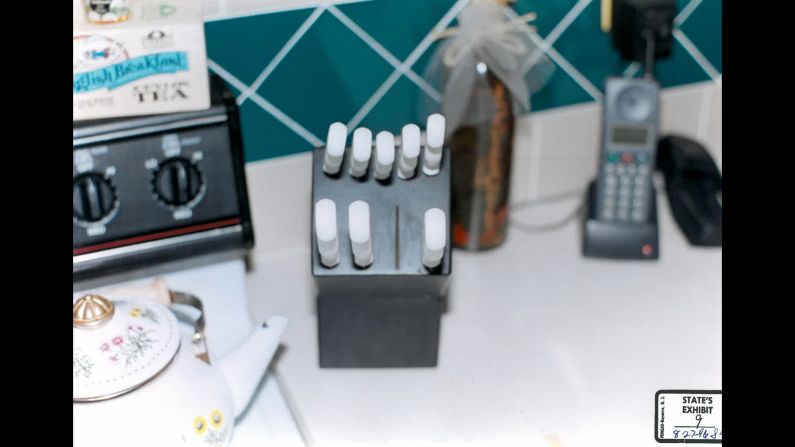
Police alleged that Routier had stabbed her boys with a kitchen knife pulled from this kitchen block.
Dallas County Court Records
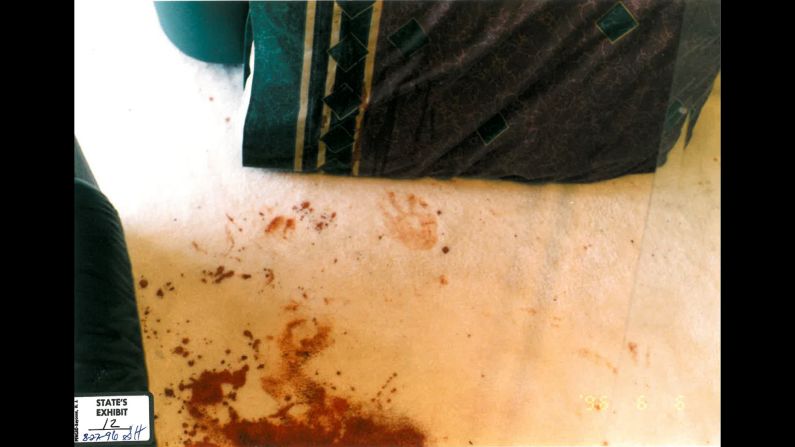
An evidence photo shows 5-year-old Damon's bloody handprint. He had been stabbed multiple times in the back.
During the initial questioning, when she'd regained consciousness after surgery in the hospital for her injuries, Routier told police she woke up to a man standing over her and there was a physical struggle. Later, when she was brought into the police department for questioning, she said she awoke to Damon, dripping with blood, calling out, "Mommy! Mommy!"
Dallas County Court Records
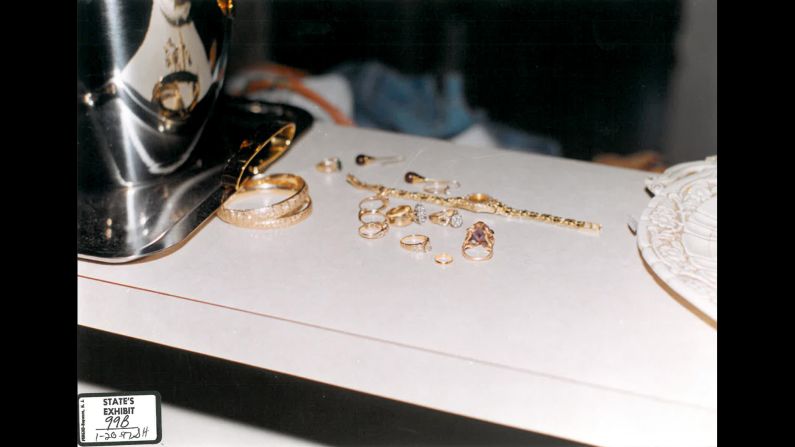
In court, prosecutors argued that Routier had fabricated the story of an assailant, because valuable jewelry had been left untouched on the kitchen counter.