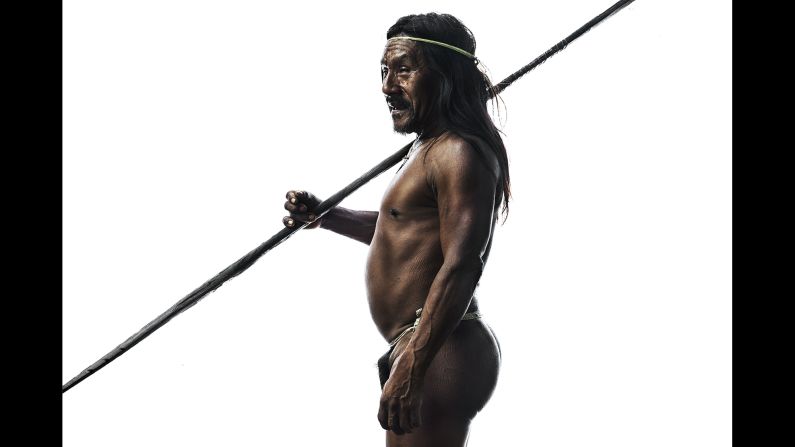
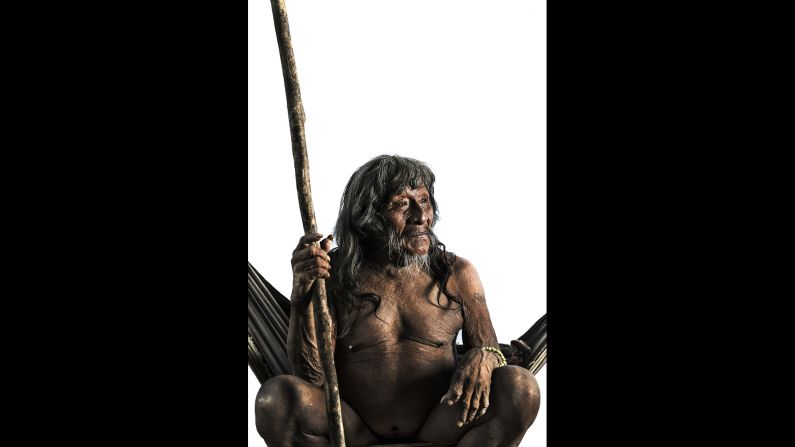
A portrait of Omayewei, one of the Huaorani people photographed by Trupal Pandya in Ecuador. Omayewei is an elder in his community, making him one of the few who still live a very primal or authentic way of life, Pandya said.
Trupal Pandya
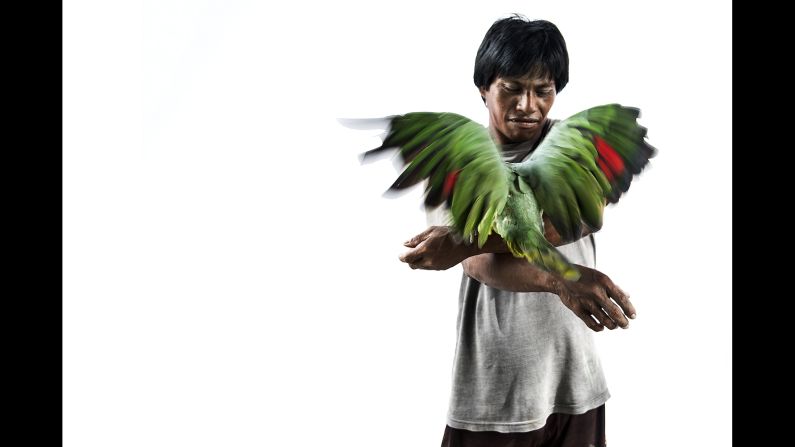
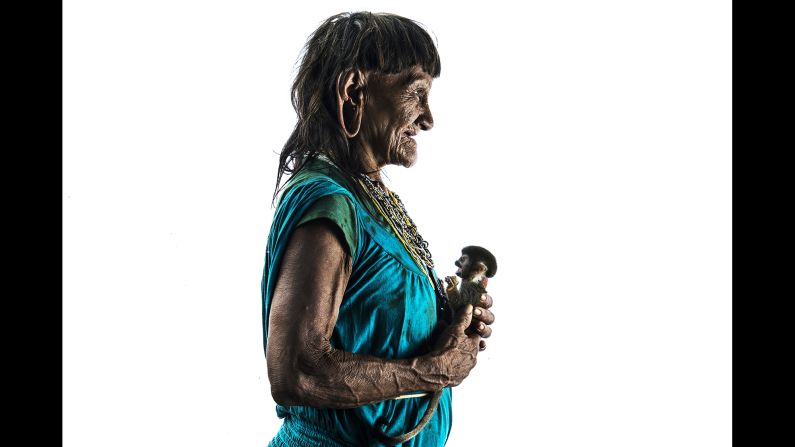
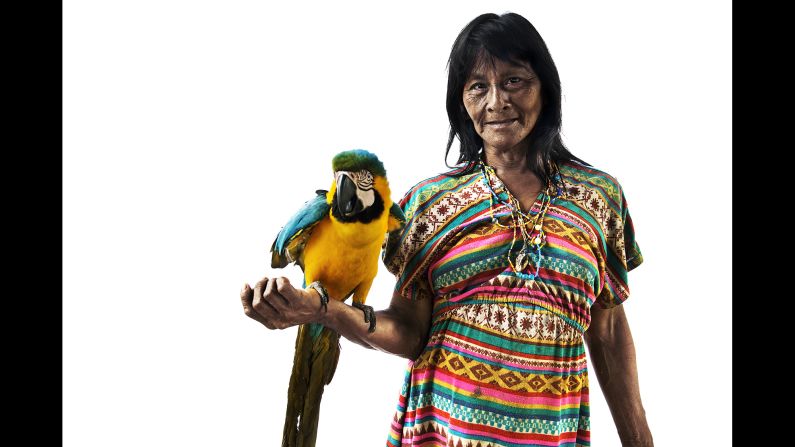
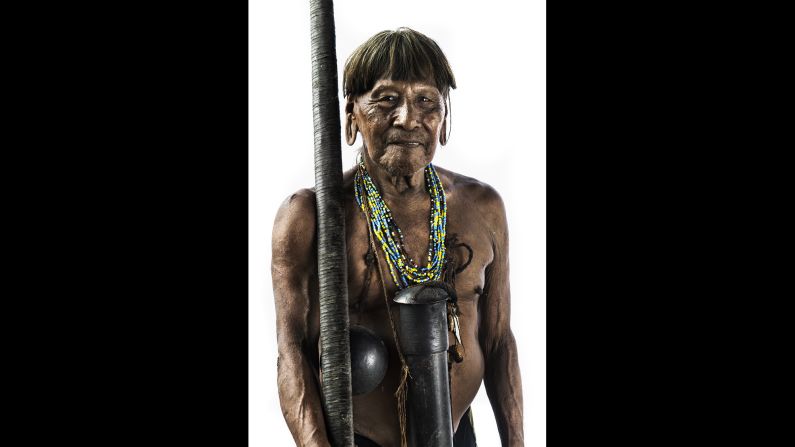
For his formal portraits, Pandya placed his subjects in front of a solid white background in order to portray the Huaorani in a very direct and concise manner, eliminating the presence of any distractions. It also highlights the coexistence between the Huaorani and the different kinds of animals they encounter daily in their natural environment.
Trupal Pandya
It was really fascinating to see how the Huaorani coexisted with animals, Pandya said. Even as hunters, they seemed to have very strict rules of what was deemed ethically acceptable and what was inhumane. Sometimes when they are out hunting, they kill a parent animal and bring its orphan child back to the community. They then nurture the baby until it is an adult.
Trupal Pandya
Macaws and parrots are a common sight in the Huaorani home, Pandya said. The Huaorani, which means "the people," or "human beings," are believed to have inhabited the Amazon rainforest for thousands of years. Until about the 1960s, they never had any contact with the outside world.
Trupal Pandya
This is Awa, the founder of Bameno, the largest Huaorani community in the Amazon.
Trupal Pandya
Qumperi' is the shaman of the community, Pandya said, and he plays a very important role in the Huaorani culture. He is the healer of the community who has a trusted and vast knowledge of animals, plants and trees, including those which are used as poisons or medicines.