Massachusetts wiped the death penalty off its books in 1984, but the state's past is far more eye-for-an-eye -- which makes picking a jury in the trial of accused Boston Marathon bomber Dzhokhar Tsarnaev all the more challenging. The case is being brought by the U.S. government, which still has the death penalty -- and prosecutors are seeking a death sentence.
from Vkontakte.com
Massachusetts was one of the first colonies to carry out the death penalty, hanging murderer John Billington in Plymouth in 1630. Billington was one of the signers of the Mayflower Compact in 1620, shown here in a painting by Edward Percy Moran. The compact, written and signed by the Pilgrims aboard the Mayflower while anchored in Provincetown harbor, established the founding principle of self-rule for the group.
Three Lions/Getty Images
The executions in Massachusetts seem to reflect the worst fears of their times. Mary Dyer was one the so-called "Boston martyrs" hanged in 1660 under a law that banned Quakers from the Massachusetts Bay Colony. This illustration shows Quakers being led to execution in the 17th century. Though the illustration does not specify it, the scene may depict Dyer and others on their way to the gallows on Boston Common.
Interim Archives/Getty Images
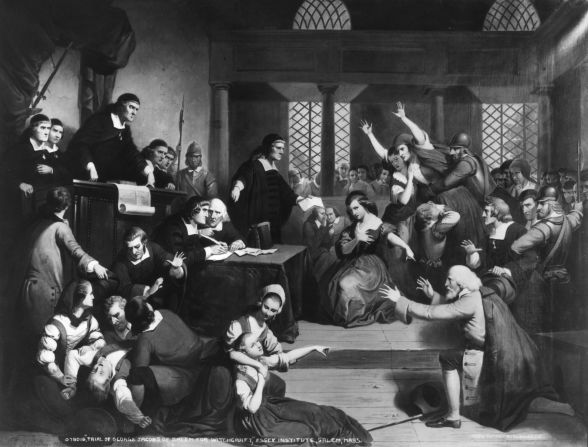
In all, Massachusetts has executed 345 people, including 26 people hanged for practicing witchcraft. Nineteen women were hanged in 1692 alone in the infamous Salem witch trials, depicted in this image.
MPI/Getty Images
Two Italian-born anarchists, Nicola Sacco and Bartolomeo Vanzetti, went to the electric chair in 1927 amid a huge public outcry spurred by writers, academics and celebrities of the time; many people believed them innocent.
Fotosearch/Getty Images
The last people executed in the state, Phillip Bellino and Edward Gerlson, were reputed gangsters -- the bogeymen of the 1940s and '50s. They were sentenced to die for the kidnapping and murder of an ex-Marine and were executed in 1947. Some 64 men died in the electric chair at Walpole State Prison, seen in this 1963 photograph.