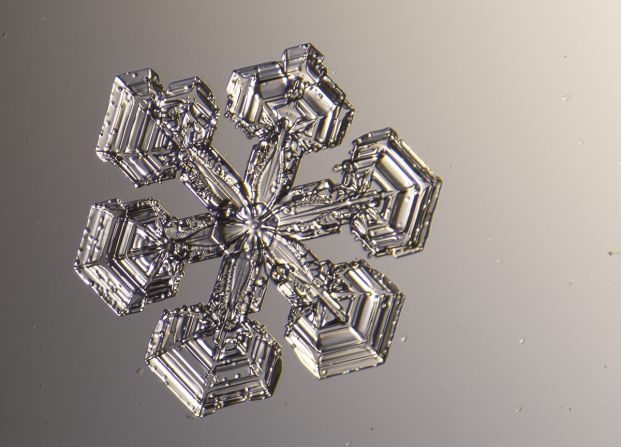
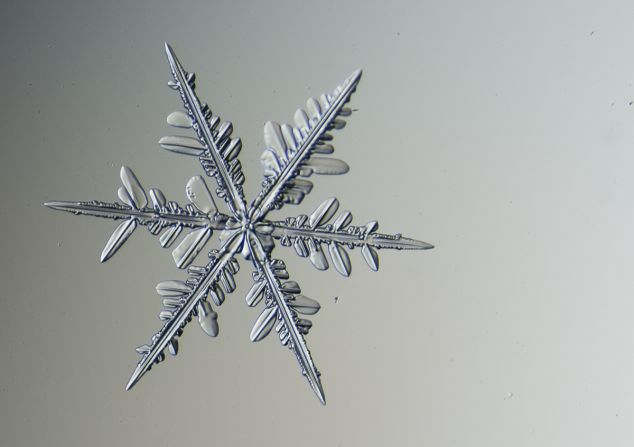
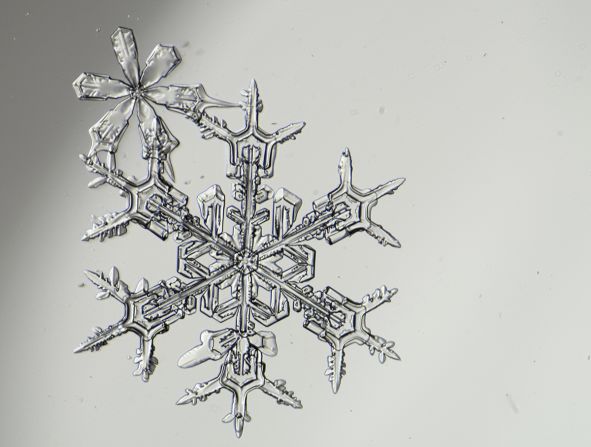
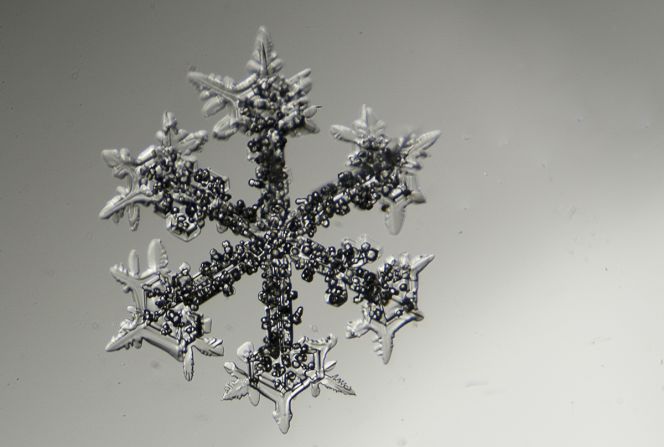
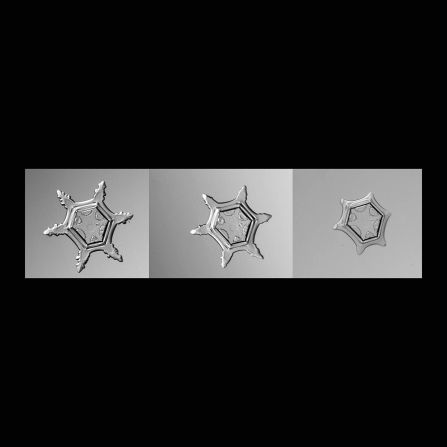
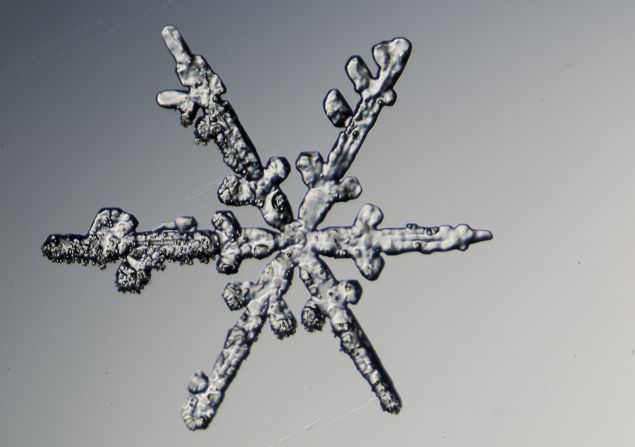
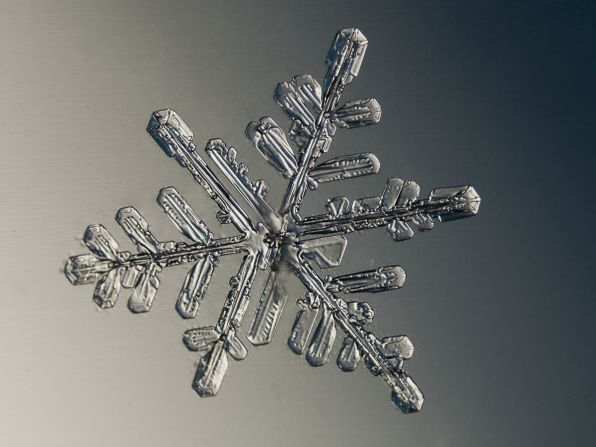
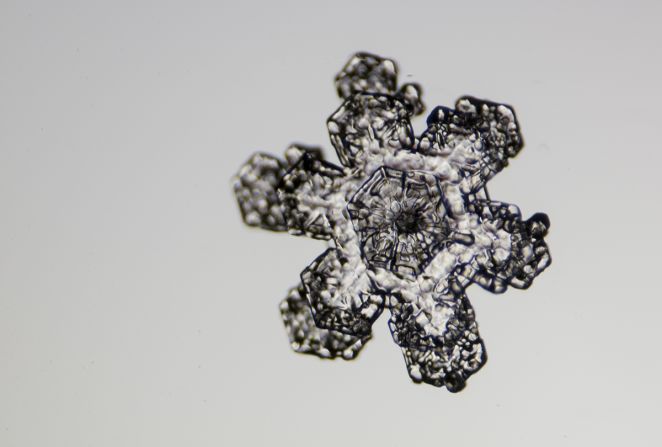
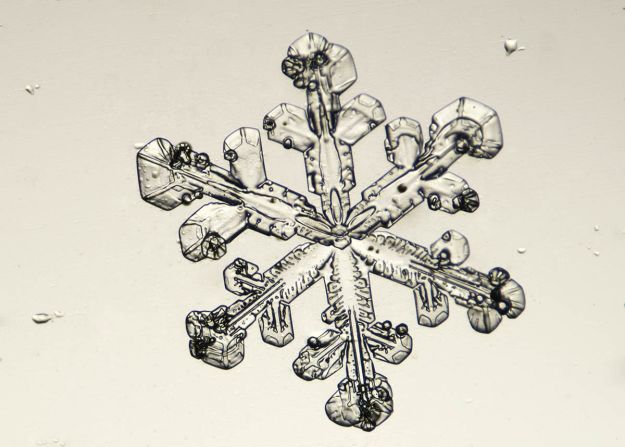
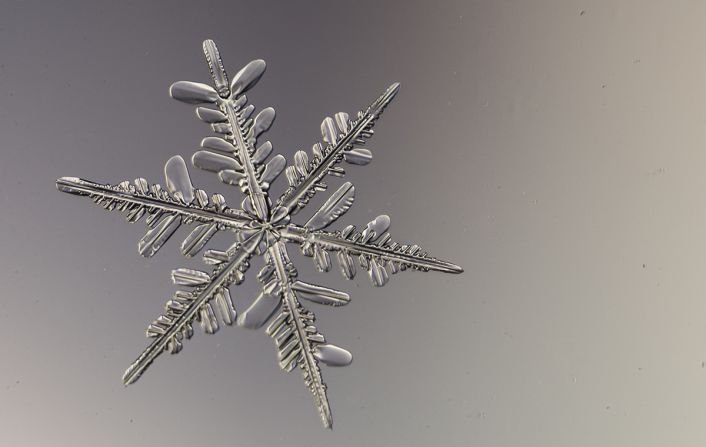
Michael Peres has been photographing snowflakes under a microscope for 13 years. Every time it snows in Rochester, New York, he runs outside, ready to photograph the tiny flakes.
Michael Peres/CNN iReport
He catches the tiny flakes on black velvet and moves them over to a clean microscope slide with a dissecting needle.
Michael Peres/CNN iReport
"I try to light them to get all the facets like a gemstone would refract and reflect the light," he said. "But I'm on a timer because they start to melt."
Michael Peres/CNN iReport
It the air temperature is in the upper 20s, Peres says he has 30 seconds to capture it. If it's colder than that, he can have up to 2 minutes to photograph the flakes.
Michael Peres/CNN iReport
When he has a flake on a slide, it quickly starts evaporating. Here you see the process of sublimation, when a substance goes from a solid to a gas, skipping the liquid phase. "They are getting tinier while I shoot. It makes focusing exciting."
Michael Peres/CNN iReport
To keep the flakes from melting quickly, Peres says "everything has to be cold," from the catching tray and the velvet, to the slide and the microscope.
Michael Peres/CNN iReport
To capture different colors, he uses newspapers, envelopes and other items as a backdrop for the snowflake.
Michael Peres/CNN iReport
Peres rigged his Nikon camera to his "homemade" microscope to capture these images. He set a macro lens on a bellows.
Michael Peres/CNN iReport
"I have taken apart a lot of older vintage microscopes from the 20s and 30s, like a cobbled-together Rube Goldberg microscope."
Michael Peres/CNN iReport
"It's kind of scary to 'fess up to this addiction of mine," he said. So far this winter, he says he's captured 50 to 80 images that he likes. "Maybe one out of every 8 or 10 is great. I know have hundreds, but they're not all great."