‘One small step’: Artifacts of the moon landing | CNN Business
Thank You!
Your effort and contribution in providing this feedback is much
appreciated.
Close
Ad Feedback
Ad Feedback
‘One small step’: Artifacts of the moon landing
Experts have concluded that this bag of items, found inside legendary U.S. astronaut Neil Armstrong's closet, was used during the historic lunar landing in 1969.
Copyright, all rights reserved. Courtesy of the Smithsonian's National Air and Space Museum
Perhaps the most interesting item belonging to the Apollo 11 stash is the Data Acquisition camera, pictured, which was originally mounted in the right-hand window of the lunar module Eagle.
Image by Dane Penland/Courtesy National Air and Space Museum, Smithsonian Institution
Astronauts Neil Armstrong and Buzz Aldrin would later relocate the camera so it can film them during moon walks -- this shot captured them placing the U.S. flag on the lunar surface.
Lintao Zhang/Getty Images AsiaPac/Getty Images
Another image captured by the recently recovered camera shows Eagle's shadow against the moon's dusty surface.
NASA
This white cloth bag, known as a McDivitt Purse, was stowed in the Lunar Module during the Apollo 11 mission. For unknown reasons, Armstrong brought the bag back to Earth, despite the fact it was supposed to remain on the moon's surface. Unbeknownst to all, it remained in Armstrong's closet until he died in 2012. It has now been donated to the Museum by Armstrong's family.
Courtesy National Air and Space Museum, Smithsonian Institution
Another item found is this tether used by the Apollo 11 pair when exiting and reentering their lunar module. Tethers were also used by astronauts to secure themselves and the equipment to the spacecraft during tricky procedures.
Image by Dane Penland/Courtesy National Air and Space Museum, Smithsonian Institution
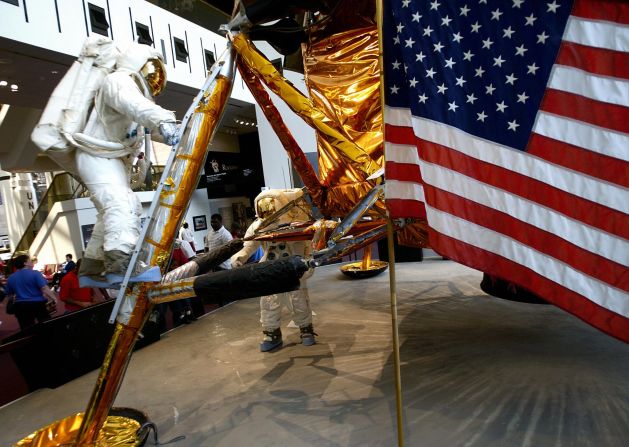
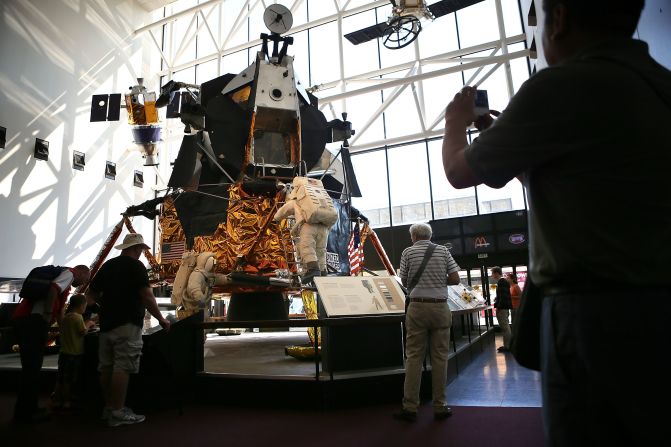
Visited by millions each year, the Smithsonian's National Air and Space Museum in Washington is home to several Apollo lunar modules built for the moon-landing program.
Alex Wong/Getty Images file
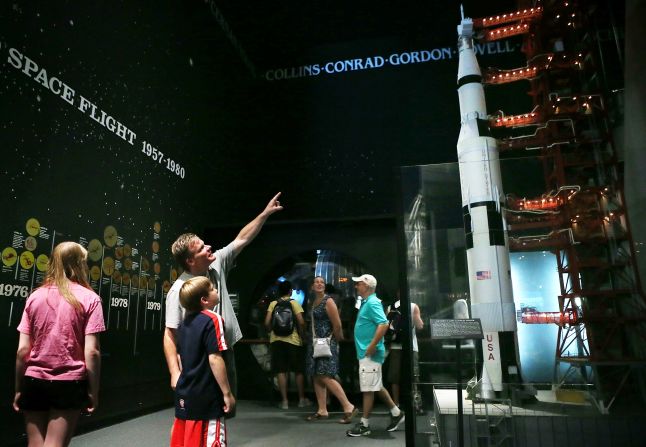
A model of a Saturn V rocket and its launch umbilical tower are examples of what were used during the Apollo era.
Alex Wong/Getty Images file
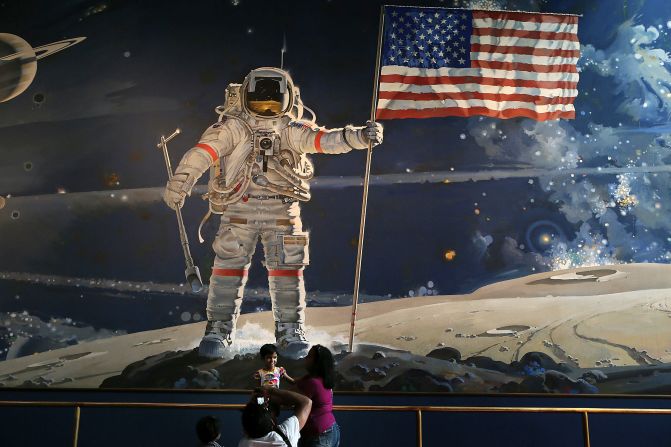
Neil Armstrong's famous moon walk is commemorated at the National Air and Space Museum.
Alex Wong/Getty Images
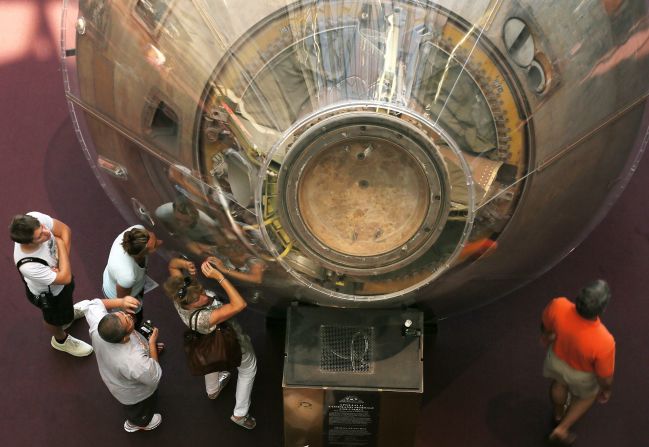
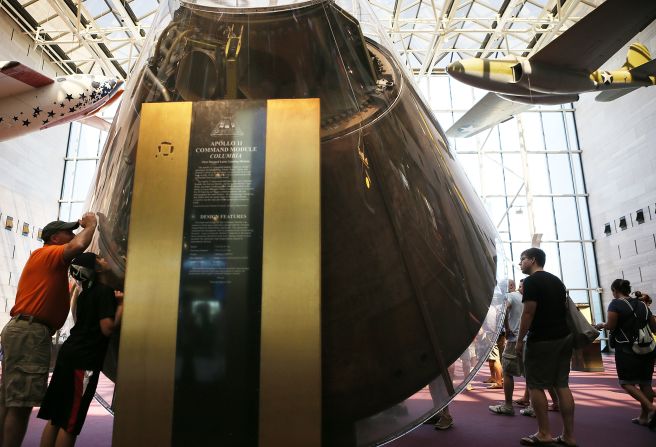
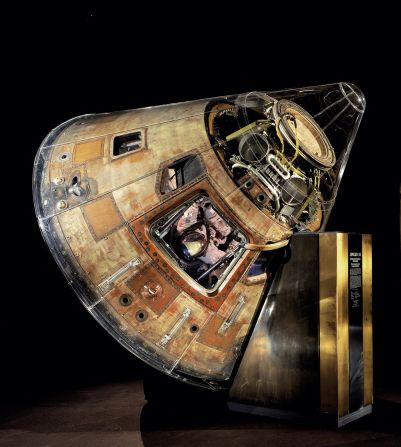
The Apollo 11 command module, now on display at the National Air and Space Museum, was one of three parts of the Apollo spacecraft.
Alex Wong/Getty Images file
An American flag is part of the display at the Smithsonian's National Air and Space Museum.
Alex Wong/Getty Images file
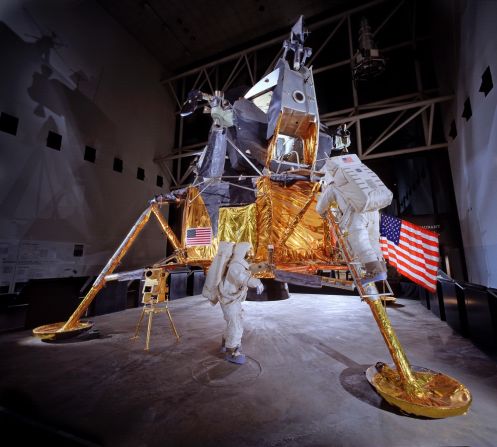
There were 12 lunar modules built for the Apollo moon-landing program.
Alex Wong/Getty Images file
The command module from Apollo 11 brought astronauts safely back to Earth.
Alex Wong/Getty Images file
The Apollo 11 command module Columbia carried astronauts Neal Armstrong, Buzz Aldrin and Michael Collins to the moon and back in July 1969.
Eric Long/National Air and Space Museum
The Apollo lunar module No. 2 is on display.
Eric Long/National Air and Space Museum
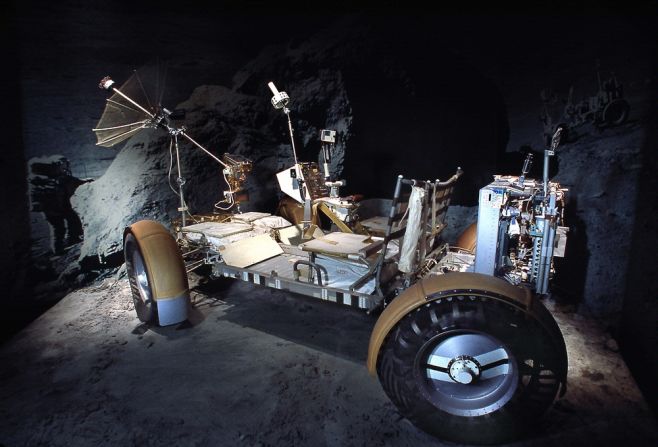
The lunar roving vehicle qualification test unit is on display at the National Air and Space Museum.
National Air and Space Museum, Smithsonian Institution
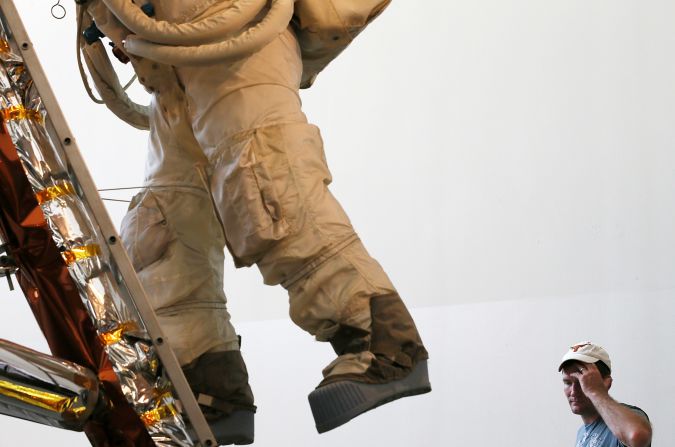
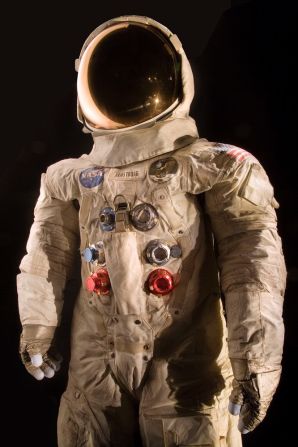
This spacesuit was worn by astronaut Neil Armstrong, commander of the Apollo 11 mission, which landed the first man on the moon on July 20, 1969.