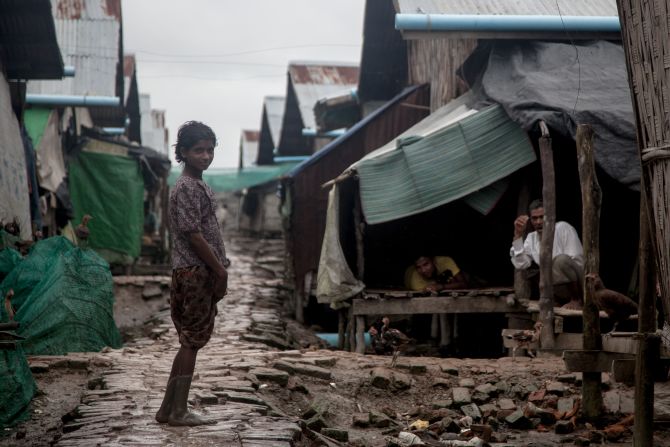
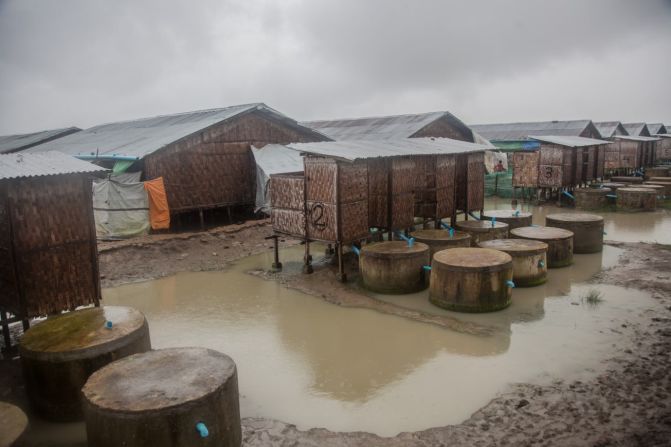
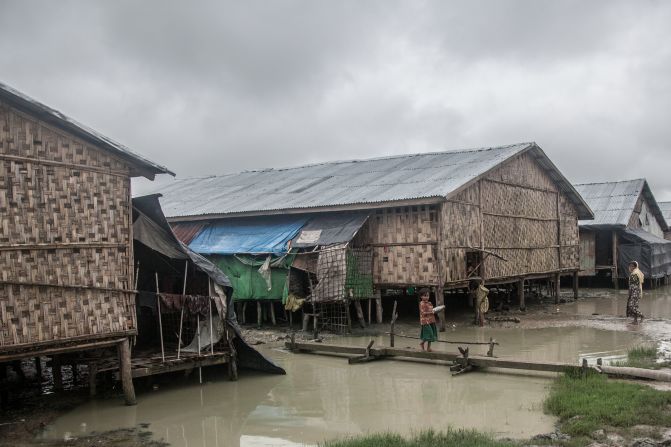
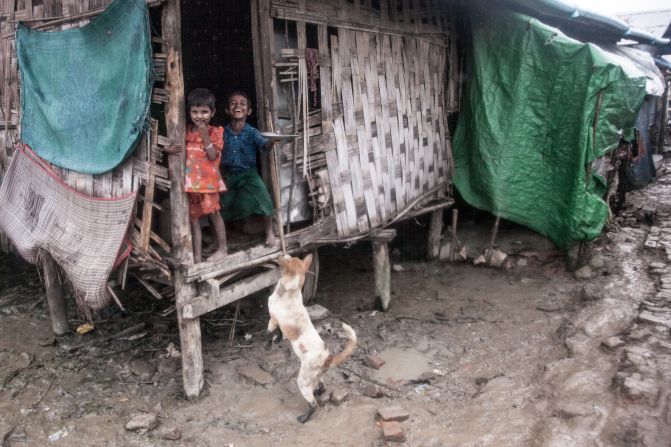
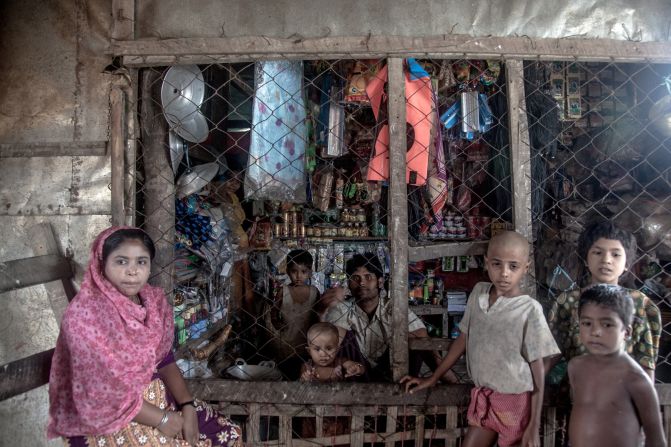
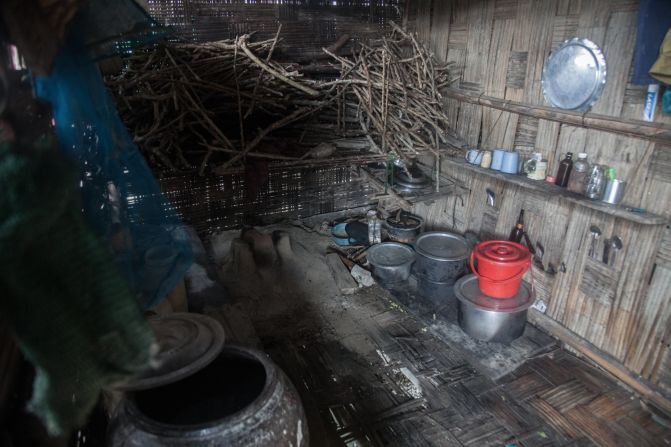
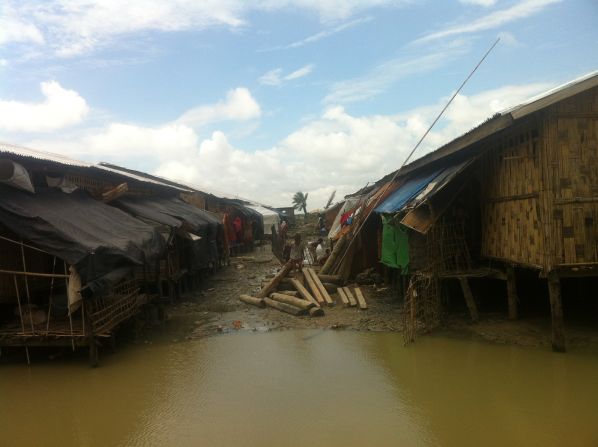
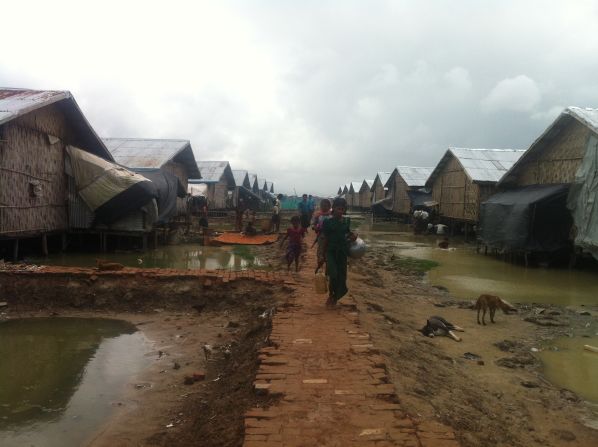
Nget Chaung IDP camp, in a low-lying coastal region of Myanmar's Rakhine state, is home to 6,000 displaced Muslims, made up of 1,170 households. It is known for having some of the worst conditions of any of the 68 IDP camps in the state, which house about 140,000 displaced people.
OCHA/C. Learson
Inside Nget Chaung IDP camp —
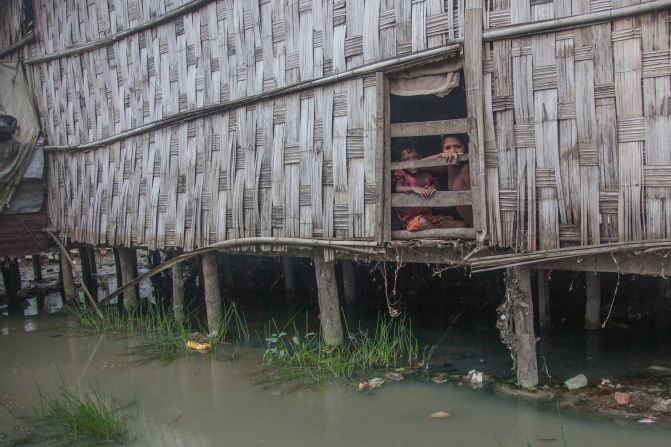
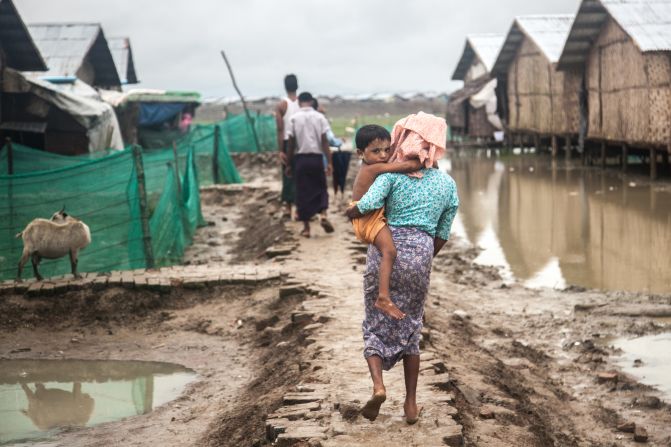
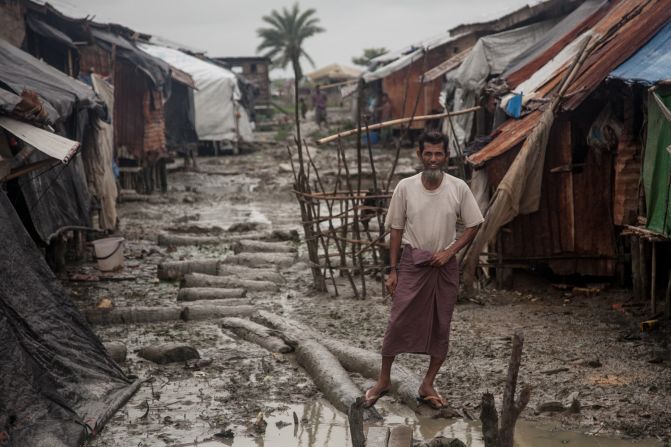
Exposed to severe storms, the camp is often flooded, and has had to be evacuated on occasion. Humanitarian workers in the camp say those who were relocated elsewhere during the storms did not want to return.
OCHA/C. Learson
Inside Nget Chaung IDP camp —
After a U.N. official visited Rakhine's camps, including Nget Chaung, she described "a level of human suffering in IDP camps that I have personally never seen before."
OCHA/C. Learson
Inside Nget Chaung IDP camp —
Most of the residents of the camp have been there for two years, since their villages were sacked during intercommunal violence with the ethnic Rakhine majority in the state. The Buddhist Rakhines make up 60% of the state population, the Rohingya about 30%.
OCHA/C. Learson
Inside Nget Chaung IDP camp —
The people in Nget Chaung are completely isolated. The camp is only accessible by boat, taking between 1.5 to 4 hours to reach depending on tides.
OCHA/C. Learson
Inside Nget Chaung IDP camp —
Residents of the camps are "stripped of their human rights, left with no physical, mental or food security," says Rohingya activist Wai Wai Nu. "They are depressed, in pain, hopeless."
OCHA/C. Learson
Inside Nget Chaung IDP camp —
It is difficult to get contractors in to improve conditions in the camp, says a humanitarian worker familiar with Nget Chaung, as they have been warned off working there by Rakhine communities opposed to the Rohingya presence.
OCHA/C. Learson
Inside Nget Chaung IDP camp —
Most people in the camp came from surrounding villages, which they can make out in the distance. They inhabitants are forbidden to leave the camps of their own volition, to ensure their safety, according to the government.
OCHA/C. Learson
Inside Nget Chaung IDP camp —
"People have been here two years and they have nothing. Nothing," says a humanitarian worker familiar with the camp.
OCHA/C. Learson
Inside Nget Chaung IDP camp —
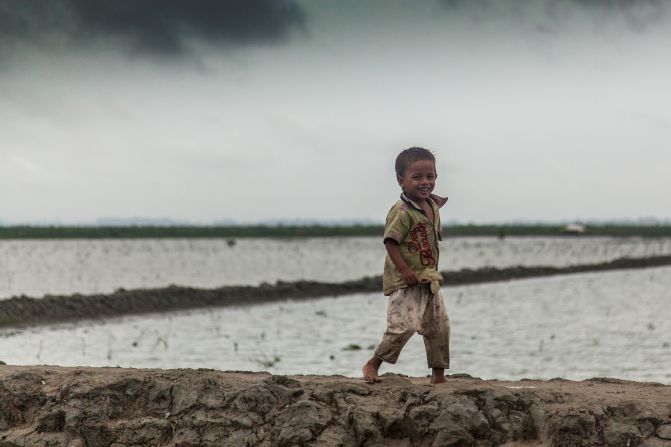
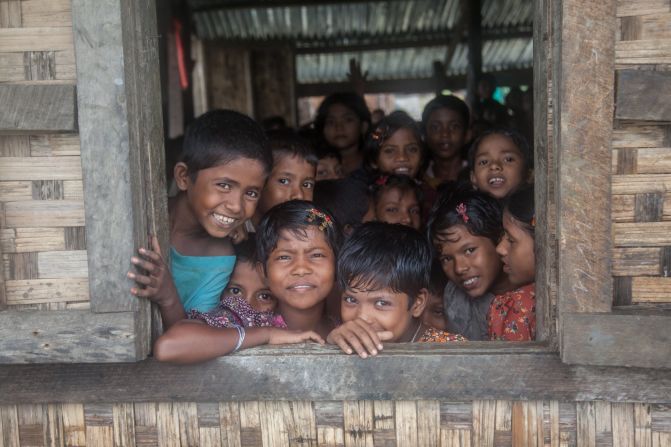
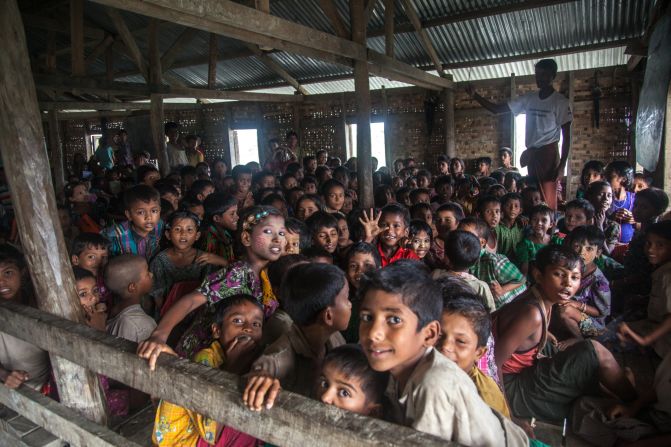
Thousands of children reside in the camp. Educational opportunities are limited.
OCHA/C. Learson
Inside Nget Chaung IDP camp —
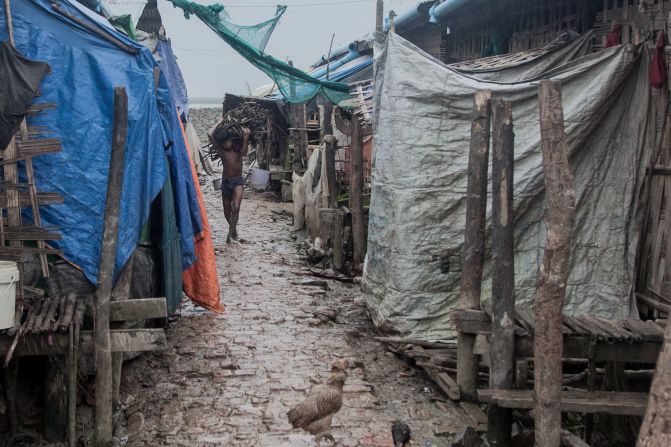
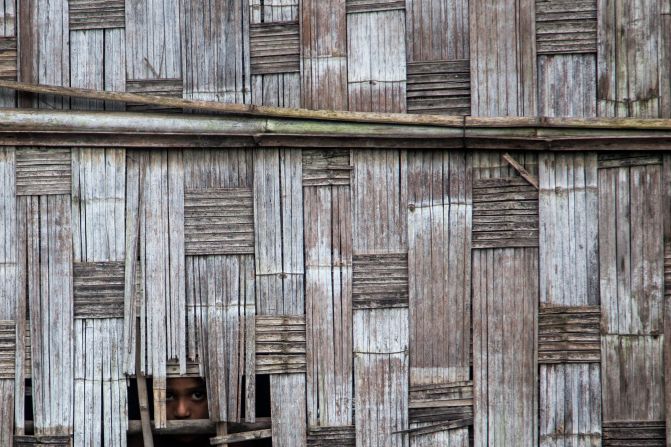
Most shelters in the camp were built to last six months, and are now in bad condition. Inhabitants gather scrap and dismantle other structures to bolster their shelters, say camp workers.
OCHA/C. Learson
Inside Nget Chaung IDP camp —
Crowded conditions inside a makeshift classroom in Nget Chaung.
OCHA/C. Learson
Inside Nget Chaung IDP camp —
"The desperation is extremely high and it's increasing," says a humanitarian worker who knows the camp.
OCHA/C. Learson
Inside Nget Chaung IDP camp —
Facilities in the camp are rudimentary and health diseases are common, especially skin diseases and gastrointestinal complaints.
OCHA/C. Learson
Inside Nget Chaung IDP camp —
Regular flooding means medical clinics operate only at the entrance to Nget Chaung, says the humanitarian worker, putting treatment beyond the reach of those too ill to make their way through the muddy camp.
Supplied
Inside Nget Chaung IDP camp —
The Rohingya, says activist Wai Wai Nu, used to lead "a dignified existence." Now, she says, "young people ... have no hope, we cannot imagine where it will lead."