As the Ebola virus spreads and grows into a global threat, there is a lot of talk about how to keep from catching the potentially deadly disease. From full-body suits to improvised face coverings, here's a look at ways health workers protect themselves in some of the hardest hit areas.
PASCAL GUYOT/AFP/Getty Images
Ebola protection —
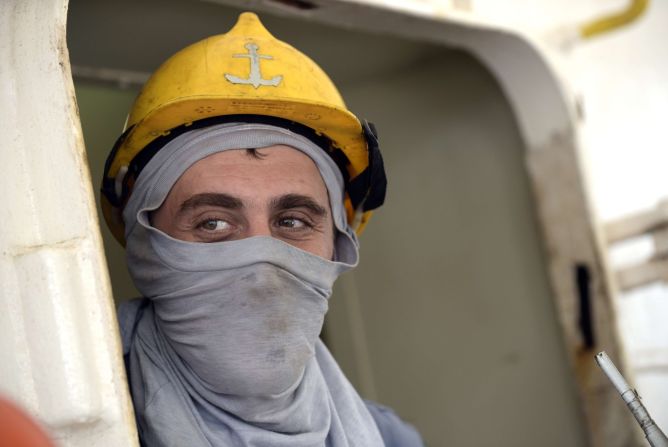
Here, a Ukrainian sailor uses a T-shirt as a face mask as he watches Nigerian health workers check the ship he's on for signs of the Ebola virus. The World Health Organization, or WHO, recommends a medical mask to adequately protect the mouth and nose.
PIUS UTOMI EKPEI/AFP/Getty Images
Ebola protection —
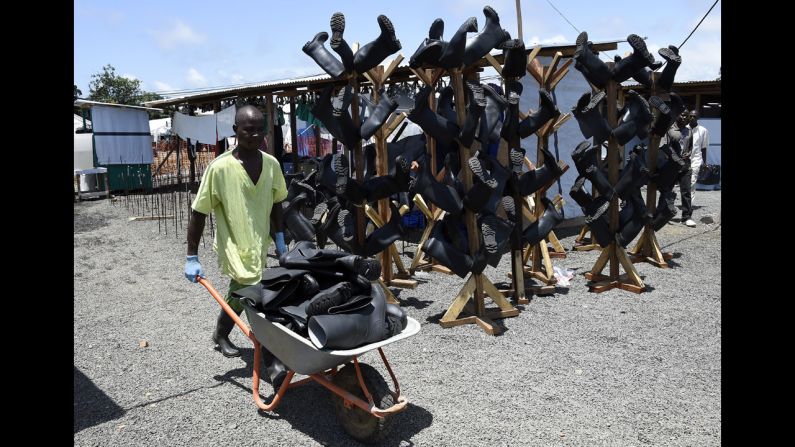
WHO also recommends boots with closed toes, preferably made from rubber. Here, a man carries disinfected boots back to health workers, who will wear them as they treat infected patients.
PASCAL GUYOT/AFP/Getty Images
Ebola protection —
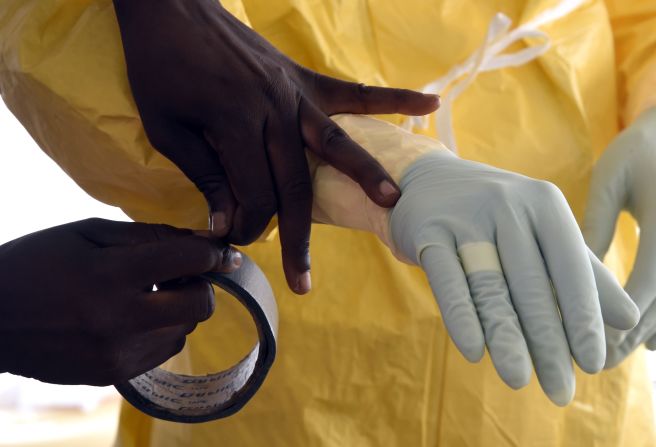
Tape is often used to seal the gap between sleeves and protective gloves. Shoes are often covered with boot protection and extra loose sleeves can be used to protect the underarms.
PASCAL GUYOT/AFP/Getty Images
Ebola protection —
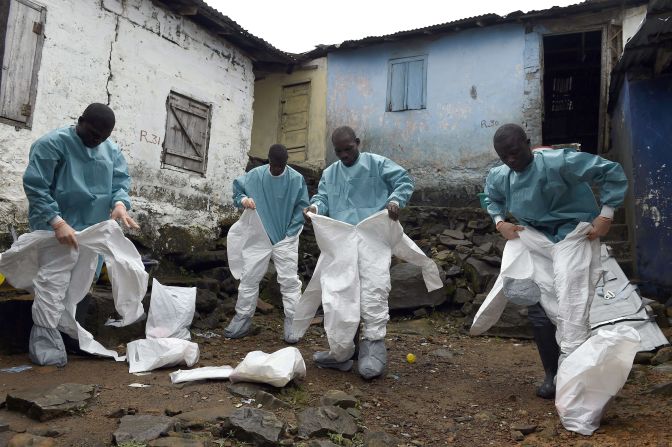
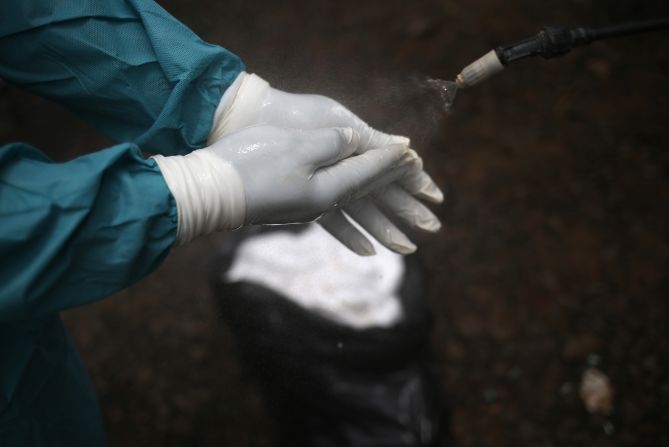
Disinfecting after treating infected patients is key, according to WHO protocol.
John Moore/Getty Images
Ebola protection —
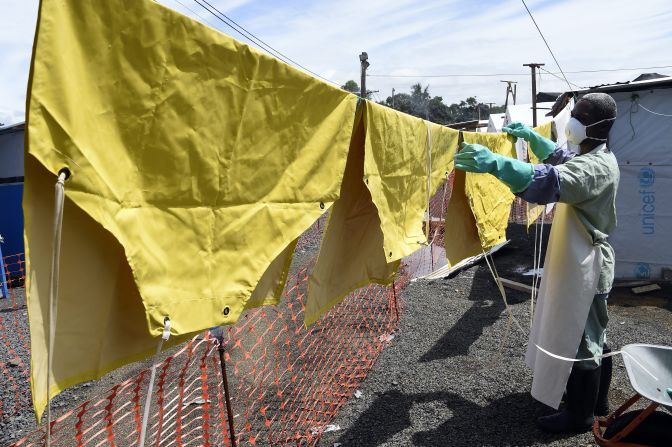
WHO also recommends aid workers wear long-sleeved gowns made from impermeable material, which can be used in combination with a waterproof apron -- like the one being washed in this photo -- to protect against bodily fluids.
PASCAL GUYOT/AFP/Getty Images
Ebola protection —
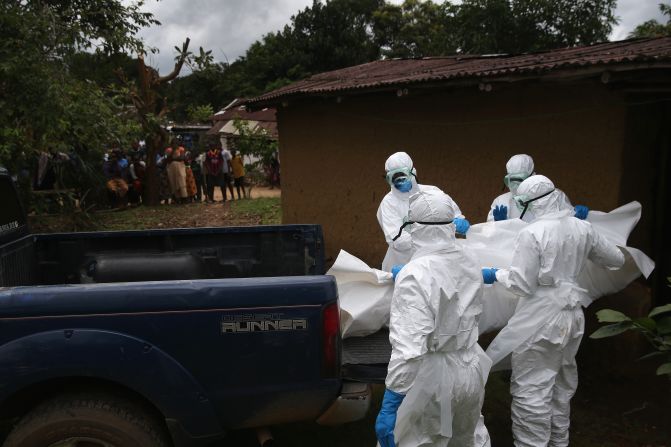
The U.S. Centers for Disease Control and Prevention recommends that only people "trained in handling infected human remains, and wearing personal protective equipment, should touch or move any Ebola-infected remains."
John Moore/Getty Images
Ebola protection —
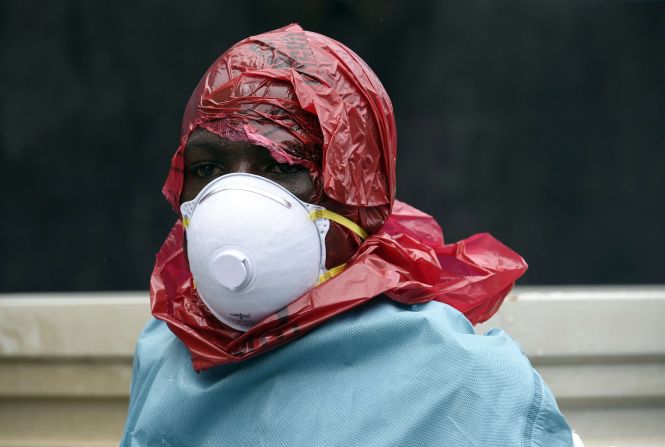
Most people in Ebola-affected areas do not have access to protective suits. Red Cross volunteers have improvised their protective wear and cover their heads with red plastic bags. They cut a hole in the bag to see and breathe.
PASCAL GUYOT/AFP/Getty Images
Ebola protection —
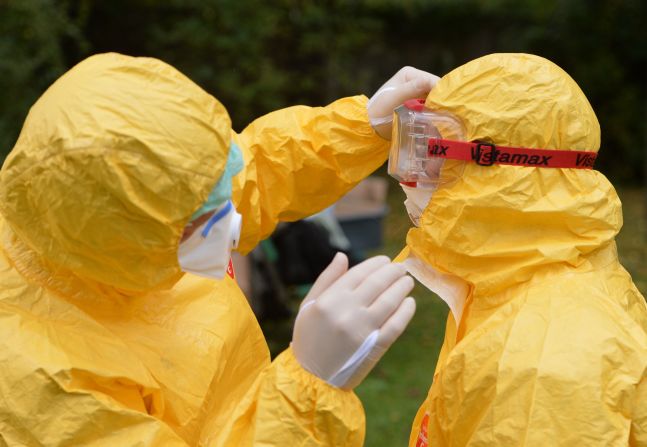
The highest standard used in West Africa is a hooded coverall. It is used by Medecins Sans Frontieres. The material used is not ordinary plastic. It is tested to be resistant to contagious liquids such as blood and vomit.
Timm Schamberger/Getty Images
Ebola protection —
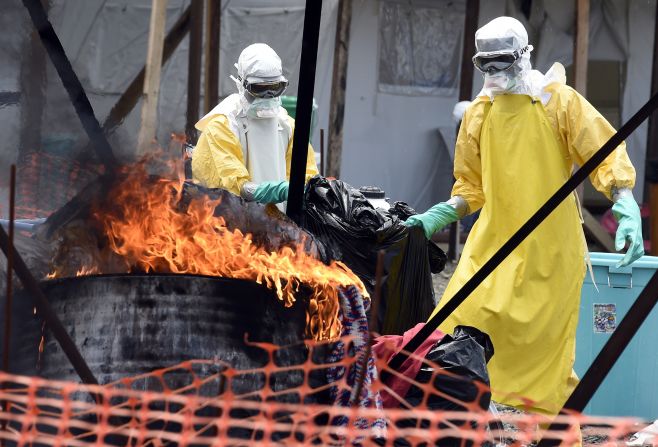
In Liberia, medical staff burn clothes belonging to Ebola patients to help stop the spread of the virus.