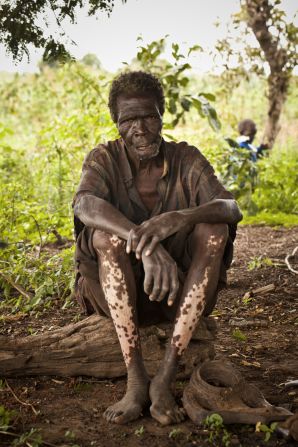
James Waya, 67, lives in North Liwa Village, Uganda. Waya suffers from leopard skin, which affects many people with river blindness. Thanks to The Carter Center and its partners, including the national river blindness program, James has been receiving ivermectin treatment for more than seven years and no longer experiences the intense itching and other ill effects associated with the disease.
Kay Hinton/The Carter Center
Eliminating river blindness —
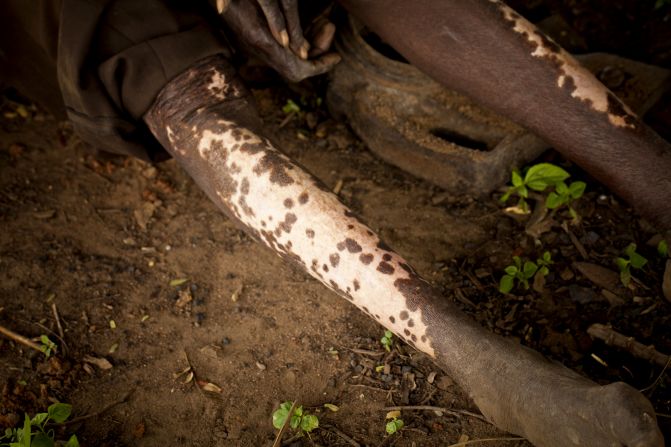
Leopard skin is one symptom of river blindness. The more infected black fly bites a person receives, the more severe the illness becomes.
Kay Hinton/The Carter Center
Eliminating river blindness —
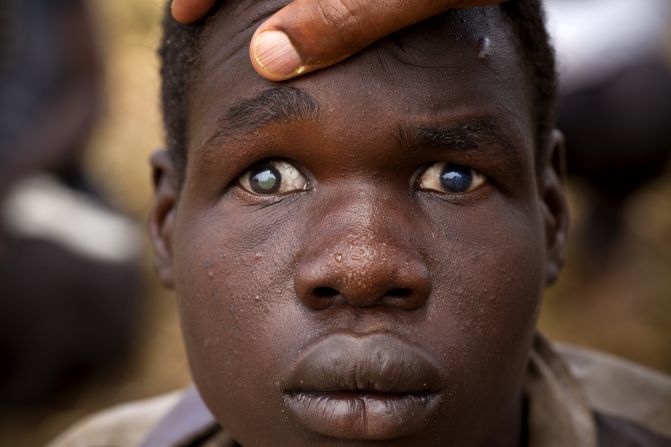
Okello Noel, 18, lives in Kibega Villiage, in Pader District, Uganda. He lost his sight in 2007. The Carter Center's River Blindness Program now assists the country's Ministry of Health in providing mass drug distribution in Noel's community so that future generations will not suffer from impaired vision caused by river blindness.
Kay Hinton/The Carter Center
Eliminating river blindness —
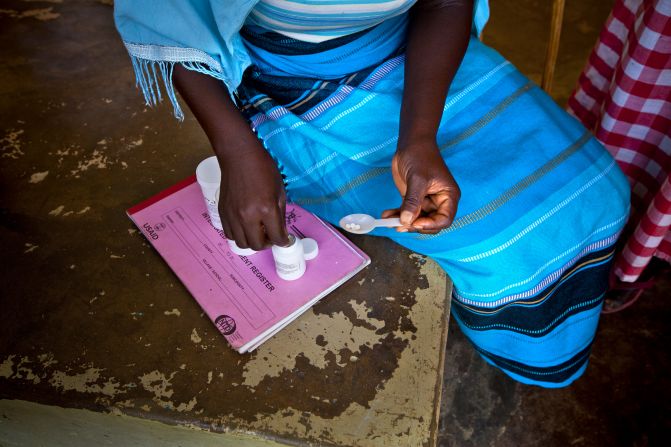
Community drug distributors provide doses of the drug ivermectin for free in river blindness endemic areas. The correct dosage is determined by the patient's height. Mass drug distribution is a key component of the drive to eliminate the blinding disease throughout Uganda.
Kay Hinton/The Carter Center
Eliminating river blindness —
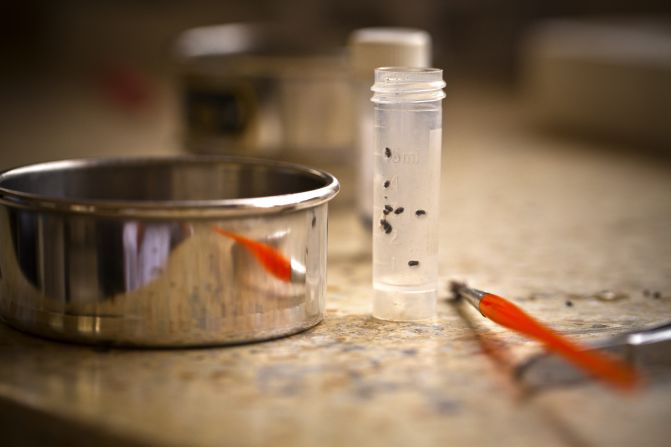
Black flies are collected by community members who use themselves as bait. Thousands of black flies are brought to the Carter Center-supported lab each year. Each sample collection contains a paper with the month, region, place of collection and species. The flies are tested to see if they contain DNA from the river blindness parasite, an indication of the presence of the disease.