Your effort and contribution in providing this feedback is much
appreciated.
Close
Ad Feedback
The Crash Test Boat
Testing times —
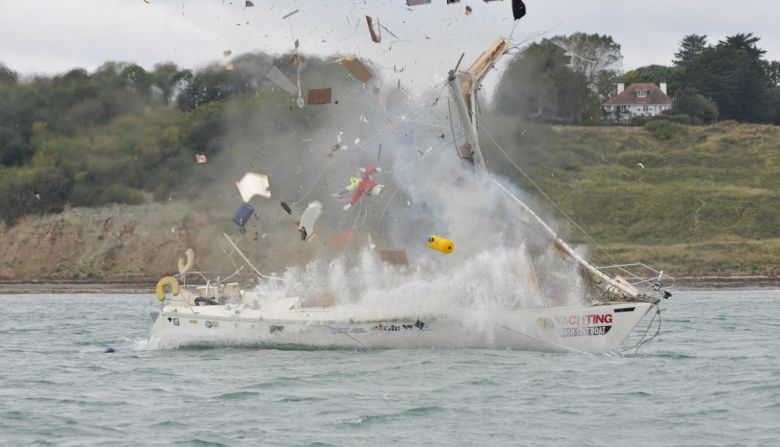
Sailing experts from British magazine Yachting Monthly have recreated eight nautical disasters as part of their "Crash Test Boat" study, ending with a gas explosion.
Courtesy Yachting Monthly
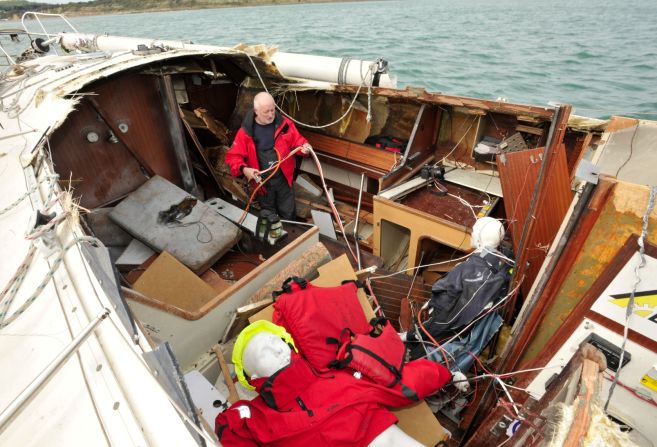
Damage control —
Former Yachting Monthly editor Paul Gelder inspects the damage after the explosion. The team wanted to show the consequences of disasters and the best ways of dealing with them.
Courtesy Yachting Monthly
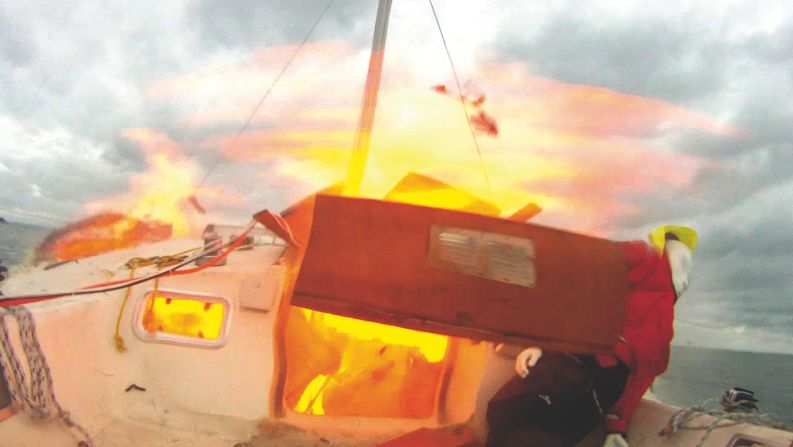
Shock resistant —
The experiments were filmed using special shock-resistant cameras and posted on Youtube, already generating more than 1million hits.
Courtesy RNLI
Out with a bang —
Royal Navy explosives experts were enlisted to set up the final blast, carried out in a 200 meter exclusion zone off the Isle of Wight in Britain.
Courtesy Yachting Monthly
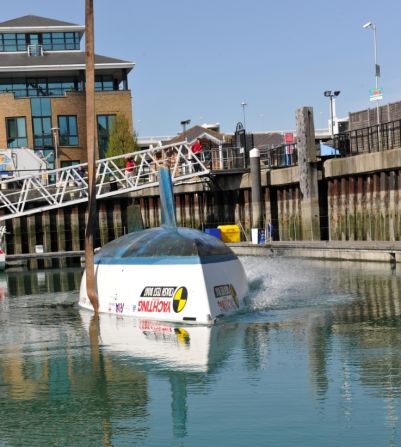
Capsized boat —
The 12 meter yacht, worth $47,700 was also capsized (pictured), run aground, set on fire and dismasted as part of the ground-breaking experiments.
Courtesy Yachting Monthly
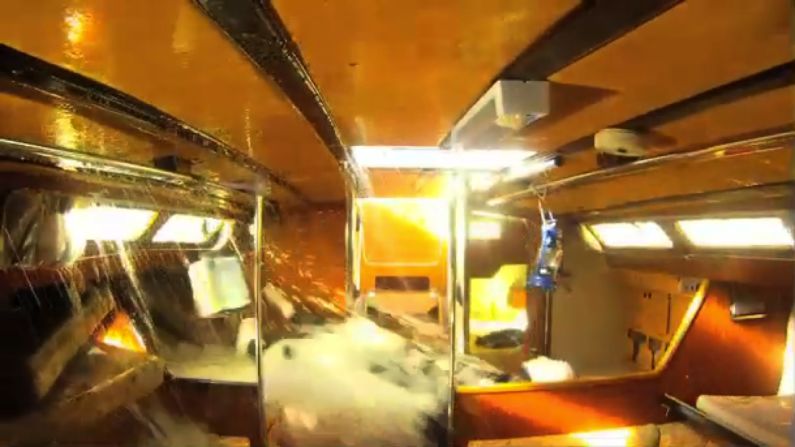
Inside lowdown —
Inside footage of the capsize experiment revealed that even a pen could become a dangerous projectile unless secured down.
Courtesy Yachting Monthly
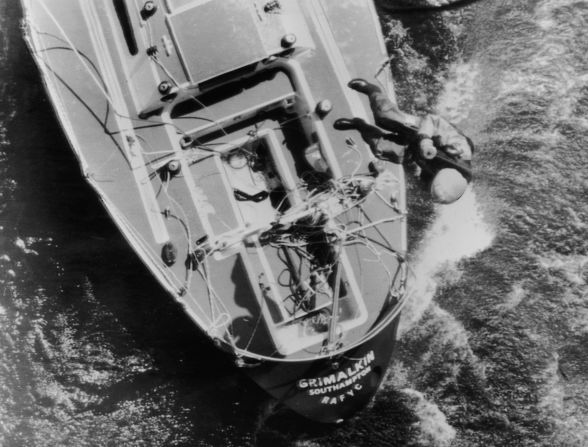
Fastnet Race, 1979 —
The capsize experiment was based on the experiences of sailors caught in the disasterous 1979 Fastnet Race. Severe storms in the Irish Sea killed 15 competitors.
Steven Pratt/Getty Images/file
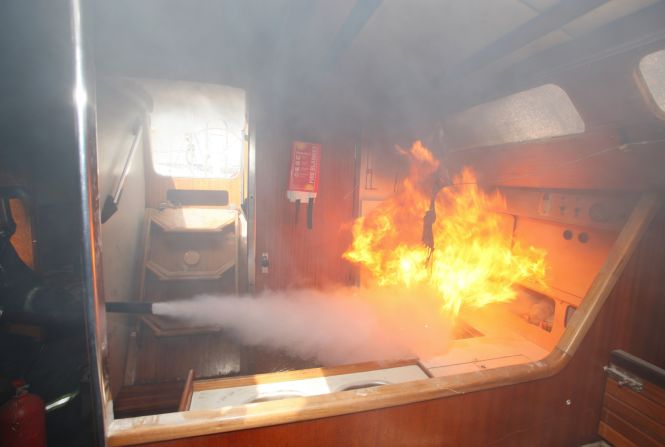
Fire in the hull —
The team also recreated two fires -- one in the galley and one in the engine room. They found powder extinguishers were one of the best methods of putting out a blaze.
Courtesy Yachting Monthly
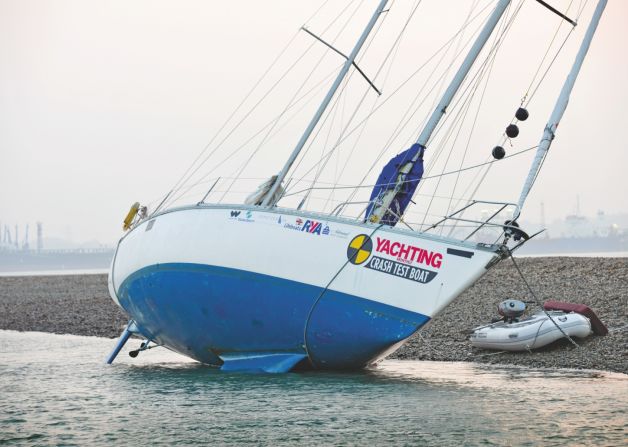
Ground to a halt —
"If you're grounded on rocks, don't attempt to turn the yacht because you could rip out the keel," the Yachting Monthly team advise.
Courtesy Yachting Monthly
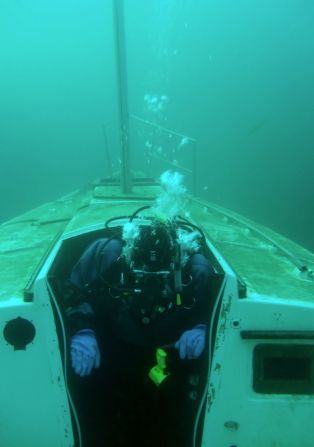
That sinking feeling —
The team drilled a hole in the hull as part of its sinking experiment. They found that one of the quickest methods for stemming the flow of water was covering it with a cushion.
Courtesy Yachting Monthly
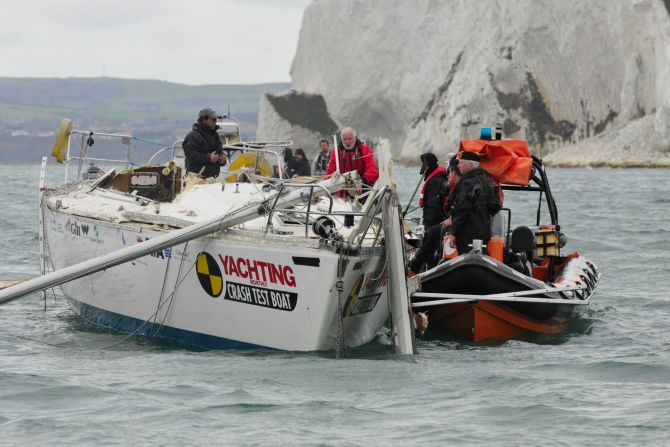
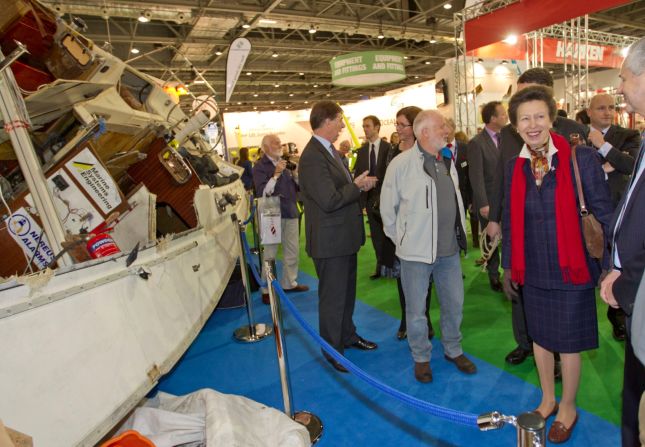
Royal reception —
The UK's Princess Anne inspects the exploded Crash Test Boat, on display at the London Boat Show. The yacht is now used as a teaching aid at the International Boat Building College in Suffolk.