Solar flares and sunspots | CNN

CNN values your feedback

1. How relevant is this ad to you?
2. Did you encounter any technical issues?
Thank You!
Your effort and contribution in providing this feedback is much appreciated.
Close
Ad Feedback
US
World
Politics
Business
Health
Entertainment
Style
Travel
Sports
Science
Climate
Weather
World Cup 2026
Ukraine-Russia War
Israel-Hamas War
Games
More
US World Politics Business Health Entertainment Style Travel Sports Science Climate Weather World Cup 2026 Ukraine-Russia War Israel-Hamas War Games
Watch Listen Live TV
My Account
  • Settings
  • Newsletters
  • Topics you follow
  • Sign out
Your CNN account Sign in to your CNN account

My Account
  • Settings
  • Newsletters
  • Topics you follow
  • Sign out
Your CNN account Sign in to your CNN account

Live TV Listen Watch
Edition
US
International
Arabic
Español
Edition
  • US
  • International
  • Arabic
  • Español

  • World
    • Africa
    • Americas
    • Asia
    • Australia
    • China
    • Europe
    • India
    • Middle East
    • United Kingdom
  • US Politics
    • Elections 2026
    • Trump
    • Facts First
    • CNN Polls
    • Redistricting Tracker
    • Epstein Files
  • Business
    • Tech
    • Media
    • Calculators
    • Videos
  • Markets
    • Pre-markets
    • After-Hours
    • Fear & Greed
    • Investing
  • Health
    • Life, But Better
    • Fitness
    • Food
    • Sleep
    • Mindfulness
    • Relationships
  • Entertainment
    • Movies
    • Television
    • Celebrity
  • Tech
    • Innovate
  • Style
    • Arts
    • Design
    • Fashion
    • Architecture
    • Luxury
    • Beauty
    • Video
  • Travel
    • Destinations
    • Food & Drink
    • Stay
    • News
    • Videos
  • Sports
    • Football
    • Tennis
    • Golf
    • Motorsport
    • US Sports
    • Olympics
  • Science
    • Space
    • Life
    • Unearthed
  • Climate
    • Solutions
    • Weather
  • Weather
    • Video
    • Climate
  • World Cup 2026
  • Ukraine-Russia War
  • Israel-Hamas War
  • Features
    • As Equals
    • Call to Earth
    • Freedom Project
    • Impact Your World
    • Inside Africa
    • CNN Heroes
  • Watch
    • Live TV
    • Featured
    • CNN Fast
    • Shows A-Z
    • CNN 10
    • CNN TV Schedule
  • Listen
    • All There Is with Anderson Cooper
    • Chasing Life with Dr. Sanjay Gupta
    • The Assignment with Audie Cornish
    • Terms of Service with Clare Duffy
    • CNN 5 Things
    • All CNN Podcasts
  • Games
    • Daily Crossword
    • Jumble Crossword
    • Photo Shuffle
    • Sudoblock
    • Sudoku
    • 5 Things Quiz
  • About CNN
    • Photos
    • Investigations
    • CNN Profiles
    • CNN Leadership
    • CNN Newsletters
    • Work for CNN

Follow CNN
Download the CNN App

Solar flares and sunspots

Updated 4:27 PM EDT, Tue June 10, 2014
Link Copied!
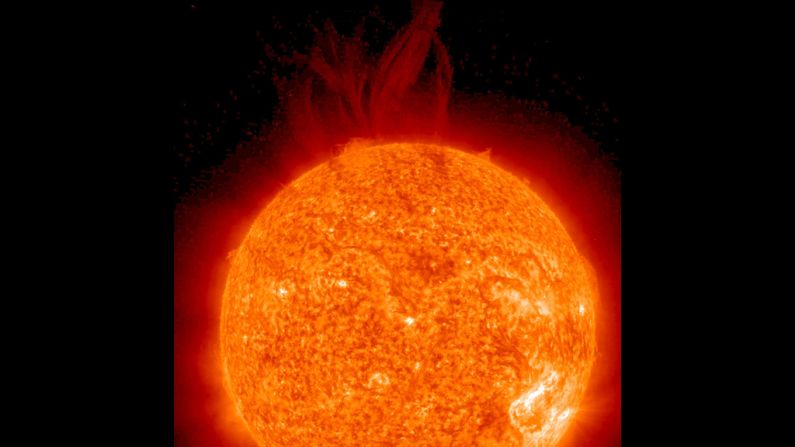
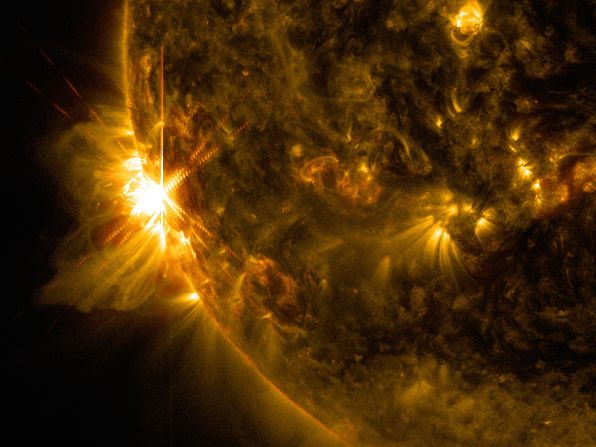
NASA's Solar Dynamics Observatory, which observes the sun 24 hours a day, captures this image of an X-class solar flare at 7:42 a.m. ET Tuesday, June 10. X-class flares are the most powerful. Check out more images of recent solar flares and related activity:
Solar flares and sunspots —
NASA's Solar Dynamics Observatory, which observes the sun 24 hours a day, captures this image of an X-class solar flare at 7:42 a.m. ET Tuesday, June 10. X-class flares are the most powerful. Check out more images of recent solar flares and related activity:
From NASA
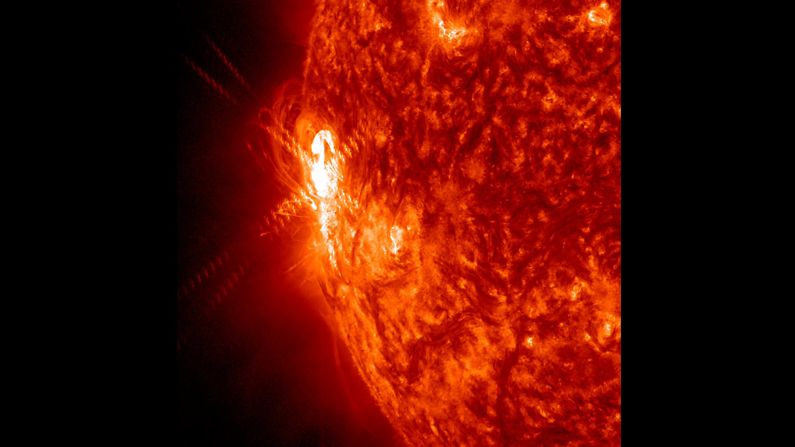
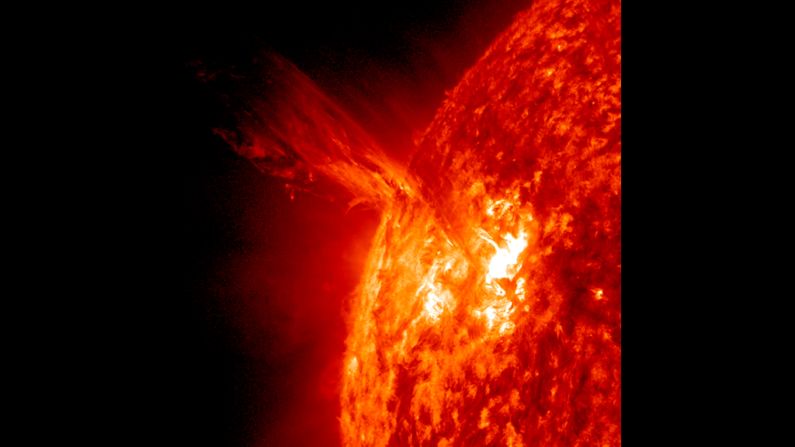
NASA shows this second flare, which appears as a bright flash on the left side of the sun, shortly after it peaked at 8:52 a.m. ET on June 10. It was less powerful than the first flare that day.
Solar flares and sunspots —
NASA shows this second flare, which appears as a bright flash on the left side of the sun, shortly after it peaked at 8:52 a.m. ET on June 10. It was less powerful than the first flare that day.
From NASA
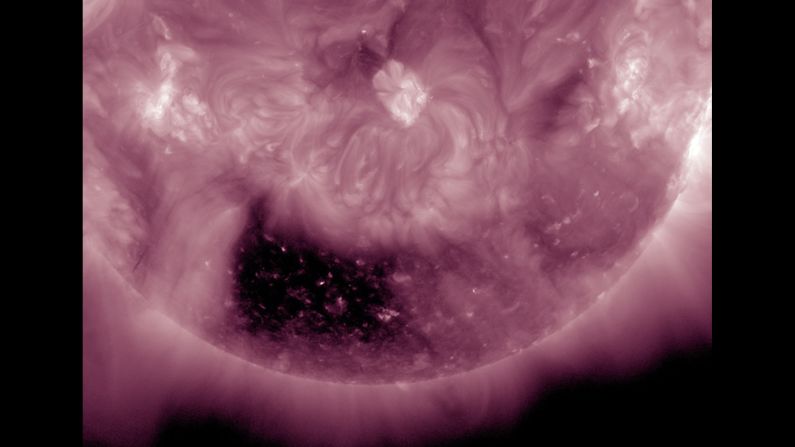
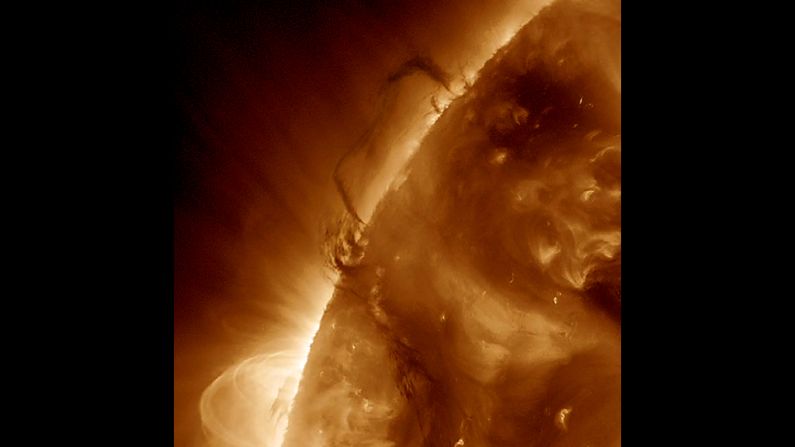
A coronal hole, almost square in its shape, is one of the most noticeable features on the sun on May 5-7. A coronal hole is an area where high-speed solar wind streams into space. It appears dark in extreme ultraviolet light, as there is less material to emit in these wavelengths. Inside the coronal hole, you can see bright loops where the hot plasma outlines little pieces of the solar magnetic field sticking above the surface.
Solar flares and sunspots —
A coronal hole, almost square in its shape, is one of the most noticeable features on the sun on May 5-7. A coronal hole is an area where high-speed solar wind streams into space. It appears dark in extreme ultraviolet light, as there is less material to emit in these wavelengths. Inside the coronal hole, you can see bright loops where the hot plasma outlines little pieces of the solar magnetic field sticking above the surface.
Solar Dynamics Observatory/NASA
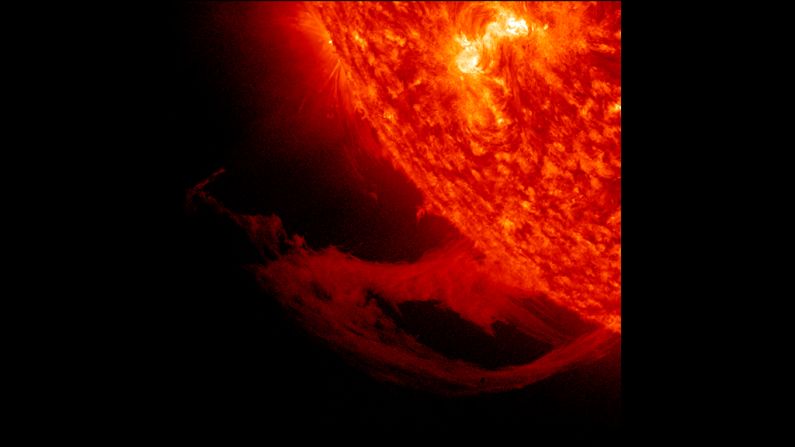
A large active region gave off warning signs as a possible source of powerful solar storms. It already shot off two smaller flares on January 2, as shown here in a wavelength of extreme ultraviolet light.
Solar flares and sunspots —
A large active region gave off warning signs as a possible source of powerful solar storms. It already shot off two smaller flares on January 2, as shown here in a wavelength of extreme ultraviolet light.
Solar Dynamics Observatory.
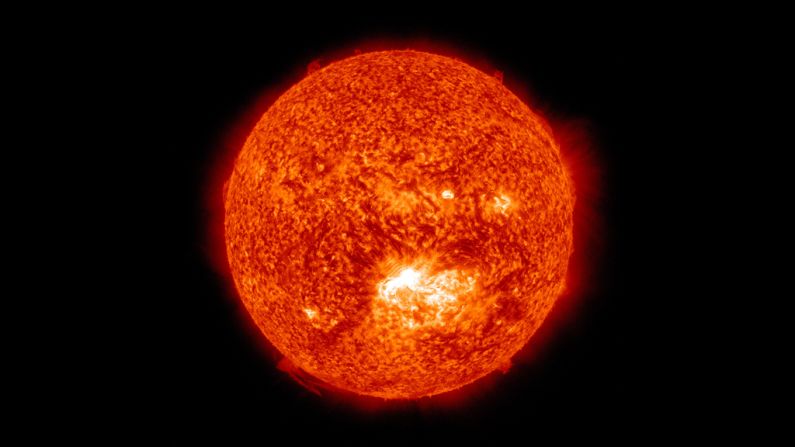
This image from the Solar Dynamics Observatory shows the sun at 12:45 p.m. ET on July 12, 2012, during an X1.4 class flare. The image is captured in the 304 Angstrom wavelength, which is typically colorized in red.
Solar flares and sunspots —
This image from the Solar Dynamics Observatory shows the sun at 12:45 p.m. ET on July 12, 2012, during an X1.4 class flare. The image is captured in the 304 Angstrom wavelength, which is typically colorized in red.
NASA
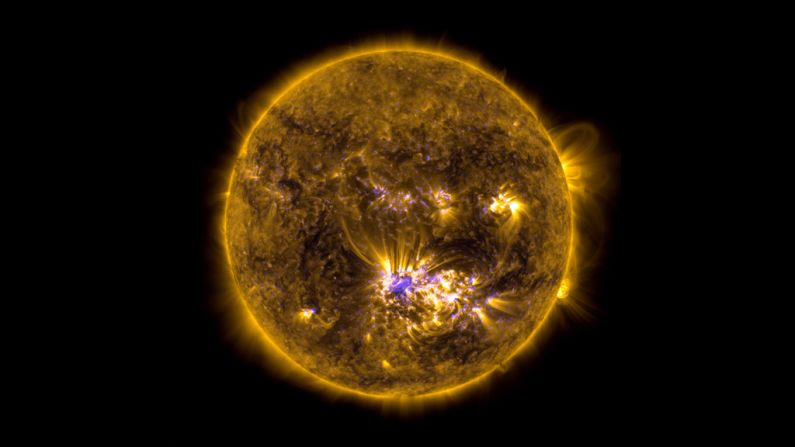
This image combines two sets of photos of the sun on July 12, 2012, to give an impression of what the sun looked like shortly before it unleashed an X-class flare.
Solar flares and sunspots —
This image combines two sets of photos of the sun on July 12, 2012, to give an impression of what the sun looked like shortly before it unleashed an X-class flare.
NASA
NASA was watching when this trio of large sunspots formed on the eastern limb of the sun in 2012. The sunspots released several medium solar flares while moving across the face of the sun.
Solar flares and sunspots —
NASA was watching when this trio of large sunspots formed on the eastern limb of the sun in 2012. The sunspots released several medium solar flares while moving across the face of the sun.
NASA
A very large filament became unstable and erupted June 27, 2012, as seen by the STEREO Ahead spacecraft in a wavelength of extreme UV light.
Solar flares and sunspots —
A very large filament became unstable and erupted June 27, 2012, as seen by the STEREO Ahead spacecraft in a wavelength of extreme UV light.
NASA
This active region of the sun could not contain itself as it popped off over a dozen flashes, minor eruptions, and flares over almost two days -- June 27 through 29 -- in 2012.
Solar flares and sunspots —
This active region of the sun could not contain itself as it popped off over a dozen flashes, minor eruptions, and flares over almost two days -- June 27 through 29 -- in 2012.
NASA
Two areas of dark plasma that were close together danced and entwined with each other over a one-day period March 27 and 28, 2012. The dark plasma, seen in profile, was somewhat cooler and therefore darker than the material around it.
Solar flares and sunspots —
Two areas of dark plasma that were close together danced and entwined with each other over a one-day period March 27 and 28, 2012. The dark plasma, seen in profile, was somewhat cooler and therefore darker than the material around it.
NASA
This close-up view reveals magnetic forces at work as they pull plasma strands this way and that before gradually breaking away from the sun November 14 and 15, 2011.
Solar flares and sunspots —
This close-up view reveals magnetic forces at work as they pull plasma strands this way and that before gradually breaking away from the sun November 14 and 15, 2011.
NASA
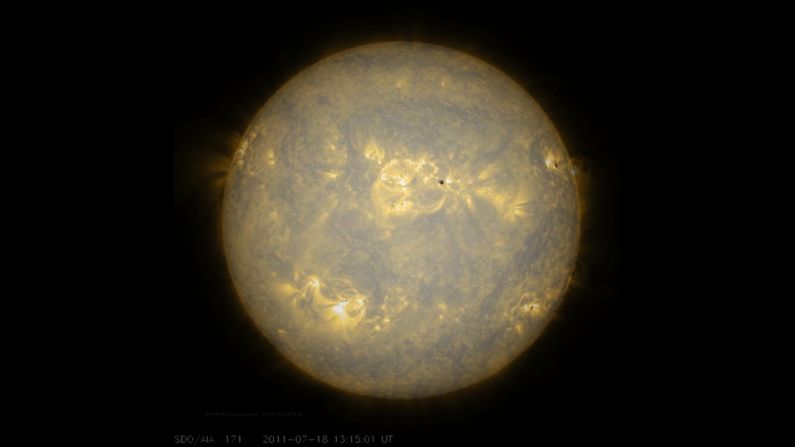
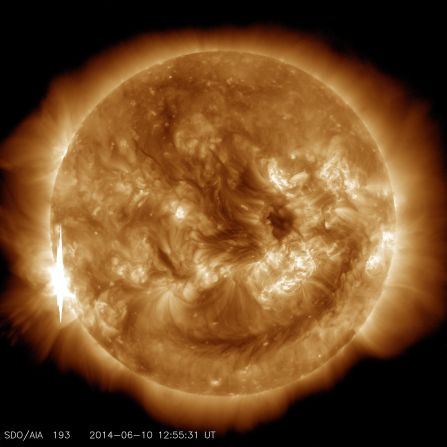
Sunspots, which are cooler, darker areas of intense magnetic activity, are most often the source of solar storms. Here the sun's lower atmosphere is observed in extreme ultraviolet light July 17 and 18, 2011.
Solar flares and sunspots —
Sunspots, which are cooler, darker areas of intense magnetic activity, are most often the source of solar storms. Here the sun's lower atmosphere is observed in extreme ultraviolet light July 17 and 18, 2011.
NASA

My Account
  • Settings
  • Newsletters
  • Topics you follow
  • Sign out
Your CNN account Sign in to your CNN account

Live TV Listen Watch
  • World
    • Africa
    • Americas
    • Asia
    • Australia
    • China
    • Europe
    • India
    • Middle East
    • United Kingdom
  • US Politics
    • Trump
    • Facts First
    • CNN Polls
    • Elections 2026
    • Redistricting Tracker
    • Epstein Files
  • Business
    • Tech
    • Media
    • Calculators
    • Videos
  • Markets
    • Pre-markets
    • After-Hours
    • Fear & Greed
    • Investing
  • Health
    • Life, But Better
    • Fitness
    • Food
    • Sleep
    • Mindfulness
    • Relationships
  • Entertainment
    • Movies
    • Television
    • Celebrity
  • Tech
    • Innovate
  • Style
    • Arts
    • Design
    • Fashion
    • Architecture
    • Luxury
    • Beauty
    • Video
  • Travel
    • Destinations
    • Food & Drink
    • Stay
    • News
    • Videos
  • Sports
    • Football
    • Tennis
    • Golf
    • Motorsport
    • US Sports
    • Olympics
  • Science
    • Space
    • Life
    • Unearthed
  • Climate
    • Solutions
    • Weather
  • Weather
    • Video
    • Climate
  • World Cup 2026
  • Ukraine-Russia War
  • Israel-Hamas War
  • Features
    • As Equals
    • Call to Earth
    • Freedom Project
    • Impact Your World
    • Inside Africa
    • CNN Heroes
  • Watch
    • Live TV
    • Featured
    • CNN Headlines
    • Shows A-Z
    • CNN 10
    • CNN TV Schedule
  • Listen
    • All There Is with Anderson Cooper
    • Chasing Life with Dr. Sanjay Gupta
    • The Assignment with Audie Cornish
    • Terms of Service with Clare Duffy
    • CNN 5 Things
    • All CNN Podcasts
  • Games
    • Daily Crossword
    • Jumble Crossword
    • Photo Shuffle
    • Sudoblock
    • Sudoku
    • 5 Things Quiz
  • About CNN
    • Photos
    • Investigations
    • CNN Profiles
    • CNN Leadership
    • CNN Newsletters
    • Work for CNN

US
Watch Listen Live TV
My Account
  • Settings
  • Newsletters
  • Topics you follow
  • Sign out
Your CNN account Sign in to your CNN account
Follow CNN

Download the CNN app

Terms of Use Privacy Policy Ad Choices Accessibility & CC About Newsletters Transcripts Sitemap

© 2026 Cable News Network. A Warner Bros. Discovery Company. All Rights Reserved.
CNN Sans ™ & © 2016 Cable News Network.

Download the CNN app

Scan the QR code to download the CNN app on Google Play.

Scan the QR code to download the CNN app from Google Play.

Download the CNN app

Scan the QR code to download the CNN app from the Apple Store.

Scan the QR code to download the CNN app from the Apple Store.