Today's Show Transcript
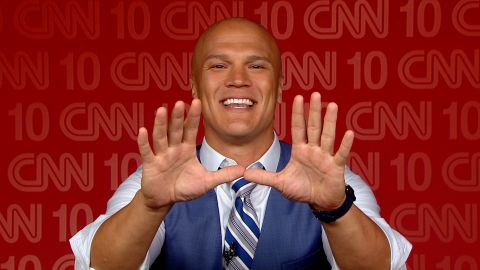
COY WIRE, CNN 10 ANCHOR: Hello and welcome to CNN 10. I'm Coy Wire here with your daily 10 minutes of news for you this Tuesday, March 24th. We will start with a motivational reminder. You never truly appreciate what you have until it's gone. A good example is toilet paper. Thank you for making me and my team a part of your day.
Now, let's get you your news. On this day in 1989, an oil supertanker called the Exxon Valdez crashed into Bligh Reef off Alaska's southern coast, spurring one of the worst environmental disasters in U.S. history. More than 11 million gallons of crude oil eventually spilled into the surrounding waters of the Prince William Sound, wreaking havoc on the ecosystem.
The spill quickly spread into the Gulf of Alaska, polluting thousands of square miles of ocean, damaging more than 1,300 miles of coastline. Local communities that depended on fishing and tourism to survive were heavily devastated.
(BEGIN VIDEO CLIP)
UNIDENTIFIED FEMALE: My husband's a fisherman and has been since he got out of high school, and our livelihood has just gone down the tube.
UNIDENTIFIED MALE: If we don't produce, if we can't fish, if we can't deal with our livelihood, then this town will die.
UNIDENTIFIED MALE: I think it brings most of us to tears because of what happened to such an incredible environment.
(END VIDEO CLIP)
WIRE: But the spill's biggest impact, damage to the pristine region's abundant wildlife, was catastrophic.
(BEGIN VIDEO CLIP)
UNIDENTIFIED MALE: What we have in Prince William Sound is obviously very severe damage, very severe environmental damage, both to the beach areas and to the wildlife. The barnacles are dead, the mussels are dead, the kelp is dead, the beach is covered with tar.
(END VIDEO CLIP)
WIRE: Studies estimate the spill killed around 250,000 seabirds, 4,000 sea otters, 22 orcas, and billions of fish eggs. Some species in the area have yet to recover. Initial cleanup efforts involved thousands of workers and lasted four years.
To this day, though, oil still remains in parts of the region. Investigators determined the crash was caused by a combination of crew error and equipment failure. The incident led to a number of reforms.
Congress passed the Oil Pollution Act of 1990, protecting the sound from certain tankers and standardizing requirements like reinforced hulls to help prevent future spills.
NASA is one step closer to sending humans back around the moon. The Artemis 2 rocket has officially rolled out to the launch pad in Florida. The move began this past Friday at Cape Canaveral as the rocket slowly made its way out of the Vehicle Assembly Building. According to NASA, the rocket's four-mile journey to the launch pad took more than 10 hours on a crawler transporter. One slow step for a rocket, one giant leap towards deep space exploration.
If all goes as planned, liftoff could come as soon as April 1st. No April Fools here, just a mission decades in the making.
Now to an incredible advancement in the world of emergency medicine, a futuristic foam that gets injected into the body, potentially saving the life of someone bleeding internally.
It's known as ResQFoam, and it expands inside the body to help stop potentially fatal internal bleeding while surgeons go to work. Our Jacqueline Howard got the chance to see how the innovation works and talk to the first person ever to receive the treatment.
(BEGIN VIDEOTAPE)
JACQUELINE HOWARD, CNN HEALTH REPORTER: All right, Dr. Hewgley, let's take a look. This is how it would look in the human body. You might think this is just a cool science project, but it may actually be able to save your life.
Wow. Oh my goodness.
DR. PRESTON HEWGLEY, UAB HOSPITAL: It could be a game changer.
HOWARD (voice-over): It's called ResQFoam, and the material works a lot like a human version of Fix-A-Flat. Doctors inject it into the abdomen, it quickly expands, and it creates pressure from inside the body to slow life-threatening bleeding.
RONALD FARMS, TREATED WITH RESQFOAM: It saved my life. It really did.
HOWARD (voice-over): We've been given an exclusive interview with Ronald Farms. He's the very first person in the world to be treated with this futuristic material.
FARMS: By all science, I shouldn't be here. By all medical personnel, I should not be here. That's what every one of them have told me. It was a miracle.
HOWARD: How does it feel to be back here now, walking, recovering?
FARMS: Very sober. Dr. Hewgley and them had told my family, even if I made it through the surgeries, I would never walk again. Lo and behold, here I am walking, thanks to the good Lord.
HOWARD: It was last year when Farms was seriously injured in a car crash in Alabama. He was 34 years old, and he had just moments to live.
FARMS: I said, Lord, forgive me for failing you, because I knew I had a destiny here on this earth, and I thought this was it.
HOWARD (voice-over): When Farms arrived at the University of Alabama Birmingham Hospital, doctors immediately knew he could be a candidate for ResQFoam.
HEWGLEY: The foam has to be extracted through the same type of surgery we would use to treat intra-abdominal bleeding. So, we only want to use it in someone we know is going to go to surgery.
HOWARD: The foam gives doctors just enough time to prep for surgery, and it's during that surgery when the foam is then taken out after it's already done its job.
HEWGLEY: There's always adrenaline and trauma, but it's rare that we encounter something that has never been done before, that we've never done before.
HOWARD: ResQFoam was developed by Arsenal Medical, and some experts do worry about potential side effects. Some experts worry self-expanding foam could risk causing bowel injury or unintended pressure on the chest. But Dr. Hewgley, he says he is confident the benefits outweigh the risks.
HEWGLEY: The side effects that we see from ResQFoam usage are manageable compared to intra-abdominal hemorrhage, which is oftentimes fatal.
FARMS: I just thank the Lord that he gave the knowledge, the gifts, the talents to these people.
HEWGLEY: How are you doing?
FARMS: It helped save my life.
FARMS: Good to see you too.
HEWGLEY: You look great, man.
(END VIDEO CLIP)
WIRE: Ten-second trivia.
What part of the flower produces pollen?
Petal, stem, anther, or root? If you said anther, you are in full bloom. Like a tiny pollen factory, an anther can release thousands, sometimes millions, of pollen grains from a single flower.
One of the most iconic indicators that spring has sprung in the United States, the cherry blossoms in Washington, D.C. And as the trees begin to show early signs of blooming, the symbolism behind the natural landmark is also on full display. The original blossoms were a gift from Japan.
In 1912, 3,020 cherry trees were planted around the tidal basin, East Potomac Park, and the Potomac River waterfront. They were a gift from Tokyo's mayor at the time, and were welcomed in an elaborate friendship ceremony with President William Taft and First Lady Helen.
Ever since, the blooms have become an iconic backdrop for U.S. presidents and diplomatic visits. An estimated 1.6 million people visit the nation's capital each spring just to see them up close. Last week, Japanese Prime Minister Sanae Takaichi announced that Japan will present the U.S. with an additional 250 cherry trees soon to coincide with the 250th anniversary of the founding of the United States this summer.
At the Whipsnade Zoo in England, some tiny feet are already making big moves. At the UK's largest zoo, three-month-old southern white rhino calf Mick is taking his very first steps outdoors before quickly picking up the pace. And once he gets going, there is no slowing down.
Not far behind, reticulated giraffe siblings Leoni and Duke are also stretching their legs, wobbling at the start, then finding their footing as they explore their outdoor home.
With only about 10,000 southern white rhinos and 11,000 reticulated giraffes left in the wild, these little steps are part of a much bigger journey helping protect the future of their species.
Now, to the Great Lakes for a frigid rescue you will have to see to believe. A snowmobiler near Michigan's Mackinac Island found himself stuck on a shrinking patch of floating ice in the middle of Lake Huron, during a blizzard nonetheless. Windy, white-out conditions prevented an aerial rescue, so the Coast Guard diverted a nearby cutter crew to make the save. The ship was able to reach the man just in time and safely brought him aboard, where he was treated for hypothermia symptoms and stabilized.
The crew was even able to hoist his snowmobile aboard just as the patch of ice reduced to nearly nothing. Talk about a great save.
Today's story getting a 10 out of 10. A small business owner with a zest for doing good in his community. What started as a gift for his high school teachers has become big business for 24-year-old Max Crawford. His signature spice blend, the Max Mix, is now sold in more than 150 stores across the Midwest and he's got a following.
Max has Down syndrome. He was autographing bottles at a Kansas City grocer this weekend to mark World Down Syndrome Day.
(BEGIN VIDEO CLIP)
UNIDENTIFIED FEMALE: He just wants what everyone else wants and he wanted to have his own company and he wanted to be taken seriously.
(END VIDEO CLIP)
WIRE: One dollar from every sale goes to a Kansas City organization that helps adults with intellectual or developmental disabilities live independently.
If you're not in the Midwest but love a good spice blend and a great cause, yes, you can get the Max Mix online.
We see you, Max. Thanks to everyone who have made us friends on our socials and our CNN 10 YouTube channel. We have a shout out today going to Ms. McLeish and Ms. Acevedo at Buffalo Grove High School in Buffalo Grove, Illinois. We love your school motto, "Be Kind. Be Curious. Be Brave. Belong." Rise up.
And this shout out goes to Mrs. Hughes and friends at Random Lake Middle School in Random Lake, Wisconsin. The treats you sent to my crew from your hometown were soda-licious.
Submit those unique vocabulary words and definitions to our latest post on Instagram @CNN10, @CoyWire, we'll choose a winner to work into tomorrow's Your Word Wednesday.
Make it an awesome day, y'all. See you later, alligators. I'm Coy Wire and we are CNN10.
END
CNN 10's Weekly News Quiz

 CNN10 From Gift to Global Symbol: How Washington got its cherry blossoms10:35CNN10 From Gift to Global Symbol: How Washington got its cherry blossoms 10:35
 • Video 10:40Video CNN10 How Pokémon Go players helped train a new generation of robots 10:40
 • Video 10:29Video CNN10 Why the World’s Happiest Country was ranked first once again 10:29
 • Video 10:30Video CNN10 Breaking down the new space race: a return to the moon 10:30
 • Video 10:48Video CNN10 How this center keeps thousands of pounds of hazardous waste from clogging landfills 10:48
 • Video 10:45Video CNN10 The history behind Chicago's most famous St. Patrick's Day celebration 10:45
 • Video 10:47Video CNN10 This technology could revolutionize how astronauts exercise in space 10:47
 • Video 10:55Video CNN10 This group of students is using A.I. to help houseplants "talk" 10:55
 • Video 10:00Video CNN10 Cuba's critical energy crisis, explained 10:00