podcast
CNN One Thing
You’ve been overwhelmed with headlines all week – what's worth a closer look? One Thing takes you beyond the headlines and helps make sense of what everyone is talking about. Host David Rind talks to experts, reporters on the front lines and the real people impacted by the news about what they've learned – and why it matters. New episodes every Wednesday and Sunday.
What’s Behind Hegseth’s Latest Pentagon Shakeup?
CNN One Thing
Apr 8, 2026
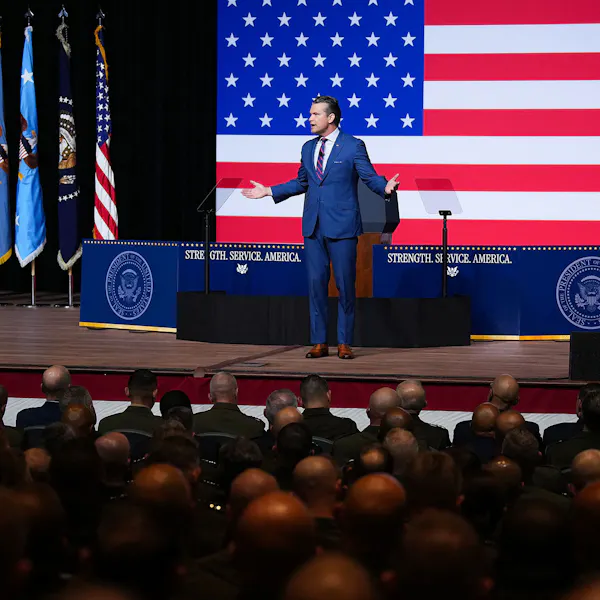
The firing of the US Army chief of staff and two other generals is just the latest personnel shakeup under Defense Secretary Pete Hegseth. But why do this during wartime? We examine whether disagreements between Hegseth and Army Secretary Dan Driscoll are behind the move, and how Hegseth’s ongoing fixation on so-called “culture wars” and loyalty could impact service members.
For more: Trump and Hegseth on Iran war: ‘God is good’
---
Guest: Haley Britzky, CNN National Security Reporter
Host: David Rind
Producer: Paola Ortiz
Showrunner: Felicia Patinkin
Photo: Andrew Harnik/Getty Images
Episode Transcript
David Rind
00:00:00
This is One Thing, I'm David Rind, and why is the Defense Secretary shaking up his staff in the middle of a war?
Haley Britzky
00:00:07
You just don't see that often from that high, that senior of a level, the most senior level in the Pentagon, to reach down into a service and say this person should not be promoted, this person shouldn't be promoted.
David Rind
00:00:19
Stick around. President Donald Trump posts a lot on social media, but one of his true social posts on Easter Sunday really stood out, not only for the content of the message, but for the profanity it contained. The words he used are jarring, but this was the president delivering a crucial wartime message to Iran, so I think it's worth reflecting on the actual words he use. Here it is, quote, "'Tuesday will be power plant day and bridge day, "'all wrapped up in one in Iran. "'There will be nothing like it.'" Open the fucking straight, you crazy bastards, or you'll be living in hell. Just watch. Praise be to Allah.
Reporter
00:00:59
'Why did you- you did use such vulgar language in that truth social post.
President Donald J. Trump
00:01:02
Only to make my point, I think you've heard it before.
David Rind
00:01:06
Needless to say, it is not normal for the President of the United States to openly curse, or to threaten to wipe an entire country and its people off the map as he did later in another True Social Post.
John Berman
00:01:18
Whole civilization will die tonight, never to be brought back again. I don't want that to happen, but it probably will.
David Rind
00:01:29
'This does fit into a broader pattern we've seen throughout the Trump administration when it comes to messaging and culture. So-called woke ideology is out. So is political correctness. The appearance of strength, dominance, and brash rhetoric are in. No apologies, online or off. That is especially clear when you look at how Defense Secretary Pete Hegseth is working to reshape the Pentagon.
Sec. Defense Pete Hegseth
00:01:53
If women can make it, excellent. If not, it is what it is. If that means no women qualify for some combat jobs, so be it.
David Rind
00:02:02
He once said he doesn't believe women belong in combat roles. Now as secretary, he's put an emphasis on physical fitness and lethality. He said all service members, regardless of gender, should meet a baseline standard. He has spearheaded a movement to push out reporters from the Pentagon building itself and raged against what he sees as negative headlines.
Sec. Defense Pete Hegseth
00:02:22
I get it, the press only wants to make the president look bad, but try for once to report the reality. The terms of this war will be set by us at every step.
David Rind
00:02:32
Above all else, Hexeth has been a major cheerleader for President Trump's agenda. But is that commitment to loyalty making its way into actual personnel decisions?
Brianna Keilar
00:02:42
We have breaking news. Defense Secretary Pete Hegseth forcing out the Army's top general amid this war with Iran. A Pentagon official telling CNN that Hegsath told General Randy George to retire immediately.
David Rind
00:02:56
Hegseth has pushed out at least a dozen top officials since taking office. So what does this latest one tell us about the priorities of the Pentagon and how it could impact the rank and file? Let's turn to CNN national security reporter, Haley Britsky. She covers the Pentagon. So Haley, can you just bring us back to last week? Who exactly did Secretary Hegsath push out here?
Haley Britzky
00:03:16
'Yeah. So, the secretary fired Army Chief of Staff, General Randy George, General David Hodney, who was the head of Army Training and Transformation Command, and then Major General William Green, who is the Army's Chief of Chaplains. So General George, obviously, the most kind of high-profile one there, given that he's a member of the Chiefs of Staff. All three of these general officers, from at least what I have seen and heard from people have. You know, relatively pretty good reputations, General Hodney, who deployed multiple times to the Middle East throughout his career, several times with the Ranger Regiment, obviously one of the more elite units within the Army. So it was surprising, to say the least. I mean, I think Army officials, as we reported, senior Army officials. Were caught off guard by this, they learned of this at the same time as everyone else. So this is what sources told us. And then very quickly, the Pentagon put out a statement, largely just confirming General George saying that he would be retiring immediately.
David Rind
00:04:18
I mean, yeah, what was the justification? Is it just their retirement or like what else might be going on here?
Haley Britzky
00:04:24
So the Pentagon hasn't provided any further detail as to why. Sean Parnell, the chief Pentagon spokesperson, said that they respected his service, appreciated his time in uniform, and that he would be retiring. As we reported, though, this was sort of like the writing was on the wall for this with General George for a little while, given a few factors. One, his proximity to Army Secretary DeAndre Scholl. They, of course, work very closely together, which is to be expected for the secretary and the Chief of Staff. To work closely together, but we know that the relationship between Secretary Driscoll and Defense Secretary Pete Hegseth has been at times a little contentious.
David Rind
00:05:03
Huh, what's up?
Haley Britzky
00:05:05
Well, Secretary Hegseth, as we've reported before, has felt a little threatened by Secretary Driscoll. Driscolle is very good friends with the vice president, for example. He definitely has his ear. He has the president's ear, the president who's kind of affectionately referred to him in the past as his drone guy, because Secretary Driscolla is very interested and focused on sort of the innovation piece of the Army. Specifically on drones. He's traveled overseas and spoken with soldiers about that problem set. So something that we've noticed over the last year is sort of that tension between Secretary Driscoll and Secretary Hegseth and that that may have kind of bled over onto General George and his close relationship with Secretary Driscolle. But we've also seen that Secretary Hegsath and the people around him, his team, have sort of taken I guess what is kind of a standard process, typically, for someone in General George's position, you know, they're appointed to these roles as senior military assistants for the secretary of defense, right? That's typically seen as a job given to some of the highest performing officers in the military services, right, they are going to be working very closely with the secretary of defense. And General George worked with Secretary of Defense Lloyd Austin, he was his senior military assistant.
David Rind
00:06:25
Under the Biden administration.
Haley Britzky
00:06:27
Under the Biden administration, right? So that has seemed to be sort of a mark against him, if you will, in Hegseth's circle, that he was, you know, quote unquote, a Biden appointee. And while that may be technically true, that it was his nomination came through under the Biden administration. That is not a political role at all. That is not something that is like a political appointee job. That is very much a military billet. And so those roles are not supposed to be seen as a politically charged kind of thing.
David Rind
00:06:59
Like they don't usually get turned over from administration to administration.
Haley Britzky
00:07:03
'No. In fact, we saw Secretary Hegseth's chief of staff right now, Ricky Berea, he was the junior military aide for Secretary Austin. And he remained in that position when Secretary Hegsath came into the role. We've seen him transition into actually a political role. He is now the chief of Staff, which is a political appointee job that the White House finally approved him to be in after he retired from the Marine Corps. But he was a holdover, essentially. So we saw people talking about him in that context of, oh, he's a Biden-era holdover. But really, again, those jobs are not meant to be political postings. And it's something that has never, I think, been seen in that political context the way that it is now.
Sec. Defense Pete Hegseth
00:07:49
I think the single dumbest phrase in military history is our diversity is our strength.
Haley Britzky
00:07:56
We've heard Secretary Hegseth say repeatedly from, I mean, even before he became secretary, but certainly since he did, kind of railing against what he sees as diversity, equity, inclusion, DEI practices in the military.
Sec. Defense Pete Hegseth
00:08:12
No more identity Months, DEI offices, dudes in dresses.
Haley Britzky
00:08:17
We've heard him make comments about women in combat.
Sec. Defense Pete Hegseth
00:08:20
I don't want my son serving alongside troops who are out of shape, or in combat unit with females who can't meet the same combat arms physical standards as men.
Haley Britzky
00:08:30
'And so we've seen some of these firings, plenty of them being senior ranking women, plenty of being people of color. Obviously in the very beginning, Chairman of the Joint Chiefs of Staff, General C.Q. Brown, he was one of the first to go. And then we saw the Navy Chief of Operations, Admiral Lisa Franketti. And it's not just that Hegseth has fired some of the senior officers or forced them into retirement early. We've also seen reports specifically from NBC, I think, last week saying that Hegseth was blocking some of promotions for officers who are people of color or women into positions that maybe he didn't think they should have. So CNN hasn't confirmed that ourselves at this point, but we have seen that reporting from NBC from the New York Times that the secretary has been involved in a way that the secretaries typically are not in these more junior roles. They don't typically take on this kind of hands-on dealings with these more junior officers and their promotions.
David Rind
00:09:34
Yeah, I mean, I think the Pentagon has since denied that story and said that meritocracy is the rule of the day at the Pentagon, but that would seem to really kind of be an escalation if the Fed Secretary was getting involved at some kind of granular level to stop the promotion of someone he may not have seen fit to climb up the ladder.
Haley Britzky
00:09:54
Yeah, yeah, absolutely. And again, I think that is the important point is like, there's a lot of really important things that the Secretary of Defense does day to day or like needs to be doing. And certainly the Secretary, I mean, he's the Secretary of Defense. If he doesn't want someone to get promoted or he wants to step in, then I'm sure he has the capability to do that. But you just don't see that often from that high, that senior of a level, the most senior level in the Pentagon. To reach down into a service and say this person should not be promoted, this person should not be promoted.
David Rind
00:10:30
We should say the Pentagon continues to defend its promotion process. They described it to the New York Times as quote, unpolitical and unbiased. And when it comes to the relationship between Hegseth and Army Secretary Dan Driscoll, Hegsath previously gave a statement to CNN where he denied any tension between him and Driscoell and said he has complete and total confidence in him. Driscolle told CNN that he is honored to serve under Hegsith and any suggestion to the contrary is quote, fake news. We also asked the Pentagon whether any of the firings of Biden appointees were politically motivated and they did not respond to our request for comment. We gotta take a break. When we come back, how faith is being felt among the rank and file. Stick around. Can we talk about the Chaplain Corps for a second? Because we've covered on the show how Secretary Hegseth has kind of brought his personal faith to the job in a way that no defense secretary has done before. Shot down on a Friday.
Sec. Defense Pete Hegseth
00:11:31
Good Friday, hidden in a cave, a crevice, all of Saturday, and rescued on Sunday.
David Rind
00:11:41
We just heard in a briefing, he gave this kind of extended Jesus back from the dead Easter metaphor about the rescued airmen in Iran over the weekend on Easter Sunday.
Sec. Defense Pete Hegseth
00:11:57
A pilot reborn, all home and accounted for, a nation rejoicing.
David Rind
00:12:06
Pope Leo has kind of taken notice how leaders like him have brought up God in relation to the war. He's not a fan of it. So it seems notable that one of the people had said, like, oh, here was the chief of chaplains. What is going on in that part of the military?
Haley Britzky
00:12:20
Yeah, Secretary Hegseth has made pretty clear that he thinks the military's chaplain corps has strayed from its mission.
Sec. Defense Pete Hegseth
00:12:28
As I reported to you in December, in previous administrations, our Chaplain Corps was infected by political correctness and secular humanism.
Haley Britzky
00:12:38
They focus, in his opinion, too much on general terms like spiritual wellness and things like that, and not enough on faith and God, especially in their doctrine.
Sec. Defense Pete Hegseth
00:12:52
The previous system had ballooned to well over 200 faith codes, 200. It was impractical and unusable.
Haley Britzky
00:13:00
So the way he sees it and what he has said is that, you know, there were so many religions listed in the official documentation that service members were using, but, I mean, and some of them were like a couple of people, he says. Like, his perspective on this is like, well, no one's really using these religions, they're just listed here, so let's just get rid of them in the official document.
Sec. Defense Pete Hegseth
00:13:24
Our internal review committee recommended that going forward the department use 31 religious affiliation codes.
Haley Britzky
00:13:31
They're, of course, religious freedom groups who specifically focus on service members and their religious freedoms in uniform. So whether that's going to actually impact people, I think, is still sort of yet to be seen. But it's something that the secretary has repeatedly brought up, something that I think is very important to him, given exactly what you're saying, like his focus on his own faith and his religion and how he carries out his job. I mean, we've seen these regular church services and the Pentagon. Bye. That are held every month, something we've never seen the secretary do before and the way that he kind of sponsors this. So it has raised a lot of questions as to how that is influencing the way that he approaches the job and what his priorities are.
David Rind
00:14:14
Yeah, I guess the concern from some of these religious freedom groups would be like if you have the Secretary of Defense and he is promoting one specific view of Christianity and using it in official statements and having these church services, then is that like the de facto religion here? And I guess that concern would be as if others are kind of being pushed to the side.
Haley Britzky
00:14:35
Right. And it's not to say that other secretaries of defense haven't been religious. Of course, they have been, but it hasn't been so present. And, you know, we heard concerns when these church services started that it would be, yes, it was a volunteer thing. Like, you didn't have to go to these church services. But the secretary is sending them out, and it's very in worship service. And the criticisms we heard was, yeah, it's voluntary, but at the same time, everyone knows, you know, you want to go where the boss is. You want to be seen doing what the boss likes, right? I think it's something that, again, these religious freedom groups are certainly focusing on and wanting to hear from people if they are. I haven't seen any evidence of that. I think the military, especially the rank and file, the ones doing the hard jobs, I mean, I think they are pretty good about. Keeping the blinders on, so to speak, and like the political conversation and the headlines and things happening in D.C. Are not necessarily going to be what they're thinking about when they're on the ground doing these jobs, especially in the middle of a war.
David Rind
00:15:48
Yeah, that's what I wanted to ask because last year I interviewed retired Major General Paul Heaton. He served in the Army for over 30 years. And we spoke right after Secretary Hegseth had gathered all these generals and admirals from around the world for this big pet talk. And Heaton stressed to me that even as the military was undergoing this culture shift under Hegsath that the rank and file would continue to do their jobs.
Paul Eaton
00:16:11
The generals and admirals in that audience are going, we hear you, we know, we've seen people like you before. We are a moral and a wise organization. We're going to do the right thing by our troops and we are going to the right by America.
David Rind
00:16:31
Does it not pose a problem that if the reporting keeps showing that Hegseth is kind of pushing out people that might be perceived as not loyal to his cause, I know the Pentagon stresses that all these people serve at the pleasure of the Secretary of Defense and he can kind of make these changes as he sees fit, but does even the suggestion of loyalty being factor influence how these, you know, service members conduct themselves.
Haley Britzky
00:16:59
I think that's the big question behind all of this, right, is if the secretary is saying that certain people who happen to be promoted to a job under one president are somehow inherently political, or if people who do certain jobs under certain presidents are political actors and there's this kind of expectation of loyalty. I mean you talk to anyone in the military, they will tell you, like, the loyalty first and foremost is to defending the Constitution. That's in there, especially as an officer, that is in the oath that they take. It's not to a president, it's not to a political party. So it does present a huge question and I think a big concern for a lot of people of, you know, as the politicization of the military is happening more and more. And we've heard Secretary Hegseth say that that was one of his big concerns, right, which is kind of ironic that he has come in and said, well, the General Officer Corps and the military has been politicized so heavily and we're not going to do that anymore. We're getting back to the basics, no more politics. But we've had him repeatedly bring the military into very political arenas. Putting politicized general officers who, I think if you ask them, would say they certainly were not trying to do anything political. They were carrying out the lawful orders of a different president. It does raise the question of, well, where does this stop, right? At what point, because then the next president could come in and say, well these people did this under Secretary Hegseth and so they're political. It kind of creates this precedent, I thinks, that is really concerning to a lot of people. And, you know, I want to be clear, the politicization of the military. Is not something that just started, you know, a year and so many months ago. This has been on a trend for quite a while, and it's been a concerning trend to a lot of people. And it just seems to be escalating and escalating, and I think it's really concerning, certainly former military who are watching this, but you have to wonder what impact that's going to have on some of these junior leaders who are seeing people higher ranking than them be fired or relieved of command. For following the lawful orders of a president at that time and then kind of being punished for it later.
David Rind
00:19:15
Yeah, and it strikes me hearing President Trump talk about the rescue mission over the weekend. He was asked if anybody disagreed with the decision to carry out the mission. He said, yeah, there were some military folks who were not on board, but it seems like other voices won out and just makes you wonder about, you know, what is kind of going into those conversations as they're happening.
Haley Britzky
00:19:37
Yeah. I mean, I think we want to know that there is the space for those opinions, right? I think, we get into a more concerning territory when we hear, oh, no one had any other opinion other than we should do this. Because then it's like, well,
David Rind
00:19:53
Like people were too afraid to speak up at all. Right.
Haley Britzky
00:19:54
Right. Like, did they really not have any other opinion or did they just not want to say anything? So I think it is a good sign to hear, maybe, you know, that people at least felt comfortable and military commanders were still feeling empowered to voice, you, know, concerns or... Opposition or whatever it was to those plans or to say maybe we need to think through acts a little bit more or whatever. I don't have insight to those conversations. But I think we want to know that there is still the ability to do that and for commanders to provide their very best military advice. And I think when we get to a point when they don't feel that they can do that or they don t want to do, that for fear of losing their job, that's when we're really in trouble.
David Rind
00:20:36
Well, Hayley, thanks very much for this. I appreciate it.
Haley Britzky
00:20:39
Yeah, thank you.
David Rind
00:20:42
We should say we also asked the Pentagon about the changes to the faith codes and whether it was prioritizing certain religions over others. They did not respond to our request for comment, but they have previously said that Hegseth is proud of his Christian faith, and they pointed to past presidents like George Washington and FDR who leaned on their Christian faith during wartime. That's all for us today. Thank you for listening. The very latest on the war with Iran over at CNN.com or on the CNN app, and we'll be back here with another episode on Sunday. I'll talk to you then.